

Report finds drastic increase in antisemitism at European universities since Oct. 7
B’nai B’rith examines schools in 9 countries; recommends they bolster security, appoint taskforces, adopt IHRA antisemitism definition and enforce protest rules
 Add ToI as a Preferred Source on Google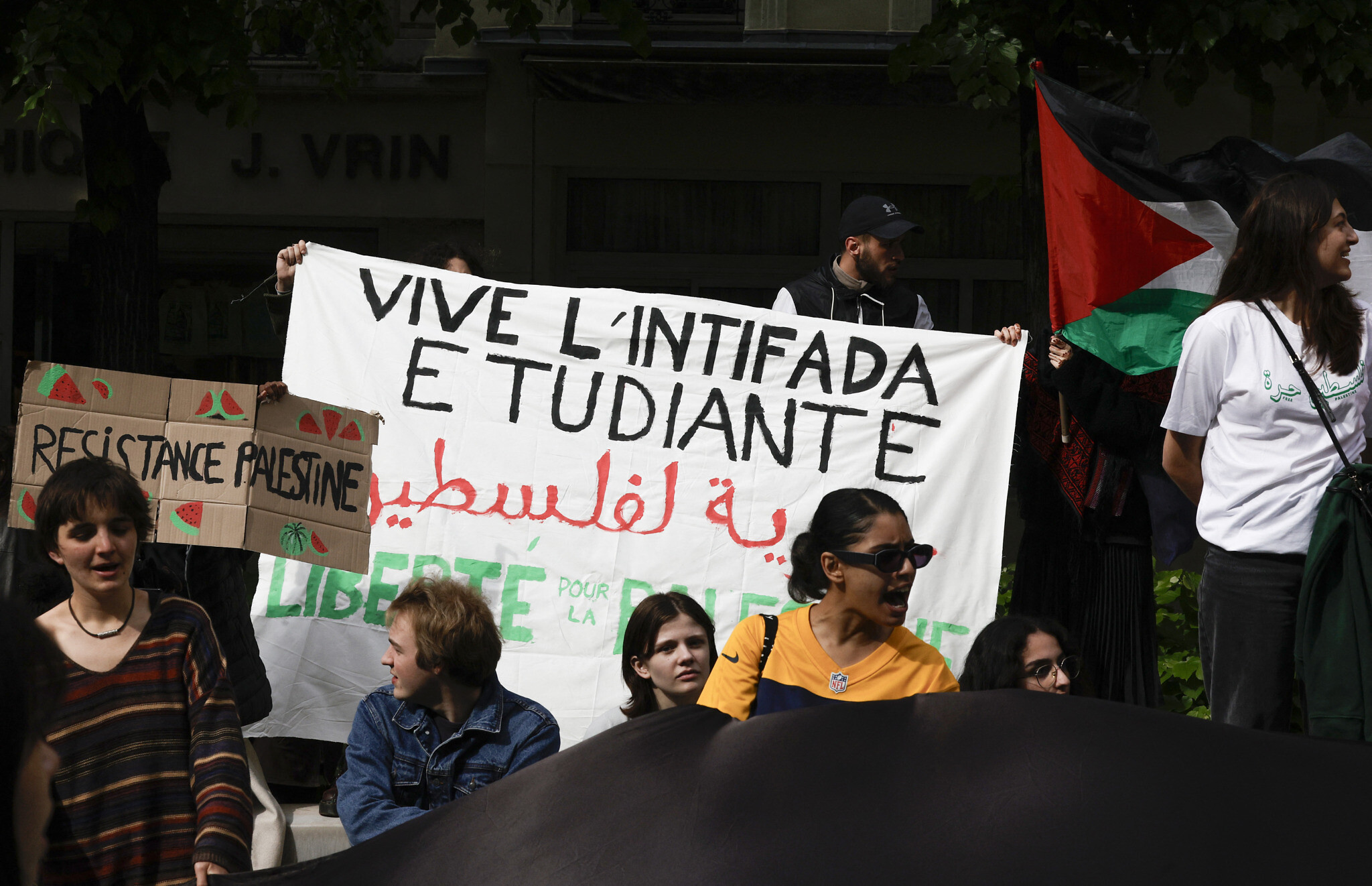
University administrators in Europe must do more to address antisemitism on campuses across the continent, including increasing security, auditing teaching materials, training instructors and pursuing legal action, two Jewish groups and a German watchdog said in a report Tuesday.
The study, which looked at issues affecting Jewish students at schools in eight European countries, along with the United Kingdom, since October 7, 2023, found that antisemitic narratives and attitudes were regularly being normalized, particularly in the context of anti-Israel protest activity, and claimed nearly across-the-board hesitancy by university heads to tackle the problem head on.
“Many university administrations have failed to take strong stances against antisemitic incidents, allowing an environment of intimidation and hostility toward Jewish students to persist under the guise of political activism,” wrote the authors of the report, which was compiled by B’nai B’rith International, the European Union of Jewish Students, and democ, a Berlin-based group of academics and media professionals involved in documenting and analyze anti-democratic movements.
“The impact on Jewish students as a result of the hostile environments captured across the national entries is significant. Jewish students report feelings of fear, isolation, and disenfranchisement within academic spaces that should otherwise serve as environments of mutual respect and open discussion,” they added.
The report looked at schools in Austria, Belgium, Britain, France, Germany, Italy, the Netherlands, Spain and Sweden, documenting attacks on Jewish students, instances of harassment or feelings of unease around anti-Israel demonstrations, along with surveys or anecdotal evidence showing a rise in antisemitic incidents or rhetoric.
Testimonials from students included several at the University of Vienna saying they no longer felt comfortable on campus due to identifiably Jewish students being targeted by anti-Israel protesters.
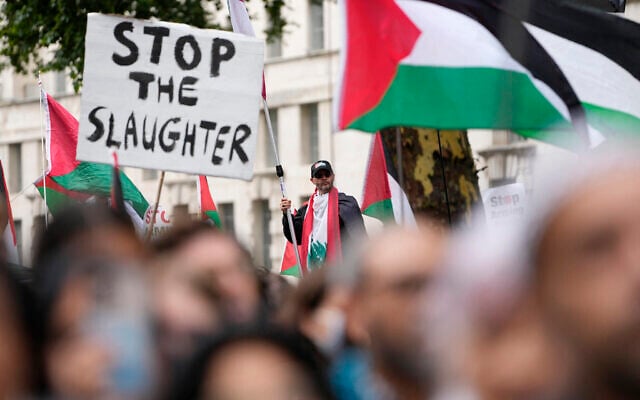
“It makes you think twice about whether you really have to go there, to the campus, or simply not go and not put yourself in a situation where antisemitic slogans are being shouted and antisemitic ideas are simply being spread,” one student was quoted as saying.
The report also found that various student groups have worked with organizations that have ties to proscribed groups such as the Popular Front for the Liberation of Palestine (PFLP), which is classified as a terror group by the EU.
In Austria, Germany and Spain, the report said, protests have been supported by organizations with “ties to terrorist activity,” including Samidoun — the Palestinian Prisoner Solidarity Network. Meanwhile, in Austria, students are working with organizations such as Dar al Janub, which has “direct documented links to Hamas,” the report added.
In some instances, university students have engaged in Holocaust distortion and instrumentalization in order to draw a “false equivalence” with the war in Gaza, the report said, calling this behavior “particularly pernicious.”

These instances included protest chants such as “Zionists are all the same, Nazis by a different name,” which was heard at Wageningen University in the Netherlands, and a move by the University of Applied Sciences Utrecht to cancel a lecture series on the Holocaust and antisemitism.
Antisemitic vandalism featured at many of the universities covered in the report.
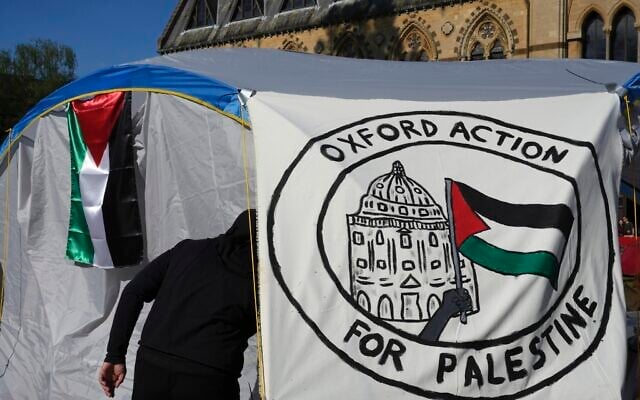
In particular, it noted 17 instances of antisemitic or hateful “damage and desecration” at UK universities in Nottingham, Birmingham, Leeds, Kent, Norwich, London, Sussex, Oxford, Sheffield, Brighton, and Canterbury in the 2023-2024 academic year, up from just four instances a year prior.
The experiences appeared to mirror those reported by Jewish college students in the United States, particularly during the 2023-2024 academic year, when many campuses saw large-scale protest encampments that critics said veered at times into antisemitic activity. Many schools in the US cracked down on such activity, particularly following the election of President Donald Trump, whose administration has pulled hundreds of millions in funding from schools deemed to have insufficiently dealt with the problem, including Harvard and Columbia universities.
The report acknowledged steps taken by political leaders in France, Germany, the UK, Sweden and Austria to deal with the activity, including clearing protest encampments in some cases. However, the authors alleged that the universities had largely “reacted hesitantly to the protests, sometimes with tacit approval or by invoking freedom of expression – in some cases, antisemitic actors were not sanctioned.”
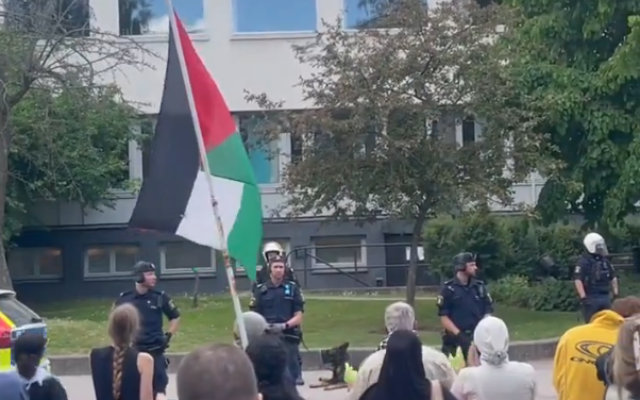
The report called for schools to set out clear guidelines and disciplinary rules for protests; to ramp up security, coordinate more closely with law enforcement and block outside groups from coming to campus to instigate demonstrations; establish reporting mechanisms for victims; and appoint contact people or taskforces with taking the lead on addressing antisemitism.
“Decisive action, and where necessary prosecution, is needed to prevent further poisoning of the public space,” Katharina von Schnurbein, the European Commission coordinator on combating antisemitism and fostering Jewish life, wrote in a foreword to the report.
University leaders were also called on to build bridges with Jewish students and groups, and raise the profile of Jewish history and the Jewish experience via campus activities.
The report urged universities to adopt the International Holocaust Remembrance Alliance’s (IHRA) working definition of antisemitism, as “a clear and useful tool in identifying antisemitism on campus.”
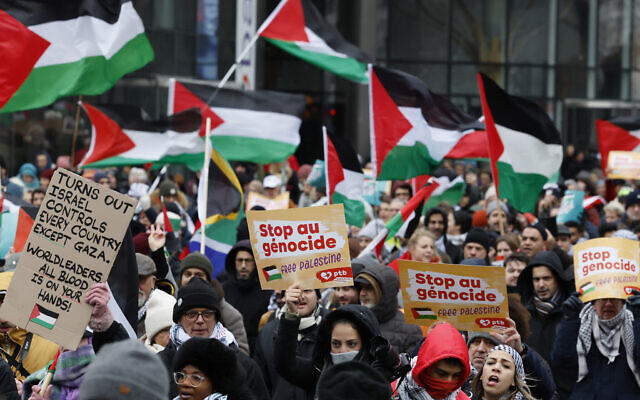
The IHRA definition of antisemitism has been adopted by groups and governments worldwide, but is contested because it covers some examples of anti-Israel rhetoric, such as denying the Jewish people the right to self-determination.
The report also recommended that schools create “clear reporting procedures” for victims of antisemitism and work to build trust with Jewish students and groups on campus “to be aware of developments and trends in antisemitic incidents, rhetoric and more broadly in student dynamics that may adversely impact Jewish students.”
As for campus protests, the report suggested that schools “ensure, promote and enforce clear disciplinary rules” for demonstrations, and step up security on campuses.
The report also recommended that schools provide teachers with training opportunities regarding antisemitism and to ensure that university staff and course content “provide students with balanced perspectives.”
To ensure that all the above steps are implemented, the report recommended that schools appoint a “contact point or taskforce” to deal specifically with campus antisemitism as it arises.
Finally, the report said that schools should work to “make Jewish life and history visible,” through marking or encouraging Jewish students to celebrate holidays publicly, to highlight Jewish contributions, and to “mark International Holocaust Remembrance Day (January 27), as a foundational shared European legacy.”
“This report makes clear that Europe’s universities are failing their Jewish students,” B’nai B’rith International president Robert Spitzer and CEO Daniel S. Mariaschin said. “Just as we have seen on campuses across the United States, antisemitism here is too often excused as ‘activism’—but in reality, it is a threat to safety, inclusion and the very integrity of higher education.”
Antisemitism has skyrocketed around the world since Hamas launched its shock assault on Israel on October 7, 2023, killing more than 1,200 people and kidnapping 251. The number of antisemitic incidents peaked right after the attack, and remains at levels significantly higher than before the assault, according to a April study by Tel Aviv University.








The Times of Israel Community.