

Report: Netanyahu received intel on Hamas plan to invade southern Israel as early as 2018
PM reportedly was warned about Hamas’s ‘Jericho’s Wall’ plan for large-scale attack years before Oct. 7, despite his repeated denials; source says one report was shared with PM directly
 Add ToI as a Preferred Source on Google
Prime Minister Benjamin Netanyahu was presented with IDF intelligence reports detailing Hamas’s plans to invade Israel as early as April 2018, according to a Tuesday report citing intelligence documents and senior officials.
The report, published by the Ynet news site, said that between 2018 and 2022, Hamas developed a comprehensive operational blueprint for a coordinated, multifront attack against Israeli military bases and civilian communities in southern Israel. The attack plan, which was later put together in a document known as “Jericho’s Walls,” envisioned breaching the Gaza border at dozens of points and deploying thousands of fighters.
It was ultimately executed with deadly effect on October 7, 2023, when Hamas led a devastating invasion of southern Israel, killing some 1,200 people, kidnapping 251 hostages, and sparking two years of war in Gaza.
According to the report, Netanyahu — who has served as prime minister since 2009, save for 18 months in 2021-2022 — was given intelligence about Hamas’s “Jericho’s Walls” plans several times over those years, despite his repeated public denials that he had ever seen or heard of such a plan before the October 7 attack.
The earliest known transfer of the plan to Israeli leadership, according to the report, occurred in April 2018, when the Military Intelligence Directorate’s Research Division distributed a special intelligence document to senior officials. Those officials included the military secretaries of the prime minister and defense minister, the National Security Council, the heads of the Shin Bet and Mossad, and the IDF chief of staff’s office.
According to the documents cited by Ynet, the 2018 report asked the following question in its subheading: “Is Hamas’s military wing building up its force for a broad attack deep into our territory?”
Ynet said the Prime Minister’s Office did not respond to requests for comment.
Ynet said the intelligence report warned that Hamas was developing “a plan for an initiated offensive maneuver with a broad order of [troops in] battle (six reserve battalions; approximately 3,000 fighters)” aimed at overrunning IDF bases while simultaneously attacking civilian targets “in the border communities and deep inside Israel.”
The 2018 report stressed the seriousness of the threat, emphasizing that “the scope of the plan and its complexity are exceptional.” While some analysts who contributed to the report expressed doubt that Hamas could actually carry out the plan in full, they cautioned that “the plan illustrates a new and broader threat scenario than before.”
The veracity of the 2018 “Jericho’s Walls” report referenced by Ynet was confirmed by the IDF last year in a probe by its Military Intelligence Directorate of the intelligence failures leading up to the October 7 attack.
That report, presaging key elements of the October 7 attack, quoted the Hamas plan as saying that “forces from five [elite] Nukhba companies should attack and destroy the posts belonging to the [IDF] Gaza Division… everything will be done above ground… with [rocket] fire… attack the kibbutzim in order to take hostages… focus on critical sites… livestream from the posts and kibbutzim.”
According to the probe, the idea of a large-scale attack on Israel slowly became a formal plan within Hamas, and it was given official internal approval in 2019.
PM has denied knowing of the plan; senior source: ‘Netanyahu did nothing’
Netanyahu has denied receiving any intelligence that Hamas was planning a major attack during the years leading up to October 7. When questioned by State Comptroller Matanyahu Englman about it for a probe into the failures that led to the attack, the Prime Minster’s Office said that “the prime minister never received and was never briefed on the ‘Jericho’s Walls’ document” until after the war broke out, and that he was “never presented with any Hamas plan for a mass raid into Israeli territory.”
However, Netanyahu’s own published materials appear to contradict those claims. In the 55-page document he sent to the State Comptroller’s Office last week and made public, he acknowledged receiving the April 2018 intelligence report, but selectively quoted only the most restrained assessment, which stated that Hamas had “a basic capability to carry out several simultaneous raids,” but that due to various factors, “it is not likely at this time.”
Netanyahu’s document omitted the paragraph’s concluding sentence, which warned that the plan signaled the terror group’s future ambitions and that it intended to significantly build up its forces.
According to a former senior intelligence official quoted by Ynet, Netanyahu’s responsibility “was to ensure there [was] no repetition of the Military Intelligence assessment on the eve of Yom Kippur 1973,” referring to the infamous intelligence failures preceding the simultaneous Egyptian-Syrian surprise invasion of Israel that sparked the Yom Kippur war.
“Back then, intelligence said ‘low probability,’ and the political echelon simply accepted it as a binding assessment without asking questions or checking on its own,” the official added. “Any serious leader would say in this situation: You received the plan in 2018, and even if Hamas is currently far from operational capability, this must be taken into account.”
Also in 2018, IDF intelligence’s Unit 8200 obtained an Arabic-language Hamas document that outlined a sweeping assault, Ynet added. It called for “launching a comprehensive offensive operation against the Zionist entity with the aim of subduing the enemy,” including attacks on the Re’im military base, numerous Gaza border communities, and deeper targets such as Ashdod, Ashkelon, and key infrastructure sites. The plan specified that “the attack will be carried out by six battalions,” with the “main effort” conducted above ground.
The Hamas plan was also seen by Shin Bet intelligence agency, which produced its own review that highlighted its “unusual and troubling characteristics,” and was circulated to multiple bodies, including the National Security Council, which operates under the prime minister’s authority.
According to one source quoted by Ynet, the Shin Bet report was shared with Netanyahu directly.
In May of 2022, the Intelligence Directorate obtained another version of Hamas’s attack plan, this time from August 2021, and it was added to the “Jericho’s Walls” file. The plan similarly described a large number of Nukhba Force operatives breaking through the IDF Gaza Division’s defenses and reaching cities in southern Israel.
The document was shown to the IDF’s top intelligence brass at the time, and the officials concluded that the plan appeared to be unrealistic. In a November 2022 session at the Southern Command, the “Jericho’s Walls” plan was presented at the very end of a list of assessments regarding potential scenarios for the next conflict in Gaza.
Naftali Bennett and Yair Lapid served as prime ministers during most of 2022, including in May and November, while Netanyahu served as the leader of the opposition.

The following year, with Netanyahu back in office, the Intelligence Directorate obtained information on Hamas invasion training in the months before October 7, which led some members of Unit 8200 to believe that Hamas’s wide-scale invasion plans were no longer just aspirations, but a solid plan.
According to the IDF’s probes, this assessment was presented, both via emails and meetings, to intelligence officers at the Southern Command and regional officers of 8200 in southern Israel. However, the information did not reach any senior officials, including top intelligence officers.
While Netanyahu was not directly presented with the 2022 and 2023 updates to the “Jericho’s Walls” file, a senior intelligence source quoted by Ynet said, “Even if the army commanders failed to [connect the dots] themselves, the obligation of the prime minister is to demand answers regarding Hamas’s intentions.”
“Netanyahu did nothing,” the source said.
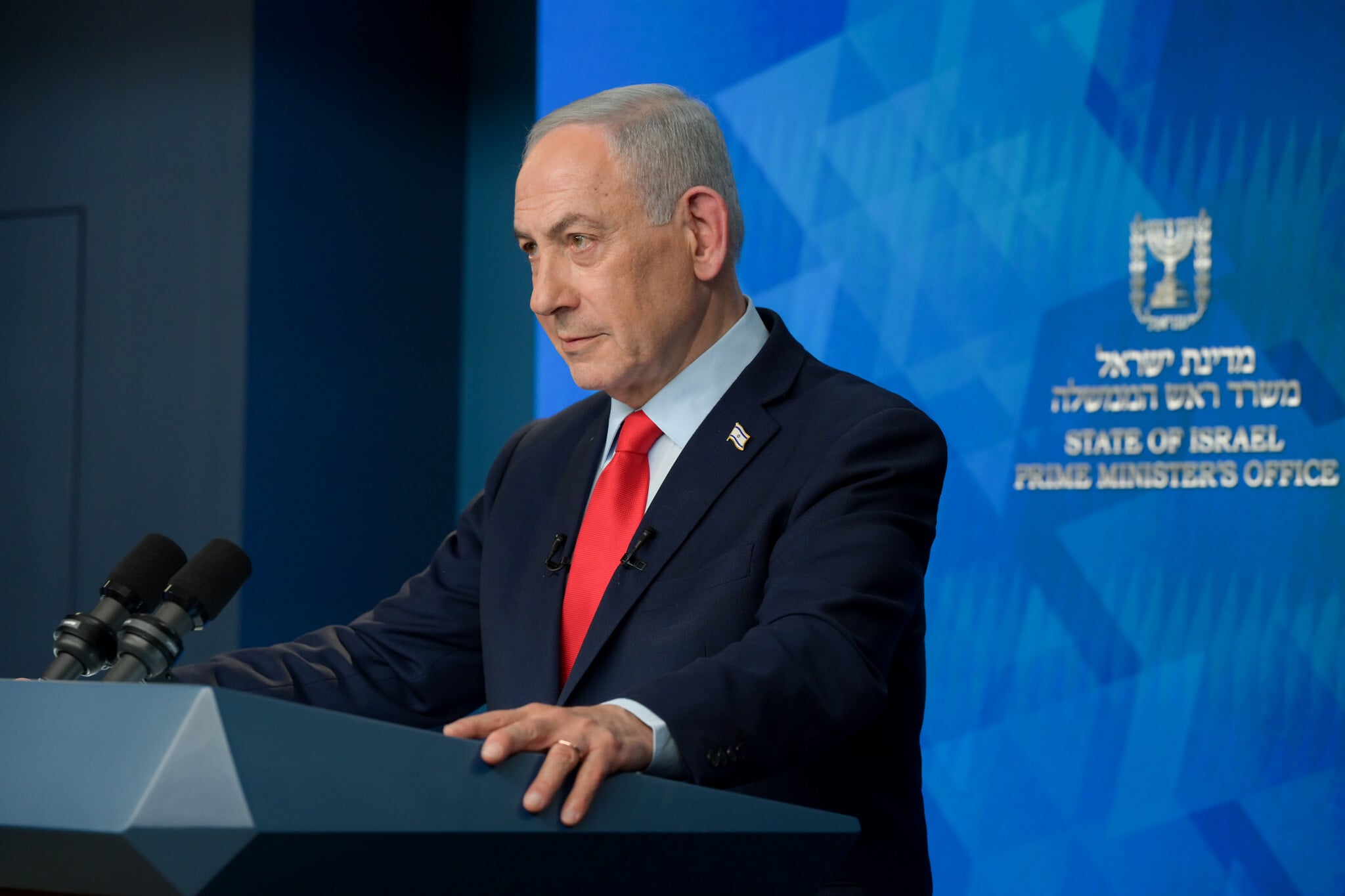
Despite documents proving that Netanyahu was presented with Hamas’s attack plans early as 2018, he has argued that the “Jericho’s Walls” plan only relates to the 2022 document presented to leadership, the only year since 2009 that he was not in power, in an attempt to distance himself from responsibility for failing to prevent the attack.
Senior intelligence officials speaking to Ynet disputed that narrative, pointing to the 2018 documents and the multiple intelligence assessments that Hamas was planning a large-scale attack for several years before October 7.
The sources also pointed to the extensive documentation procedures within the Prime Minister’s Office that track every classified document delivered for the prime minister’s review. Such documents could be subpoenaed in a state commission of inquiry into the failures of October 7, which the government, including Netanyahu, has opposed.
Emanuel Fabian contributed to this report.








The Times of Israel Community.