

‘Sleeper cells’ fighting Islamic State in Iraq
Former soldiers, policemen in Mosul providing government with intel from inside territory held by jihadist group
 Add ToI as a Preferred Source on Google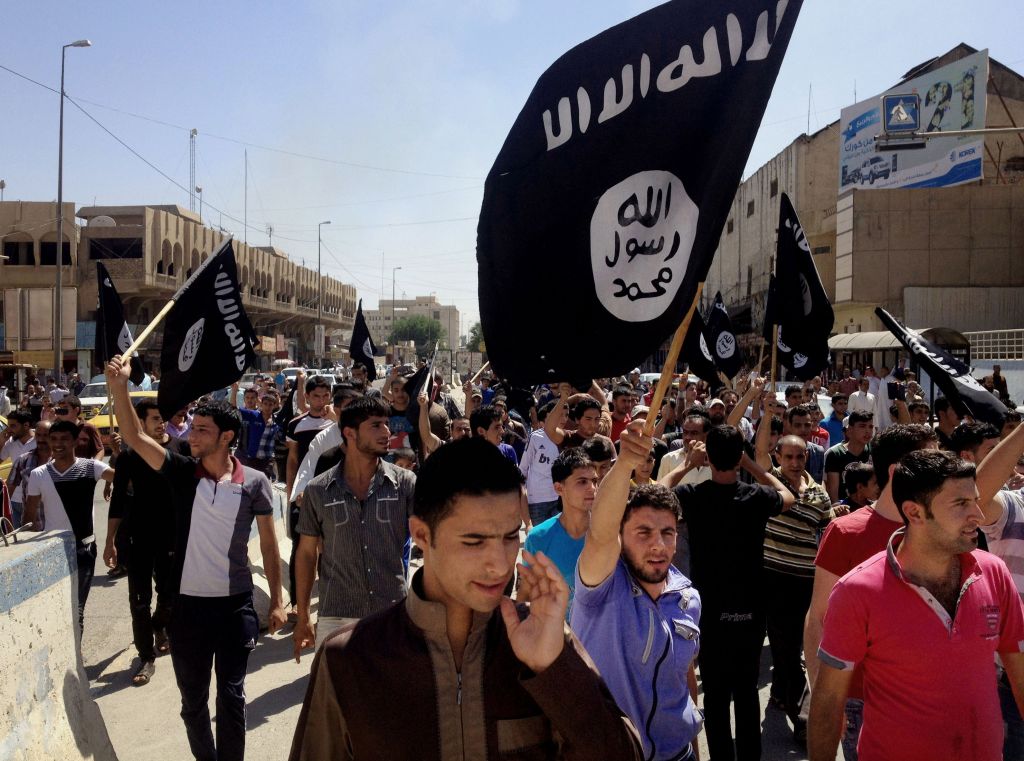
BAGHDAD (AP) — “Sleeper cells” made up of former Iraqi police officers and soldiers are tipping off authorities to Islamic State group positions in the northern city of Mosul, a prominent lawmaker has told The Associated Press.
The comments by Hakim al-Zamili, the head of parliament’s security and defense committee, are the first high-level confirmation of the groups’ existence after weeks of rumors.
Their work remains incredibly dangerous as the Islamic State group has shut down mobile phone networks and regularly kills suspected government collaborators. However, their intelligence could prove invaluable as the US-led coalition steps up airstrikes around Mosul, Iraq’s second-largest city, to disrupt Islamic State group supply lines ahead of an expected operation later this year to take back the city from militants.
“Those patriotic groups, some operate from inside the city of Mosul and others from the areas surrounding it, are now giving us information about the military preparations being made by Islamic State group in order to face any attack by government forces to retake the city,” al-Zamili told the AP.
The Islamic State group captured Mosul in August 2014 during its blitz across northern Iraq. The militants now hold about a third of both Iraq and neighboring Syria in its self-declared caliphate.
Many soldiers and police officers dropped their weapons and fled during the extremists’ initial offensive. Now, however, some have begun spying on behalf of the Iraqi government, al-Zamili said. Resentment among Mosul residents has grown as prices of most food staples have more than doubled, kerosene is in short supply and militants have banned alcohol and cigarettes.
In late November, the Islamic State group blocked all mobile phone networks in Mosul, accusing informants in the city of tipping off coalition and Iraqi forces to their whereabouts. The move caused chaos across Mosul.
Typically, informants leave Mosul and head to higher altitudes to get a network signal so they can make calls, al-Zamili said. Their information then gets passed to Iraqi security commanders in charge of airstrikes and military operation in Nineveh province, the lawmaker said. So far, the information has not been shared with US-led forces, he said.
“We receive a lot of useful information from Mosulis who are becoming fed-up with the militants and this is the reason why the IS group blocked all mobile phone networks in the city,” he said.
In recent days, coalition airstrikes pounded at least two dozen locations around Mosul, destroying dozens of vehicles, buildings, fighting positions and insurgent units. The airstrikes, said one senior military official, are the start of a new phase, and military leaders are watching to see how the militants respond. The official was not authorized to discuss the operations publicly so spoke on condition of anonymity.
Any offensive to retake Mosul likely remains months away. However, al-Zamili said the intelligence helps. To encourage others, he said Iraq’s parliament is considering laws to reinstate soldiers and police officers who served under former Iraqi dictator Saddam Hussein but have taken the “honorable stance” in cooperating with Iraqi authorities battling the Islamic State group.
Copyright 2015 The Associated Press.






The Times of Israel Community.