

SpaceX rocket launch delay resonates in Israel
The next iteration of the Amos satellite is set to be launched this year – on a rocket that has recently been held back twice from launching
 Add ToI as a Preferred Source on Google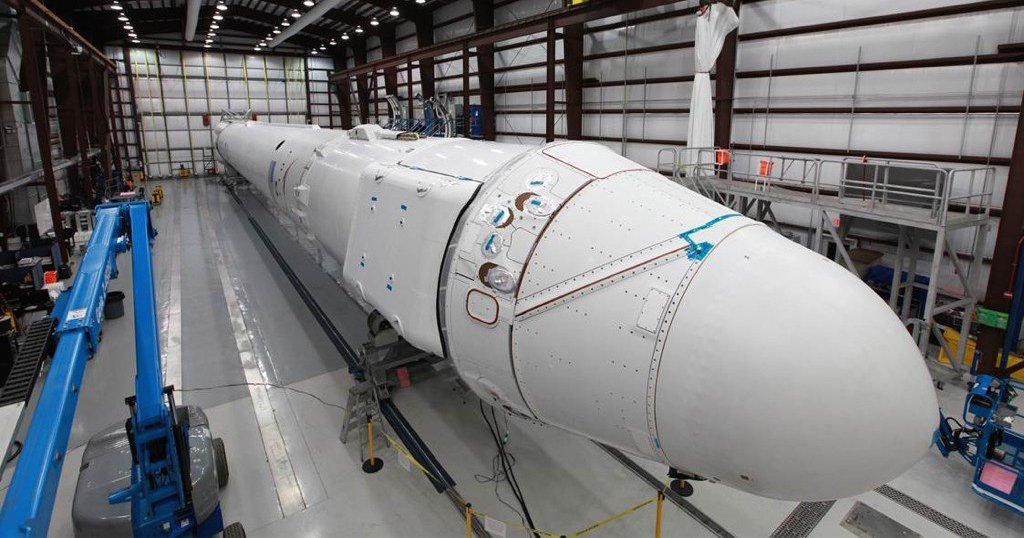
The last-minute scrubbing of a planned rocket launch Tuesday by US aerospace firm SpaceX could have big implications for Israel.
Spacecom, the Israeli satellite company, was set to launch the latest iteration of its Amos communications satellite sometime this year using the same reusable rocket SpaceX planned to fire, which was to bring supplies to the International Space Station.
A Spacecom official would not comment on the viability of the Falcon 9, nor indicate if the Israeli company had any concerns about its deal with SpaceX to launch the Amos 6 satellite.
Amos satellites are used for a wide variety of purposes, including supplying television and radio broadcasts in Israel and several European countries, along with weather data, Internet communication, and other “unspecified” purposes that some suspect are related to security matters.
Until now, space travel has been almost exclusively a matter for governments – among other reasons, because they were the only ones that could afford it – but in recent years several private groups and organizations have sprung up, promising commercial space flights for business and pleasure. Among those organizations are British millionaire Richard Branson’s Virgin Galactic, the space tour company that promises the first suborbital flights by 2016, and SpaceX, owned by US millionaire Elon Musk, who made his fortune when payments service PayPal was acquired by eBay in 2002. Since then, Musk has gone on to head electric car maker Tesla Motors and SpaceX, which has developed the Falcon 1 and 9 rockets as well as a spacecraft.
The Falcon 9 has already proven itself space-worthy; in 2012, it delivered SpaceX’s Dragon spacecraft to the International Space Station, and has been back there three times since, delivering cargo for NASA. The Falcon launches (altogether there have been 13) have brought the company much closer to its goal of deploying a full-fledged commercial rocket service, for both cargo and people, SpaceX said.
Spacecom signed a contract in 2010 with SpaceX for delivery of the Amos 6 satellite, as well as for additional satellites in the coming years.
“As a highly competitive solution for in-orbit delivery, Falcon 9 supports us as we transition into a leading global satellite services provider,” said David Pollack, president and CEO of Spacecom in a press release. “With a larger fleet providing more service options and capacity, we can continue to provide the highest quality satellite communications services and exceed customer expectations.”
On Tuesday, however, neither Pollack nor anyone else from Spacecom had any comment on the SpaceX delay. The Tuesday launch was to ferry 5,000 pounds of supplies for the astronauts on the ISS, on an upgraded version of the rocket, which has an interesting trick up its sleeve; SpaceX plans to return the rocket to earth after it drops off its supplies and land it on a platform in the Pacific Ocean. Reusable rockets, too, are a part of SpaceX’s vision for future space transport, the company has said.
But it was not to be – at least on Tuesday. According to the company, the launch was delayed due to “a problem with the thrust vector control actuator.” Pending resolution of the problem, SpaceX will try again Friday.
It was the second delay for this launch, which had first been scheduled for mid-December. NASA is hoping that the launch gets off the ground; officials have said that the supplies the SpaceX rocket is set to carry are “critical” for the ISS astronauts. Although Spacecom wouldn’t comment, getting the Falcon 9’s glitches ironed out is also a time-sensitive issue; the Amos 6 is set to replace the Amos 2, which is due to be retired soon.









The Times of Israel Community.