

Supreme Court freezes home demolition of Israeli teen’s suspected killer
Arafat Irfaiya was charged last month with rape and murder of Ori Ansbacher; IDF given 48 hours to respond to family’s petition against order to destroy house
 Add ToI as a Preferred Source on Google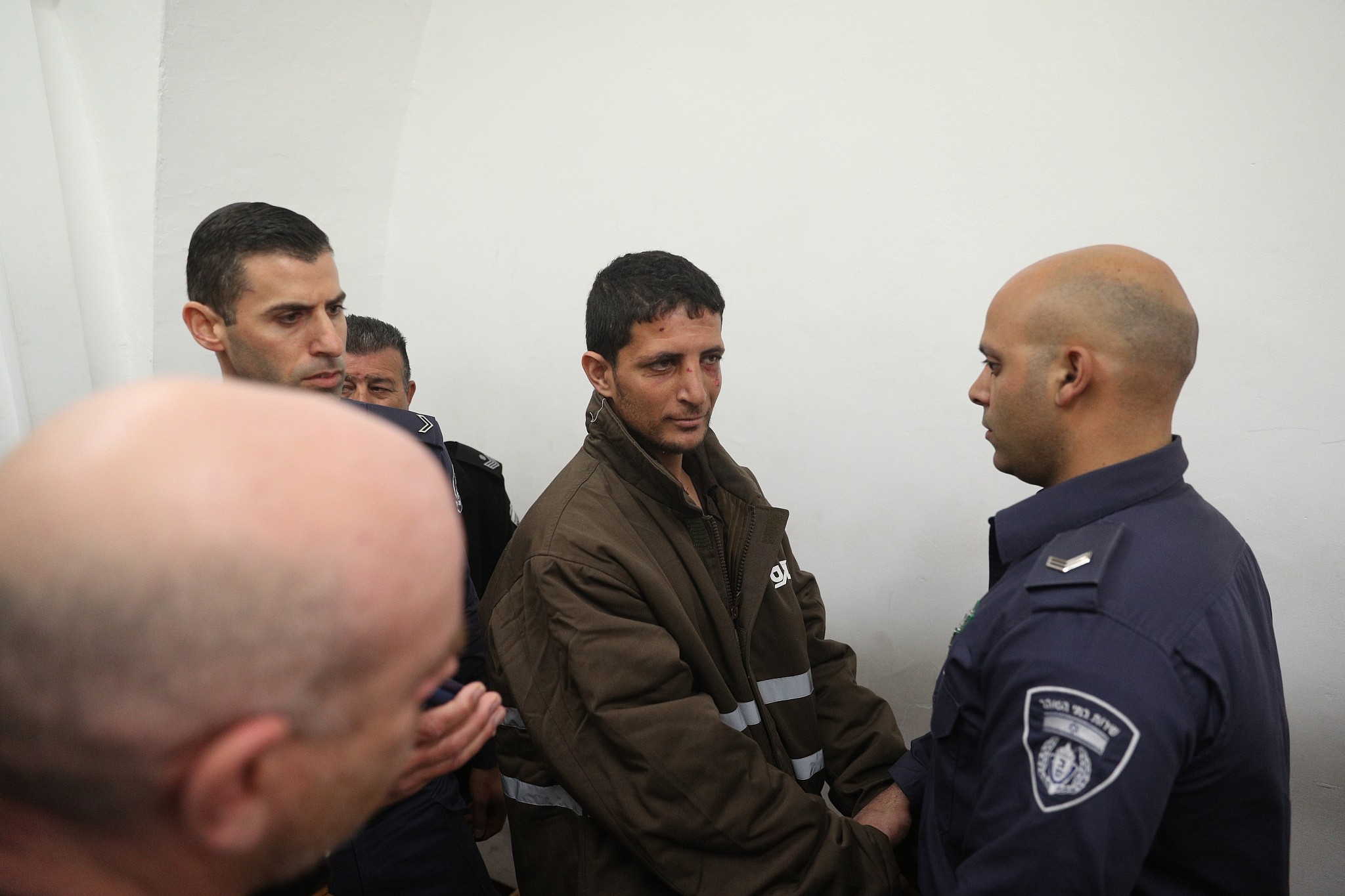
The Supreme Court on Monday froze plans to demolish the home of a Palestinian man who has been charged with the brutal rape and murder of an Israeli teenager.
Arafat Irfaiya, a 29-year-old resident of Hebron in the West Bank, was charged last month with rape and murder in the context of a terrorist act for attacking 19-year-old Ori Ansbacher in a Jerusalem forest on the evening of February 7.
The court froze the demolition order in response to a petition filed by Irfaiya’s family. The Israel Defense Force’s Central Command has 48 hours to respond to the petition, according to the Ynet news site.
The IDF informed the family of its plan to demolish their home on March 6.
According to last month’s indictment, Irfaiya entered Israel from the West Bank illegally in early February armed with a knife.
“He came across Ansbacher and decided to kill her because she was Jewish,” the charge sheet said. “He attacked Ori with violent cruelty, and though she tried to fight him off, he overpowered her. He stabbed her with a knife multiple times throughout her body, causing her death.”
The Jerusalem District Prosecution said no further details about Ansbacher’s murder would be revealed.

During the hearing, state prosecutors presented the court with evidence against Irfaiya, including his DNA that was found on the murder weapon and at the crime scene. Prosecutors also told the court that during his interrogation, Irfaiya revealed details about Ansbacher that implicated him in her murder.
According to a Channel 12 news report, Irfaiya told investigators that he did not plan much of the attack in advance aside from purchasing a kippa so that he could slip into Israel undetected.
“I bought the skullcap two weeks before, so I could enter Israel without being suspected or identified as an illegal resident,” Arafat Irfaiya reportedly told investigators, adding that he did not tell anyone of his plans in advance.
“I left my home to kill a Jew due to the occupation and treatment of Arabs at checkpoints,” he reportedly told investigators.
On the day of the killing Ansbacher, who was a volunteer at a youth center in the capital, went for a walk in a woodland at Ein Yael to the south of Jerusalem.
According to the report, Irfaiya told investigators he encountered Ansbacher, 19, by chance in a forested area close to Jerusalem, where she was sitting on a rock, writing in a notebook, and decided he would have sex with her “whether she agreed to it, or not.”
Irfaiya reportedly said he stabbed Ansbacher three times and dragged her as she tried to resist. He then stabbed her again, before gagging her with her scarf and binding her hands.
The suspect said that after the attack, he took Ansbacher’s cellphone and destroyed the memory card.
The suspect reportedly told interrogators that he entered Israel and looked for a Jewish victim because he wanted to be a “martyr.”
“I entered Israel with a knife because I wanted to become a martyr and murder a Jew,” he reportedly said. “I met the girl by chance.”
A spokesman for the Shin Bet previously said Irfaiya had spent time in prison for security-related offenses and that he had crossed into Israel without a permit before carrying out the murder. Hebrew media reported that he is affiliated with Hamas, but the terror group has not claimed responsibility for the attack.
The case sparked outrage across the country and prompted the government to approve implementing a law under which Israel would deduct from tax revenues it collects on behalf of Palestinians the amount that the Palestinian Authority pays out to Palestinian attackers and their families.
Israel says the practice of demolishing terrorists’ homes is an effective means of discouraging future attacks, though it has been criticized by human rights groups as a form of collective punishment and by some analysts as an ineffective deterrent measure.









The Times of Israel Community.