

Syria victims show signs of exposure to ‘nerve agents’ — UN
World Health Organization points to lack of external injuries and acute respiratory distress being main death cause
 Add ToI as a Preferred Source on Google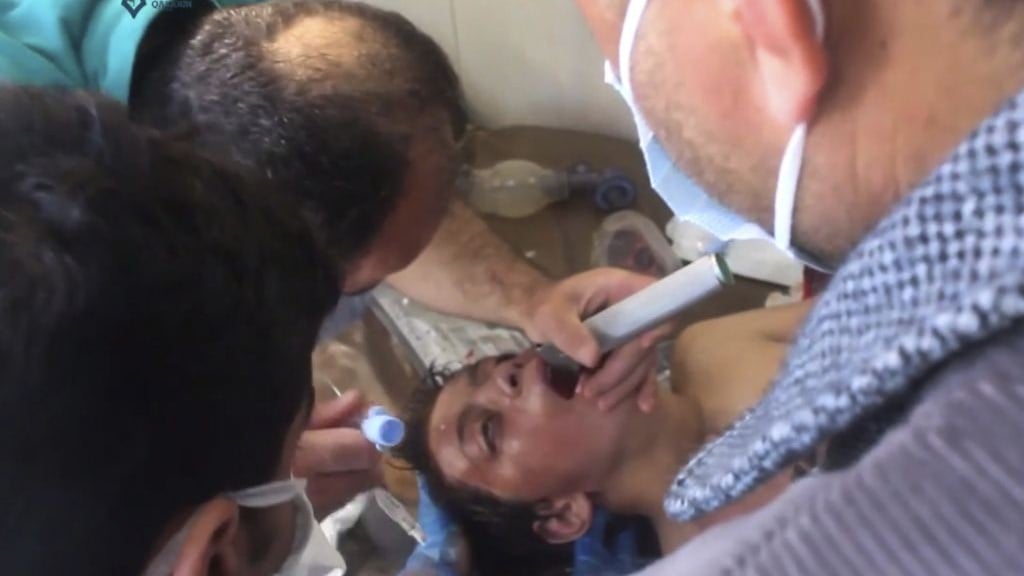
GENEVA, Switzerland — Some victims of a suspected chemical attack in Syria have symptoms consistent with exposure to a category of chemicals that includes nerve agents, the World Health Organization said Wednesday.
The UN health agency said the deadly attack in Idlib province Tuesday appeared to have involved chemical weapons, pointing to the “apparent lack of external injuries reported in cases showing a rapid onset of similar symptoms, including acute respiratory distress as the main cause of death.”
“Some cases appear to show additional signs consistent with exposure to organophosphorus chemicals, a category of chemicals that includes nerve agents,” it said.
At least 72 civilians, among them 20 children, were killed in Tuesday’s attack in rebel-held Khan Sheikhoun, and dozens more were left gasping for air, convulsing, and foaming at the mouth, doctors said.

Washington and London have pointed the finger at President Bashar Assad’s government for the attack, though the regime has denied using chemical weapons.
But WHO said there was good reason to suspect a chemical attack, noting the dozens of patients admitted to hospitals “suffering from breathing difficulties and suffocation.”
“The images and reports coming from Idlib today leave me shocked, saddened and outraged,” Peter Salama, head of WHO’s health emergencies program, said in a statement.
“These types of weapons are banned by international law because they represent an intolerable barbarism,” he added.
WHO warned that the capacity of hospitals in the surrounding area was limited and that many facilities had been damaged in the fighting.
The UN agency pointed out that the Ma’ara Hospital had been out of service since Sunday due to infrastructure damage, and that the Al Rahma Hospital was hit shortly after it began taking in patients from the suspected chemical attack and was forced to temporarily shut its doors.
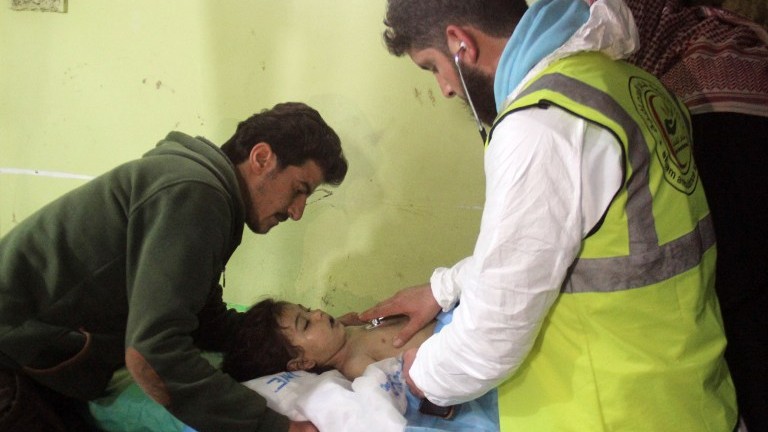
Emergency rooms in the area were overwhelmed, and many patients had been referred to southern Turkey, it said.
As soon as word got out about the suspected chemical attack, WHO said it had begun dispatching medicines, including Atrophine, an antidote for some types of chemical exposure, and steroids for symptomatic treatment, from a warehouse in Idlib.
“WHO is shipping additional medicines from Turkey and is ready to provide more life-saving supplies and ambulances as needed,” it said, adding that its experts were providing around-the-clock guidance on diagnosis and treatment.









The Times of Israel Community.