

Syria’s chemical deal and Israel’s sigh of relief
Arab observers claim Israel is the big winner of the plan to strip the Assad regime of its chemical weapons
 Add ToI as a Preferred Source on Google
Elhanan Miller is the former Arab affairs reporter for The Times of Israel
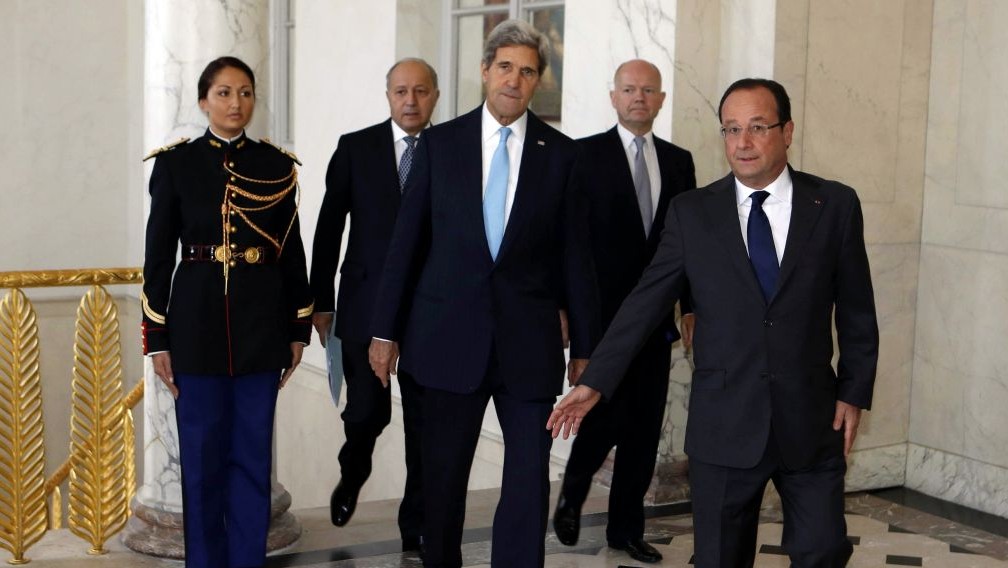
A UN report confirming the use of chemical weapons in an attack against Damascus suburbs on August 21 lead the headlines, serving for Arab media as an implication of the Assad regime.
“The inspectors’ report: an implicit allusion to the regime’s responsibility,” reads the headline of London-based daily Al-Hayat, claiming that the report’s conclusion that surface to surface missiles were used to spread the chemicals constitutes a tacit condemnation of the Assad regime.
“Washington and London blame Assad for the chemical attack,” reads the headline of an article on the website of Qatari news channel Al-Jazeera, featuring a photo of dead children taken shortly after the attack in the Ghouta district.
The main headline of Saudi-owned daily A-Sharq Al-Awsat reads, “Saudi Arabia insists that the Syrian crisis is not limited to chemical weapons,” featuring a photo of Crown Prince Salman bin Abdulaziz, who headed a government meeting to discuss the Syrian crisis on Monday. Saudi Arabia called for international intervention in Syria and for increased assistance to rebel fighters.
London-based daily Al-Quds Al-Arabi leads its article by reporting that the UN Organization for the Prohibition of Chemical Weapons will begin a program to destroy Syria’s chemical stockpiles within days.
The daily stresses that the UN report “does not directly define those responsible for using chemical weapons, since the mandate given to the investigators does not include that.”
In the article’s sub-headline, the daily quotes a UN human rights agency expressing concern over the increased number of human rights abuses perpetrated by jihadists flocking to Syria.
“Israel and the Syrian regime are the two winners in the chemical weapons agreement,” reads the headline of Saudi news website Elaph, which adds that the “softness” of the international community has allowed Hezbollah to go wild, most recently by forcibly laying its own communications infrastructure in the predominantly Christian city of Zahleh, in eastern Lebanon.
Atef Majdalani, a member of Lebanon’s opposition party Al-Mustaqbal, tells Elaph that Israel is the prime beneficiary of the chemical weapons agreement, since the weapons were used by the Assad regime as a “strategic” threat against the Jewish state.
Whether or not Assad’s chemical stockpiles were indeed a strategic counterbalance to Israel’s nuclear weapons, “the Syrian regime, according to its argumentation, sacrificed this equalizer which theoretically comprises a balance with the Jewish state,” writes Hazem Saghieh in an op-ed in Al-Hayat.
“This means that the survival of the regime overrides all other goals. Knowing this simple fact means only that the Syrian regime has lost its ability to exercise its defiance, which was and continues to be measured according to its balance with Israel. In other words, the American-Russian agreement deprived the Syrian regime of any doctrinal or moral value it claimed for itself,” writes Saghieh.
Could the model of the chemical weapons agreement be applied to the Iranian nuclear issues? wonders the editorial of Al-Quds Al-Arabi, noting that Iran has begun to adopt a softer approach in its international diplomatic conduct since the start of Hasan Rouhani’s term as president.
“Iran’s diplomatic circles have certainly begun preparing new modes of action. They were especially embarrassed by the crisis of Syria’s chemical weapons, hiding behind the Russian actions and refraining from encouraging Assad to maneuver and place obstacles in a bid to maintain his chemical weapons,” reads the editorial.
“The experience of the chemical crisis has given Iran a number of lessons, but did not grant it any gain, aside from its greater reliance on Russia and its interests.”







The Times of Israel Community.