

UN to vote Monday on condemning Iran for supplying missiles to Yemen
Draft resolution set in motion after experts revealed rockets launched at Houthi rebels were made in Islamic Republic
 Add ToI as a Preferred Source on Google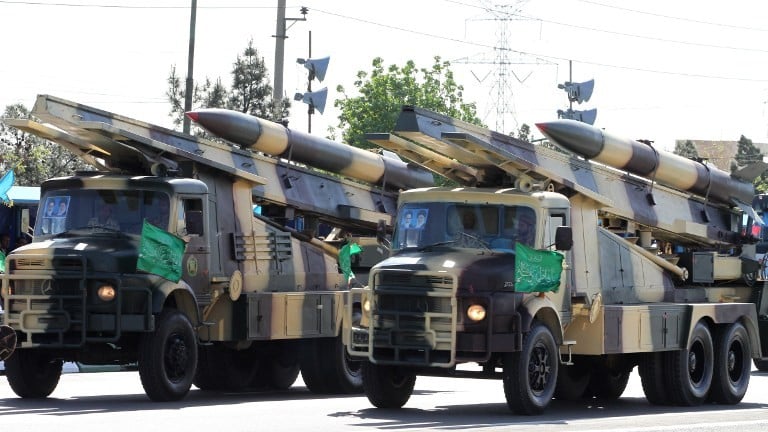
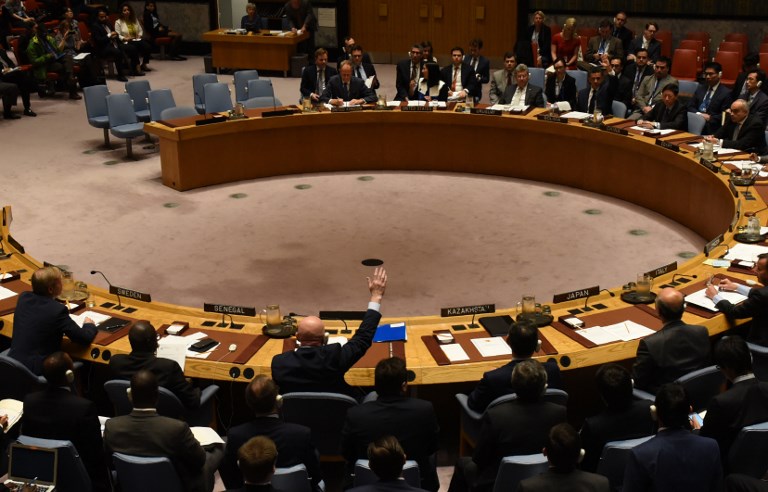
The Security Council is expected to vote Monday on a British-drafted UN resolution that would condemn Iran for violating a UN arms embargo by providing missiles and drones to Shiite rebels in Yemen — and commit to future action against Tehran.
Kuwait’s UN Ambassador Mansour Al-Otaiba is the current council president. He told reporters Saturday, “We are still working on the text, but the intention is to adopt it Monday morning.”
Russia’s UN Ambassador Vassily Nebenzia said last week that he opposed the draft, saying it should be about renewing the work of experts monitoring sanctions against Yemen, not condemning Iran.
The experts said in a January report that they’d identified Iranian missile remnants and other equipment introduced into Yemen after the 2015 arms embargo that were fired into Saudi Arabia.
The draft text condemns Iran for violating the 2015 arms embargo on Yemen by “failing to take the necessary measures to prevent the direct or indirect supply, sale or transfer” of short-range ballistic missiles, drones and other military equipment to the Houthis.
The draft resolution, backed by the United States and France, specifies that “these violations … require a further response from the council; and further decides to take additional measures to address these violations.”

While the text, presented to the council last Friday, does not provide details on those measures, it does specify that “any activity related to the use of ballistic missiles in Yemen” is criteria for sanctions.
The report by the UN experts bolstered US and Saudi claims that Iran was arming the Houthis, despite Tehran’s strong denials.
While the report found that Tehran had violated the 2015 embargo by failing to block the shipments of equipment made in Iran, the experts said they were unable to identify the supplier.
Reining in Iran
Nebenzia, the Russian ambassador, has raised questions about the experts’ findings, which AFP first reported in January when the document was confidentially sent to the council.
Russia has the power to block sanctions by resorting to its veto as one of the five permanent Security Council members, along with Britain, China, France, and the United States.
In a New York Times editorial published last weekend, US Ambassador Nikki Haley made the case that UN action against Iran could help prevent a military confrontation between Iran and Saudi Arabia.
“By confirming that Iran is the source of the missiles and other weaponry fired into Saudi Arabia, the UN panel has given the world a chance to act before a missile hits a school or a hospital and leads to a dangerous military escalation that provokes a Saudi military response,” Haley wrote.
“Today, armed with this evidence, we have the chance to rein in Iran’s behavior and demand that it live up to its international agreements that discourage conflict.”
Haley last month took Security Council ambassadors to a warehouse near Washington to inspect debris from missiles fired at Saudi Arabia last year that the United States says were supplied by Iran to the Houthis.
The missile components and other weaponry were collected by Saudi Arabia.
After the visit, Russia’s ambassador remained unconvinced.
Asked whether the case had been made for action against Iran, Nebenzia answered “no.”
The resolution would also renew UN sanctions on Yemen for another year, until February 26, 2019.






The Times of Israel Community.