

US, Iran said to agree on further talks next week, as mediator claims progress
Contradictory reports emerge on whether sides any closer to deal; report says Witkoff, Kushner demanded Tehran dismantle all nuclear sites and turn over enriched uranium; Trump said briefed on his potential military options
 Add ToI as a Preferred Source on Google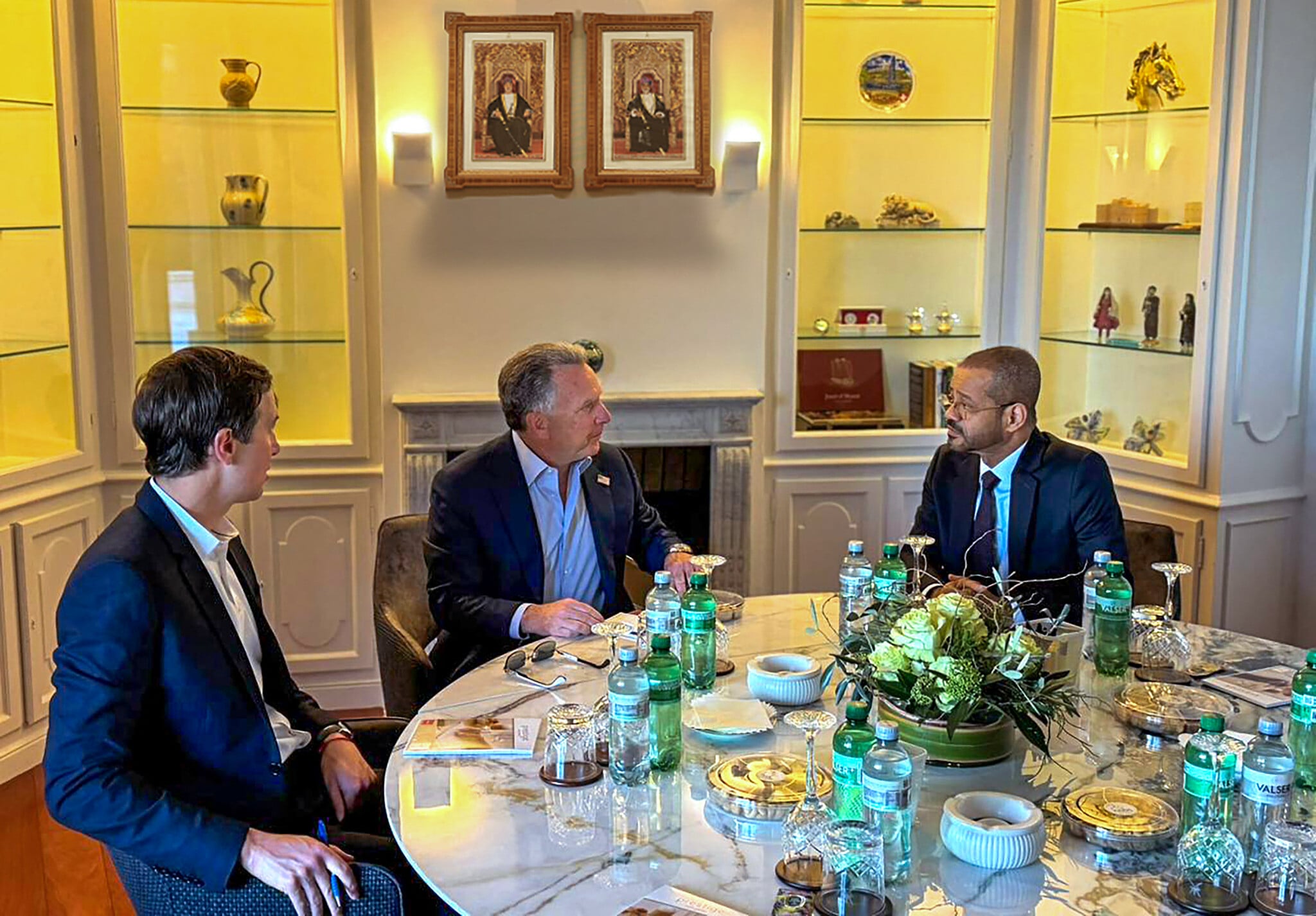
The United States and Iran made significant progress in talks on Thursday aimed at resolving a longstanding nuclear dispute and averting new US strikes, mediator Oman said, amid Washington’s large-scale military buildup in the Middle East.
Iranian Foreign Minister Abbas Araghchi told state TV that the talks “made very good progress and entered into the elements of an agreement very seriously, both in the nuclear field and in the sanctions field.”
He said the next round would take place in “perhaps less than a week,” with technical talks at the UN’s nuclear agency to begin in Vienna on Monday.
“Further progress has been made in our diplomatic engagement with the United States. This round of talks was the most intense so far,” Araghchi wrote in a separate statement posted on X overnight after the talks.
A US official described the talks to Axios as “positive.”
The upbeat assessments appeared to contradict earlier reports of American disappointment over the Iranian position, as well as comments made anonymously to various Hebrew media outlets by senior Israeli officials that the gap between the sides appeared increasingly unbridgeable, and that a US strike seemed more and more likely.
The Wall Street Journal, meanwhile, gave a less rosy assessment on Thursday evening, describing the sides as “still far apart on key issues.”
The cause for the discrepancies was not immediately clear.
After the day’s talks ended in Switzerland, Omani Foreign Minister Sayyid Badr Albusaidi said in a post on X that the two sides planned to resume negotiations soon after consultations in their countries’ capitals, with technical-level discussions scheduled to take place next week in Vienna.
The Omani minister’s assessment of progress followed indirect talks between Araghchi and US envoys Steve Witkoff and Jared Kushner in Geneva, with one session in the morning and the second in the afternoon.
“We have finished the day after significant progress in the negotiation between the United States and Iran,” Badr Albusaidi said.
Describing the talks as some of the most serious that Iran has had with the US, Araghchi told Iranian state television: “We reached agreement on some issues, and there are differences regarding some other issues.”
“It was decided that the next round of negotiations will take place soon, in less than a week,” he said, adding the Iranians had clearly expressed their demand for sanctions relief.
There was no immediate comment from US negotiating team on the outcome of the talks.
Axios had reported earlier that Witkoff and Kushner were “disappointed” by the Iranians’ positions after the morning session, but at the day’s conclusion, a source described the talks as “positive.”
The negotiations – which were mediated by Albusaidi and included UN nuclear watchdog chief Rafael Grossi, according to several reports – lasted several hours and included both direct and indirect exchanges, according to Axios.
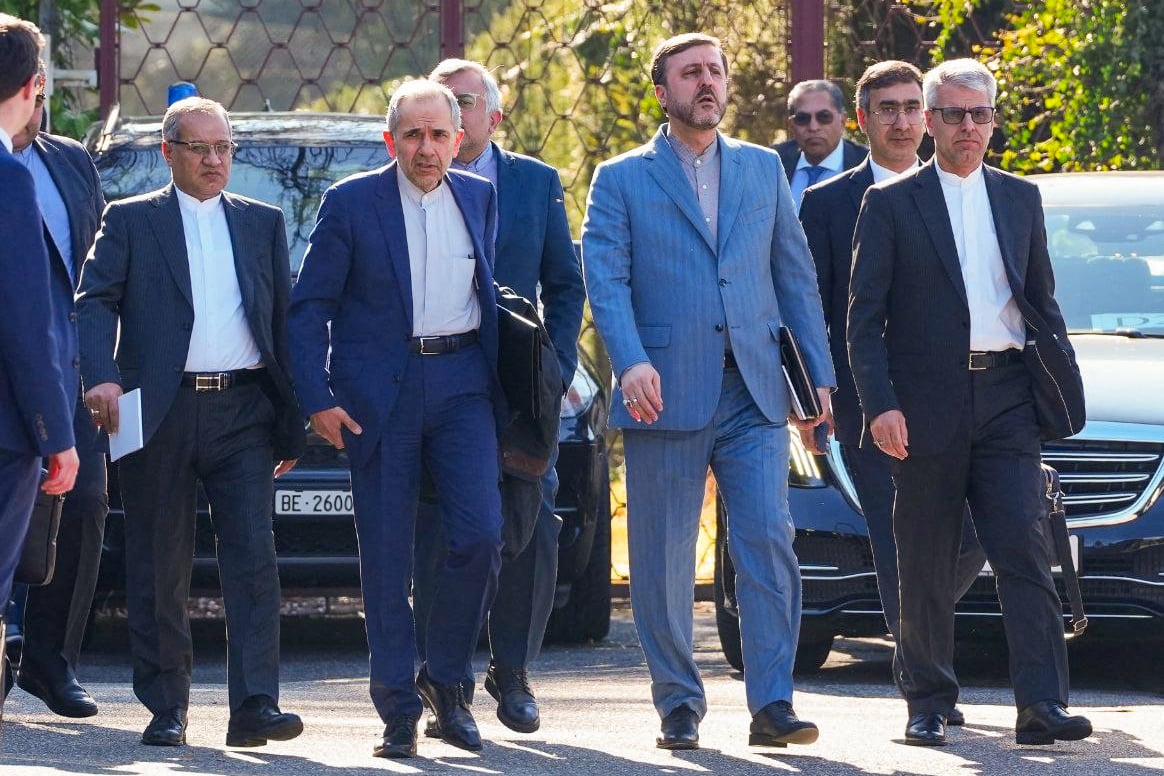
According to Israel’s Channel 12, Iran offered to limit uranium enrichment to medical needs, while nuclear activity would cease for an unspecified, limited number of years, and enrichment would later resume under a regulated regional framework.
The US, for its part, was said to be demanding a deal without a time limit.
Washington is willing to allow low-level enrichment at a Tehran research reactor, but is insisting on the full dismantlement of all of Iran’s other nuclear facilities and the transfer of all enriched uranium out of the country, according to the TV report.
The report on US demands of Iran appeared to largely mirror the Journal’s account.
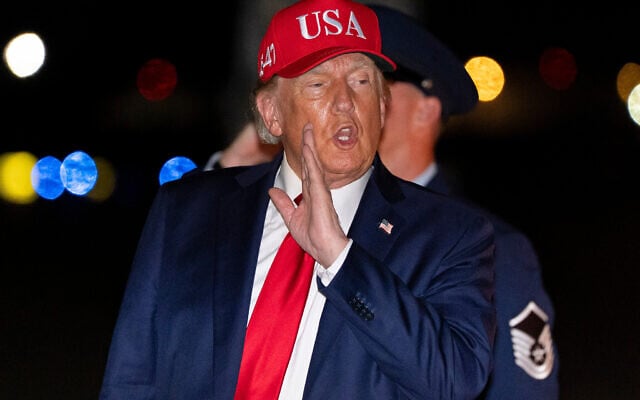
The discussions about the decades-long dispute over Iran’s nuclear work come as fears grow of a Middle East conflagration. US President Trump has repeatedly threatened action if there is no deal and the US military has amassed its forces in waters near the Islamic Republic.
The apparent decision to schedule a future round of negotiations would suggest that enough progress was made for the US to hold off on long-threatened military strikes. However, in June 2025, Omani mediators had also scheduled a round of nuclear talks that never materialized, as Jerusalem — with American blessing — launched a campaign targeting Iran’s nuclear and missile programs.
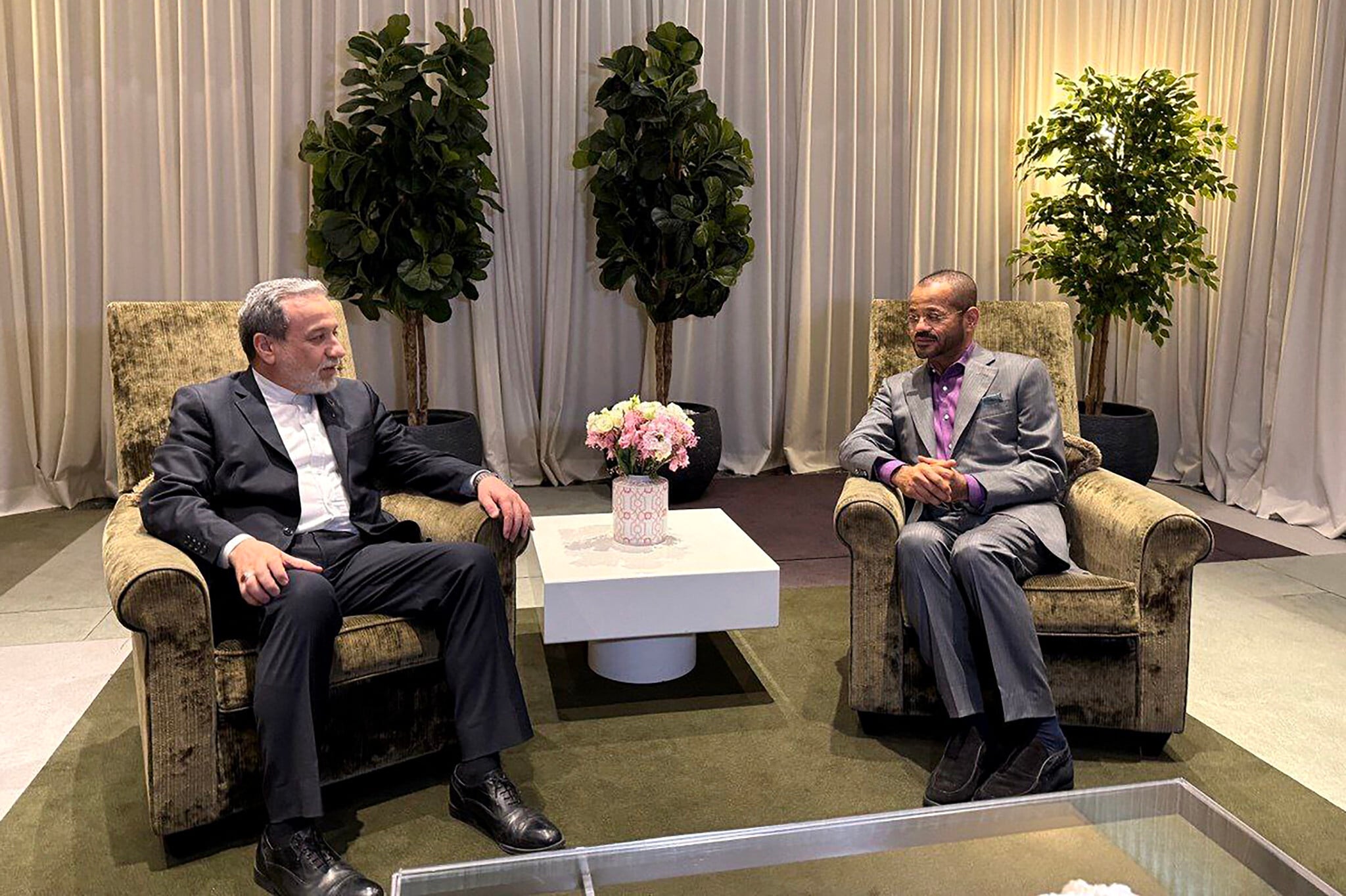
The negotiations on Thursday marked the third round of nuclear talks with the US in recent weeks.
The negotiators initially met for some three hours, then paused for a break. During the first session, the Iranians presented their draft proposal for a deal, according to Axios.
When the talks paused, Iranian Foreign Ministry Spokesman Esmaeil Baqaei told state TV that “both delegations needed to carry out consultations with their respective capitals.”
An Iranian official told Al Jazeera during the break that Tehran’s representatives had rejected the full dismantlement of its nuclear program, and the shipping away of all enriched uranium.
“Our proposal in Geneva is politically serious, technically creative, and includes everything required to reach an agreement immediately,” the Iranian official told the Qatari network.

Iran – which denies any desire to acquire a nuclear weapon, but has enriched uranium to levels far beyond what’s required for civilian use, and obstructed inspections of its nuclear sites – has publicly resisted demands that it stop enrichment entirely.
The Islamic Republic has also said it will not discuss anything other than its nuclear program and sanctions relief in exchange. The US, however, has repeatedly pressed for talks to also address Iran’s ballistic missile program and its support for regional terror proxies.
A senior Iranian official told Reuters on Thursday, prior to the talks, that the sides could reach a framework for a deal if Washington were to separate “nuclear and non-nuclear issues,” but added that remaining gaps need to be narrowed during the third round.
US Secretary of State Marco Rubio said on Wednesday that Iran’s refusal to discuss its ballistic missile program was a “big problem” that would have to be addressed eventually. The missiles were “designed solely to strike America” and pose a threat to regional stability, he said.
US sends even more planes to region
While the talks were held in Geneva, the US continued to send warplanes to the Middle East, amid its largest buildup of forces in the region since the eve of the 2003 invasion of Iraq – though this build-up, unlike that one, has not included significant numbers of ground troops.
A source close to Trump told ABC News that the US president was briefed Thursday on his potential military options against Iran by Adm. Brad Cooper, who commands US forces in the Middle East. A second source said Gen. Dan Caine, who as chairman of the Joint Chiefs of Staff is the American president’s top military adviser, also took part in the briefing.
US Vice President JD Vance, meanwhile, declared Thursday that there was “no chance” a strike on Iran would lead to protracted war in the region
“The idea that we’re going to be in a Middle Eastern war for years with no end in sight — there is no chance that will happen,” Vance told the Washington Post, essentially rejecting criticism that Washington could get stuck in a military quagmire in the volatile region should Trump order airstrikes.
“I think we all prefer the diplomatic option,” said Vance, a US Marine veteran who served in the Iraq war. “But it really depends on what the Iranians do and what they say.”
According to MS Now, Vance is among the US officials scheduled to meet Friday with Oman’s Badr Albusaidi, with the outlet describing the Omani diplomat’s visit to Washington as part of efforts to stave off war with Iran.
Fast-Jet & Tanker Movements Update 26/02/2026 #FreeIran
— "Operation LION & SUN" —Below is a full summary of fast-jet movements from the US to Europe so far today, and of Tankers from the US to the Middle East so far today:
——————————
Coronet East 044…— DefenceGeek ???????? (@DefenceGeek) February 26, 2026
In recent weeks, dozens of fighter jets — including F-35s, F-22s, F-15s, and F-16s — have been spotted heading to the Middle East by the Military Air Tracking Alliance, a team of about 30 open-source analysts that routinely analyzes military and government flight activity.
Six more American refueling tankers were scheduled to head for Israel’s Ben Gurion Airport on Thursday, according to analysts monitoring open-source flight tracking data. Five American KC-46 refueling planes were reportedly set to depart Portsmouth International Airport in New Hampshire, and a sixth tanker to depart from Seymour Johnson Air Force Base in North Carolina. All were expected to land at Ben Gurion Airport.
This week, several American refuelers and cargo planes were spotted at Ben Gurion, and 11 F-22 stealth fighter jets — along with accompanying logistical support planes and aircrews — also landed at Ovda Airbase in southern Israel.
The deployment of US fighter jets at Israeli airbases for operational activities — rather than for joint training with the IAF — is extremely rare.
Images published by Chinese intelligence firm MizarVison provided visual confirmation of the F-22s at the airbase, along with what appeared to be the deployment of an air defense system in the area, which MizarVision labeled a Patriot model.
MizarVision has released new satellite imagery confirming 11 U.S. Air Force F-22 Raptor stealth fighters deployed at Ovda Air Base in Israel.
The images also appear to show components of an air defense battery, likely associated with the MIM-104 Patriot missile defense system. https://t.co/qDtFyFRoRD pic.twitter.com/hXYjH8DUio
— Egypt's Intel Observer (@EGYOSINT) February 26, 2026
According to analysts monitoring open-source flight tracking data, another 12 F-22s arrived at Royal Air Force Lakenheath airbase in England on Wednesday.
The additional 12 F-22s, along with another one that had a technical issue and was meant to be delivered with the earlier batch, were all expected to later head to Israel and be deployed at the same IAF airbase, eventually bringing the total number of American stealth fighters stationed in Israel to 24.
The F-22, operated exclusively by the US Air Force, is the world’s most advanced air-superiority fighter, built for unmatched speed, maneuverability, and stealth in air-to-air combat.
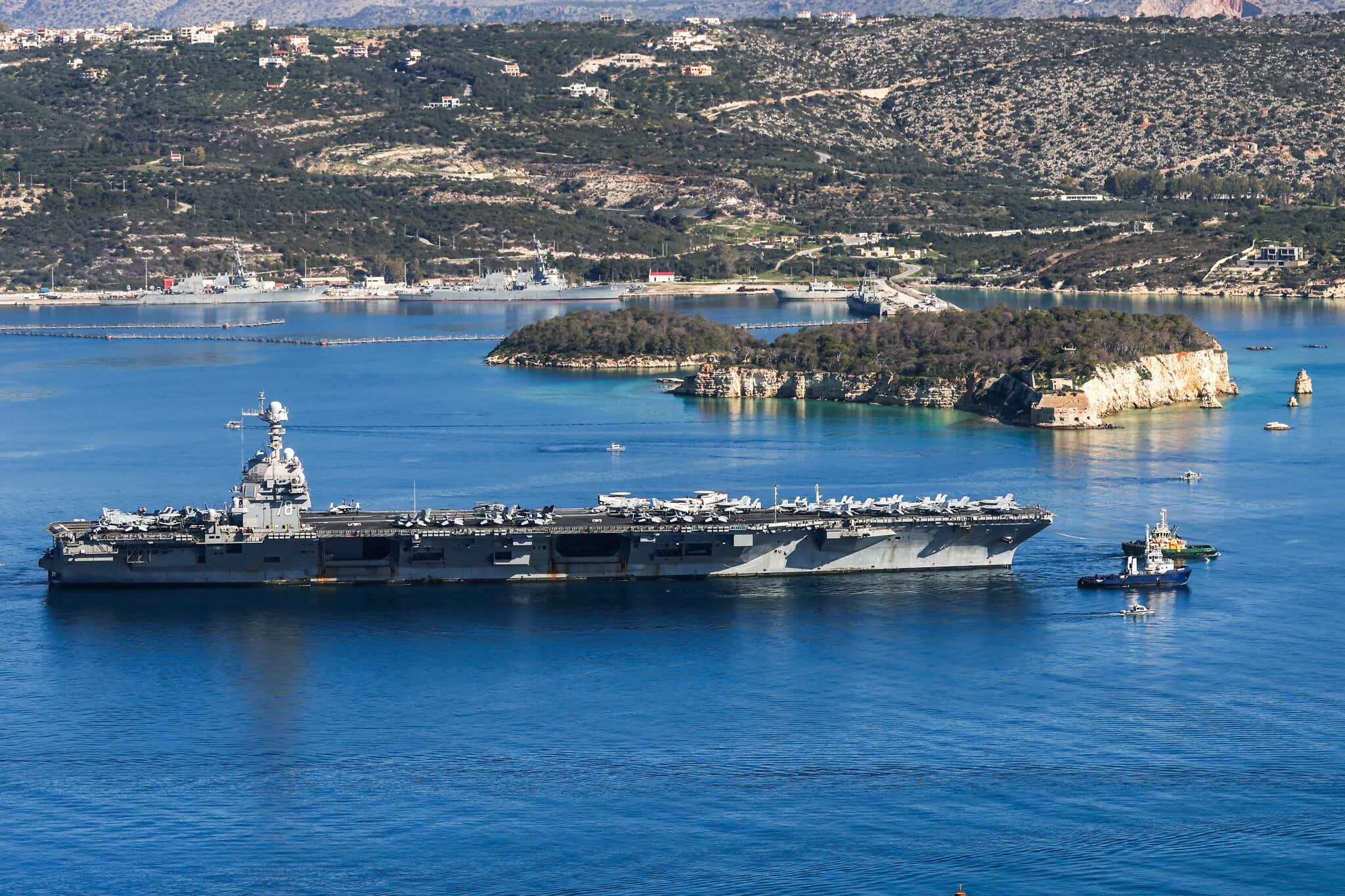
Additionally, the USS Gerald R. Ford, the world’s largest aircraft carrier, departed the Greek island of Crete, where it had made a supply stop on its way to the Middle East. Another US carrier – the USS Abraham Lincoln – is already in the region.
In January, amid mass anti-government protests in Iran, Trump threatened to intervene if the regime were to kill protesters. The regime killed thousands of protesters shortly thereafter. Since then, Trump has mostly shifted attention to the Islamic Republic’s nuclear program, warning that “bad things” will happen if Iran doesn’t agree to a deal on it.
Iran’s main nuclear sites were hit by US and Israeli strikes in June 2025, causing significant damage above ground. But it’s unclear whether enriched uranium was spirited away before they were hit or buried underground. Iran says it has been unable to enrich since then, but it has also barred inspections.






The Times of Israel Community.