

UTJ said upping threats to ditch coalition over failure to pass Haredi draft exemptions
Reports say party will weigh quitting or moving to dissolve Knesset if law isn’t passed after Shavuot; Shas reportedly trying to keep party in government
 Add ToI as a Preferred Source on Google
The ultra-Orthodox United Torah Judaism party is upping its threats to quit the government over the failure to pass a law exempting yeshiva students from military service, according to Hebrew media reports Wednesday.
Haaretz and Walla reported that party members and rabbis behind them, led by Housing and Construction Minister Yitzhak Goldknopf, will debate either withdrawing from the government or initiating proceedings to dissolve the Knesset and go to elections should the law not be passed after the Shavuot holiday, which falls on June 1-2.
A source in the party told Haaretz that a leader of the Agudat Israel faction representing Hasidic communities informed members of the non-Hasidic Degel Hatorah faction that they have decided to leave the government. The latter faction has yet to decide on its move, the source added.
Meanwhile, fellow ultra-Orthodox party Shas was so far striking a softer tone and was trying to appeal to UTJ to remain in the government, the source told Haaretz.
According to Walla, senior coalition officials believe it unlikely that Goldknopf will actually make good on his threats and pull his party from the coalition and estimate that, rather than quitting outright, the party will instead increase the scope of its protests from within the government.
In recent months, the party has boycotted Knesset legislation, and earlier this year, Goldknopf symbolically resigned from his secondary ministerial position as a minister in the Prime Minister’s Office over the issue.
Netanyahu’s government has been on rocky ground due to its failure to reach an agreement on legislation to settle the matter of military service for yeshiva students.
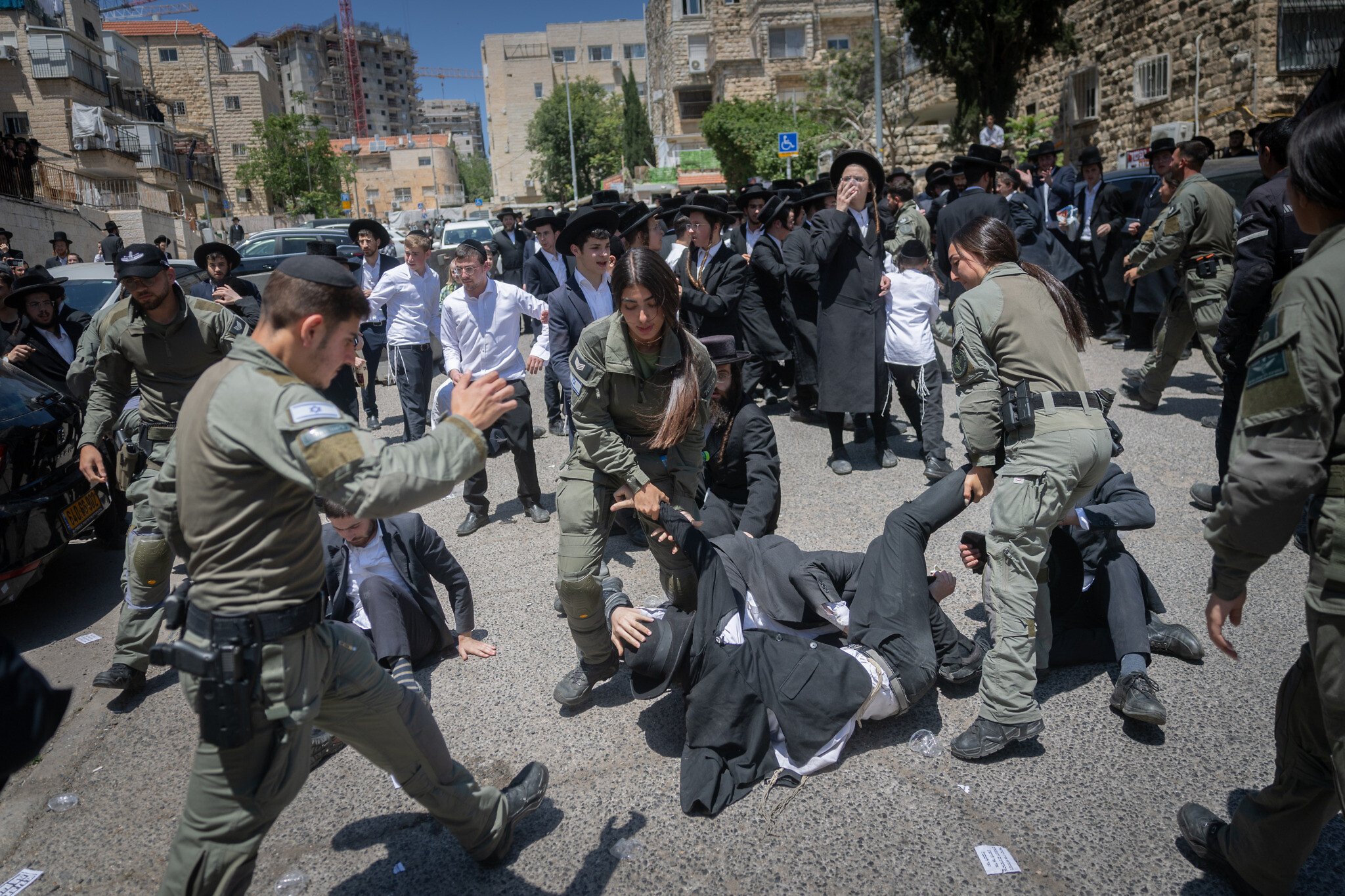
Following a High Court ruling last year that there was no longer any legal basis to maintain longstanding exemptions of yeshiva students, Haredi parties have demanded new legislation to enable the practice to continue. But 20 months of war in Gaza and on other fronts have put a huge strain on the military and made such a move wildly unpopular. Many non-Haredi members of the coalition have said they will not agree to a bill that enables blanket exemptions.
Earlier this month, UTJ lawmaker Yaakov Asher warned that if the Knesset did not pass draft exemption legislation by the end of the summer session, on July 27, his party would no longer be able to remain in the government.
Haredi lawmakers also threatened to bring down the coalition after the military said earlier this month that it had detained people who ignored enlistment orders following the latest round of call-ups.
However, it did not appear that any arrests were eventually made, prompting Opposition Leader Yair Lapid to allege that the IDF had “refrained from enforcing the conscription orders issued to young Haredi men” due to “personal and illegal involvement of political figures who interfered in the work of the military police.”

Under Likud MK Yuli Edelstein, the Knesset Foreign Affairs and Defense Committee is currently revising a government-backed bill to regulate Haredi enlistment.
He has pledged that any law on the issue of Haredi service coming out of his committee would contain individual sanctions against draft dodgers and “significantly increase the IDF’s conscription base,” while rejecting suggestions to significantly limit the rate and scale of Haredim enlistment.
Such legislation will likely be unacceptable to Haredi lawmakers.
Approximately 80,000 Haredi men between the ages of 18 and 24 are eligible for military service, but just over 1,800 Haredim have enlisted since last summer, far fewer than the military’s goal of 4,800.
The government has also done little, if anything, to combat those actively encouraging yeshiva students to dodge the draft.
Since the High Court of Justice’s ruling in June 2024 ending the exemption of Haredim from military service, multiple initiatives affiliated with various Haredi factions have sprung up to guide young men through their new post-exemption reality and encourage them to disregard IDF enlistment orders.
The police and the attorney general appear to have failed to crack down on such groups, despite demands for investigation by advocacy groups and lawmakers. Under the law, a person inciting others to evade service during wartime can face a prison term of up to 15 years.
Emanuel Fabian and Sam Sokol contributed to this report.








The Times of Israel Community.