

Vote local, affect global: 8 things to know for November 6
Midterm elections are being seen as a referendum on Trump and a blueprint for many around the world on how to view America over the next two years and possibly beyond
 Add ToI as a Preferred Source on Google
Joshua Davidovich is The Times of Israel's Deputy Editor
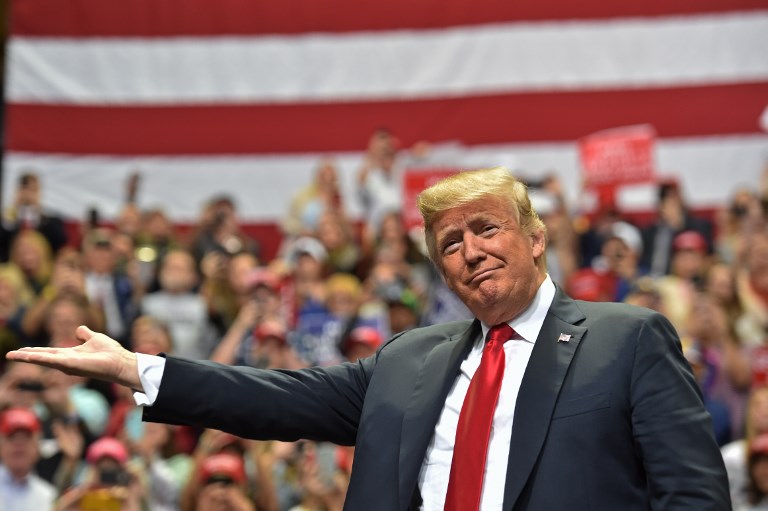
1. What the elections mean for everybody else: Americans are heading to the polls in earnest, and most surveys are predicting a Democratic House of Representatives and Republican Senate to emerge from the election. Those are just predictions, though, and no matter what happens, abroad the election is being looked at far beyond what form of legislative deadlock will ensue.
- With sanctions on Iran taking effect Monday and Tehran (mildly) fuming, Meir Javedanfar, who lectures on Iran at the Interdisciplinary Center Herzliya.
tells ToI’s Raphael Ahren that Iranians are closely watching the results come in for an idea of whether they will be able to outlast Trump: “If the Republicans do badly, the Iranians will be given hope that they can outlast Trump. But if the Republicans do well, or if it’s a close call between Republicans and Democrats, then the Iranians will worry.” - In the Financial Times, Gideon Rachman counts Israel (at least official Israel) as one of the handful of countries cheering for Trump to stay powerful, as the rest of the world counts down until he can possibly be shown the door.
- “If the Democrats prosper on Tuesday night, then the US president’s foreign critics will cling on to the hope that the Trump years may yet turn out to be an aberration — and that the old America is waiting in the wings to return,” he writes. “A big political setback for the president would weaken the sense of momentum behind the Trump agenda.”
2. Why Israelis should care: In Yedioth Ahronoth, Nahum Barnea says that Israel does not have a horse in the race, but Israelis should still care.
- “Israel has no role in these elections, even among Jewish voters … having said that, the results could have a large impact on the future. Israel is more connected to the Republican Party than ever before. It’s further from the Democratic Party than it’s ever been.”
- Haaretz’s Allison Kaplan-Sommer puts it in even starker terms: “For Israel and American Jews, Tuesday’s midterms are also an unprecedented event. Never before in U.S. history has the perceived fate and well-being of the Jewish people been such a partisan issue – one that clearly divides between those who fear most for Israel’s security, and those who believe the current president and his supporters present a clear and present danger to Jewish America.”
3. A dispatch from Nacirema: Israel may or may not have a role, but Israel Hayom editor Boaz Bismuth certainly thinks he does, slapping a picture of himself in front of election yard signs near Miami on page two of the paper like he’s Margaret Mead exposing the strange and wondrous lives of those voting Floridians.
“If Ohio is a bellwether for voting trends, then Florida is America 2.0: It seems all the battles in Washington clone themselves in this state, which may be geographically in the south, but from a cultural-economic-age point of view is split just like the whole America. Unlike Ohio, a Midwest state, with its wide open spaces and relative calm, Florida has all the energy of a national presidential race,” he writes.
Israel Hayom anthropologist Boaz Bismuth sends back this picture as he ventures deep into the wilds of Broward County to report to Israelis on the strange ways of Sowth Floor-Idians and their magical Vote'Ting Booths and Ballotte Boxes. pic.twitter.com/QZdGD2ecES
— Joshua Davidovich (@Josh_Davidovich) November 6, 2018
4. But it’s not Israel, or even Boaz Bismuth, that is at the center of the election. It’s Trump, which is how the results will be viewed, with an eye toward 2020.
- In Haaretz, Chemi Shalev notes that a loss for Republicans will be a setback, but for Democrats will be a disaster.
- “If Democrats don’t take the House, at the very least, they’ll be utterly devastated … they will be consumed by a despair that could have a significant negative impact on their chances of recovering the White House in 2020.” he writes. “The Democratic resentment of Trump is so palpable, and their opinion of him so dismal that a sweeping GOP triumph on Tuesday is simply unthinkable. Many of them will feel that America has repudiated them and their values.”
5. Occupation mockupation: Lost amid the hubbub are reports on some explosive statements made by Prime Minister Benjamin Netanyahu that either reveal his true worldview or are a cynical play for right-wing votes ahead of an expected early election.
- “Power is the most important [component] of foreign policy. ‘Occupation’ is baloney. There were huge countries that have occupied and transferred populations and no one talks about them,” Netanyahu said at a closed door meeting of his Knesset faction, according to Army Radio.
- According Yedioth, Netanyahu also appeared to reject the notion that Israeli territorial concessions could bring peace.
- “Contrary to the notion that concessions will bring about agreements with the Arabs, concessions will only bring about slight and short-term changes and nothing more,” Netanyahu said, apparently referring to ceding territory to the Palestinians. “What we need to do is advance [talks] on shared interests with Israel based on technological power.”
- The comments come as Netanyahu and other ministers have made high-profile visits to the Gulf in recent days.
- But in Haaretz the Israel Policy Forum’s Evan Gottesman notes that Israel’s so-called flourishing ties are but baby steps and can’t replace an actual peace deal with the Palestinians in the eyes of much of the world.
- “A common enemy can produce some meetings and covert collaboration, but only a final status agreement with the Palestinians can inspire normalization. … Despite the real gains made by Israel’s government over the weekend and in previous years, Israel’s position vis-a-vis the Arab world is anything but normal. Playing a country’s national anthem at an international sporting event signals the most basic level of decorum, opening a trade office is pretty standard fare, and leaders exchange visits regularly,” he writes. “That right-wing Israeli leaders and their supporters now fawn over the Gulf states for undertaking relatively simple steps only underscores the enormous room for growth that still remains.”
6. You’re not disabled, I am: What did make waves in the Knesset Monday was Likud MK Oren Hazan calling Meretz MK Ilan Gilon “half a man,” which was immediately taken to be a reference to the fact that Gilon was disabled.
- The comment drew immediate fire, though Hazan claimed that he was only referring to Gilon’s ideology, and not his personal stature.
- On Haaretz’s blog site, Irina Melamed writes that Hazan “isn’t fit to be a doormat under Gilon’s wheelchair.”
- As a colleague noted after Hazan made the comment, “if it had been the first time…” Alas, Hazan is well known for, among other bad boy exploits, having been punished by the Knesset Ethics Committee for mocking disabled MK Karine Elharrar.
- Asked about it on Radio 103 Tuesday morning, Hazan tells his interviewer, “I myself am handicapped,” without explaining.
7. Climbing the ladder: MK Elazar Stern is also under fire, though not as much, for an off-color quip about Culture Minister Miri Regev during the same Knesset session — which was to debate a law she is championing that will place restrictions on state funding for art seen as subversive or not pro-Israel.
- “I don’t want to talk here about how she rose in the ranks of the army. It’s not worthwhile,” he said about the former IDF spokesperson, who still signs letters with her brigadier general rank (according to one sent to a Spanish official about BDS on Monday.)
- As Regev herself might say, “cut de bullshit.”
8. Jesus doesn’t live here anymore: Jesus is back in the news, or at least the places he has been. Reuters looks at the Sea of Galilee’s dropping water levels, quipping that it no longer requires a miracle to walk on water there, and reporting on a plan to desalinate Mediterranean water and pipe it to the glorified lake.
- “We are doing this in order to save our nature, to fight global warming, to prevent the effect, the devastating effect, of global warming on the Sea of Galilee, and also to create a very significant water storage for the State of Israel,” a soggy-footed Energy Minister Yuval Steinitz tells reporter Dan Williams.
On the Sea of Galilee with Israeli Energy Minister @Steinitz_Yuval, who is heading up an ambitious plan to restore the drought-hit lake by piping in desalinated Mediterranean water. pic.twitter.com/Ic4pW0Pm98
— Dan Williams (@DanWilliams) November 5, 2018
- Next to Jesus’ hometown of Nazareth, meanwhile, the Jewish-majority town of Nazareth Illit (“Upper Nazareth”) is hunting for a new name, sick of being “confused” with its larger, more famous and more Arab neighbor.
- “It’s time to give Nazareth Illit an independent identity, and put an end to the chronic confusion between it and its neighbor Nazareth,” Mayor Ronen Plot says.




The Times of Israel Community.