

What we know, and what we don’t, about Trump’s virus diagnosis
Questions surround timing of US president’s positive test and his condition, with his ride outside the hospital appearing hard to reconcile with his receiving COVID-19 treatment
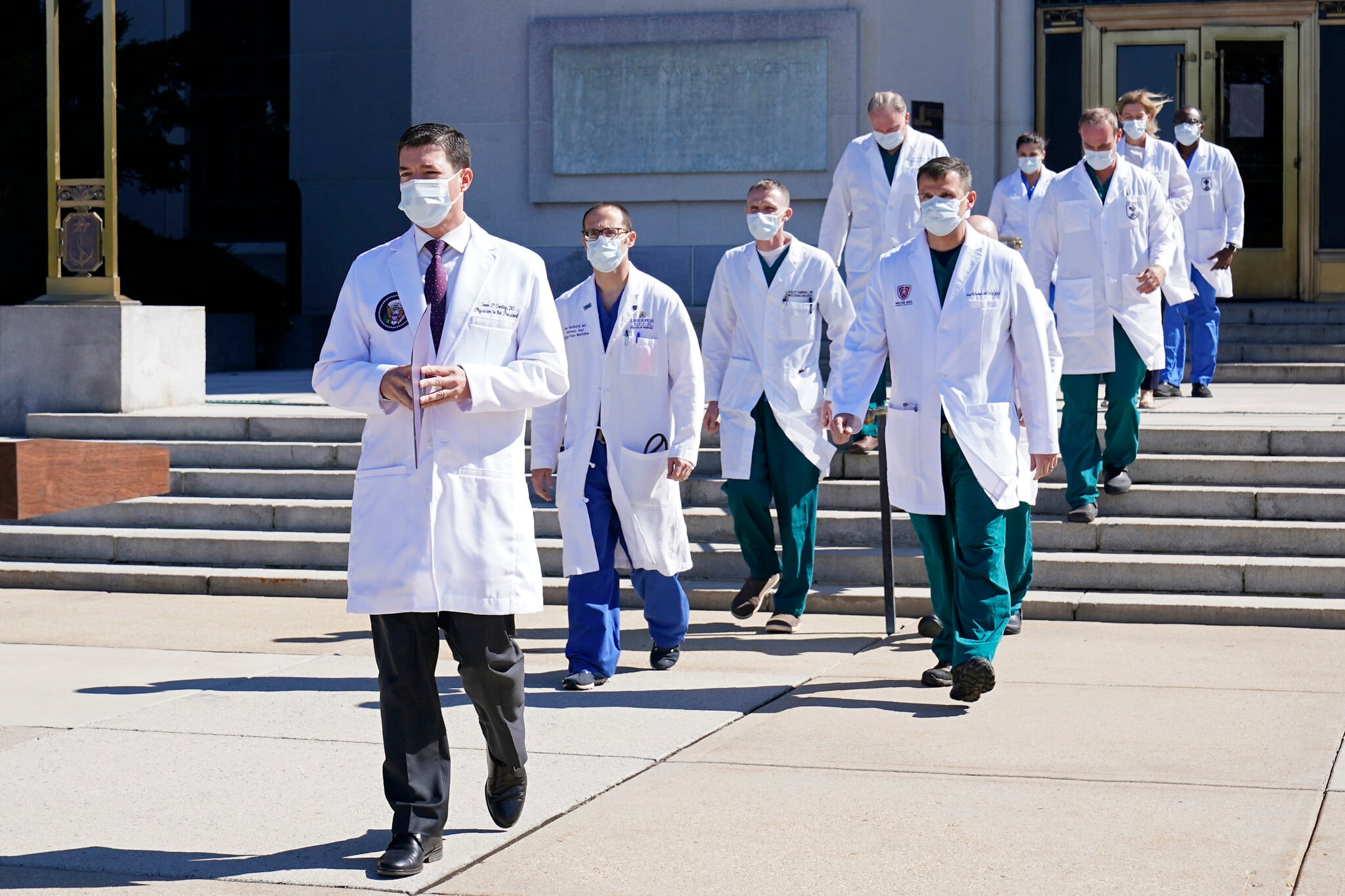
A White House physician’s comments on Sunday about the health of US President Donald Trump amid his coronavirus diagnosis added a new layer of confusion even as the doctor sought to clarify contradictory statements from the day before. And a brief motorcade ride outside the hospital to the cheers of supporters appeared at odds with a patient receiving COVID-19 treatments.
What we know and what we don’t know:
What we know about Trump’s medical condition
Dr. Sean Conley, the president’s physician, said Trump was given a steroid dexamethasone after his blood oxygen level had dropped suddenly twice in recent days, but he “has continued to improve” since then. Conley said Trump could be discharged from Walter Reed National Military Medical Center as early as Monday.
Conley said Trump had a “high fever” and a blood oxygen level below 94% on Friday and during “another episode” on Saturday.

Conley was evasive when asked whether Trump’s blood oxygen level had dropped below 90%: “We don’t have any recordings here on that.” The level currently stands at 98%, Trump’s medical team said.
Blood oxygen saturation is a key health marker for COVID-19 patients. A normal reading is between 95 and 100. A drop below 90 is concerning.
Trump’s team said Sunday that Trump received oxygen at the White House on Friday. They were not clear on whether he received any Saturday.
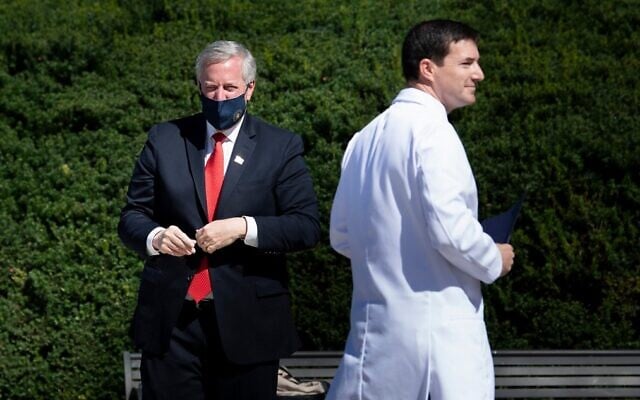
The additional details emerged after White House chief of staff Mark Meadows on Saturday said some of Trump’s vital signs were “very concerning” Friday. That disclosure contradicted a rosy assessment Trump’s doctors had initially provided.
Along with a steroid, Trump has been treated with two experimental drugs, doctors said.
On Friday, Trump was given a single dose of a drug that Regeneron Pharmaceuticals Inc. is testing to supply antibodies to help his immune system fight the virus. Trump also has taken two doses of a five-day course of remdesivir, a Gilead Sciences drug currently used for moderately and severely ill patients.
Trump’s team said Sunday that Trump is “up and around” and doing well — apparently so well that the president took an impromptu ride in a motorcade Sunday afternoon to wave to supporters outside the hospital. Officials said if things continue to go well, Trump will be able to return to the White House on Monday to continue his treatment.
What we don’t know about Trump’s medical condition
Trump’s medical team continued to dodge many questions Sunday, such as the specific timing of the president’s dip in oxygen and the impact of the disease on his lungs.
Asked repeatedly about what lung scan tests found and whether there have been any signs of pneumonia or other damage, Conley responded: “We’re tracking all of that. There’s some expected findings but nothing of any major clinical concern.”
Conley also hasn’t specified where Trump is in the “disease course” of COVID-19. Days seven to 10 typically are a time of higher concern, he said.
As far as the drive-by greeting to supporters, CDC guidelines say that, in general, moving a patient with COVID-19 outside his room should be limited to “medically essential purposes.” The outing suggests to the common observer Trump’s condition is not perilous, but medical authorities note that talk of Trump leaving the hospital for home after only a few days doesn’t square with information about his treatments.
What we know about when Trump fell ill
Trump started showing symptoms by Thursday, a full day before the White House announced what were initially called “mild symptoms.”

Conley said Trump showed some common signs of COVID-19 on Thursday — a mild cough, stuffy nose and fatigue. The president tested positive that evening, the doctor said.
The timeline matters as an indication of how transparent Trump, his staffers and doctors are being about the president’s health and whether Trump should have known he may have been spreading the virus as he mingled with campaign donors, staffers and others Thursday.
What we don’t know about when Trump fell ill
Conley declined to say when Trump had last been tested before Thursday’s test confirmed COVID-19.
What we know about how Trump was infected
It’s not clear, but attention is focusing on a White House event September 26 introducing Trump’s Supreme Court nominee. Trump gathered more than 150 people in the Rose Garden, where they mingled, hugged and shook hands — overwhelmingly without masks. Photos also show several indoor receptions, where Trump’s nominee, Judge Amy Coney Barrett, her family, senators and others gathered in the close quarters in the White House.
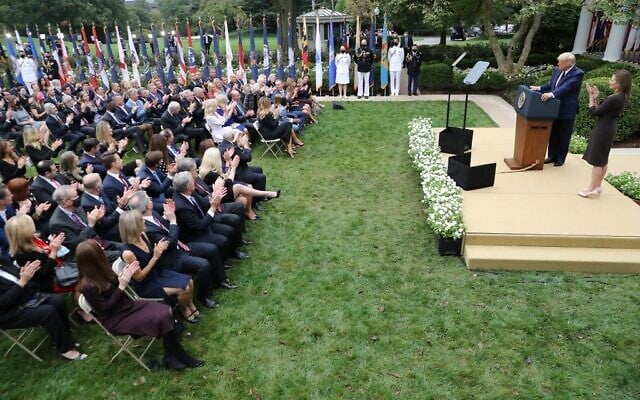
Among those who attended who have now tested positive: former New Jersey Gov. Chris Christie, White House counselor Kellyanne Conway, the president of the University of Notre Dame and at least two Republican lawmakers — Utah Sen. Mike Lee and North Carolina Sen. Thom Tillis.
What we don’t know about how Trump was infected
There’s no way to know for sure if the Rose Garden event was where Trump — who typically shuns a mask and has kept holding big public gatherings during the pandemic — was exposed. The president had a full week of official and campaign events before his hospitalization Friday.
A third Republican senator, Ron Johnson of Wisconsin, announced his positive test Saturday, and he had not attended Barrett’s nomination kickoff.
The administration says a White House medical team is tracing contacts.










The Times of Israel Community.