

Why Israel is having a moment in Latin America — and what might make it last
Jerusalem is being embraced by right-wing Latino leaders eager to follow the White House’s example, cater to evangelical voters and benefit from Israeli technology. The challenge is to ensure the new warmth is sustained

 Add ToI as a Preferred Source on Google
Since shortly after October 7, 2023, the overarching story of Israel’s international relations has included criticism, boycotts, and isolation. Countries once thought of as allies have recalled ambassadors, canceled arms deals, accused Israel of genocide in Gaza and more.
But lately, Latin America feels like a bizarro world. In country after country, governments are restoring diplomatic relations, having friendly meetings with Foreign Minister Gideon Sa’ar, praising Israel and increasing cooperation. Argentine President Javier Milei has traveled to Israel three times and has mused about converting to Judaism. Earlier this month, Colombia became the second country in the world to recognize Israel’s claim to the Golan Heights.
The turn toward Israel is especially notable because not long ago, some of those same Latin American countries were among Israel’s harshest critics. Bolivia cut ties with Israel just weeks after the October 7 attack, and Colombia followed suit six months later. Venezuela, under leaders Hugo Chavez and Nicolas Maduro, was known for its ties with Iran and its opposition to Israel.
But in December 2025, Bolivia renewed those relations with a signing ceremony in Washington, DC, and canceled the visa requirement for Israeli tourists. Sa’ar just attended the inauguration of Colombia’s new president and met his cabinet members. Venezuela and Israel renewed diplomatic ties for the first time since 2009. The same story is unfolding in Chile, Honduras, and elsewhere.
Israel has responded enthusiastically, celebrating the Latino pro-Israel moment and designating 2026 “the year of Latin America.”
Why is this happening now? For Israel, it is an eager embrace of the rare region that is becoming friendlier to Jerusalem. And in Latin America, it is a direct outcome of a wave of right-wing political victories, replacing leftist governments. The global logic of political polarization — a force that has long coursed through Latin America — has dictated that, as left-wing governments have been anti-Israel, their right-wing opponents have taken the opposite approach.
But it’s not that simple. A large part of why these governments have explicitly recommitted to relations with Israel, experts say, is a desire to make nice with their large, powerful neighbor to the north — the Trump White House. Latin America also has a growing number of evangelical Christians, many of whom imbue supporting Israel with theological significance. And in a couple of cases, Israel has offered aid when natural disasters hit, as with the earthquakes in Venezuela and Colombia.
“It’s the first time in a generation that Israel has an entire bloc of friends in one geography,” said Leah Soibel, founder and CEO of Fuente Latina, a pro-Israel Spanish-language media group. “It’s very historic, and incredibly important that it not be an opportunity wasted, because we have so many doors closing elsewhere with regard to Israel.”
She added, “In Latin America, we have doors opening.”

But the factors that have been powering the pro-Israel turn are the same ones that mean it might not last. If the left replaces the right in the next set of Latin American elections, attitudes toward Israel could flip again. The region’s affection for Israel could also sour if a less pro-Israel president is elected in the US just two years from now. And, as in countries across the world, public opinion polls show that, following the war in Gaza, Latin American leaders’ love for Israel is not shared by their constituents.
To avoid a seesaw of relations every time a new government takes power, said Dina Siegel Vann, director of the American Jewish Committee’s Belfer Institute for Latino and Latin American Affairs, Israel needs to increase its investments and partnerships in the region’s economy. She said Israel also must demonstrate the ways its technology and industry can benefit not just Latin American leaders but their societies, in everything from agriculture to disaster relief.
“Israel is very grateful for the support they have received from many countries in the region. But what are [Israelis] going to do beyond giving them that love?” she said. “They want to make sure that the populations can really benefit from Israel’s expertise and contributions in areas where Latin American societies are lacking.”
She added, “I think that’s the only way, really, of institutionalizing or changing the perception [so] that it’s not a perception only of a bellicose Israel.”
A rising foreign policy priority
A number of Latin American nations voted in the UN in 1947 for the establishment of a Jewish state, and Israel has long done economic development work in the region. It is a popular destination for Israelis taking post-army trips. But it has typically been low on Israel’s diplomatic priority list.

Unlike Europe, it is not a geographic neighbor full of wealthy countries. Unlike the Arab world, it does not share borders with Israel and has little impact on Israeli geopolitics and security. Both Europe and the Arab world, in addition, are rife with Jewish roots, as well as cultural, culinary, and linguistic connections. Unlike India, China, and the rest of the Pacific Rim, Latin America is not full of large countries with rising economies.
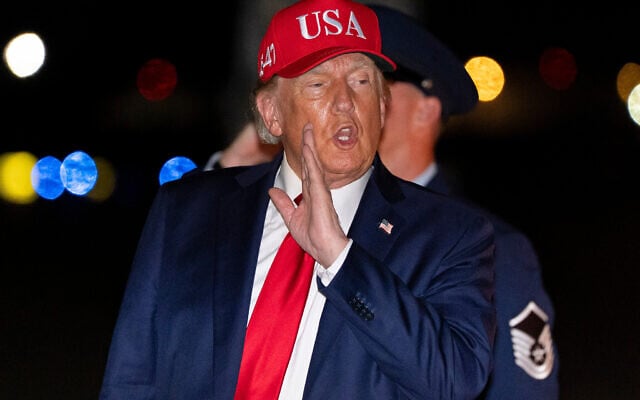
And Latin America’s ties with Israel do not hold a candle to those of the United States. But the Trump administration’s close ties with Israel, Siegel Vann said, have pushed the US president’s ideological allies in Latino countries to adopt his attitude on the subject — particularly at a time when Trump is heavily involved in Latin America, pushing a war on drugs, and exerting control over Venezuela’s government.
“The fact that you have an American government that is paying a lot of attention to Latin America has also helped with this new movement to the right,” said Siegel Vann. “Some of them are following very much in the footsteps of the United States. And for this government, for the Trump administration, support for Israel is very important.”
Israel’s relationship with Latin America has also been reflected in the arms trade. The region is not a prime destination for Israeli weapons, accounting for just two percent of exports in 2025, as opposed to Europe’s 36%, according to Defense Ministry figures. But as part of his decision to sever ties with Israel, former Colombian president Gustavo Petro shut down a long-running arms partnership, beginning to manufacture weapons domestically in place of those sourced from Israel. His hawkish successor, by contrast, is eager to expand cooperation with Israel.
Some of the shift has also been powered by the growth of evangelical Christianity in the region, which now accounts for close to a quarter of the region’s population, according to one estimate.
“Faith and God play a very important role in these Latin American countries, and they very much look to Israel because of it being Tierra Santa [the Holy Land] and being a guiding light,” Soibel said. If the ceasefires in the region last and tourism ticks up again, she said, “I’m certain that we’re going to see a huge influx of tourism to Tierra Santa, to Israel, from many, many Latin American countries.”

A recent poll by the Pew Research Center showed that the global wave of unfavorability toward Israel has also swept over Latin America, with most respondents in Chile, Mexico, Colombia, Argentina, and Brazil — and half in Peru — reporting a negative opinion of Israel, even though a few of those countries have pro-Israel leaders.
But Siegel Vann and Soibel both said that the low numbers should not be mistaken for a fixation on Israel. Unlike in the United States and Europe, where Israel has been a prominent topic of public discourse and an issue in elections, they said, Israel does not often feature in Latin America’s public debate.
“Israel is not an issue in Latin America, mostly. They don’t care,” Siegel Vann said. “Although of course you have the very leftist activists or whatever, or the evangelicals or, you know, those people who are very committed — but to a large, large, large extent, they don’t care about Israel.”
And they said Israel could improve those perceptions by leveraging the diplomatic warming to deepen its ties not just with Latin America’s leaders, but also with its people. Israeli agritech expertise could improve Latin America’s economies, while its experience dealing with disasters is coming to bear in Colombia and Venezuela.
In June, Finance Minister Bezalel Smotrich signed a letter of intent with the Inter-American Development Bank to create a fund to strengthen those ties, part of the “Isaac Accords” spearheaded by Milei to deepen Israeli-Latino relations. The fund, the Finance Ministry said, would “facilitate the export of proven Israeli solutions to meet regional development challenges while paving the way for Israeli companies to expand into emerging markets.”
Pitfalls ahead
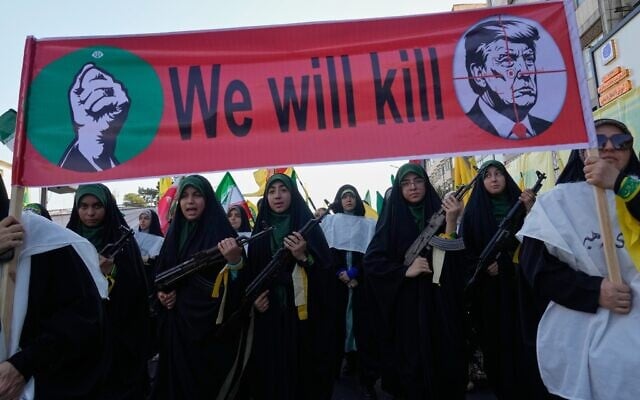
Israel isn’t the only one paying attention to the region’s changing attitudes. Iran operates a news channel, HispanTV, that caters to Latino audiences, as does Russia’s RT network, which is often critical of Israel. As in the United States and elsewhere, Latinos increasingly get their news from social media, where Soibel said anti-Israel sources are penetrating. Much of that, she said, is a byproduct of those countries’ anti-US attitudes.
“A lot of what gets kind of caught, like the baby in the bathwater is antisemitic and anti-Israel content,” she said. “Latin America is the United States’ backyard, and there’s a reason why Iran and others have been investing in it so long militarily, financially, economically. And now that Israel has this huge bloc of friends, you can absolutely expect to see them double down.”
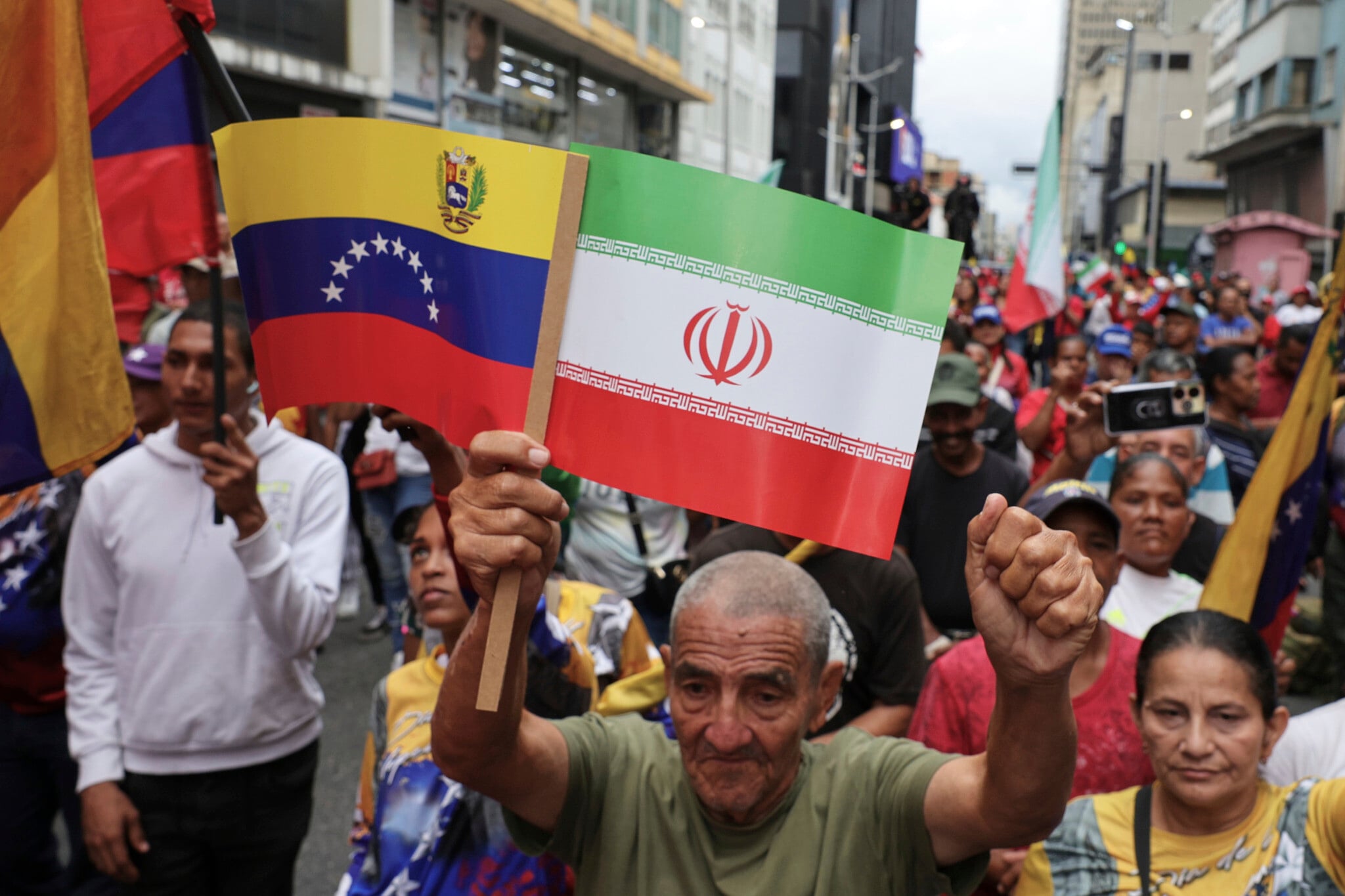
In addition, Chile has the largest Palestinian diaspora outside of the Middle East, and Honduras has a large Palestinian population as well, though Siegel Vann noted that has not always translated to an opposition to Israel. Both countries are now led by administrations friendly to Israel, even though in Honduras’s case, President Nasry Asfura is of Palestinian descent. So is El Salvador’s pro-Israel president, Nayib Bukele.
Another pitfall for Israel is that some of the administrations now warming to them, particularly Bukele’s government, have poor human rights records. Siegel Vann said Israel must be careful to welcome these countries’ friendship without endorsing their policies more generally.
“The best policy for Israel is to be always non-partisan,” she said. “Countries that are friendly, whether they be from the right or the left, I think that Israel should work with them. That doesn’t mean that they have to support or to endorse every policy that those governments are undertaking.”
In some cases, Israel’s government has gone well beyond friendly diplomacy, particularly when it comes to Milei, who has received fulsome praise from Israeli leaders and whose friendship spurred Prime Minister Benjamin Netanyahu to say he was supporting Argentina in the World Cup final.
Milei also addressed the Knesset, lit a ceremonial torch at Israel’s Independence Day ceremony this year (and sang on stage), and was last year’s laureate of the prize known as the “Jewish Nobel,” though he is not Jewish.
If the blossoming of Israeli-Latino relations remains tied to those leaders’ friendship — or to the polarizing Trump presidency — experts say it could flip yet again. Soibel said she did not want to “tempt fate.”
“I’m definitely optimistic,” she said. “But I also think that we have to be cautiously optimistic because I do know the potential and the capabilities of the other, the extremist side.
She added, “We do have friends. We do have a lot of public opinion and support, but I can absolutely tell you that the other sides are going to be doing their utmost to make sure that they can sway opinion.”








The Times of Israel Community.