

Kerry: No link between Iran talks, other Mideast issues
In wake of reported Obama missive to Khamenei, top US diplomat says nuclear talks between P5+1 and Tehran ‘are on their own’
 Add ToI as a Preferred Source on Google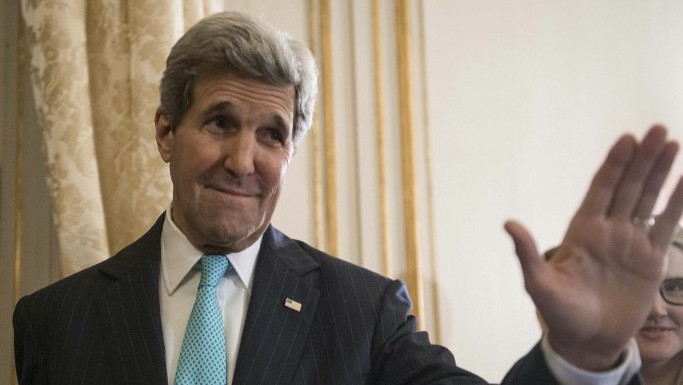
US Secretary of State John Kerry said Saturday that there was no link between efforts to reach a nuclear deal with Iran and other issues facing the Middle East.
“No conversation, no agreement, no exchange, nothing, has created any kind of deal or agreement with respect to any of the events that are at stake in the Middle East,” Kerry told reporters in Beijing, according to Reuters.
“There is no linkage whatsoever of the nuclear discussions with any other issue, and I want to make that absolutely clear. The nuclear negotiations are on their own,” he said.
Kerry spoke between meetings at the Asia-Pacific Economic Cooperation summit attended by top leaders and ministers from November 7-11.
The US secretary of state’s remarks came on the heels of a report in the Wall Street Journal Thursday that US President Barack Obama sent a secret letter to Iranian Supreme Leader Ayatollah Ali Khamenei last month offering to work together against the Islamic State terror group in exchange for a deal on Tehran’s nuclear program.
The letter was sent without informing Israel or other Middle Eastern allies, according to unnamed sources familiar with the correspondence cited by the paper.
In the missive, Obama describes a shared interest in working against the Islamic State group, which has seized wide swaths of Iraq and Syria, drawing a military response from a US-led coalition.
However, he said that joint operations against the group, which Iran views as a threat, could only take place after Tehran and six world powers came to a final agreement on curbing the country’s nuclear program.
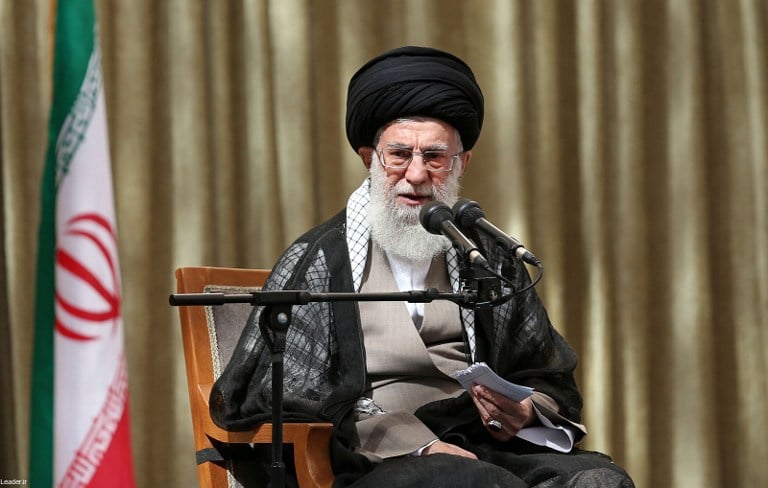
In September, Khamenei claimed he had rejected a private approach from the United States suggesting cooperation on the battlefield.
US officials have not confirmed or denied making a request in private, but Kerry said at the time that there was a role for Iran in the battle against the Islamic State.
On Friday, the UN’s nuclear agency said that its attempts to probe allegations that Tehran worked on nuclear weapons were deadlocked — a finding that all but rules out hopes of full nuclear deal between six world powers and Iran by the November 24 target date.
The report came hours before after an Iranian opposition group claimed to have new information showing Iran is still working toward nuclear weapons.
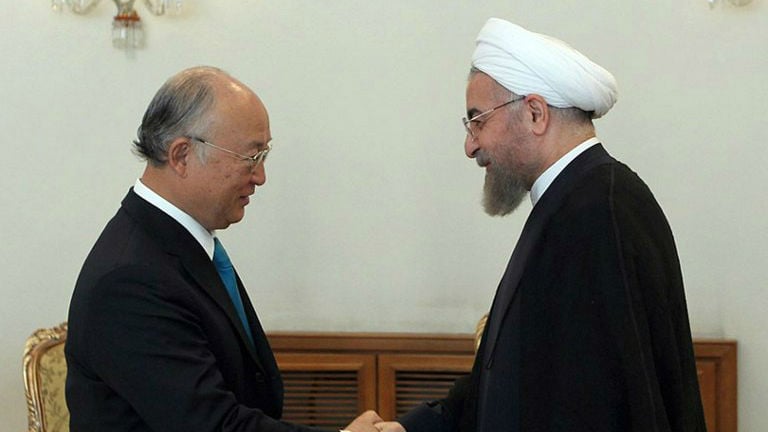
Iran agreed in February to work with the International Atomic Energy Agency, in what was seen as a test of Tehran’s professed new willingness to reduce tensions over its nuclear program.
Since then, the agency has sought information on alleged experiments with detonators that can be used to set off nuclear explosions; work on high-explosive charges used in nuclear blasts, and alleged studies on calculating nuclear explosive yields.
Iran denies wanting — or ever working on — nuclear arms. Since February, it has provided information only on the detonators, insisting that they were used for oil exploration or non-nuclear military purposes. The agency says interconnected information suggests that they were being tested for nuclear weapons use.
“Iran has not provided any explanations that enable the agency to clarify the outstanding practical measures,” said the confidential report from the IAEA obtained by The Associated Press.
The finding is significant in recording where the investigation stands for the US and five other world powers negotiating with Iran.
The US and its allies say no final agreement will be reached until the IAEA says it’s satisfied with its inquiry. With the IAEA investigation stalled, the agency has little hope of reaching final conclusions by the target date.
Diplomats have told The Associated Press that — if agreement is reached constraining Iran’s uranium enrichment program and other activities that could be turned to making nuclear arms — Washington was willing to extend the IAEA investigation.
But they say the US would set a time limit on any such extension and keep some sanctions on Tehran in place until the IAEA delivers its ruling. That would satisfy neither hardliners in Iran who want a full lifting of sanctions nor US congressional critics, particularly after this week’s Republican sweep of Congress.







The Times of Israel Community.