

Likud distances itself from PM immunity proposal
Officials say MK’s suggestion for legislation blocking police probes on ‘minor’ infractions was not discussed with Netanyahu
 Add ToI as a Preferred Source on Google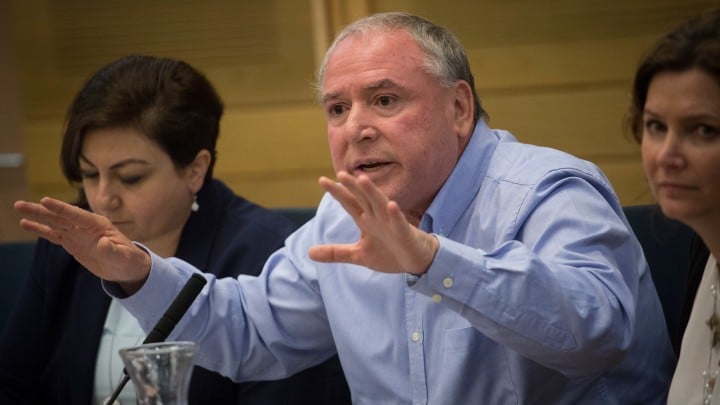
Prime Minister Benjamin Netanyahu’s Likud party on Tuesday distanced itself from a party MK’s proposed legislation a day earlier that would give the premier immunity for “minor transgressions” that hold a punishment of less than six months in prison.
MK David Amsalem said the bill, which he plans to present to the Knesset when legislators return from the summer recess in October, would prevent an “unreasonably large” number of investigations into prime ministers.
But Likud said the Knesset member’s proposal “was not coordinated with the prime minister and was made without his knowledge.”
It also noted that even if such legislation should pass, it would not be effective retroactively “and obviously would not affect existing probes.”
Amsalem’s plan was met with widespread alarm and derision among opposition politicians.
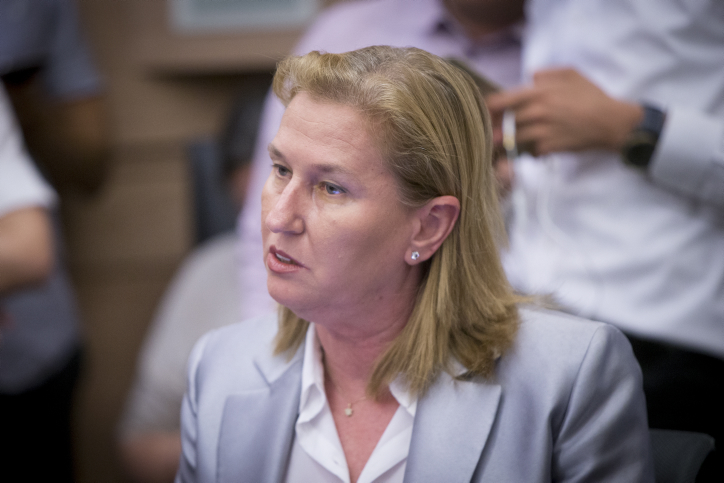
Tzipi Livni of the Zionist Union said in response: “No person is above the law. Investigations are not against but for the public, which deserves a strong, law-abiding leadership. A prime minister whose hands are clean must oppose this proposal.”
Meanwhile Zionist Union’s Shelly Yachimovich said Amsalem’s proposal “undermines the basic tenets of the rule of law” and said she did not believe it could have been brought up without consultation with Netanyahu.
Meretz party chief Zehava Galon questioned the proposal’s logic, saying that the “very worrying” number of investigations does not mean that the state should limit the police’s work but “shows that we need to replace the prime minister.”
Zionist Union MK Itzik Shmuli described the proposal as a “threat to the rule of law.”
“Likud has crossed another red line today on the path toward turning Israel into a monarchy,” he said in a statement.
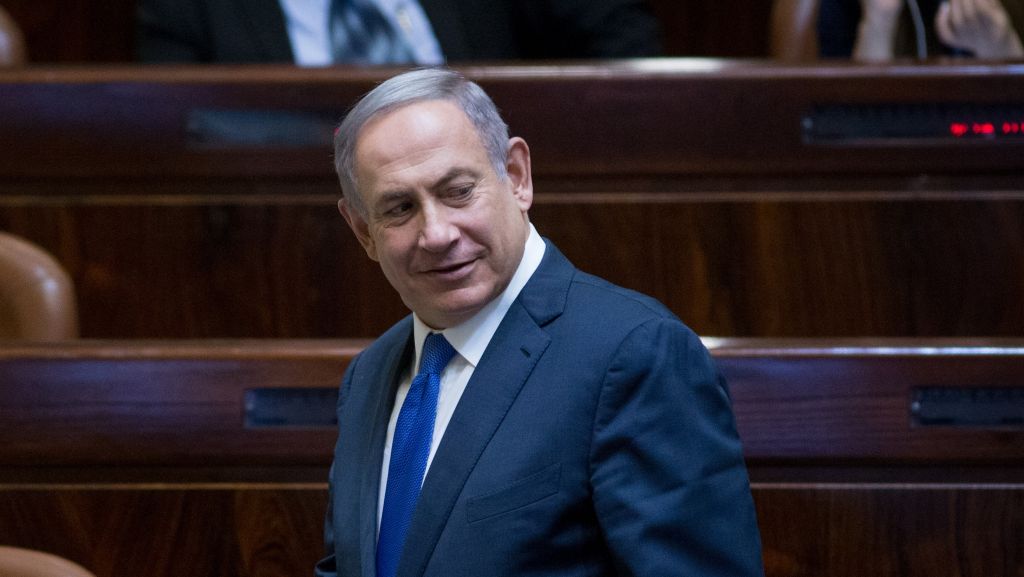
Police are currently looking into allegations of a money laundering scheme involving the prime minister. They are also investigating Netanyahu for financial corruption related to three matters: longstanding allegations of illicit funding for foreign travel, claims that Netanyahu and his family inappropriately used public funds for food and entertainment, and the accusation that he illegally received a large sum for political campaigning from French billionaire fraudster Arnaud Mimran.
Netanyahu has denied wrongdoing in all the affairs.
“The prime minister of Israel holds the most important public position. He has to make critical decisions on issues that affect the entire population: diplomatic moves, security measures, economic and social programs. He cannot be occupied daily with investigations against him,” Amsalem wrote in a Facebook post explaining the proposal. “I don’t know of any democratic country in the world whose prime minister stars as the subject of such an unreasonably large number of investigations… and no one really believes that the rest of the world is filled with saints while only we in Israel have thieves.”
If a full-blown criminal investigation were opened into Netanyahu, it wouldn’t be the first probe of a sitting prime minister or prominent public official.

Former prime minister Ehud Olmert is in prison for bribery and obstruction of justice. Former president Moshe Katsav is in prison for rape. And the late prime minister Ariel Sharon was being investigated for bribery when he fell into a coma in 2010 from which he never awoke.
As a serving Knesset member, the prime minister enjoys immunity from “searches, detention, criminal hearings and legal proceedings that are not connected to his work as a member of Knesset,” but is not protected from police investigations.







The Times of Israel Community.