Up to half of Israelis lack access to a bomb shelter — comptroller
Between a quarter and half of all Israelis do not have access to a proper bomb shelter in the case of an emergency, State Comptroller Yosef Shapira says in a new, damning report.
The document, a review of the country’s preparedness against rocket and missile tanks, finds numerous gaps and failures in the government and military’s plans to protect Israel’s civilian population. A similar report, released last year, also noted shortcomings in the country’s home front defense.
The 65-page report documents a whole host of issues, including an ongoing failure by government ministries to formalize areas of responsibility during an emergency, incomplete evacuation plans and budgetary problems for rocket alert systems.
However, Shapira’s harshest criticism is levied at the gap between the number of bomb shelters — private and public — that Israel has and the number that it needs.

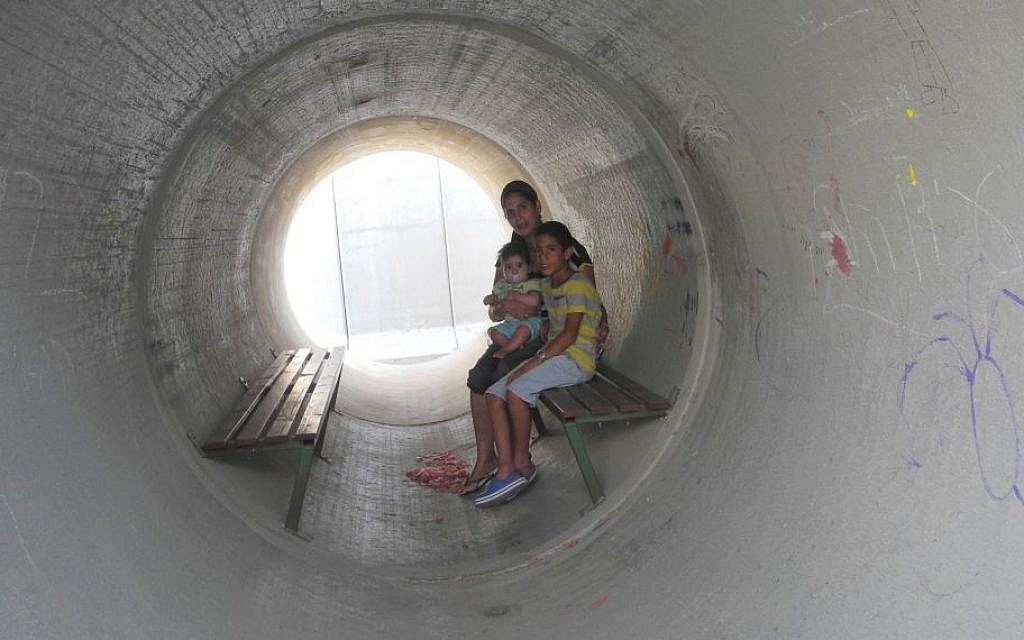
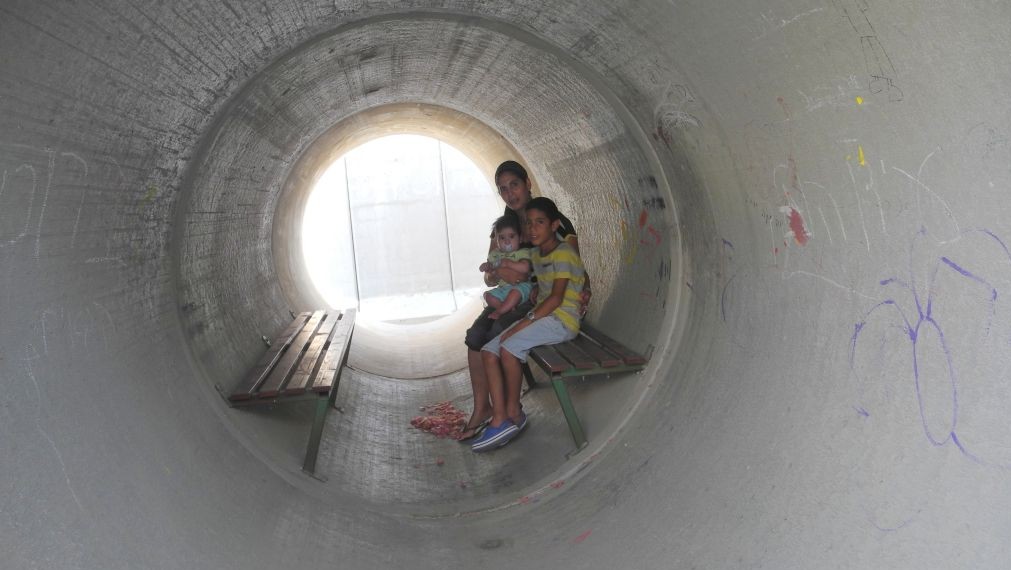
Devorah Israeli, of Nitzan, with 8-year-old Idan and 6-month-old Ron in the sewage pipe bomb shelter next to her caravilla during Operation Protective Edge in summer 2014. (Melanie Lidman/Times of Israel)
As the document notes, the exact percentage of Israelis without access to proper bomb shelters is subject to some level of debate. According to the IDF’s Home Front Command, 27 percent of the country — or just over two million people — do not have protection against incoming rockets that is “up to standard.”
However, the Interior Ministry puts that figure substantially higher, at approximately 50%, in accordance with its definition of what constitutes a “proper” bomb shelter.
The disparity comes from a ministry directive that demands a minimum of 54 square feet (5 square meters) per person in a bomb shelter, as opposed to the 21.5 square feet (2 square meters) required in the past. This change was made in light of the belief that civilians may be forced to spend long periods of time in their bomb shelters, which in turn would require additional space. This requirement disqualified some 23% of shared, private bomb shelters, like the ones found in apartment buildings, from being considered fully functional.
— Judah Ari Gross


 Add ToI as a Preferred Source on Google