

The gag is up
Nuclear talks, shmuclear talks. For some papers, the lifting of a gag order on Eyal Golan is the real news
 Add ToI as a Preferred Source on Google
Joshua Davidovich is The Times of Israel's Deputy Editor
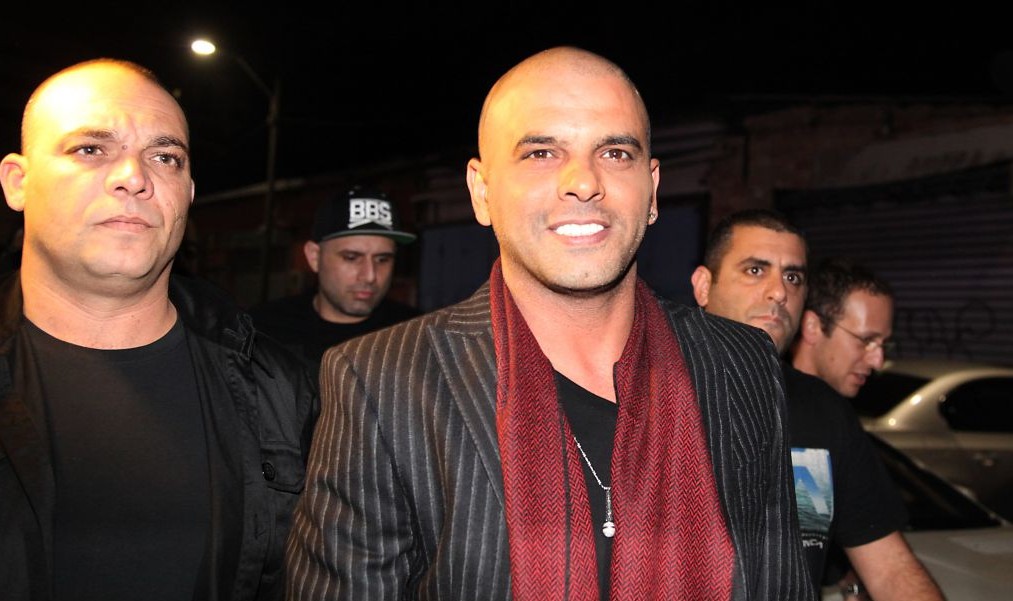
It’s a split decision in the Hebrew press Thursday morning on whether the bigger story is Iranian nuclear talks or the naming of a famous singer accused of having sex with underage girls.
Haaretz, not surprisingly for a staid and stately property, leads with the diplomatic story, noting that there’s a lot of optimism surrounding the talks to the point that Ayatollah Ali Khamenei is even trying to get buddy buddy with the US. Reporter Anshell Pfeffer, covering the action from Geneva, reports all the news surrounding the talks that’s been reported elsewhere, and then goes on to analyze what’s behind Britain’s recent détente with Iran, taking readers all the way back to Prime Minister David Cameron’s failed bid to gain support for a strike on Syria.
“While there is no indication as of yet that Britain is about to reduce the sanctions and economic pressure, beyond whatever concessions are included in an interim agreement that may be signed this week in Geneva, both British and Israeli officials acknowledge there is a ‘change of tune’ in London regarding Iran,” he writes. “This is partly due to the political setback suffered by Cameron three months ago when the British parliament voted against a British strike on Syria in retaliation to the use of chemical weapons on civilians. Following that humiliating defeat, the British seem to have taken a backseat in Middle East affairs and adopted a much more conciliatory attitude. This has manifested in much less eagerness than before to help the Syrian rebels, allowing the European Union to lead on issues such as Israeli settlements in the West Bank and ceding to the French the role of the toughest European power on Iran.”
Maariv, on the other hand, reports that the optimism may be unwarranted, writing that the P5+1 are anything but united on what kind of deal to sign with Iran. The paper’s Gideon Kutz, also in Geneva, reports that the main beef is between France, which wants an immediate cessation of activities in nuclear sites Natanz, Fordo and Arak, and the US, which isn’t seeking an immediate halt. Kutz also quotes a member of the Iranian delegation saying there is confusion on both sides, though it’s not clear if he spoke to the Iranian flack or simply overheard him talking:
“The spokesperson for the Iranian team complained in Maariv’s ears that ‘We are ready to sign, but we don’t know which paper, and if we’re talking about the agreement put on the table at the end of the last round of talks,’” he writes.
Like good tabloids, both Yedioth Ahronoth and Israel Hayom bury their Iran coverage well inside the paper, after several-page packages about singer Eyal Golan’s legal troubles.
Yedioth devotes all of 100 words to the talks, though together with coverage of some nice words Khamenei had for the “rabid dog” Israel, and Prime Minister Benjamin Netanyahu’s trip to Moscow to meet with Vladimir Putin, diplomatic efforts get more respect than an underage girl at a “famous singer” sex party. The paper’s Shimon Shafir writes about the pointlessness of the trip at a time when Netanyau should be trying to shore up ties with the US.
“Netanyahu continues to act in his typical fashion as he did during the American presidential elections, when he starkly backed Mitt Romney,” he writes. “Any newspaper reader knows Putin supports and will support in the future the ayatollah regime in Iran. Russia gives Iran the nuclear reactors and the equipment needed to develop missiles and air defense. So what is Netanyahu going to find in Moscow?”
Gag the gag
Israel Hayom devotes nine pages to the Golan affair, celebrating the fact that we can finally name the “famous singer” after a high-profile gag order, though it does note on the front page that nobody was surprised it turned out to be Golan. Writing in the paper, Aviad Cohen wonders why the court felt it necessary to continue the charade of the gag order when everybody knew the name being hidden. “The longer the smokescreen stays in place, the greater the harm to the public’s right to know, which could create a real crisis of confidence among the public in the judicial system. Thus, the use of gag orders should be reduced to a minimum. Both in the duration of the order, and in when it is used, it would be well of the court to coordinate its gag orders with reality.”
Thursday’s Labor Party primaries get some play in the press as well, especially in Haaretz, seen as the paper of choice for the left. Columnist Gideon Levy throws his weight behind current party leader Shelly Yachimovich, who is a lesser evil when compared to Isaac Herzog, or as Levy calls him, “an Israeli Francois Hollande.”
“Yachimovich did not join the right’s government, and we should remember this today to her credit. It is not a lot, but it is also not such a small thing,” he writes. “If it had depended on the person running against her, Labor would have joined the government a long time ago; Herzog and his friends would have been ministers (again), just as they were in all the right-wing governments, quashing the stench from within and behaving self-righteously.”






The Times of Israel Community.