

There will be noise
While papers handicap the chances of violence in response to Hamas drone ninja Zoari (small) and at the Amona outpost (larger), their reporting makes one thing clear: neither event will pass quietly
 Add ToI as a Preferred Source on Google
Joshua Davidovich is The Times of Israel's Deputy Editor
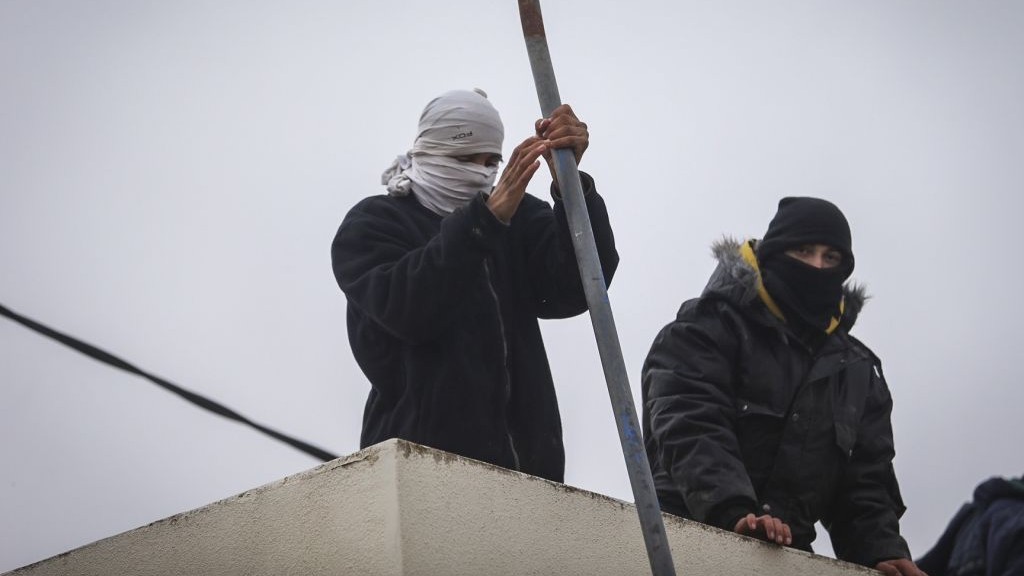
Chances are that most average Israeli news consumers had never heard of Hamas drone master Mohammed al-Zoari before Thursday or Friday.
Come Sunday, though, days after his assassination in Tunisia, the press is filled with everything you could ever possibly want to know about the life and death of the man, except, of course, for who actually killed him.
Together with Amona and, to a lesser extent, the nomination of David Friedman to be US ambassador to Israel, papers drone on and on about the life and death of the unmanned aerial vehicle maker.
Everybody from Hamas to the Tunisians to the journalists in Israel assumes the culprit is the Mossad, though at least in Israel they can’t exactly say it outright. “The long arm,” reads a headline in Yedioth Ahronoth, describing his assassination at the hand of a silenced revolver as a truck blocked in his car near his home in Sfax as “something out of the movies.”
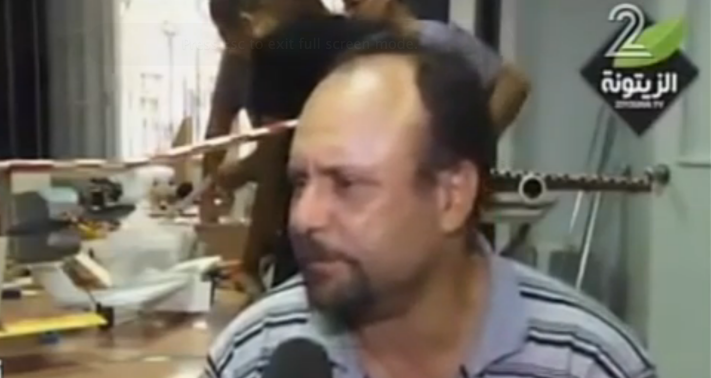
The paper and Israel Hayom trace the assassination to a meeting Zoari had recently with a Tunisian-Hungarian “journalist” who said she was doing an investigation on drones.
“Zoari took the bait,” Yedioth’s article reads. “The ‘journalist’ met with Zoari and came with a man she called a ‘researcher.’ They agreed to meet again on Thursday, when the assassination took place, but the ‘journalist’ got on a plane back to Hungary and didn’t show at the second meeting. The assassins knew their victim would be at home and the Tunisians are checking if their source of this information was this ‘journalist.’”
In Haaretz, commentator Amos Harel just comes out and adds Zoari to the list of other Hamas guys who supposedly found themselves on the wrong side of Israel’s gunsights, like Mahmoud al-Mabhouh and Samir Kuntar.
“In all these cases, the organizations accused Israel, and Israel maintained ambiguity by not talking about who was responsible for the assassinations. But it made clear that it reserved the right to fight terror even far from its borders,” Harel notes.
He adds that it’s not likely that Hamas will actually respond. “Israel must of course prepare for a possible revenge attack. But Hamas isn’t likely to renew the fighting just because of the death of a Tunisian civilian far from Gaza, no matter how important he was to Hamas’s drone program.
Even if there won’t be (more) blood, there is a lot of noise, and Israel Hayom leads off with Hamas accusing the Mossad, though in actually the group just threatened to avenge his death on the “Zionist enemy.”
Columnist Boaz Bismuth writes that even if everyone knows who did it, the only result will be the same old dog-and-pony show we see every time this happens.
“Tunisia off the bat will be angry and make a lot of noise, but not for long since it doesn’t want to let the [Islamist] al-Adha movement take advantage politically. So there will be arrests, and we’ll hear about progress in the investigation … and they will blame Israel. And then things will calm down — until the next assassination.”
Knowing how things will end and going through the motions anyway is a theme that could also be applied to the Amona story, as residents prepare for the evacuation in the coming days.
Papers contain dispatches from the doomed outpost, where melancholy set in over what will almost certainly be their last Shabbat on the hilltop. One also gets the sense that residents may be starting to regret having invited the whole country to come up on their hilltop to resist the evacuation.
“During Shabbat the residents busied themselves with prayer and studying Torah. The meals were shared and in the synagogue there was a mass Seudah Shlishit [Saturday afternoon Shabbat meal] that ended with optimism tinged with sadness,” Efrat Porsher reports for Israel Hayom. “The residents promised they would not act violently and ordered the visitors to only resist passively and not be violent toward police and soldiers. Yet there was doubt if this instruction made it to the youths that answered the call to come stop the evacuation, where their minds were seared with what happened at Amona a decade ago.”
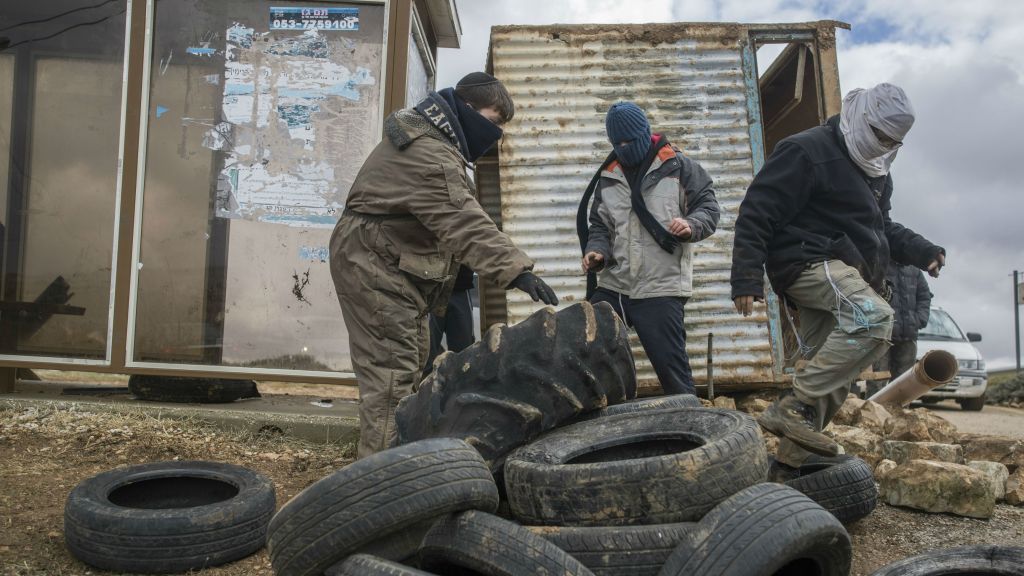
Yedioth describes various fortifications on roofs of water towers and homes these youths have put up to defend Amona, as well as lookout posts, tires to burn and spikes on the roads to slow down security forces.
If one is confused as to why the kids seem so hell-bent on turning the community into a war zone despite residents calling for passive resistance, one only need read the paper’s quote of community leader Avichai Boaron speaking to the youths over Shabbat, in which he seems to speak out of by sides of his mouth.
“Don’t lift a hand against cops or soldiers – but you certainly have to resist. There are here many groups of youths. We’ve planned many surprises for the forces. There will be here large fortifications and they will have big problems. This is not Gush Katif [Gaza]. We are here to give them a picture of the difficulties of kicking out Jews. We won’t let this pass quietly. This is a deportation,” he’s quoted telling them.
Bibi the kapo?
Another thing not passing quietly is the nomination of David Freidman to be US envoy to Israel, which makes Haaretz’s top story, with a headline calling him “an enthusiastic supporter of settlements.”
(Israel Hayom, which plays Friedman’s appointment as if it’s universally praised, calls him an “enthusiastic supporter of Israel and settlements,” a small but telling change.)
Noting Friedman’s lack of support for a two-state solution and more, the paper’s Barak Ravid and Chemi Shalev both write that the move puts Trump to the right of even Prime Minister Benjamin Netanyahu, with Shalev riffing that, compared to Friedman, Danny Dayan – the settler leader whose appointment as ambassador to Brazil was foiled and is now the Consul-General in NY — “looks like a cross between [former Meretz leader] Shulamit Aloni and Martin Luther King.”
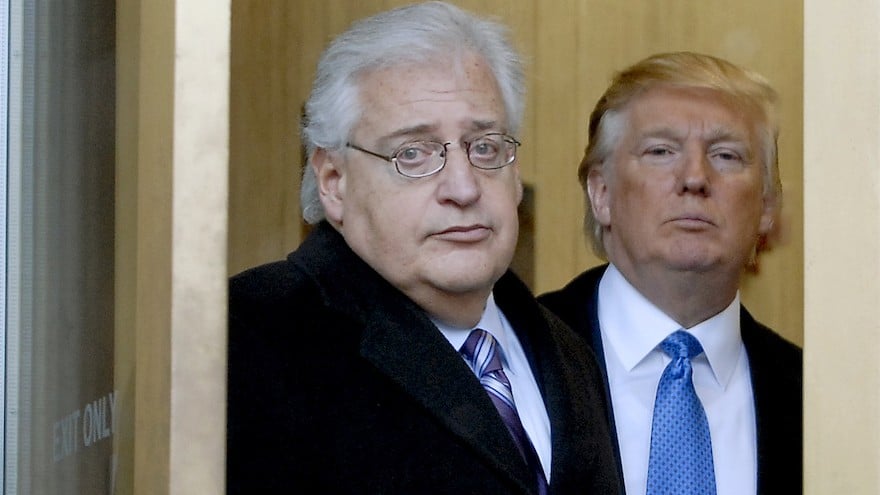
Ravid writes that without a US bogeyman to complain he is being hamstringed by, Netanyahu will have to dispense with excuses and actually show whether he is committed to a two-state solution, as he says he is, or if he is actually on the side of the settlers, as he has also claimed to be.
“Friedman’s appointment puts Bibi in the place he most hates to be politically: Without flak jackets like MK Tzipi Livni (Zionist Union) or former Prime Minister Ehud Barak, or threatening demons like outgoing US President Barack Obama or Secretary of State John Kerry,” he writes. “Once again, it has become clear that at the start of the Trump era, the prime minister has run out of excuses. What will he tell the settlers? That if he builds in the settlements or annexes the territories, Ambassador Friedman will lodge a protest?
As the late prime minister Ariel Sharon once said, Netanyahu will have to decide who to listen to – his right hand or his left hand.”






The Times of Israel Community.