

Abbas, Netanyahu to address UN after Trump pledges peace plan within months
Israeli and Palestinian leaders expected to discuss peace efforts in respective speeches, with PM also expected to focus on Iran
 Add ToI as a Preferred Source on Google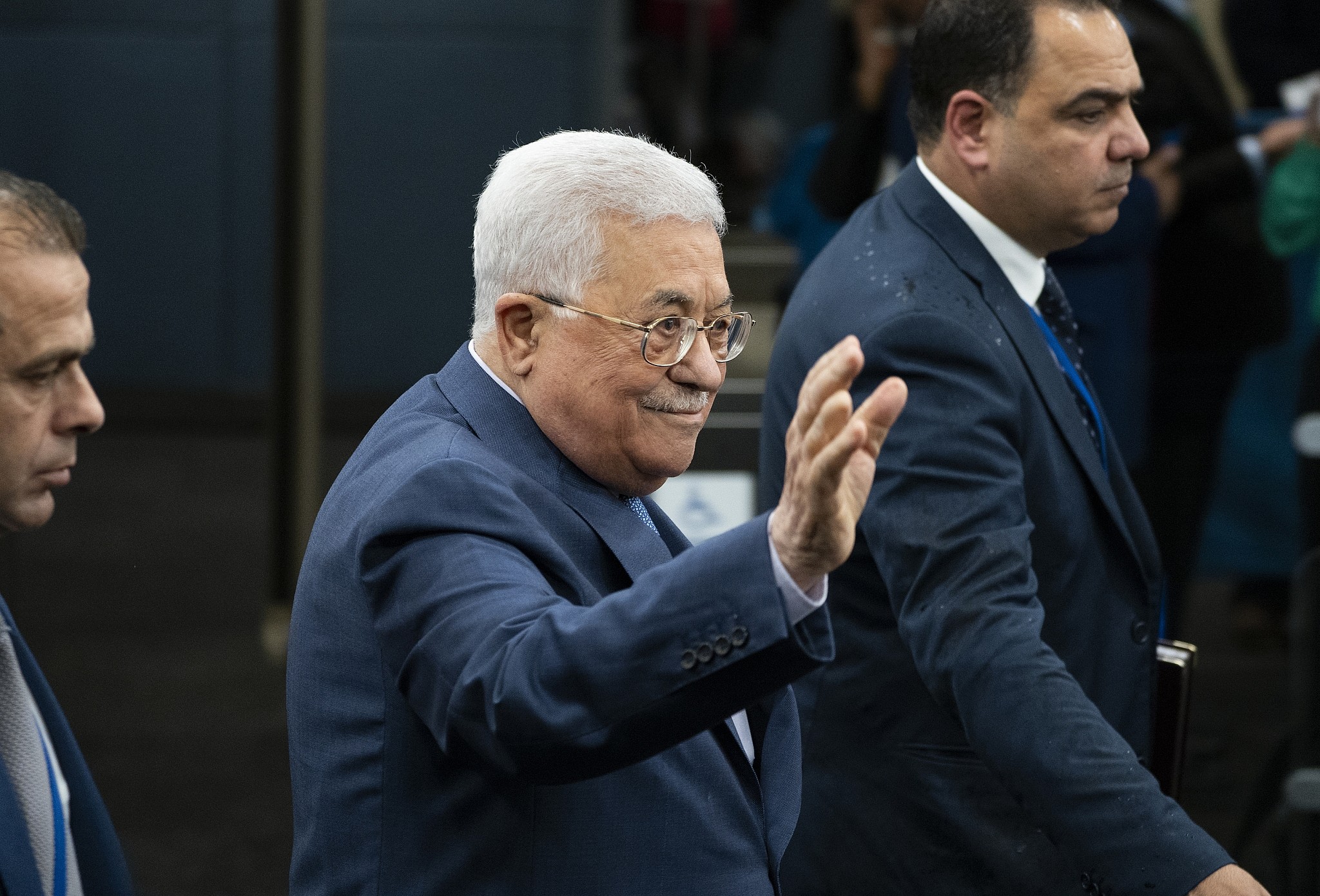
Palestinian Authority Prime Minister Mahmoud Abbas and Prime Minister Benjamin Netanyahu were set to address the UN General Assembly on Thursday, a day after US President Donald Trump pledged to present a “very fair” Israeli-Palestinian peace plan in the coming months.
Abbas’s speech comes amid a deepening rift between Ramallah and Washington due to the PA’s refusal to engage with American officials after the US recognized Jerusalem as Israel’s capital in December.
Relations plummeted further in recent weeks after Washington cut off all funding to the UN agency assisting Palestinians, triggering a budget panic, and shuttered the Palestinian mission in Washington.
Abbas will address world powers shortly before Netanyahu does.
The PA chief is expected to use his speech to the UN to urge the international community to either save the two-state solution or take responsibility for its demise and “burial,” unnamed Palestinian sources told London-based Arabic daily Asharq Al-Awsat last week.
The sources said Abbas’s appeal for an international peace conference will be his final effort to save the peace process before he is forced to make “difficult decisions.” These could include suspending the PA’s recognition of Israel, annulment of accords — including Oslo — and declaring the Palestinian territories to be a state under occupation.
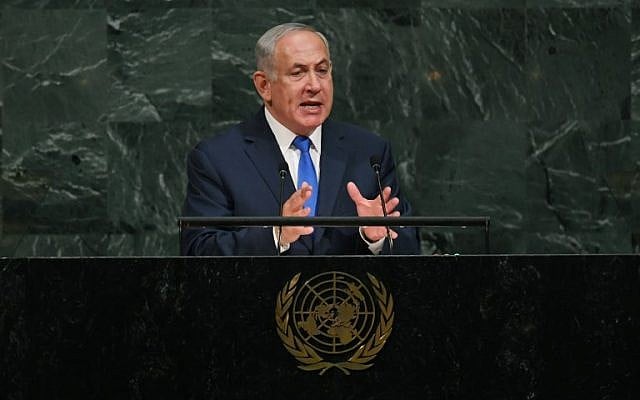
Netanyahu, meanwhile, is expected to focus primarily on Iran’s nuclear ambitions and its military entrenchment in Syria, as well as efforts to restart peace talks with the Palestinians.
On Wednesday, foreign ministers and diplomats from some 40 countries and representatives of international organizations evening attended a conference organized by the Palestinian mission to the United Nations in a bid to promote alternatives to the US administration’s expected peace plan.
Participating dignitaries endorsed the two-state solution and “reiterated the parameters [of the peace process] as we know them, and as agreed upon by everyone, and expressed willingness to allow this collective process to continue,” Palestinian Ambassador to the UN Riyad Mansour said.
Abbas arrived in New York on Monday and met with European Union foreign affairs chief Federica Mogherini, who reiterated the bloc’s support for a two-state solution.
Mogherini and EU commissioner Johannes Hahn are set Thursday to host a ministerial meeting on the sidelines of the General Assembly on UNRWA, the Palestinian refugee agency recently defunded by the Trump administration.
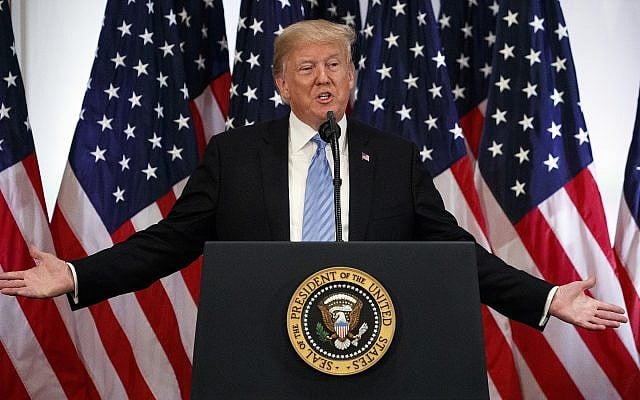
Earlier on Wednesday, Trump for the first time declared his support for a two-state solution to the conflict following his meeting with Netanyahu on the sidelines of the General Assembly.
Trump told reporters that he believes that two states — Israel and one for the Palestinians — “works best.” He has previously been vague on the topic, suggesting that he would support whatever the parties might agree to, including possibly a one-state resolution, which might see the Palestinian territories become part of Israel.
“I like (a) two-state solution,” Trump said as he posed for photographs with Netanyahu. “That’s what I think works best… That’s my feeling. Now, you may have a different feeling. I don’t think so. But I think two-state solution works best.”
Later, Trump told a news conference that reaching a two-state solution is “more difficult because it’s a real estate deal” but that ultimately it “works better because you have people governing themselves.”
But, backtracking, Trump added that he would still support Israel and the Palestinians should they opt for a one-state solution, though he believed that was less likely. “Bottom line: If the Israelis and Palestinians want one-state, that’s OK with me. If they want two states, that’s OK with me. I’m happy if they’re happy.”
In his earlier comments, Trump said his much anticipated but still unreleased Mideast peace plan could be presented in the next two to four months, but was not specific as to timing.
Trump’s explicit support support for two states was not cheered by either side.
The Palestinians said it flew in the face of his administration’s actions over the past year, while Netanyahu told Israeli journalists he would never relinquish security control over the West Bank.
Agencies contributed to this report.







The Times of Israel Community.