

Arab Israelis experiencing higher distress levels in war than Jews — study
Survey undertaken during current Iran war shows Arabs feel greatest losses in economic stability, social connections, emotional resilience, faith and hope
 Add ToI as a Preferred Source on Google
Sue Surkes is The Times of Israel's environment reporter
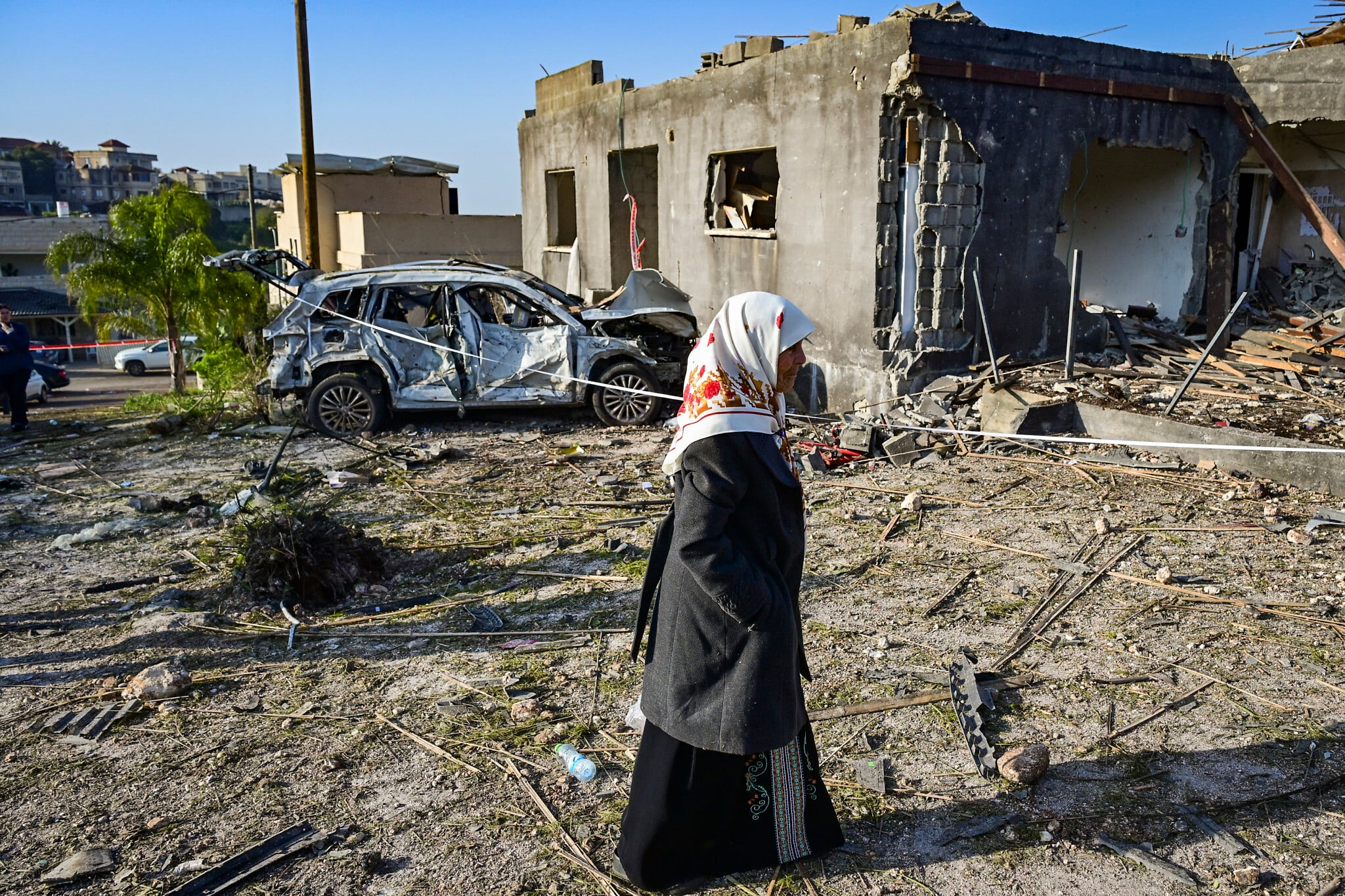
Israeli Arabs are experiencing more distress than their Jewish peers from the ongoing war with Iran, according to a new study published Wednesday.
According to a survey done between the seventh and ninth days of the war, which on Wednesday marked its 20th day, they reported a decreased sense of economic stability and social resources such as connections with friends, a weakening of spiritual resources such as faith and hope, and a drop in their sense of connection to the community and emotional resilience.
They were among 270 participants in a survey conducted by the Panels Research Institute for a snap study of community and gender experiences of the war undertaken by Prof. Liat Kulik, Dean of Netanya Academic College’s School of Behavioral Sciences and Professor Emerita at Bar-Ilan University.
The starting point was that war threatens human resources, and that stress was created when resources such as mental resilience or economic stability were damaged or lost.
In contrast to Arab respondents, ultra-Orthodox Jews reported the lowest loss of resources on most levels, especially in social, community and spiritual resources.
The general Jewish public fell between the Arabs and the Haredim.
The Arab public, Prof. Kulik found, was more inclined than the Jewish one to use coping strategies such as denying the threat or using sedatives. Like respondents from the general Jewish public, Arabs also resorted to practical problem-solving strategies to distract themselves from the situation.
Unsurprisingly, the Haredi public was more inclined to use spiritual coping strategies based on faith and hope.
The findings on Israeli Arabs are consistent with previous studies.
One, published in July 2024 — when Israel was in the midst of the Gaza war fighting Hamas terrorists in Gaza as well as Hezbollah in Lebanon — found that Arab Israelis reported significantly higher prevalences of probable post-traumatic stress disorder (PTSD), depression and anxiety than Jewish Israeli participants.
“Beyond numbers and statistics, in times of crisis, people mobilize culture, values, norms and life experience, and through them they encounter a reality that each community interprets slightly differently,” Prof. Kulik said.
“The findings show that even when an entire country experiences the same dramatic event, the psychological experience of its citizens is not uniform,” she said.
Kulik attributed this to the fact that different communities enter crisis situations with different social, cultural and community resources. This was especially true for those who were a minority.
“These influence the way people experience loss, deal with stress, experience distress, and sometimes even find new sources of light, resilience and hope within the crisis,” she said.





The Times of Israel Community.