

At Knesset antisemitism event, European lawmakers blame Islamism, policy failures
Visiting politicians from hard-right parties warn of ‘takeover from within’ by radical Muslims, ahead of controversial confab Tuesday
 Add ToI as a Preferred Source on Google
Zev Stub is the Times of Israel's reporter on diaspora affairs and Israeli real estate.
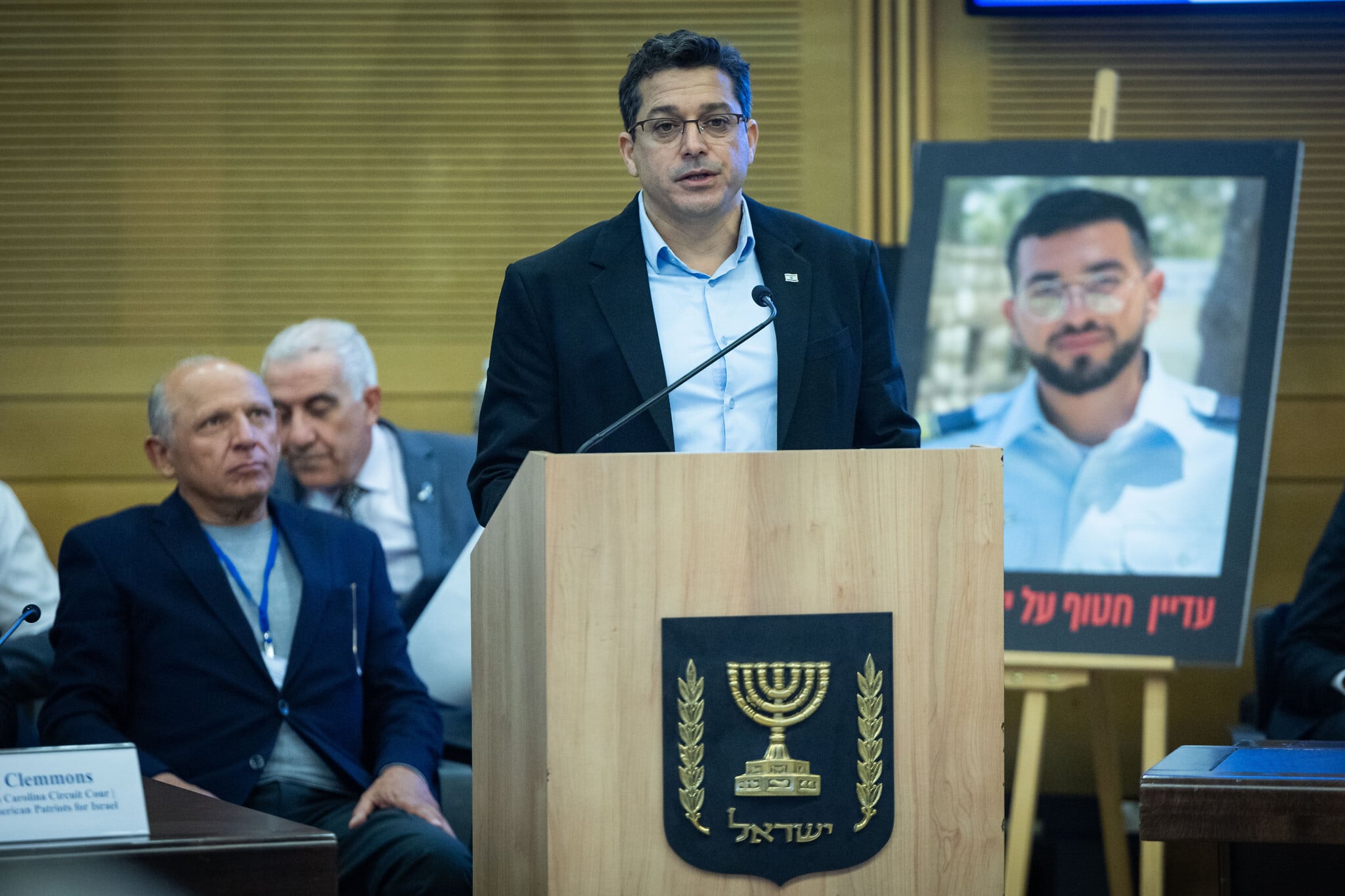
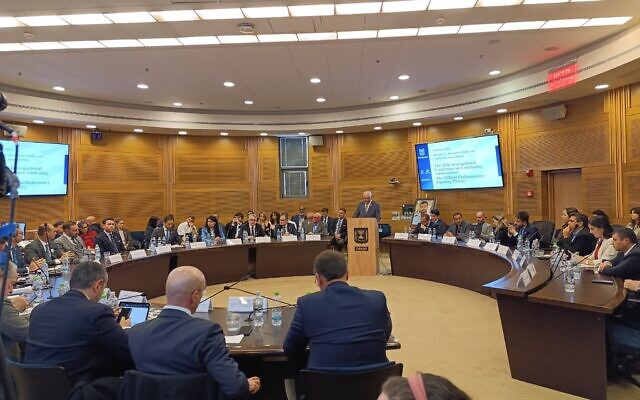
At a Knesset plenary session kicking off the government-sponsored International Conference on Combating Antisemitism, some 20 visiting lawmakers warned about the role of radical Islam in antisemitism, the failures of European policies in stymying growing hatred, the importance of education, and what they described as moral and political ambiguity on anti-Jewish hatred since Hamas’s October 7 attack on Israel.
The speakers, primarily figures from hard-right parties in Europe, gathered in Jerusalem for a two-day confab organized by Diaspora Affairs Minister Amichai Chikli, designed in part to help Israel cultivate ties with the political parties already challenging radical Islam abroad.
The conference, the main event of which will be held on Tuesday at Jerusalem’s International Convention Center (Binyanei Hauma), comes roughly 10 months after a previous antisemitism conference was boycotted by Jewish organizations for including those same parties, many of which have themselves faced accusations of racism and antisemitism.
Chikli opened the plenary by framing the rise in global antisemitism after the October 7, 2023, attack by Hamas as a civilizational struggle between Western nations and Jihadist Islam.
Postwar Europe has become increasingly vulnerable to “takeover from within” by ideological forces that do not share its democratic values, he said.
“A notable example of this is the elimination of Holocaust education in Western Europe,” Chikli said, citing recent data indicating that the number of British schools marking International Holocaust Remembrance Day has dropped by nearly 60 percent over the past two years.
Related: Interview — Hosting Europe’s far-right again, minister says Diaspora criticism ‘just a disagreement’
The decline reflects a broader erosion of historical clarity and moral confidence, he suggested.
Chikli has argued that the right-wing parties fighting against the rise of radical Islam in Europe are well-positioned to collaborate with Israel. Many of the speakers at Monday’s plenum portrayed themselves as natural allies of Israel and the Jewish people.
Mattias Karlsson, a senior figure in Sweden’s nationalist camp, described what he called a growing alliance between European conservatives and Israel against shared enemies. He accused Sweden’s left-wing parties of funding organizations allegedly linked to terrorism, pointing specifically to past support for Palestinian factions.
“We have the Social Democratic Party, the largest party in Sweden, pouring money for decades into the Palestinian Authority while refusing to acknowledge its ties to terrorist organizations,” Karlsson said. He highlighted recent conservative-led measures in Sweden, including the closure of Islamist schools, defunding of suspect groups, and stricter migration policies, arguing that these steps have begun to curb both Islamism and antisemitism.

Brazilian congressman Eduardo Bolsonaro focused his remarks on the October 7 Hamas attack, which he described as a watershed moment. “On October 7, the world lost its illusions,” he said. “After that, neutrality is not wisdom. It is surrender.”
Bolsonaro called for governments to criminalize not only terrorist attacks themselves but also preparatory activity, financing, and ideological incitement. He urged international leaders to show “clarity and courage” rather than moral relativism.
Fabrice Leggeri of France’s National Rally party warned that antisemitism in France and across Europe is now “largely ideological,” rooted in Islamist movements rather than traditional far-right extremism. Emphasizing France’s historic bond with its Jewish community, he advocated for aggressive legislative responses, including designating the Muslim Brotherhood as a terrorist organization and dismantling Islamist networks operating under civic or charitable fronts.

Similar themes were echoed by Romanian parliamentarian Georgiana Teodorescu, who criticized European integration policies for failing to prevent radicalization. She called for legal clarity in defining terrorist organizations such as Hamas and Hezbollah and for stronger educational frameworks to counter disinformation.
“Our only chance is an Iron Dome,” she said, clarifying that she did not mean missile defense, but “laws, education, and unwavering moral clarity.”
Pedro Frazão, a Portuguese lawmaker, focused on legal blind spots that, he said, allow antisemitism to go unpunished. In Portugal, he noted, antisemitism is not categorized as a specific hate crime, making it difficult for police and courts to track and prosecute.
“What is not named becomes invisible,” Frazão said, urging the adoption of the International Holocaust Remembrance Alliance definition of antisemitism into his nation’s national law.
Finnish parliamentarian Peter Östman highlighted his country’s legal framework against incitement and discrimination, while criticizing what he described as double standards applied to Israel in international forums, including the United Nations.
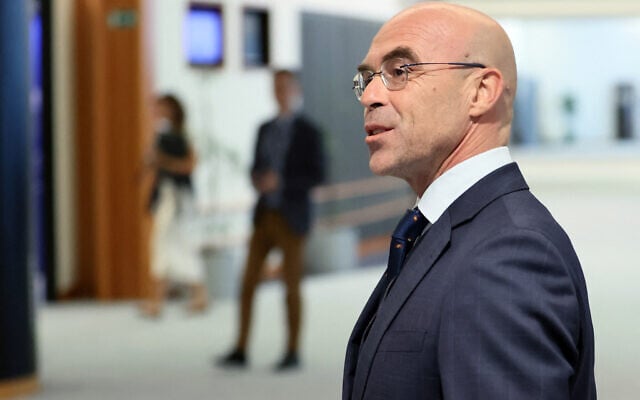
Spain’s Jorge Buxadé spoke about the challenges of radical Islamism and political separatism in Europe, calling for strong measures such as dissolving organizations that threaten public order and deporting those who reject national values.
“Hundreds of towns or cities in Europe are already in the hands of Muslim leaders,” Buxadé said. “Islamism now feeds on closed Muslim communities. Political separatism is growing in the heart of Europe.”
Alan Clemens, a retired US legislator and judge, spoke of what he said was the misuse of the term “occupation” against Israel, arguing that the term is intentionally misrepresented to portray Israel as an occupier and justify Palestinian victimhood.
“The very beating heart of modern antisemitism is the lie of ‘occupation,'” Clemens said. “[The term] is nothing more than a polite way of calling Israel a thief, suggesting that Jewish invaders colonize territory belonging to the Arabs and which therefore must be restored to its rightful, victimized owners.”
“Defeating antisemitism demands a higher level of moral clarity and truth,” Clemens added.









The Times of Israel Community.