

Bank of Israel governor warns funding yeshiva students, draft exemptions threatens growth
Speaking to cabinet ahead of 2026 budget vote, Amir Yaron says burden on working Israelis, reservists, is unsustainable, and criticizes plan to divert funding from Arab community
 Add ToI as a Preferred Source on Google
Ariela Karmel is a political correspondent at The Times of Israel. She previously reported for Calcalist and Haaretz. She holds an MA in Middle Eastern and African History from Tel Aviv University and a BA in Political Science from the University of British Columbia.

Bank of Israel Governor Amir Yaron warned cabinet ministers on Thursday that proposed government spending on the ultra-Orthodox community failing to draft members of the community — instead further deepening the military burden on reservists, would have far-reaching consequences for the Israeli economy and undermine long-term growth.
Yaron was speaking before a cabinet meeting to approve Finance Minister Bezalel Smotrich’s budget proposal for 2026. Discussions began on Thursday and final voting was expected on Friday.
In examining the plan, Amir specifically raised alarm over allocated subsidies for the ultra-Orthodox community, including funding for yeshivas and yeshiva students, many of whom are not part of the workforce, and do not serve in the army like other Jewish Israelis.
This, Yaron warned, would “create incentives for non-participation in the labor market and for not acquiring education that increases earning potential.”
“Such budgets harm long-term growth and living standards, and their impact will increase over time,” he continued.
Amir lauded several aspects of the budget proposal aimed at bringing down Israel’s sky-high cost of living and urged the government to “adopt the necessary measures” to achieve it.
He singled out Smotrich’s proposal to expand the value-added tax exemption on personal imports from $75 to $150; his “dairy reform” to waive Israel’s high tariffs on milk imports to encourage competition, increase the supply, and lower the cost of the most popular basic good bought by consumers; and his proposal to ease restrictions for small banks to enter the market to increase competition in the sector.
Amir said that these policies may help to “reduce the cost of living,” and that the Bank of Israel “welcomes these measures.”
He also highlighted the dissonance between the government’s call to massively increase defense spending by hundreds of billions of shekels in the coming years, and Smotrich’s plans to cut taxes.

“Such a level of defense spending, alongside existing civil expenditure patterns and current tax rates, does not support a reduction in the debt-to-GDP ratio,” the governor said, adding that to do both, the government must approve “necessary adjustment measures.”
Amir was notably critical of the government’s utilization of army reservists to cover for the IDF’s manpower problem instead of drafting members of the ultra-Orthodox community.
The repeat drafting of reservists, some of whom are taken from their jobs for hundreds of days a year, was being used as “a substitute for expanding compulsory service.”
“This is costly both from a budget perspective and due to the disruption to the labor market,” he said.
Costs are compounded, Amir said, by the fact that draft exemptions are being granted to a population “whose participation in the labor market is so low,” leading in turn to a greater economic burden on the working population.
The budget is being discussed amid heated debate over the recent draft exemption bill for yeshiva students proposed by Knesset Foreign Affairs and Defense Committee Chairman Boaz Bismuth has been roundly condemned, including from within his own Likud party.
Critics say that the bill preserves exemptions from the draft for most Haredi men and features weak sanctions at the same time that the military is facing an acute manpower shortage and reservists have been completing hundreds of days of reserve service amid Israel’s war in Gaza, fueling national frustration over the disproportionate burden faced by those who serve.
Haredi leadership has been pushing to pass a law to keep its constituency out of the IDF, after the High Court ruled that decades-long blanket exemptions from army duty informally afforded to full-time Haredi yeshiva students were illegal.

Some 80,000 ultra-Orthodox men aged between 18 and 24 are currently believed to be eligible for military service, but have not enlisted. The IDF has said it urgently needs 12,000 recruits due to the strain on standing and reserve forces caused by the war against Hamas in Gaza and other military challenges.
Yesh Atid MK Vladimir Beliak, who sits on the Knesset Finance Committee, tweeted that any positive reforms Smotrich claims to be implementing to lower the cost of living are insignificant compared with the money being spent on “petty and corrupt politics,” which “exploit the Israeli middle class.”
“There are still fifteen unnecessary ministries and NIS 5-7 billion earmarked for coalition funds,” he said, referring to increased funds being given to ministries such as Settlements and National Missions Ministry, the Jerusalem and Jewish Tradition Ministry, and the Heritage Ministry, among others, which Smotrich’s Finance Ministry once recommended should be closed after being deemed superfluous, as well as to the ultra-Orthodox community as part of coalition agreements.
This includes “great support for draft dodgers” through funding yeshivas and the ultra-Orthodox education system, which is largely unsupervised by the Education Ministry.
At the same time, Beliak told The Times of Israel that he doesn’t expect the budget to pass at all since it is inextricably linked to the passage of the draft exemption bill for yeshiva students.
“If the Haredim feel that things are advancing in the Foreign Affairs and Defense Committee, then they will probably support a first reading,” he said. “But ultimately, if there is no evasion law that they are satisfied with, then there will be no budget either.”
The ultra-Orthodox United Torah Judaism party quit both the government and Prime Minister Benjamin Netanyahu’s coalition in July, while the Shas party quit the government, over the failure to pass a draft bill. They’ve been boycotting a large amount of government legislation in protest ever since, as the government has been desperately trying to pass a draft exemption bill.
If the ultra-Orthodox parties refuse to vote in favor of the budget, and the government is unable to pass a budget, it could trigger its collapse and lead to early elections. Elections are currently scheduled for October.
“The budget and the draft law are intertwined,” Beliak said. “If the draft law doesn’t pass, then the budget won’t pass, and we’ll go to elections, most likely in May or June.”
Criticism of cuts to Arab economic development
Amir was also critical of Social Equality Minister May Golan’s proposal to divert NIS 3.1 billion ($960,000) from programs aimed at boosting Arab economic development to the National Security Ministry, the Israel Police, the Shin Bet intelligence service, and her own ministry.
Her proposal states that the funds will be used to “address crime and violence in Arab society,” but the money will be taken from a five-year program designed to bring Arab communities on par with Jewish counterparts in areas such as housing, policing, and economic development after decades of neglect.
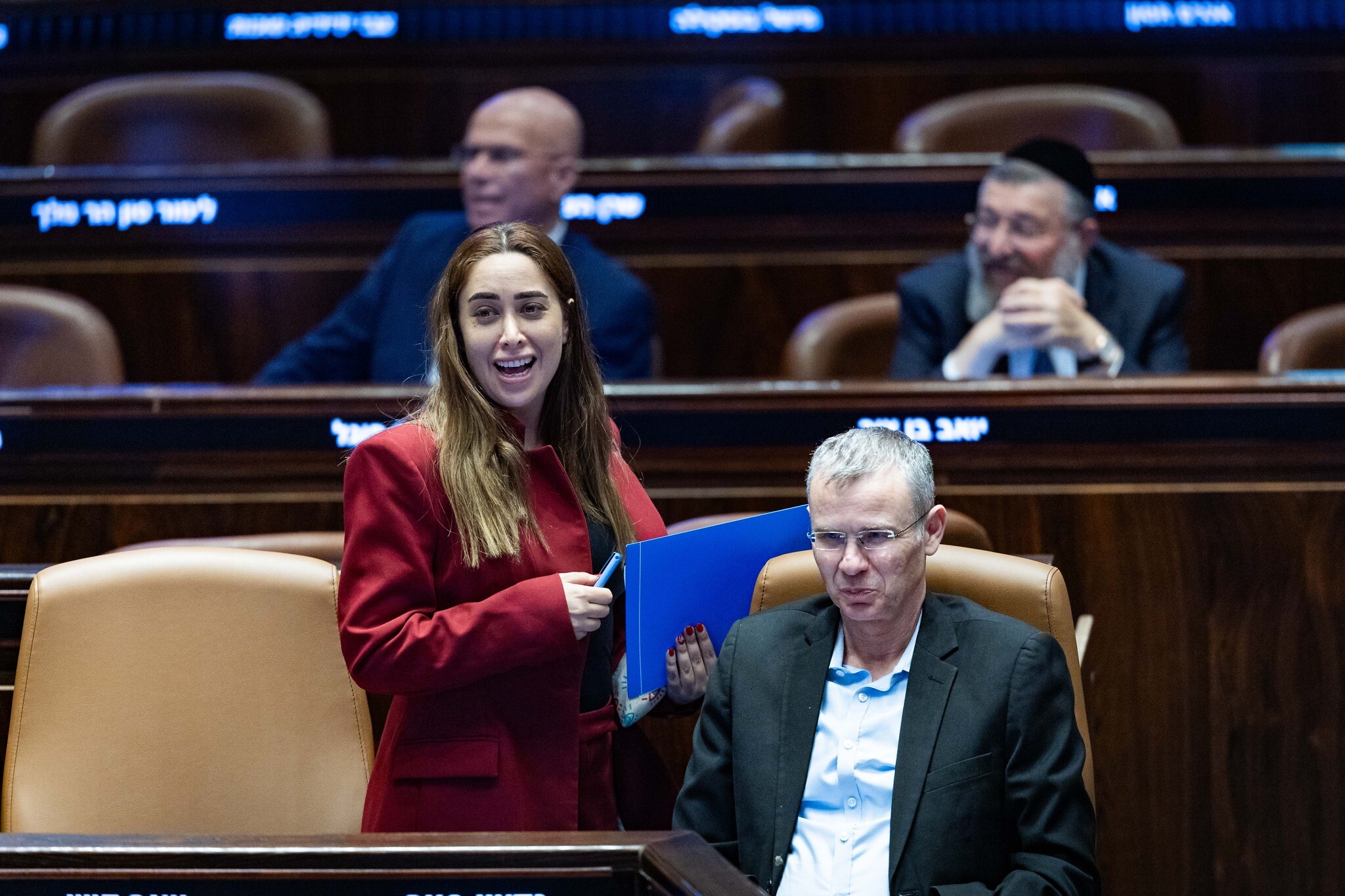
Yaron said that such a transfer would lead to widespread cuts in education, employment, transportation, construction, urban planning, and local authorities, and “halt government activity in these areas.”
“The Bank of Israel opposes the proposal to harm [the five-year economic plan] due to its proven positive impact on education and employment in the Arab sector, as well as its potential significant contribution to overall economic growth by reducing employment gaps and improving productivity between the Arab sector and the rest of the population,” he said.
Representatives from government ministries unanimously condemned the planned cuts during an emergency session convened by the Knesset Committee for the Status of Women last week.
The groundbreaking NIS 30 billion ($8.3 billion) program was created in 2021 under the short-lived Naftali Bennett-Yair Lapid-led government, with the Social Equality Ministry bearing most of the responsibility for implementation.
The planned transfer comes as Golan is being investigated by police for fraud and misusing public funds.








The Times of Israel Community.