

Behind the lines, Israelis help out with the war effort
A range of initiatives have sprung up to aid soldiers fighting in Gaza, and the families left behind
 Add ToI as a Preferred Source on Google
Jessica Steinberg, The Times of Israel's culture and lifestyles editor, covers the Sabra scene from south to north and back to the center
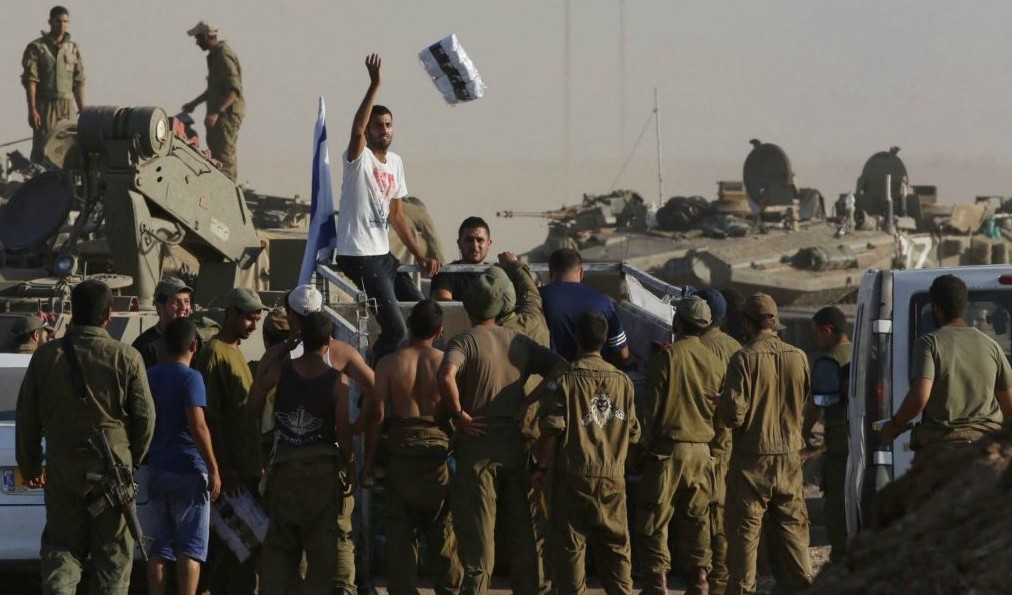
It’s taken a war for Israelis to reach out and help one another, but once motivated, they’ve been coming through in a range of creative ways.
Communities have been packing boxes of food, underwear and other necessities, and shlepping them down to soldiers on the frontlines.
In central Jerusalem on Thursday, an initiative by a local real estate agency raised donations of several thousand dollars and prepared 300 care packages for soldiers — boosted by goods supplied cost-price by some local traders and free of charge by others.
A crew of parents headed down south the other day; they set up grills and cooked kebabs, stuffing them into fresh rolls for the troops.
A plumber in the south has been setting up a mobile shower each day for soldiers on a break from the fighting, washing 300 towels overnight.
Shops all over the country have been offering free felafels, coffee and drinks to soldiers.
As a morale-booster for the local women whose husbands have been called up for reserve duty, a maternity store in Modiin has even been offering short shiatsu massages and cheap mini-manicures.
It’s not always easy to accept help, but people are learning.
Hanna Aron, the mother of a four-year-old and 4.5-month-old, said goodbye to her husband two weeks ago when he was called up. Several days later, she happened upon a Facebook post from Jerusalem Deputy Mayor Rachel Azaria, head of the Yerushalmim party.
“It was about helping out women whose husbands were called up for reserve duty, and having to convince them that they need help,” said Aron, who lives in Jerusalem. “Everyone always says, ‘No, I don’t need it; someone else needs it more.’”
But Aron decided not to take that route. “I said, ‘I’m getting help right now,’ ” she explained.
She sent Azaria a Facebook message, and immediately received a response and a follow-up phone call, asking what kind of help she wanted. She asked for a hot meal.
“Cooking can be so hard, because you’re working and you’re taking care of the kids, but you need to eat something, too,” stated Aron.
That day, she got a call from a Yerushalmim volunteer, who wanted to know what she wanted to eat. “I told her that I love fish,” said Aron, laughing. “She offered me fish patties. I said ‘Sure.’” That evening, she dined on fish patties, roast potatoes and salad, and commented that it was a “real treat.”
The Yerushalmim party compiled a list of some 200 women whose husbands have been called up for reserve duty for an indefinite period of time.
It’s a tough time, said Shira Winkler, the CEO of the Jerusalemite Movement. So the party organized 300 volunteers to cook, babysit, walk dogs and pack moving boxes.
The program is a joint initiative of the Yerushalmim party and the Jerusalemite Movement, a social action organization. Winkler recruited funding from the Leichstag Foundation and the Riverdale Jewish community for the effort.
“We focused on direct requests to the wives, actively offering them help,” she explained. “And it works.”
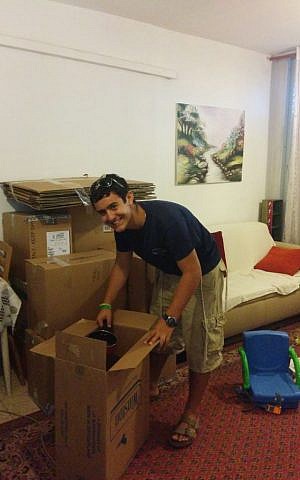
One woman got help with packing boxes for her family’s planned move up north in two weeks’ time. Aron asked for babysitting, and got an “amazing babysitter” for the hardest time of the day — the late-afternoon-through-bedtime grind. Osnat, another mother, received lunch on Thursday.
“We saw that there was such great help for the soldiers on the frontlines, but the wives are left with the kids under difficult circumstances and they don’t receive any help,” said Azaria.
The deputy mayor added that they’re planning on continuing the help for as long as it is needed. Once the reservists return home, adults will need to catch up with their lives, and that will probably happen in August, the period in the summer vacation when there are fewer day camps and programs for kids.
There are other forms of aid being offered as well.
A group of rabbis from the Barkai Center for Practical Rabbinics, which offers practical training to ordained pulpit rabbis in Israel, set up a hotline this week, answering a range of questions from whether it’s okay to forget about modesty when running to the bomb shelter, to questions about God, faith and death.
“It’s a hotline for halachic questions, but also for matters regarding belief and emotion,” said Rabbi Shlomo Sobol, a cofounder of Barkai. “We don’t have all the answers, and we’ve told our rabbis there isn’t an answer to every question. Most of the time it’s about listening and hearing. It’s less the answer than just being there to hear the question.”
The Barkai team first set up a support system after the three youths were kidnapped in June, when people were asking questions and seeking answers. But as the situation worsened — from the kidnapping and killing of Muhammed Abu Khdeir to the barrage of rockets and the current ground war in Gaza — they saw that something was needed on a more national level.
So they called the Bezeq phone company and, within a half-hour, said Sobol, they had a virtual hotline set up.
Barkai, which is endowed by medical-device entrepreneur Lewis Pell, is based in Modiin, where Sobol is a local rabbi, but its rabbis are located throughout the country. With 20 rabbis in this current class, and five drafted for reserve duty, the hotline moves every few hours to another rabbi, said Sobol.
They started the hotline on Sunday, but it’s growing quickly, he said, so far by word of mouth.
“All the rabbis are getting a lot of calls,” said Sobol.
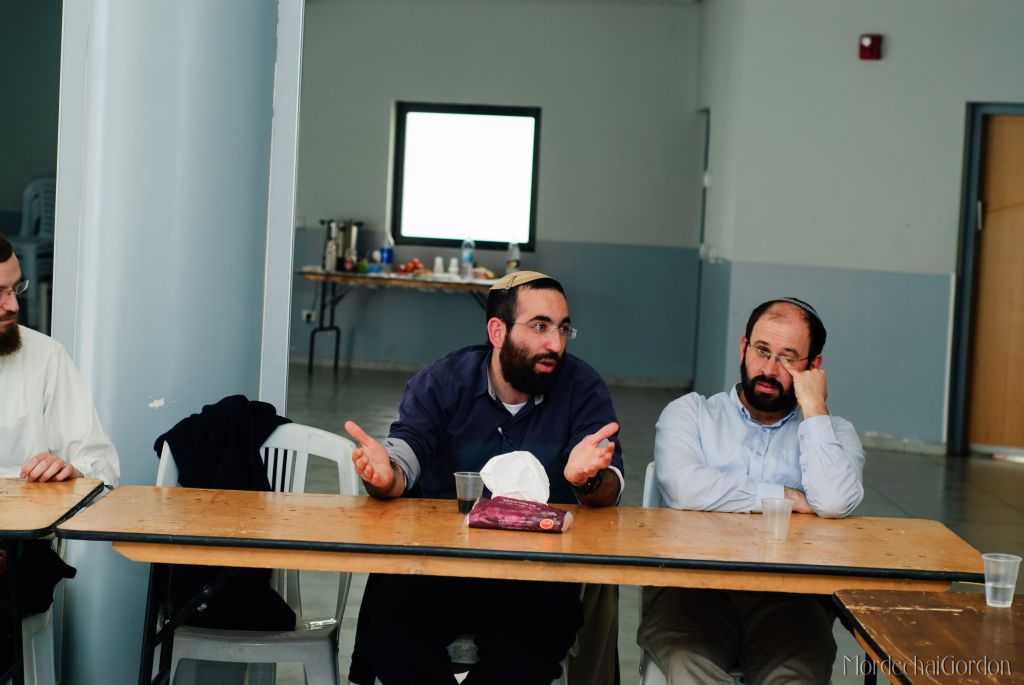
Rabbi Shachar Butzchak, a rabbi in Ein Habesor, a mostly secular moshav located six kilometers from the Gaza border, has found that most people — religious or secular — need to talk to someone right now.
“There are practical questions from some people, such as whether one can train in the army on Shabbat, or how to handle ritual impurity when your husband is away on reserve duty,” explained Butzchak, 31, who is currently on reserve duty as a deputy company commander for a Golani unit.
One example provided by Butzchak is that he told his community members that they had to keep their phones on during Shabbat, in order to receive text messages about incoming rockets and possible terrorist incursions into the moshav.
“The job of the rabbi mostly has to do with Jewish law, but it’s also as a leader, giving hope and then, in private, dealing with specific questions,” he explained. “Our job is to lift everyone’s spirits.”
Ditto for the Yerushalmim initiative, said Aron.
“It’s important to do something like this,” she felt. “People need help, all kinds of help, and you have to accept it. Even the smallest thing gives you a sense of support.”







The Times of Israel Community.