

Blast targeting Hamdallah blows Palestinian rift wide open
Some see the assassination attempt as a nail in the coffin of the unity bid, as a war of words erupts between Hamas and the PA
 Add ToI as a Preferred Source on Google
Khaled Abu Toameh is the Palestinian Affairs correspondent for The Times of Israel
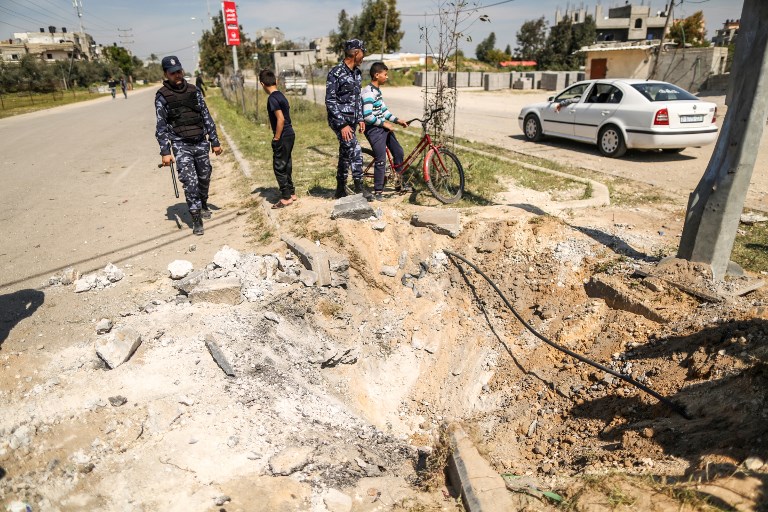
The explosion that targeted Palestinian Authority Prime Minister Rami Hamdallah’s convoy in the Gaza Strip has deepened the crisis between the PA and Hamas, and exposed the high degree of mistrust and animosity between the two parties.
Some Palestinians described the incident as the final nail in the coffin of Palestinian reconciliation and unity.
They said that Tuesday’s explosion reminded them of charges made by PA officials, who claimed that Hamas had plotted to assassinate PA President Mahmoud Abbas in a similar way more than 10 years ago.
Other Palestinians, however, said it was premature to assess the damage the explosion had caused to efforts to end the power struggle between Hamas and the PA’s ruling Fatah faction. They expressed hope that the incident would prompt the Egyptians to intensify their efforts to end the Hamas-Fatah rivalry.
“We’re now back to square one,” remarked a member of the Fatah Revolutionary Council in the West Bank. “This is a very serious crisis, and it will take time to heal the wound. It’s now up to the two sides to decide whether they want to escalate the situation of work towards calming things down. We hope that Egypt will not abandon its mediation efforts.”
The explosion, which has been denounced by the PA as a “cowardly assassination attempt” by Hamas, is seen as a severe blow to Egypt’s ongoing efforts to persuade the two rival parties to implement the reconciliation deal they signed in Cairo late last year.
Tuesday’s incident occurred while senior Egyptian security officials were visiting the Gaza Strip in yet another bid to end the impasse and pave the way for the implementation of the reconciliation agreement. In the past two months, the Egyptians have been working hard to prevent the downfall of the reconciliation agreement they helped secure late last year.
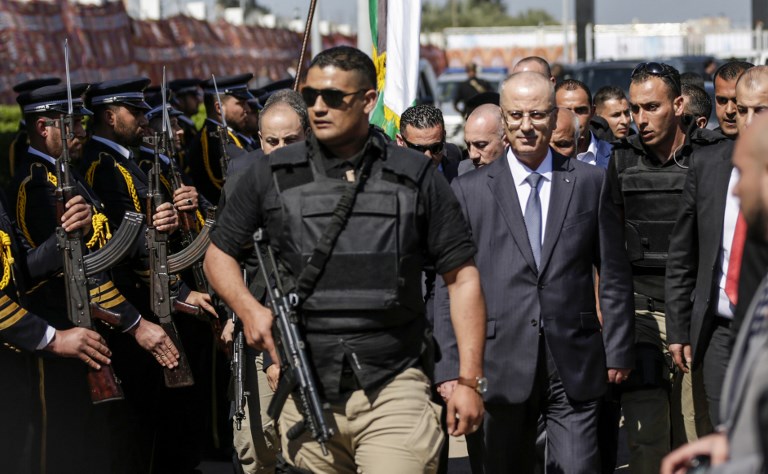
But it’s now hard to see how the Egyptians would be able to continue with their efforts, especially in wake of the war of words that erupted between Hamas and the PA after the explosion.
The PA and its Fatah faction responded to the explosion with unprecedented speed, holding Hamas fully responsible for the attempt on the life of the prime minister and PA General Intelligence Chief Majed Faraj.
On the instructions of the Fatah leadership, members of the faction took to the streets of some West Bank cities to condemn Hamas for the “murderous attempt” to kill Hamdallah and Faraj.
The PA leadership has also used the incident to demand that Hamas “empower” Hamdallah’s government by allowing it to assume security and civilian control over the entire Gaza Strip.
The PA’s rhetorical onslaught on Hamas is also designed to send a message to the Palestinian public that the terror group that rules the Gaza Strip is not interested in ending the dispute with Fatah.
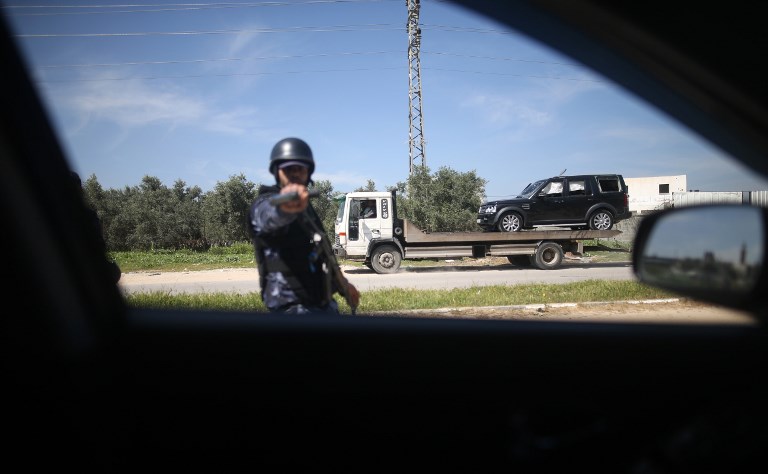
Hamas leaders and spokesmen, for their part, said they had doubts about the “suspicious” explosion. Some even went as far as hinting that the explosion may have been staged by the PA to implicate Hamas and force it to relinquish control over the Gaza Strip.
Hamas says that the speed with which the PA reacted to the explosion raised “big doubts.” Minutes after the explosion, the PA held Hamas “fully responsible” for the assassination attempt. Several PA-affiliated news websites initially reported that Hamdallah’s convoy was targeted by three car bombs and that several people were wounded.
The reports claimed that the convoy had also been attacked with gunfire.
Hamas insists that no one was hurt in the explosion and no shots were fired at the vehicles, while the PA prime minister has said that seven of the bodyguards accompanying him were being treated in a number of hospitals in Ramallah.
Hamas security sources said that the explosion was caused by a small explosive device that was detonated “far” from Hamdallah’s convoy.
This, according to the sources, shows that the explosion was not aimed at harming anyone, but causing minor damage.
Although two of the vehicles were lightly damaged, the convoy continued its journey towards the ceremony where Hamdallah inaugurated a wastewater treatment plant in the northern Gaza Strip, the sources noted.
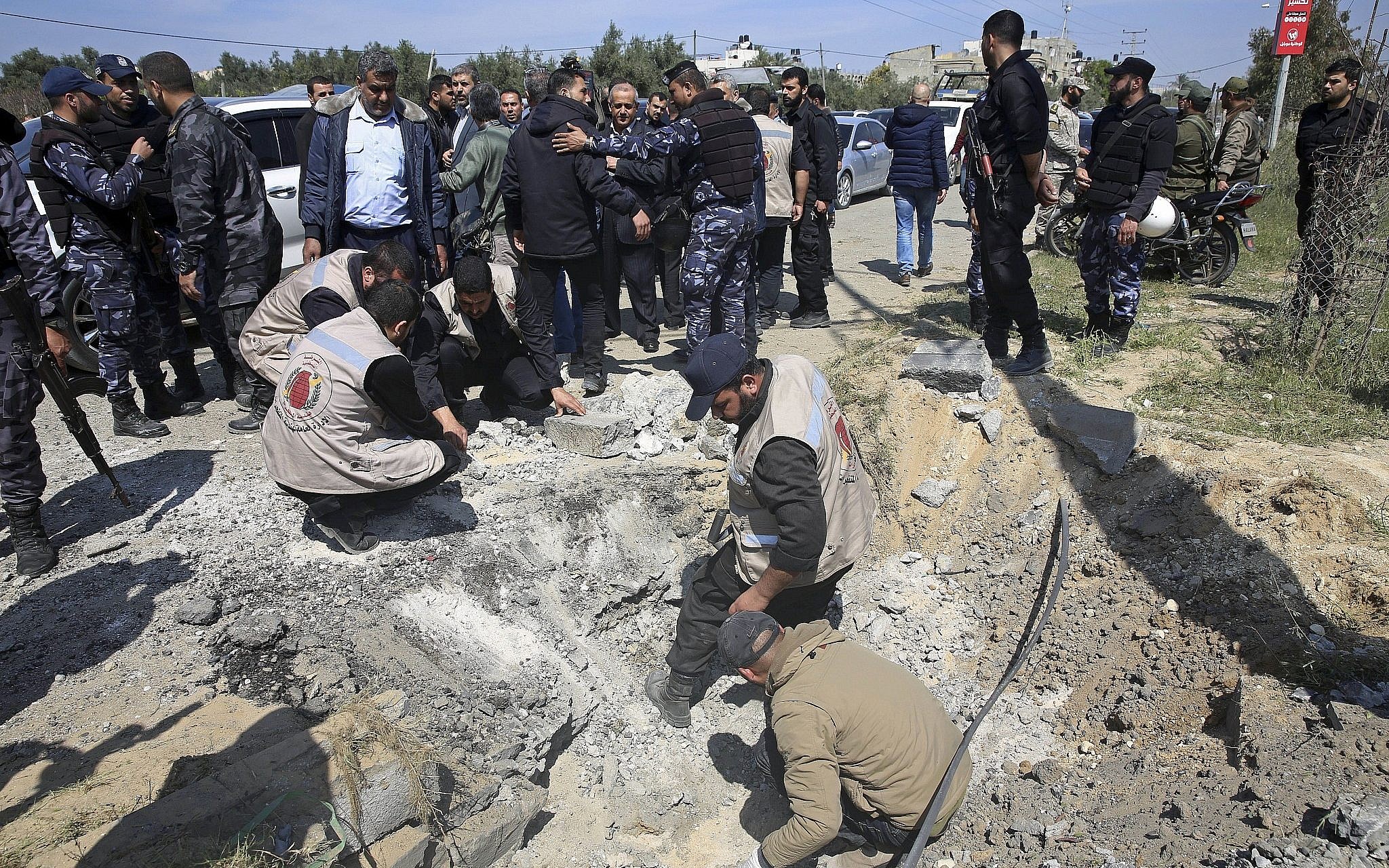
Hamas, which has strongly denied any connection to the explosion, claimed that the PA’s statements blaming the terror group “had been prepared in advance.”
Hamas “condemns the ready-made statements issued by the Palestinian Authority immediately after the explosion,” said Hamas spokesperson Fawzi Barhoum.
His remark reflected the view of some Hamas officials and their supporters, who are now openly referring to the assassination attempt as a false flag ploy concocted by the PA itself to force Hamas to give up its control of the Gaza Strip.
This theory was reinforced by Hamdallah’s appeal to Hamas — shortly after he returned to Ramallah — to hand over security control of the Gaza Strip to the PA government.
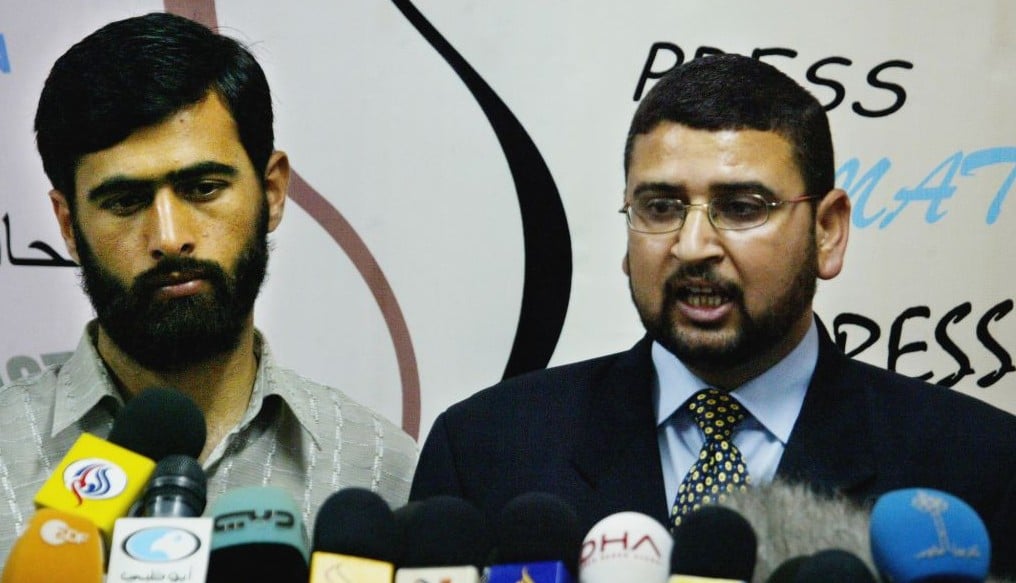
Sami Abu Zuhri, another Hamas spokesman, said that Hamdallah’s statement raised “big doubts” as to the motive behind the explosion. “This appeal proves that the goals of the explosion are bigger than its size,” he added.
Other Hamas supporters said they had good reason to believe that the assassination attempt was “calculated and pre-planned.”
They said their doubts were based on the fact that the explosive device had been directed only against the last two vehicles in the convoy, which carried Hamdallah’s bodyguards.
Several Hamas-affiliated political analysts pointed out that the fact that Hamdallah chose to proceed with his visit and did not leave the Gaza Strip immediately after the explosion also appeared to them to be suspicious.
Some Hamas leaders, including Ismail Haniyeh, appeared to be more restrained in their responses. Haniyeh phoned Hamdallah after the explosion and the two agreed to “blame Israel and its collaborators” for being behind the explosion, according to a statement issued by the Hamas leader’s office.
But Yusef al Mahmoud, spokesperson for the PA government, later denied that Hamdallah had received any phone call from Haniyeh.
Hamas and Fatah have once again embarked on a collision course, and the gap between the two parties appears now to be as wide as ever.




The Times of Israel Community.