

Boycotts, beats and bling: Eurovision’s 70th edition kicks off in Vienna
With the focus once again on Israel, singers from 35 nations will compete for the top prize in the colorful contest, amid heavy security, expected protests and backstage tension
 Add ToI as a Preferred Source on Google
Amy Spiro is a reporter and writer with The Times of Israel
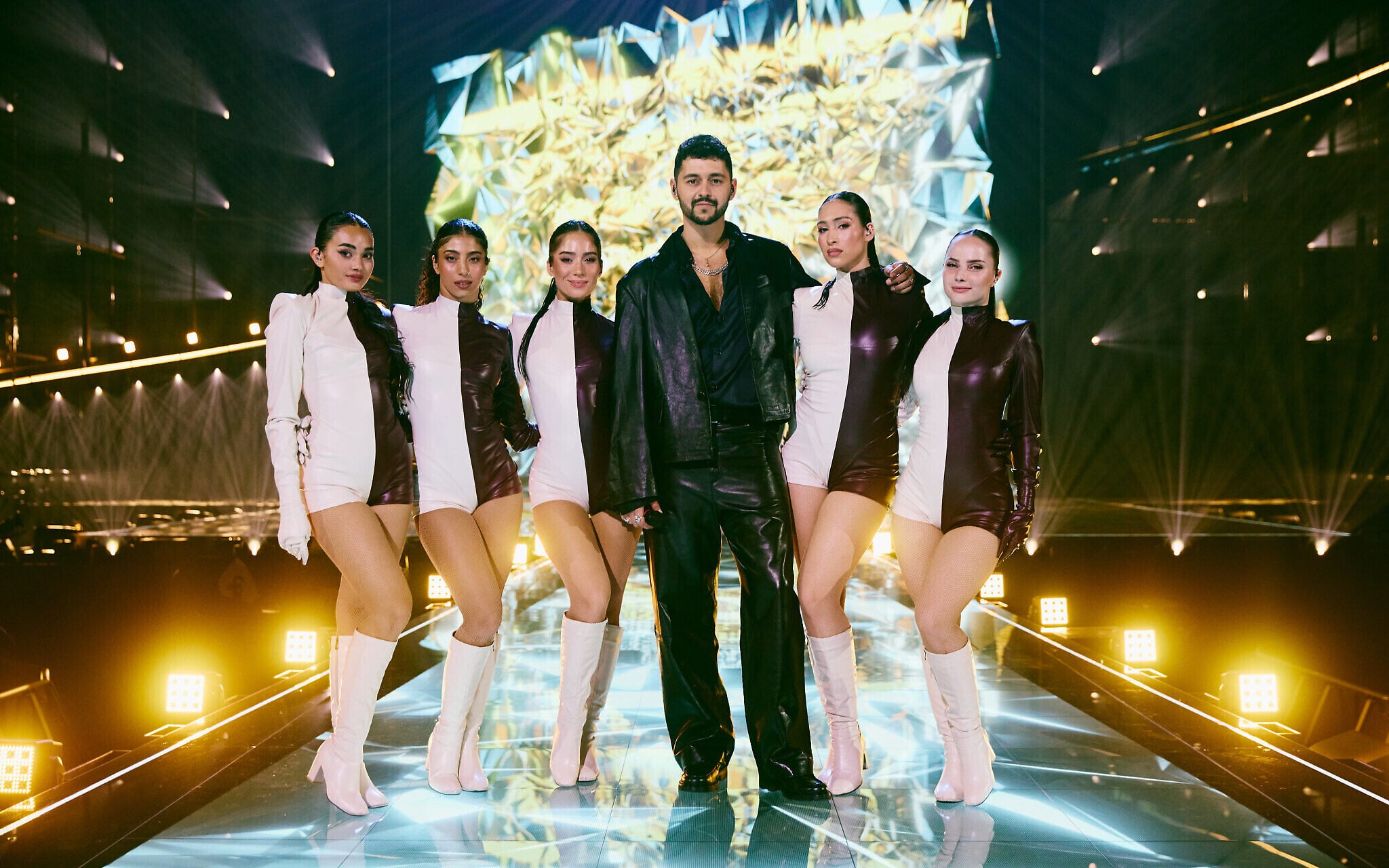
Singers from 35 countries have descended on Vienna, Austria, for the colorful, flamboyant and eyebrow-raising annual competition known as the Eurovision Song Contest, celebrating its 70th anniversary this year.
And for the third-year running, the center of the controversy and headlines about the contest have focused on Israel’s participation, with a number of protests expected throughout the week amid a heavy police presence.
On Tuesday evening, Israel’s Noam Bettan will take to the stage to perform “Michelle,” a pop song that’s a slight departure from the ballads the country sent in 2024 and 2025 amid ongoing war.
Austria’s public broadcaster, ORF, said that it will not deploy anti-booing technology nor ban Palestinian flags from the audience. Such flags were allowed last year but were not particularly noticeable in the crowd. Two protesters, however, tried to rush the stage during Israel’s performance last year, but were blocked by security – something that was not seen during the live broadcast.
Bettan – who told The Times of Israel he has been practicing to the sounds of boos – is seen as a long shot to win this year’s contest, but is highly likely to qualify for the grand final on Saturday.
How did we end up here?
For the past two years, the European Broadcasting Union has staunchly rejected calls for Israel to be barred from the contest, saying that the Kan public broadcaster had not violated any rules, despite anger from some members over the war in Gaza.
But anti-Israel anger among a minority of EBU members reached a fever pitch following last year’s contest, where Israel’s Yuval Raphael came top in the televote, sparking accusations of voter fraud from a number of countries hostile toward Israel, though they were largely dismissed by the EBU.
The EBU then said it would hold a direct vote among members over Israel’s participation, before calling it off days after a landmark ceasefire was reached in Gaza in October 2025. Instead, at the organization’s annual December general assembly, members were presented with a package of reforms aimed at quelling some of the concerns.
EBU members voted overwhelmingly to accept the proposed reforms instead of forcing a direct vote on Israel’s participation that some national broadcasters had sought. That vote meant Israel was approved to stay in the contest, which led five nations – Spain, Ireland, Iceland, Slovenia and the Netherlands – to quit in protest. Of the five, only the Netherlands and Iceland will still air the competition to fans at home.
The Eurovision reforms include the return of professional juries in the semifinal rounds (effectively weakening the power of the public vote); capping votes per person at 10 instead of 20; and – addressing anger over last year’s Israeli-government backed online campaign – discouraging “disproportionate promotion campaigns,” and barring broadcasters or artists from participating in any third-party campaigns.

The EBU sent a direct warning on Saturday to Israel over an ad campaign featuring Bettan in a number of languages calling for people to vote for him 10 times, saying it was “not in line with our rules nor the spirit of the competition.”
The campaign was quickly pulled from social media. The incident, however, only further fueled anti-Israel chatter on Eurovision fan pages.
Bracing for protests
While Israel’s strongest detractors won’t be participating in the competition this year, the proceedings are still unfolding under heavy security amid expected protests throughout the week.
Vienna police said last week that they were braced for “blockades and disruption attempts” throughout the contest.
Police said the largest protests are expected on Saturday, the day of the grand final, and potentially on Friday, which is commemorated by pro-Palestinian and anti-Israel activists as Nakba Day, marking the mass displacement of Palestinians during Israel’s War of Independence.
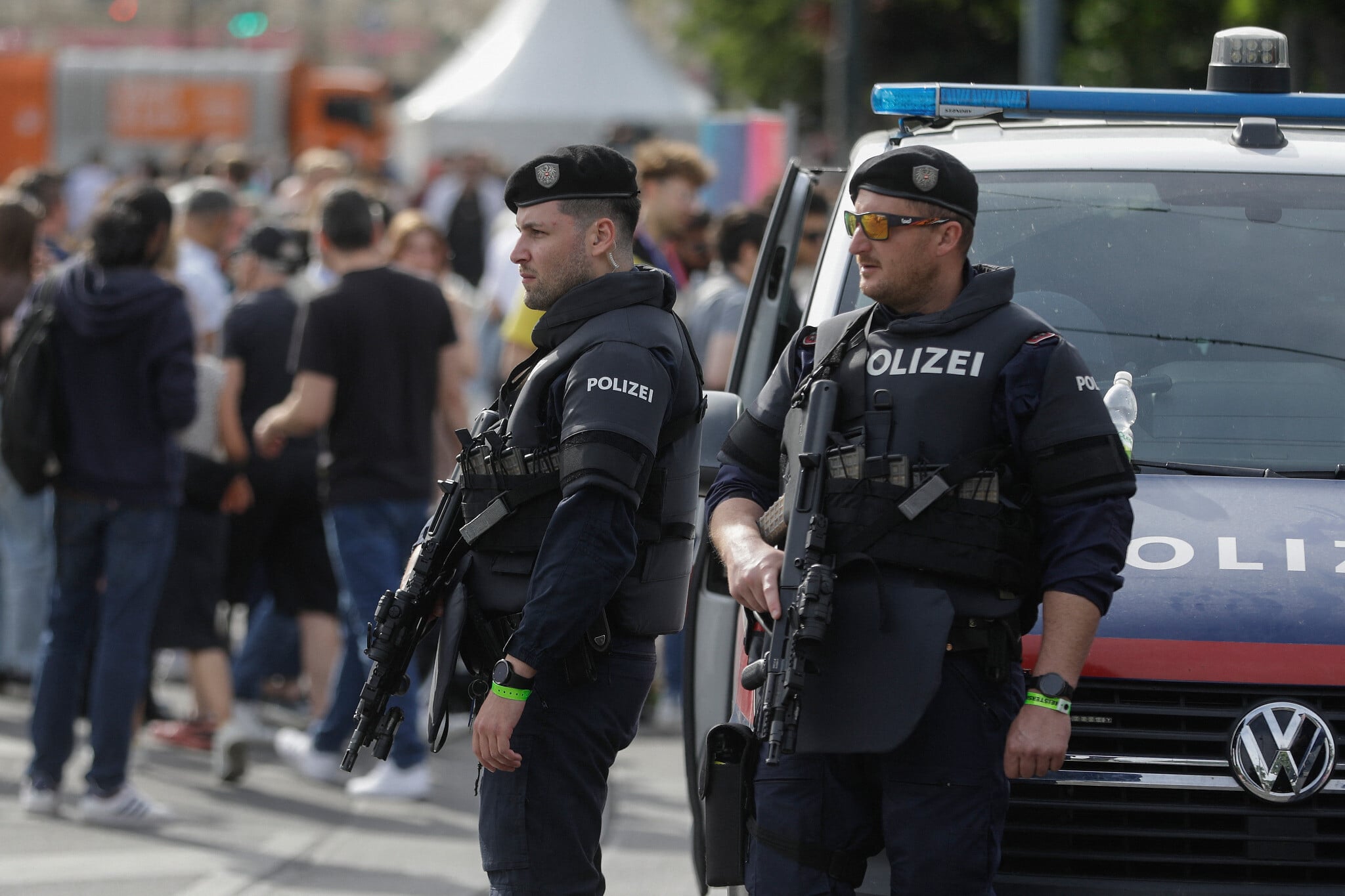
The National Security Council last week published a warning to all Israeli fans attending the contest to act with caution, keep Israeli symbols and identifiers low profile, and to “avoid entering areas perceived as hostile toward Israelis and Jews.”
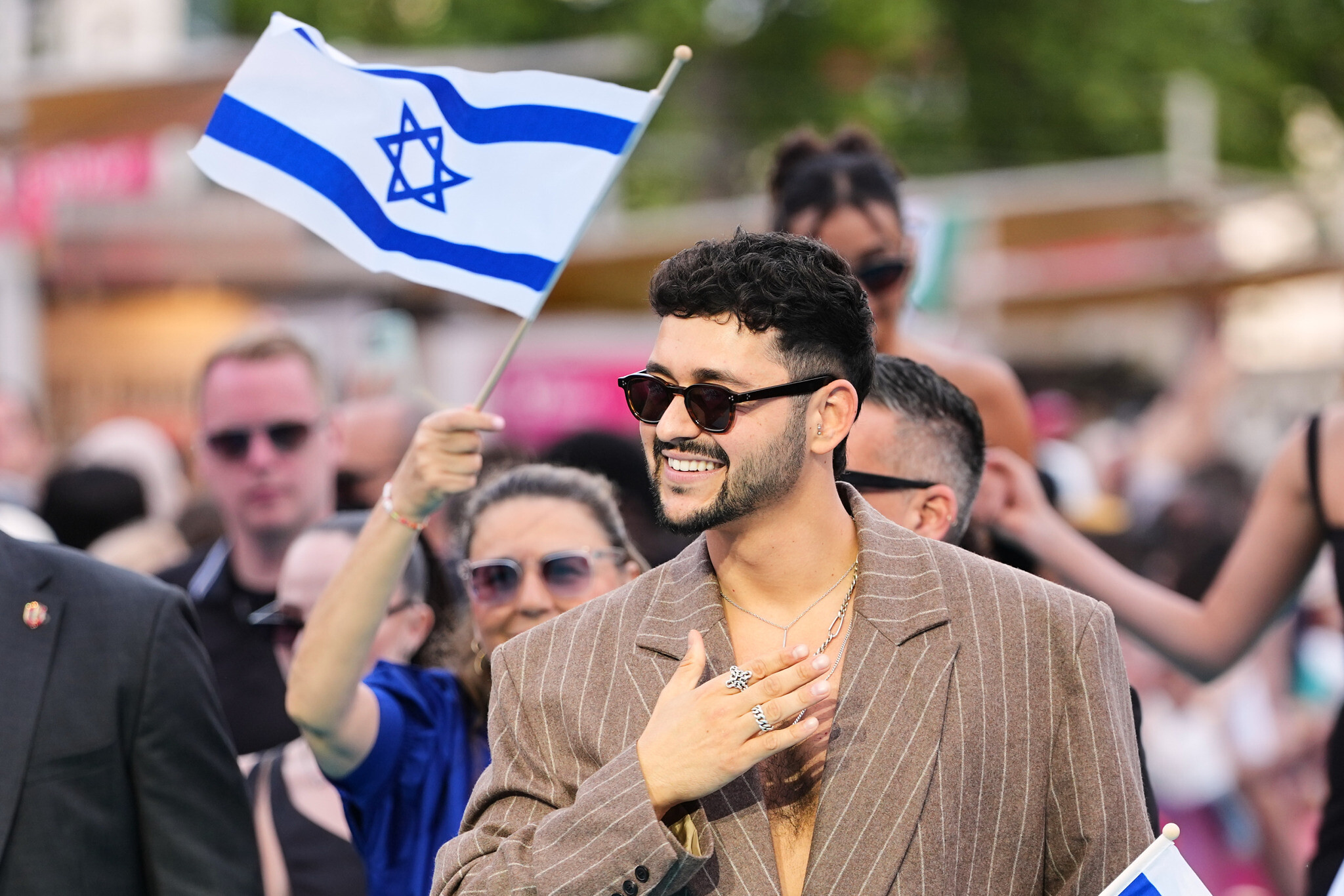
The first major test of security in Vienna, the opening ceremony on Sunday evening, proceeded without interruptions or protests, as Bettan strolled along the turquoise carpet to the tune of “Hava Nagila,” albeit surrounded by multiple security guards.
Who will win it all?
The betting odds this year have predicted that Finland will win with its song “Liekinheitin,” (Flamethrower) performed by Linda Lampenius and Pete Parkkonen – though the odds were wrong about the winner for the past two years.
While Lampenius actually studied violin at the Keshet Eilon music school in northern Israel in the early 1990s, she hasn’t expressed much love for the country in recent years. Lampenius and Parkkonen wrote on social media earlier this year that they believe allowing “Israel to participate in Eurovision is wrong. What is happening in Palestine is inhumane and condemnable.”

Israel is reportedly concerned about how a Finnish win would affect its future participation, since Helsinki is considered less friendly to the Jewish state than Austria and Switzerland, the hosts of the 2026 and 2025 contests.
Israel would likely be more comfortable if Greece, also considered a frontrunner, took home the win, considering its warmer relations with Athens. The country’s Akylas is performing the upbeat dance number “Ferto,” which bookmakers have given a 13% chance of winning the competition.
Bettan, meanwhile, is predicted to finish 6th in the betting odds and given a 4% chance of taking home the trophy. Most analysts see a Bettan win as highly unlikely, since even if Israel runs away again with the televote, the juries are likely to rank the song significantly lower.
Friends and foes
Due to both heavy security and the February-April Iran war, which stymied most international travel, Bettan was unable to take part in a number of pre-Eurovision events with his fellow contestants.
In past years, Israeli singers Yuval Raphael and Eden Golan faced hostility from some of their fellow competitors. Other Eurovision acts were simply fearful of being spotted with a representative of Israel, concerned about potential online backlash.
One notably friendly face backstage this year comes from an unlikely source: San Marino’s Senhit has recruited British pop icon Boy George to sing alongside her on “Superstar.”
Boy George, a longtime Israel ally, has already made headlines for his outspoken support of Israel staying in the competition, and has been seen warmly greeting Bettan behind the scenes.
Boy George meets Israel’s Eurovision contestant and gives him a hug to wish him luck.
“Best of luck.”
The ‘Culture Club’ singer has received praise recently over his outspoken support for Jewish and Israeli people. pic.twitter.com/9ZBWTekMaD
— Oli London (@OliLondonTV) May 8, 2026
Despite all the hype and the drama, Bettan has said that he wants to focus on music, performing and giving his all on stage.
In an interview with The Times of Israel last month, the 28-year-old singer said he’s in Vienna “to give love.”
“I understand that I only have control over myself, and what I can bring is who I am, the light I have to give to the world, the color I have to give to the world, and I’m focused on that – on coming and giving love to other people.”






The Times of Israel Community.