

Conductor, composer cut to the heart with ‘Pulse’
Young maestro Lahav Shani returns from Germany to lead the Israel Philharmonic
 Add ToI as a Preferred Source on Google
Jessica Steinberg, The Times of Israel's culture and lifestyles editor, covers the Sabra scene from south to north and back to the center
It helps to have Zubin Mehta as your personal matchmaker.
The renowned Israel Philharmonic musical director suggested to his student, the young conductor and pianist Lahav Shani, that “Pulse,” by German composer Moritz Eggert, be included in a concert series being performed this week and next by the Israeli orchestra.
Shani will conduct four concerts — on February 5, 6, and 8 in Tel Aviv’s Charles Bronfman Auditorium and in Haifa on February 9. The concerts will open with “Pulse,” followed by Dvořák Violin Concerto with soloist Guy Braunstein. The second half of the performances will feature Tchaikovsky Symphony No.6 “Pathétique.”
“We started thinking about this about a year ago,” said the 26-year-old Shani, speaking after his initial rehearsal this week with the Israel Philharmonic. “We had figured on Tchaikovsky, but we wanted something modern as well. I asked Zubin what he would suggest, because he’s my teacher. and he suggested this first.”
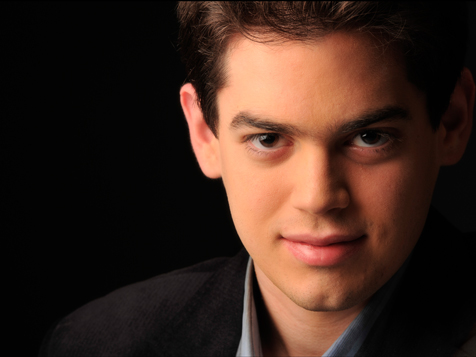
Shani, who currently lives in Berlin where he is the protege of Daniel Barenboim, has benefitted from his master teachers. The young maestro won the prestigious Gustav Mahler Conducting Competition in Bamberg, Germany, in 2013, and was then invited to open the 2013-14 season of the Israel Philharmonic Orchestra. After performances that were called “electric,” he was immediately reinvited for four weeks with the orchestra over the next two seasons.
Shani commented that Israel is the only place in the world where he can work in his native language.
“I have a long history with this orchestra,” said Lahav. “I know every musician by name; instead of saying ‘First recorder, softer, please,’ I can say Boaz, or Dudu, and they call me Lahav. It’s a very different way to work. It feels like coming home.”
The young conductor’s close relationship with the Israel Philharmonic began in 2007 when he performed as a pianist under the baton of Zubin Mehta. He continued to work closely with the IPO in 2010 when he joined Mehta and the orchestra on tour in Asia, where he participated as solo pianist, conductor’s assistant and double bass player.
He has never met composer Eggert in person, but said that master conductor Mehta was very taken by Eggert’s “Pulse” when he first heard it. The sounds of the piece mimics a heartbeat, starting slowly and becoming faster, but with a beat that remains even through variations.
“It’s a bit like a life,” said Eggert. “It starts soft with strings, beating like an embryo in the womb, and goes through iterations and transfigurations.”
Eggert is known for his broad, contemporary look at music. A pianist and composer with classical training, he wants to “be free of thinking of classical musical circles,” he said.
It’s a common theme in Germany, where Eggert lives, as classical musicians debate the need for orchestras and look for ways to engage with the larger school of music. Eggert works on a lot of unusual projects, often with DJs and electronics, and posts his works on his blog and YouTube.
“I want to be free as a composer,” he said.
“Pulse,” which was composed in 2011, was based on one of those ideas that Eggert had been toying with for some time.

“I always have ideas in my head, and I’m always trying to find the right situations for them,” said Eggert.
The approximately 17-minute piece was written over the course of one month. “Sometimes you know what you’re doing,” he said.
And once it’s done, he doesn’t meddle in how it’s performed, although he’s always happy to have his music chosen.
“Once I’ve finished a piece, it’s free to go wherever it wants,” said Eggert. “I don’t want to interfere in that process.”
Lahav, who learned the piece “from zero” in rehearsal with the IPO, said they all “quickly understood that they’re dealing with very interesting material.”
“I got a lot of positive reactions, and that’s important to me,” he said. “You want the orchestra and audience to react.”








The Times of Israel Community.