

Copping to our sins
As the Day of Atonement creeps over the country, a look at what journalists need to do better and how police are dealing with religion and terror
 Add ToI as a Preferred Source on Google
Joshua Davidovich is The Times of Israel's Deputy Editor
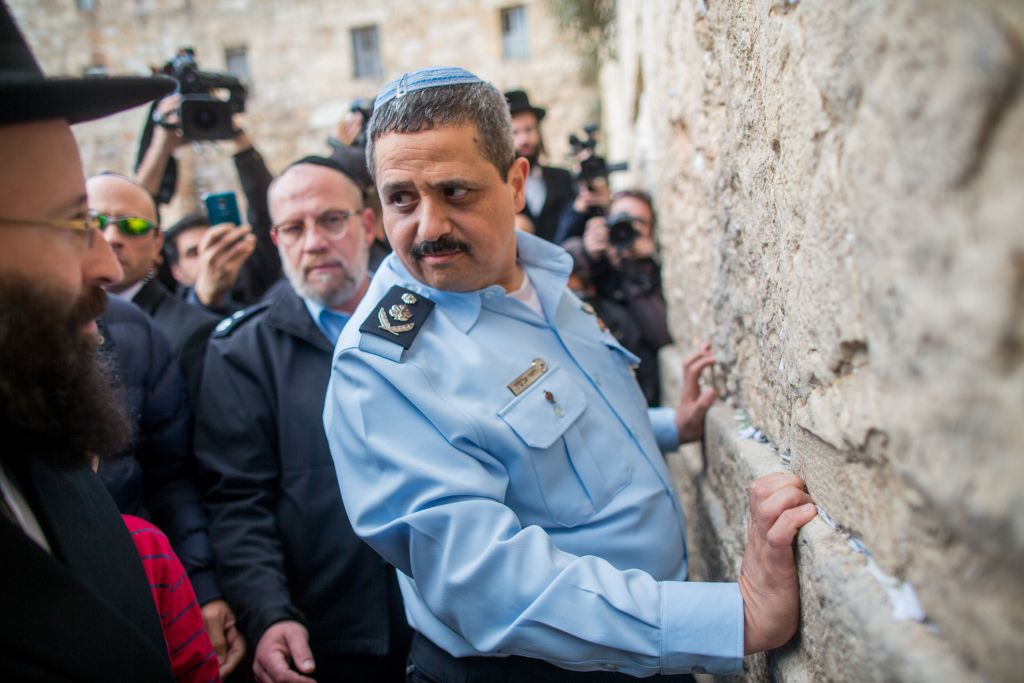
Yom Kippur, the Jewish Day of Atonement, is nigh. One of the central themes of the High Holy Day, the culmination of the so-called Ten Days of Repentance starting with the Jewish New Year is the Vidui service, a lengthy (and rote) confession marked by self-flagellation. In recent years, it has become vogue in Israel to create personalized Vidui services, sometimes confessing sins of a more specific nature and sometimes used as a form of political protest.
As far as I know, Israel’s fourth estate has never had a Vidui service of its own, but if it did, it might read something like this:
I have committed journalistic sins of commission.
I have committed journalistic sins of omission.
I have published unsourced information.
I have published incorrect information.
I have failed to publish corrections, or to place them prominently.
I have failed to admit when I am wrong.
I have been lazy in fact-checking information.
I have sensationalized.
I have published press releases and put my own name on them.
I have allowed officials to dictate stories to me.
I have relied too heavily on anonymous information without questioning why the person wishes to remain anonymous.
I have been mean-spirited.
I have been malicious toward public figures and others.
I have put my own analysis and opinions ahead of the actual news.
I have plagiarized.
I have used quotes as a lede.
I have made up quotes.
I have failed to give proper credit.
I have failed to serve the public.
I have used “they said,” when only one person was speaking.
I have invaded people’s privacy at their lowest moments.
I have tried to make others look bad.
I have kicked people while they are down.
I have represented a biased agenda.
I have used passive voice.
I have placed being first over being right.
I have sinned for access.
I have sinned for prestige.
I have sinned for a byline.
I have sinned for clicks.
I write this Vidui not just for other papers, but for myself and The Times of Israel as well and ask the public’s forgiveness for our various errors over the last year and earlier.
This may be a strange way to begin a column on what it is in the Hebrew print press Tuesday morning, but its actually fitting for a day in which the news agenda is dominated not by actual news but Yom Kippur-themed features and homilies.
The papers themselves are a symptom of the strange place Yom Kippur holds in the Israeli psyche, where it does triple duty as a solemn day of communing with God, a car-free bikers’ paradise, and a tense memorial day for a brutal and deadly war that broke out 43 years ago.
And just as weird are the days before Yom Kippur, as the holiday slowly creeps into view, easing the country into its annual 25-hour standstill (or shuckel, or bike-ride, depending on your religious persuasion).
“The whole nation will stop today to mark the day most holy to the Jewish people – Yom Kippur. Already yesterday one could feel the holiness in the air and masses of worshipers were slated to take part in the central Selichot (forgiveness) ceremony at night,” Israel Hayom’s lead story reads.
Many seeking to beseech God (or the FSM) for a clean slate use the day to beg forgiveness from those around them, and in Yedioth Ahronoth, Chief Rabbi Ashkenazi Rabbi David Lau writes a column ostensibly seeking to do the same and ask forgiveness from the Israeli public.
Yet in actuality, the apology is more of an apologetic, explaining why the Chief Rabbinate sees fit to intervene in many parts of Jewish Israelis’ lives.
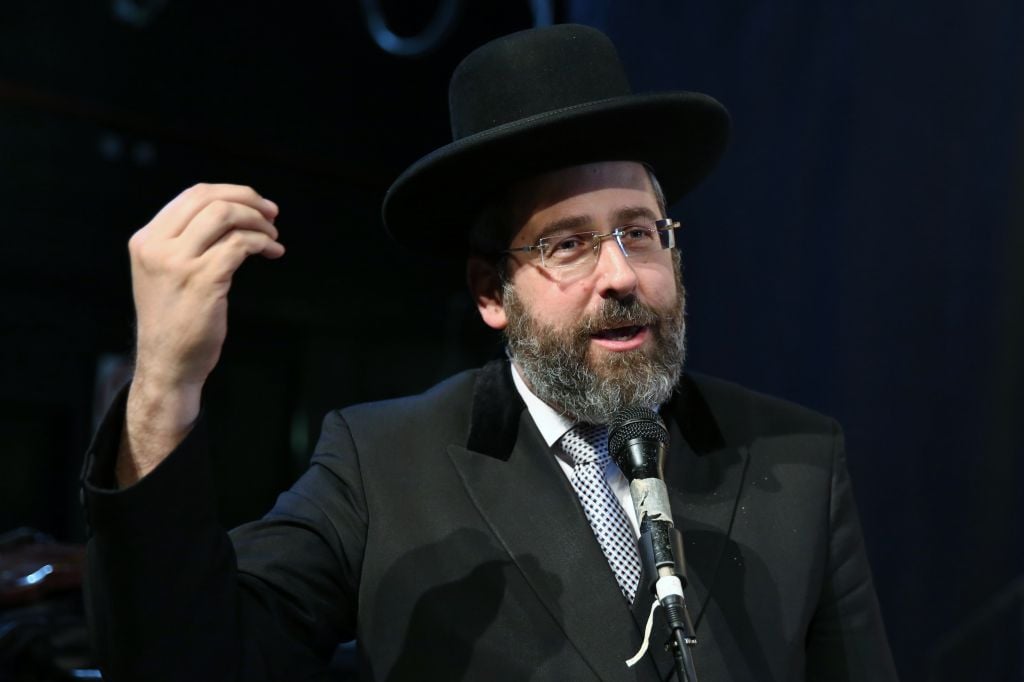
“As members of the Jewish people, we are required for future generations of our kids and grandkids to remember Jewish traditions, even if we choose not to live our personal lives by them. Even if some of our people don’t follow the Torah or its laws, we are all part of one big ship of the Jewish people for generations, and it’s on us to safeguard the hull of the boat, so we can reach that place we need to,” he writes. “Despite the difficulties in keeping the status quo between religion and state, as set during the days of David Ben-Gurion, it’s important to us, to all of us, even those who don’t agree, to keep them.”
That issue of the relationship between religion and state is on full display in Haaretz, where the lead story reports on the increasing Jewiness of the police force, with an influx of religious recruits challenging the way the cops do business.
According to the article, this means a synagogue in every police station, officers refusing to travel on Shabbat to work events Saturday night, the opening of a Jewish study hall for the 5-O so they can learn whether it’s ok to break Shabbat to protect non-Jewish lives, and what the paper describes as a recent “religious revival” rally held for Border Police officers meant to make them more religious.
“’In the past there was a synagogue at district headquarters and sometimes in subdistrict headquarters,” a retired officer speaking anonymously tells the paper. “Today every police station holds prayers and even the smallest stations have synagogues where officers pray. As long as it didn’t affect work” it was okay.
According to Israel Hayom, though, religious or not, the cops will be out in force over the holiday, including those who are taking part in a full closure of the West Bank over Yom Kippur.
In a special Yom Kippur section, the paper publishes what it says is the first interview with the police chief in charge of the West Bank, Moshe Barakat, who took over the famously troubled precinct several months ago.
Aside from saying that his station is no longer “the stepchild” of the police, he also counsels that Israelis should not think the terror wave that began a year ago and had seemingly faded away is over. “I have not heard, not in police or army briefings, anybody saying that that the wave is behind us. True, there has been a drop in incidents, but I don’t think the wave is behind us, and the issue of terror attacks is at the top of the agenda in every situational assessment, discussion and meeting. It has not dropped off the page,” he’s quoted saying.
One thing that is behind us is the second US presidential debate, but that does not stop papers from weighing in on the Sunday night showdown, even if they are a day late.

Yedioth analyst Nahum Barnea, writing under the headline “behind her,” and accompanied by a picture of Donald Trump standing creepily behind Hillary Clinton, writes that the debate failed to see Trump make any gains, pull even, or even manage to put the tape of him making comments about sexual assaulting women behind him.
“Trump came to the second debate hoping to stop the bleeding. His attacking presence, full of self-confidence, buried the calls within the GOP for him to pull out of the race. In that way he succeeded. But it’s doubtful if he convinced one voter, male or female, to vote for him, and it’s doubtful he took the vulgar tape off the agenda,” he writes. “Perhaps the opposite: Clinton managed to get out of him one line that he didn’t mean to say – that if he is elected he’ll put her in jail. The line strengthened the feeling that he is a man of violence, anti-democratic, without self-control, that does not know what a president can and cannot do. His supporters clapped, but they planned on voting for him anyway.”
In Haaretz, though, Chemi Shalev notes that Trump actually managed to stay afloat despite the crazy comments, while Clinton failed to notch a KO.
Like a worshiper during Kol Nidre flipping ahead in his Yom Kippur Mahzor to see how many pages he has left (approx. 1 trillion), Shalev tiredly notes that “there are still 29 days left before the craziest election campaign in history will finally be over.”


The Times of Israel Community.