

Decade after clandestine Syria strike, revelation sparks a war for credit
Former leaders snipe at each other over who said what in lead-up to Israel’s bombing of Assad’s nuclear facility in 2007, while ex-spies blame each other for failing to spot danger

 Add ToI as a Preferred Source on Google
Judah Ari Gross is The Times of Israel's religions and Diaspora affairs correspondent.

Fierce battles broke out this week following Israel’s admission that it bombed a secret Syrian nuclear reactor in 2007. There have been no reports of fatalities, but several egos were injured.
Yes, this is a war for credit.
On Wednesday at 5:00 a.m., the military censor ended its ban on Israeli outlets reporting that country’s air force destroyed the al-Kibar nuclear reactor in Syria’s Deir Ezzor region on the night between September 5 and 6, 2007.
The squabbling, over 10 years in the making, began almost immediately after.
Ehud Olmert, the prime minister at the time of the operation, accused then-defense minister Ehud Barak of having been opposed to the attack on the al-Kibar nuclear reactor and calling for it to be pushed off, potentially until after the reactor was running.
Barak, in turn, claimed Olmert was “hysterical” during preparations for the mission. In a television interview, the former defense minister went further in his attack, saying Olmert had been merely “playing” the role of a prime minister, likening him to Kevin Spacey as US President Francis Underwood in the series “House of Cards.”
Meanwhile, former officials from the Mossad intelligence agency have squared off against those from rival clandestine service Military Intelligence. The Mossad agents claim their actions — and their actions alone — led to the discovery of the facility in northwestern Syria in early 2007, while MI allowed the reactor to nearly go hot without noticing.
Military Intelligence maintains that it was aware of Syria’s nuclear ambitions from 2006 and that the information gathered about the al-Kibar reactor was because of their efforts as well.
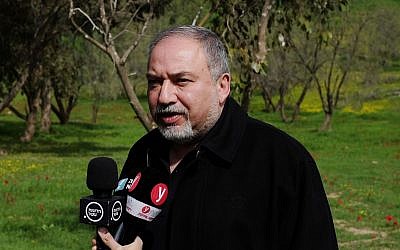
In response to the bickering, Defense Minister Avigdor Liberman on Wednesday and Thursday said it was a mistake for him to give the military censor permission to declassify the operation in light of the bickering between the parties involved.
Playing the role of the adult in the room, Liberman said these squabbles were harming national security and that those involved may have violated Israeli law by disclosing state secrets.
“The former senior officials sharing every national secret to every possible media outlet are demeaning the entire operation, which was a brilliant operation and a brave choice made by the cabinet,” Liberman told Army Radio on Thursday morning, speaking by phone from Africa, where he is on an official state visit.
The defense minister said the decision by Military Censor Ariella Ben-Avraham to allow news outlets to publish information was not in itself incorrect, but that her unit “did not anticipate that such a war for credit would make people lose their minds.”
Liberman said the loose lips of these former officials has “seriously harmed national security.”
In the hours after the defense minister’s interview on Army Radio, Barak took to Twitter, releasing a video in which he defended his reticence in the time leading up to the attack.
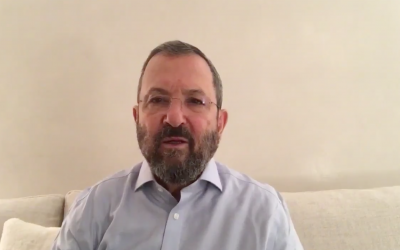
“Facts, folks, facts. I never said in the cabinet or anywhere else that we should attack the reactor when it was active,” he said.
The former defense minister said Israel’s intelligence on the site was good enough that they would know weeks beforehand if it was going to be turned on and that he therefore had only called for “clarity and a calm demeanor, which was lacking in that government.”
On Wednesday, Liberman, who at the time of the raid was minister for strategic affairs, rejected outright Barak’s claims that the mood in the cabinet room when the decision to bomb the reactor was made was “hysterical and apocalyptic.”
Rather, Liberman said, there was an air of “seriousness and responsibility.”
Spy vs. spy
A somewhat less personal fight was also waged on Wednesday, with former intelligence officials trading barbs and subtle jibes over which agency was responsible for the failure in locating the reactor for the first few years of its construction and who deserved credit for ultimately discovering it.
At a conference, former Mossad chief Tamir Pardo criticized the decision to declassify the reactor strike because a “war of egos” was liable to break out, with everyone trying to belittle the contributions of everyone else.
He then appeared to do precisely that, saying photographs of the reactor collected by Mossad agents in 2007 were the sole reason Israel was able to conduct the operation and rebound from what he described as a “resounding intelligence failure.”
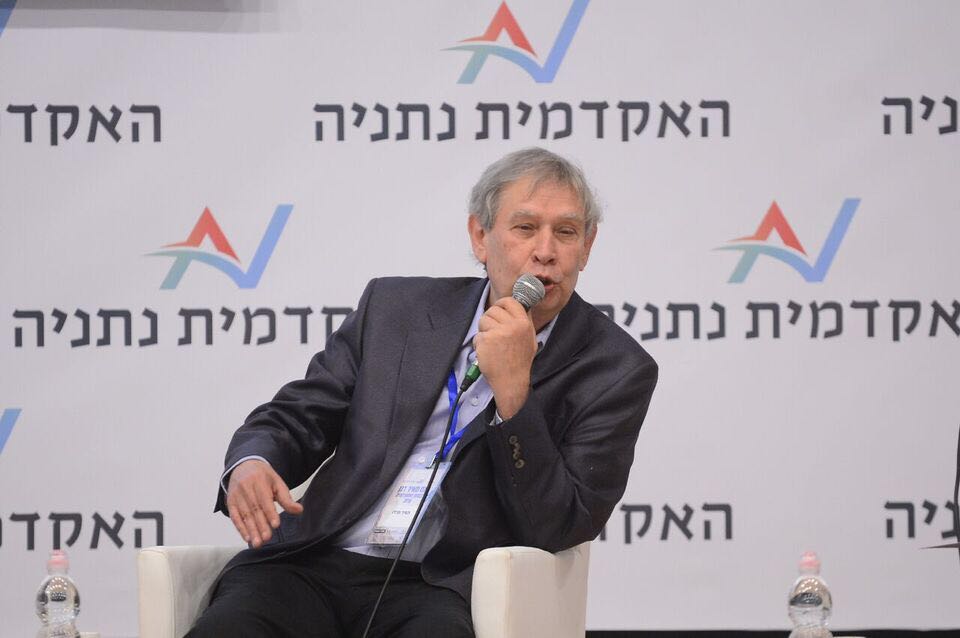
“It’s thanks to this information, and only this information, that the State of Israel was able to acquire the knowledge that allowed it [to carry out the strike] and the knowledge that there existed a reactor in Syria at all,” Pardo said.
This was seen by many as a dig at Military Intelligence.
In response, Amos Yadlin, who was head of army intelligence at the time, said in a television interview later that day that the “resounding intelligence failure” to which Pardo referred must have been a Mossad one.
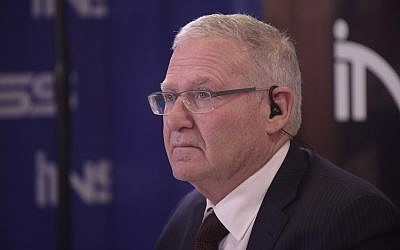
Also on Wednesday, Yadlin noted that the army believed Syria was developing a nuclear reactor a year before the Mossad agents had their major breakthrough.
“In 2006, in Military Intelligence, and in no other place, a young major came forward and said to me… ‘there is suspicion of a nuclear program in Syria,'” he told the Ynet news site.
What is unclear in all this is who the audience is for all these fights.
After all, most Israelis are just glad the damn thing was destroyed.
Stuart Winer contributed to this report.





The Times of Israel Community.