

Dust storm turns Israel’s skies gray on Passover, drives up pollution
Environmental Protection Ministry warns sensitive populations to reduce physical activity
 Add ToI as a Preferred Source on Google
A cloud of dust carried by strong winds from North Africa covered Israel on Thursday, turning the skies gray on the first day of the Passover festival and increasing air pollution.
Pollution levels were set to drop only by evening, the Environmental Protection Ministry said.
The ministry said it “recommends that sensitive populations, including heart patients, lung patients, the elderly, children and pregnant women avoid strenuous physical activity outdoors.
“The general population is advised to reduce strenuous physical activity outdoors,” it added.
The Israel Meteorological Service, meanwhile, said there was a chance of localized flooding in southern Israel, including the Judean Desert, Dead Sea, and northern Arava areas.
In February, a Hebrew University expert warned that dust storms are likely to become more common and start earlier in the year as a result of climate change.
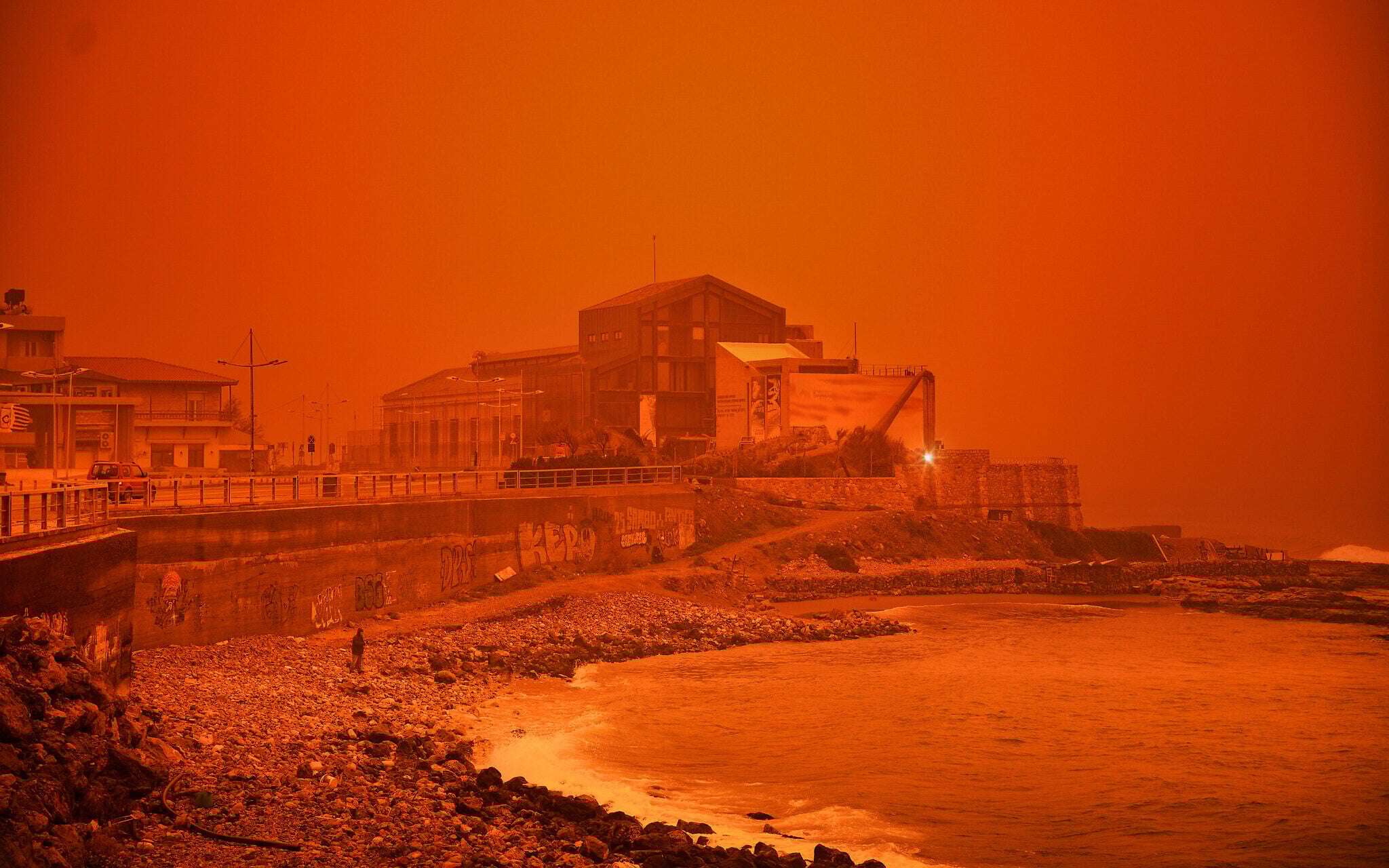
Wednesday saw dramatic scenes in the Mediterranean island of Crete, with skies turning an eerie orange as winds of up to force 9 on the Beaufort scale carried dust from North Africa, disrupting flights.
In Greece on Thursday, authorities recovered the body of a man in the seaside holiday town of Nea Makri, 35 kilometers (22 miles) northeast of Athens, a fire brigade official told Reuters, as Erminio lashed the country.
The man was believed to have been carried away by a torrent and trapped under a car as he attempted to cross a flooded street, local media reported.
The fire brigade said it has received hundreds of calls to rescue people trapped in floodwater and help clear roads of fallen trees as the storm swept through Athens and several islands in the Aegean Sea.
Early on Thursday, crews were still removing debris, pumping water from flooded buildings, and repairing damaged infrastructure east of the capital. Authorities also banned some ferries from sailing from the port of Piraeus near Athens to the Greek islands.
Greece, which sits at Europe’s southernmost tip, has suffered destructive floods and wildfires in recent years, which analysts attribute to a rapidly warming climate.










The Times of Israel Community.