Idit Silman dons scuba gear with parks authority officials to help relocate coral that has grown on submerged garbage, as part of project to protect Eilat’s reefs
Stuart Winer is a breaking news editor at The Times of Israel.
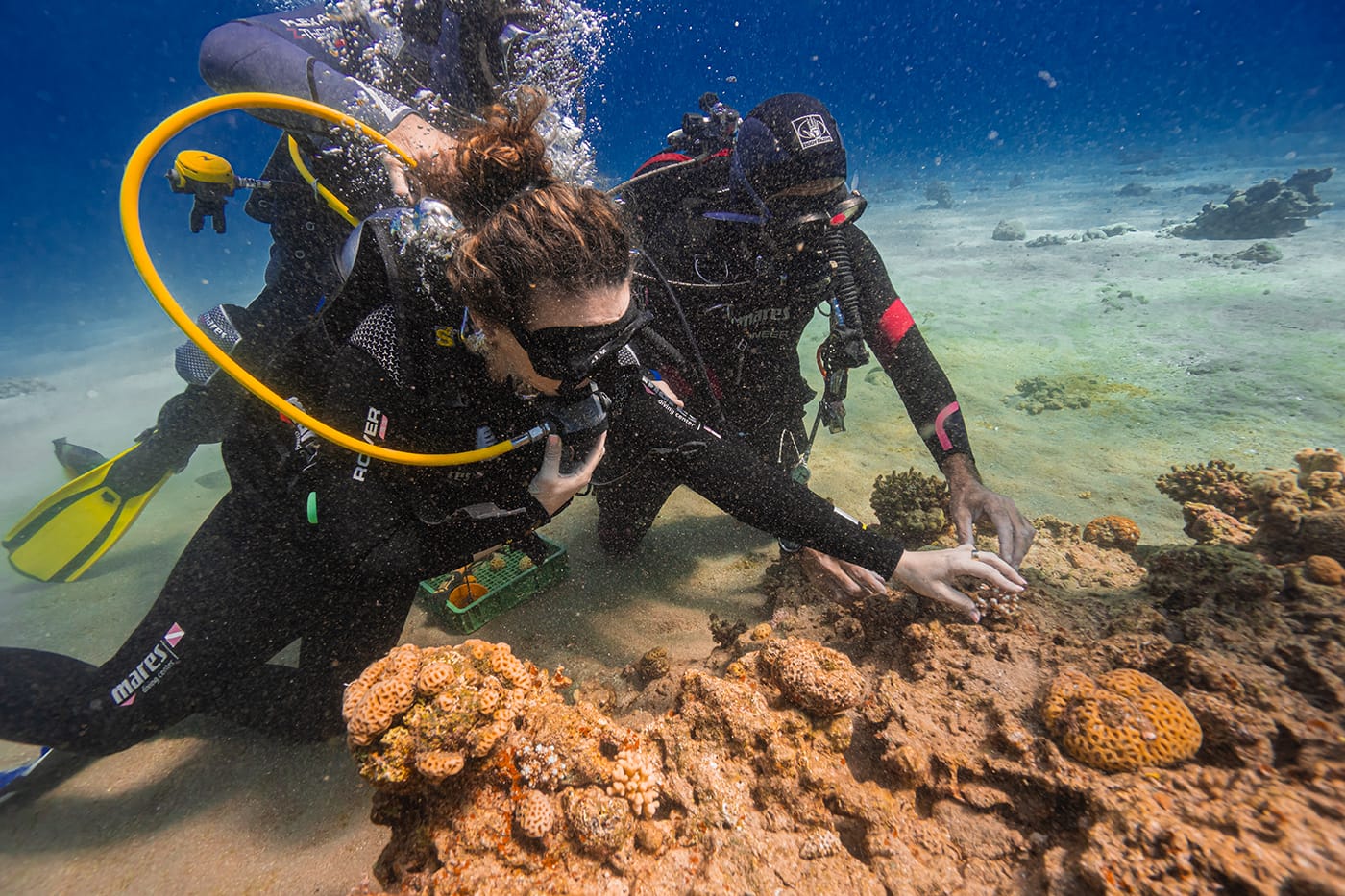
Environment Protection Minister Idit Silman, left, dives at the coral reefs in Eilat, February 6, 2023. (Omri Omsi/Israel Nature and Parks Authority)
Environmental Protection Minister Idit Silman took a hands-on approach to her job Monday as she went diving to help with the preservation of coral reefs off the southern resort city of Eilat, her ministry said in a statement.
Silman donned a wetsuit and scuba equipment as she joined Israel and Nature Parks Authority staff to relocate coral that had established itself on unnatural objects.
The slowly growing marine creatures occasionally attach themselves to sunken metal waste that has drifted into the local coral nature reserve.
The minster helped carefully pry the coral off so that it could be deposited on a more natural platform, the statement said.
The INPA regularly moves coral as part of its preservation work for the coral reefs.
Get The Times of Israel's Daily Editionby email and never miss our top stories
“This action is often a preliminary step to the removal of waste from the heart of the sea on which protected natural assets have been established,” the statement said.
The ministry noted that the coral reefs in the Gulf of Eilat are the most northern reefs in the world and support a wide variety of marine life.
“These reefs are extremely sensitive and constitute a unique habitat that must be preserved against physical damage, sea pollution, and more,” it said.
Environmental Protection Minister Idit Silman, left, and Social Affairs Minister Yaacov Margi arrive for a cabinet meeting at the Prime Minister’s Office in Jerusalem on January 22, 2023. (Fitoussi/FLASH90)
Silman took over the Environmental Protection Ministry at the beginning of the year after the new government was sworn at the end of December.
Help us report truthfully on social media
As a multimedia journalist, my job is to take the quality, fact-based journalism produced by The Times of Israel newsroom and make it accessible across every platform — from Instagram posts to podcasts to short-form videos.
This is how many, especially young people, consume news these days. But misinformation is rampant on social media. Our team at ToI produces accurate, responsible short-form reporting on Israel and the Jewish world.
If you believe in the importance of factual social media journalism, please consider joining our reader support group, The Times of Israel Community. Your financial support is essential to sustain responsible multimedia reporting.
We’re really pleased that you’ve read X Times of Israel articles in the past month.
That’s why we started the Times of Israel - to provide discerning readers like you with must-read coverage of Israel and the Jewish world.
So now we have a request. Unlike other news outlets, we haven’t put up a paywall. But as the journalism we do is costly, we invite readers for whom The Times of Israel has become important to help support our work by joining The Times of Israel Community.
For as little as $6 a month you can help support our quality journalism while enjoying The Times of Israel AD-FREE, as well as accessing exclusive content available only to Times of Israel Community members.
Thank you, David Horovitz, Founding Editor of The Times of Israel


 Add ToI as a Preferred Source on Google