

Erdogan says Turkey can’t stay out of IS fight
Meanwhile, Jordan confident it’s safe, despite taking part in anti-Islamic State coalition
 Add ToI as a Preferred Source on Google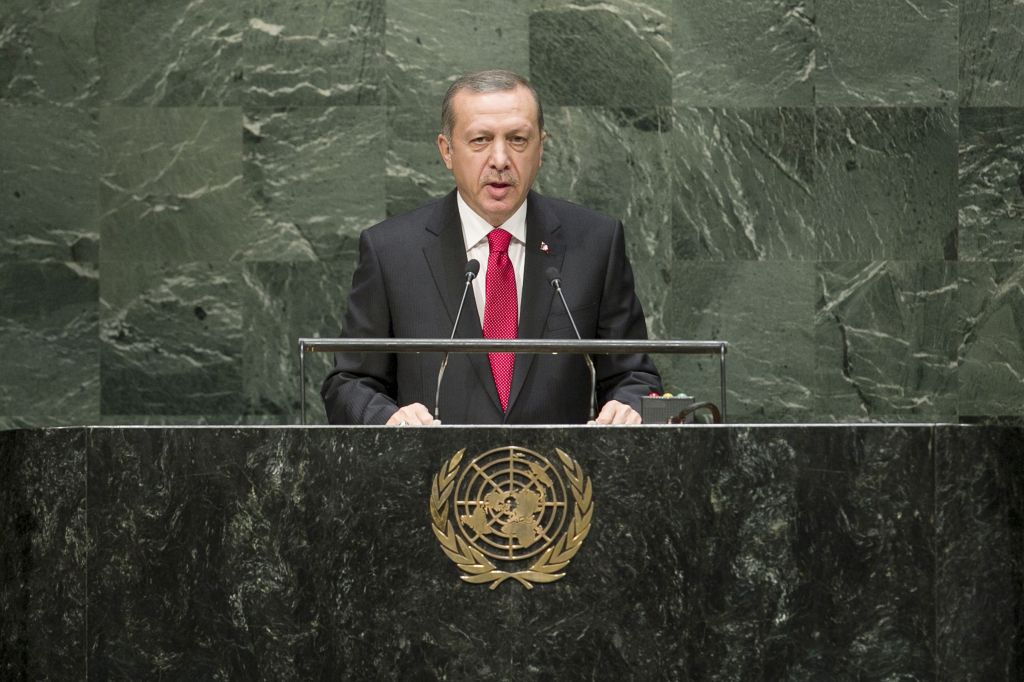
Turkey cannot stay out of the international coalition fighting Islamic State (IS) jihadists, President Recep Tayyip Erdogan said Sunday, as Ankara prepares in the coming week to define its military involvement.
Turkey has for months frustrated the West with its cautious position against IS, but there appears to have been a sea change in its policy following Erdogan’s trip last week to the United States.
“We will hold discussions with our relevant institutions this week. We will definitely be where we need to be,” Erdogan said in a keynote address to a World Economic Forum meeting in Istanbul.
“We cannot stay out of this,” he added.
IS militants have now advanced in Syria to just a few kilometers from Turkey, sending tens of thousands of people fleeing across the border.
Turkey has so far taken in over 160,000 refugees who fled the IS assault around the town of Ain al-Arab, but Erdogan said it would be better if they could live safely in their own country.
The president also reaffirmed his call for a buffer zone and no-fly zone within Syria to protect Turkey’s borders and the refugees. He also indicated ground forces could be needed.
“It is not possible only from the air, there is also a ground dimension,” he said.
Prime Minister Ahmet Davutoglu announced on Sunday that the government would send motions requesting extended mandates for military action in Iraq and Syria on Monday.
In a hugely rare intervention, Turkey’s top general, Necdet Ozel, will speak to the cabinet on Tuesday, Davutoglu added. Parliament will then debate the mandates on Thursday, paving the way for military action, although what that will involve is still not clear.
Erdogan, who has long pressed for the ouster of Syria’s President Bashar al-Assad, indicated that he did not think military action would be enough to thwart IS and long-term solutions were needed to solve political problems in Syria and Iraq.
“Dropping bombs from the air only brings a temporary solution,” he said, adding that coordinated action needs to be taken against IS in both Syria and Iraq, attacking Britain for only planning strikes on targets inside Iraq.
“Instead of handling it this way, we should send our Syrian brothers to their own country through a safe zone.”
Ankara has justified its low-key role in the fight against IS by saying its hands were tied by concerns over the fate of dozens of Turkish hostages abducted by IS in Iraq.
But these hostages were freed last weekend, prompting what Erdogan has acknowledged as a major change in Turkish policy.
Jordan says it’s safe from IS
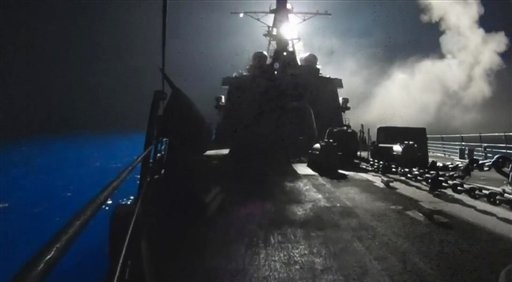
Jordan, which has joined a US-led coalition waging airstrikes on the Islamic State group, said Sunday it has secured the country’s borders against “any threat.”
The government’s statement follows warnings from analysts that Jordan was taking a risk by joining the US-led coalition.
“The government and the armed forces, as well as security forces, are monitoring closely the situation in several neighboring countries,” it said.
“Precautionary measures have been taken to control the borders and protect Jordan against any threat,” it said, quoted by state news agency Petra.
Interior Minister Hussein al-Majali, briefing the cabinet, said security in the kingdom and at its borders was “good and stable. There is no real direct threat for Jordan.”
Jordan borders both Syria and Iraq, where the US-led coalition is carrying out airstrikes on the Islamic State group.
The IS has called on its supporters to carry out attacks against coalition partners, prompting concerns that Jordan, which is grappling with its own homegrown Islamists, could be targeted.




The Times of Israel Community.