

EU warns Turkey against ‘illegal’ Mediterranean gas exploration plans
After Erdogan vows to start searching waters ‘as soon as possible,’ defying a mega-deal signed by Israel, Greece and Cyprus, European countries accuse Ankara of stoking conflict
 Add ToI as a Preferred Source on Google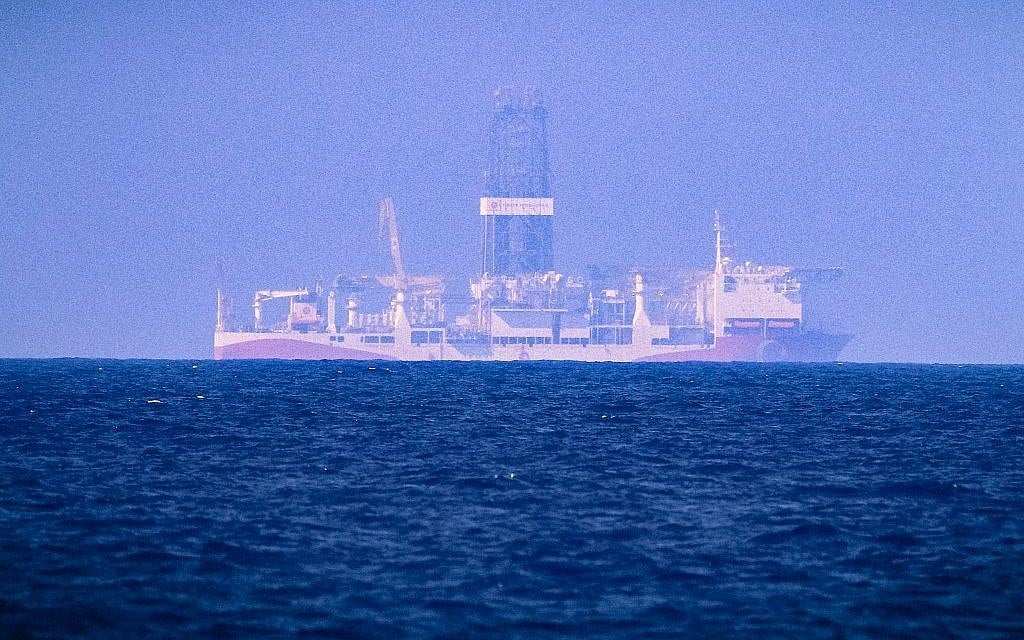
BRUSSELS, Belgium — The European Union has urged Turkey to drop plans to drill for oil and gas around Cyprus and the eastern Mediterranean, saying such exploration was “illegal.”
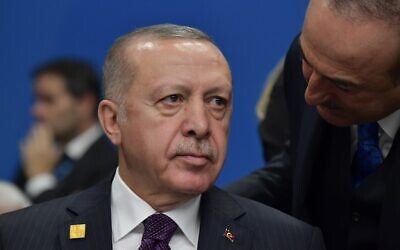
Turkish President Recep Tayyip Erdogan vowed Thursday that his country would start exploring for gas in the eastern Mediterranean “as soon as possible” this year, after signing a maritime deal with Libya.
“Concrete steps towards creating an environment conducive to dialogue in good faith are needed,” EU foreign policy spokesman Peter Stano said in a statement released Saturday.
“The intention by Turkey to launch further exploration and drilling activities in the wider region goes, regrettably, in the opposite direction.”
Ankara has angered neighboring countries in the Mediterranean with an agreement signed with the Tripoli government in November, which claimed extensive areas of the sea for Turkey.
Greece says the deal fails to take into account the island of Crete, while Turkey has already upset Cyprus by sending ships to search for oil and gas off the divided island.
Erdogan has said it is “no longer legally possible” for any search and drilling activities or a pipeline without Libya or Turkey’s approval.
Earlier this month, Greece, Cyprus and Israel signed a major deal to construct an EastMed pipeline to ship gas to Europe, despite Turkey’s vehement opposition.

“The international law of the sea, the principle of good neighborly relations and the sovereignty and sovereign rights over the maritime zones of all Member States have to be respected,” the EU statement said.
Possible sanctions could be discussed as early as Monday when the bloc’s foreign ministers meet in Brussels, officials said.
Erdogan, who is in Berlin Sunday for a Libya peace conference, has rejected what he has called “ultimatums” issued by the EU, reminding the bloc that some four million refugees, mostly Syrian, are currently in Turkey which, he has threatened, could start sending them to the EU.








The Times of Israel Community.