

Foreign passport holders stuck in Gaza for weeks begin leaving for Egypt
Over 500 foreigners and dual nationals expected to pass through Rafah border crossing in deal reportedly brokered by Qatar; wounded also let out for treatment
 Add ToI as a Preferred Source on Google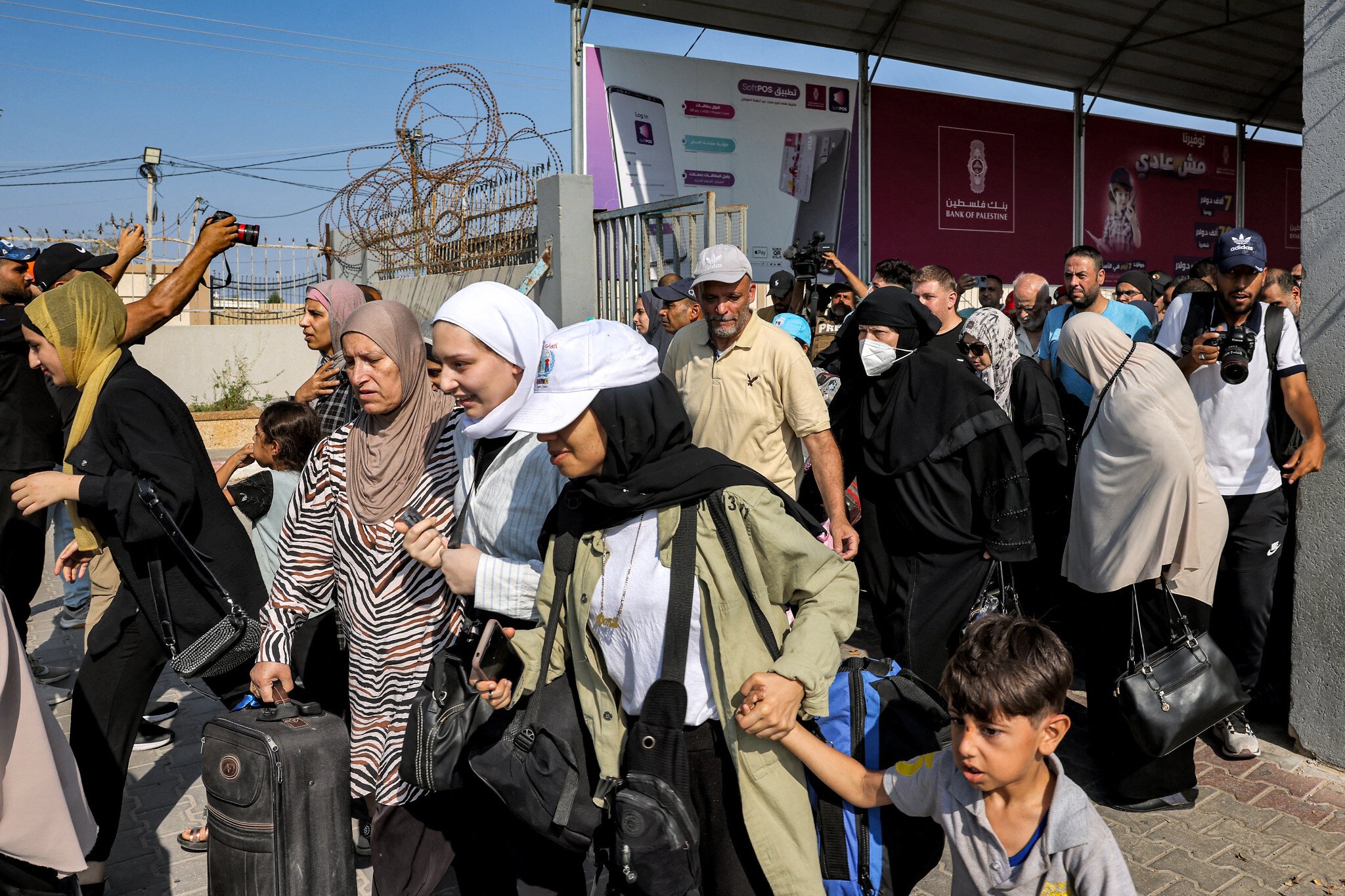
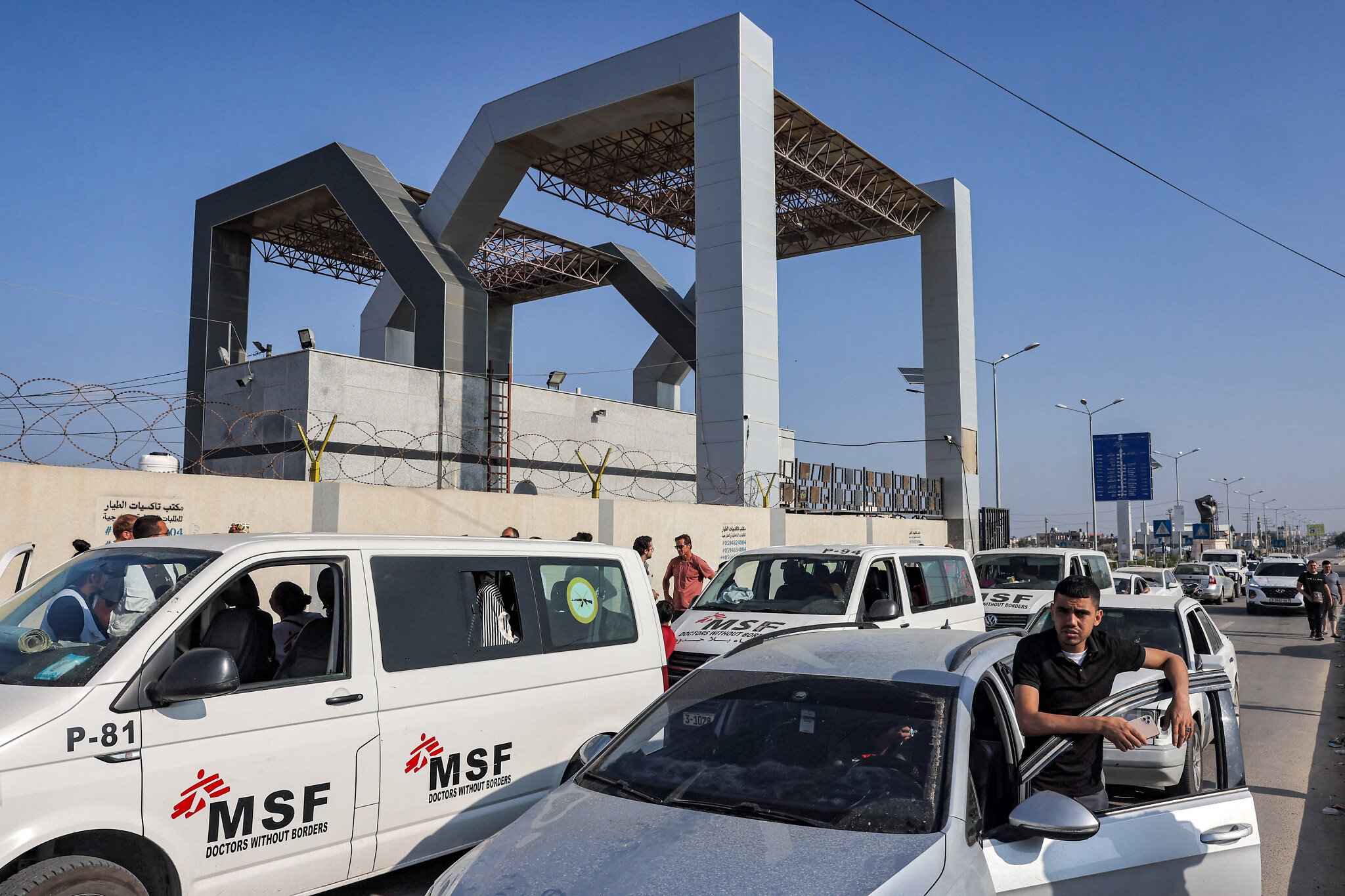
CAIRO, Egypt — Scores of foreign passport holders started leaving war-torn Gaza Strip Wednesday after Egypt opened the Rafah to allow people in for the first time since the Israel-Hamas war began on October 7, as part of a reported deal brokered by Qatar.
It was not immediately clear how many people would manage to leave via Rafah on Gaza’s southern border with Egypt, but live footage from the scene showed crowds of people entering the Palestinian side of the terminal.
Several severely wounded Gazans were also moved to Egypt for medical treatment.
Foreign nationals and dual nationals have been trying for three weeks to exit Gaza into Egypt but the border gates remained firmly shut despite efforts by Washington and other capitals to see them open.
Lines formed early Wednesday morning at the terminal and some 545 foreigners and dual nationals along with about 90 sick and wounded were expected to leave.
After being allowed into the terminal area, huge lines formed around crossing booths for checks on passports and other documents.
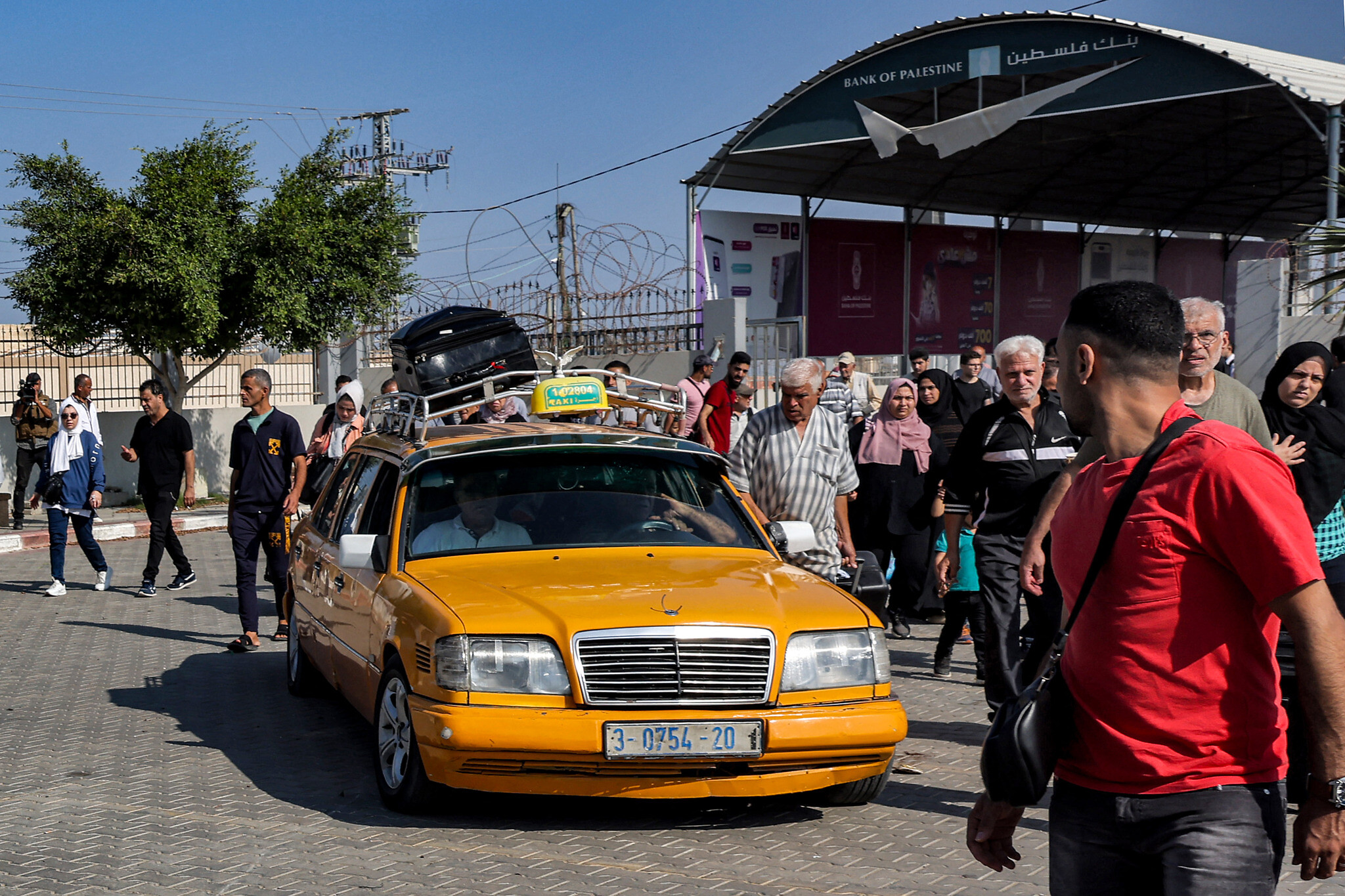
Ambulances waited on the Egyptian side to take away the wounded and sick.
A source briefed on the development told Reuters that the evacuations were agreed on in a deal mediated by Qatar between Egypt, Israel and Hamas in coordination with the US.
It was not clear how long the border will remain open, the source said and noted the agreement is not tied to negotiations to release hundreds of hostages held by terror groups in Gaza or other efforts to ease the humanitarian crisis in the Palestinian enclave.
https://twitter.com/TheMuslim786/status/1719660502962552957
Although more than 200 trucks of desperately needed aid have crossed into Gaza from Egypt during the fighting, no people had been allowed to flee the battered enclave.
Foreign governments say there are passport holders from 44 countries, as well as 28 agencies, including UN bodies, living in the Gaza Strip.
Egypt said a first group of seriously sick or wounded Palestinians would be allowed in to Egypt for medical treatment, with television channels close to the Egyptian intelligence services broadcasting live images of a fleet of ambulances entering the terminal.
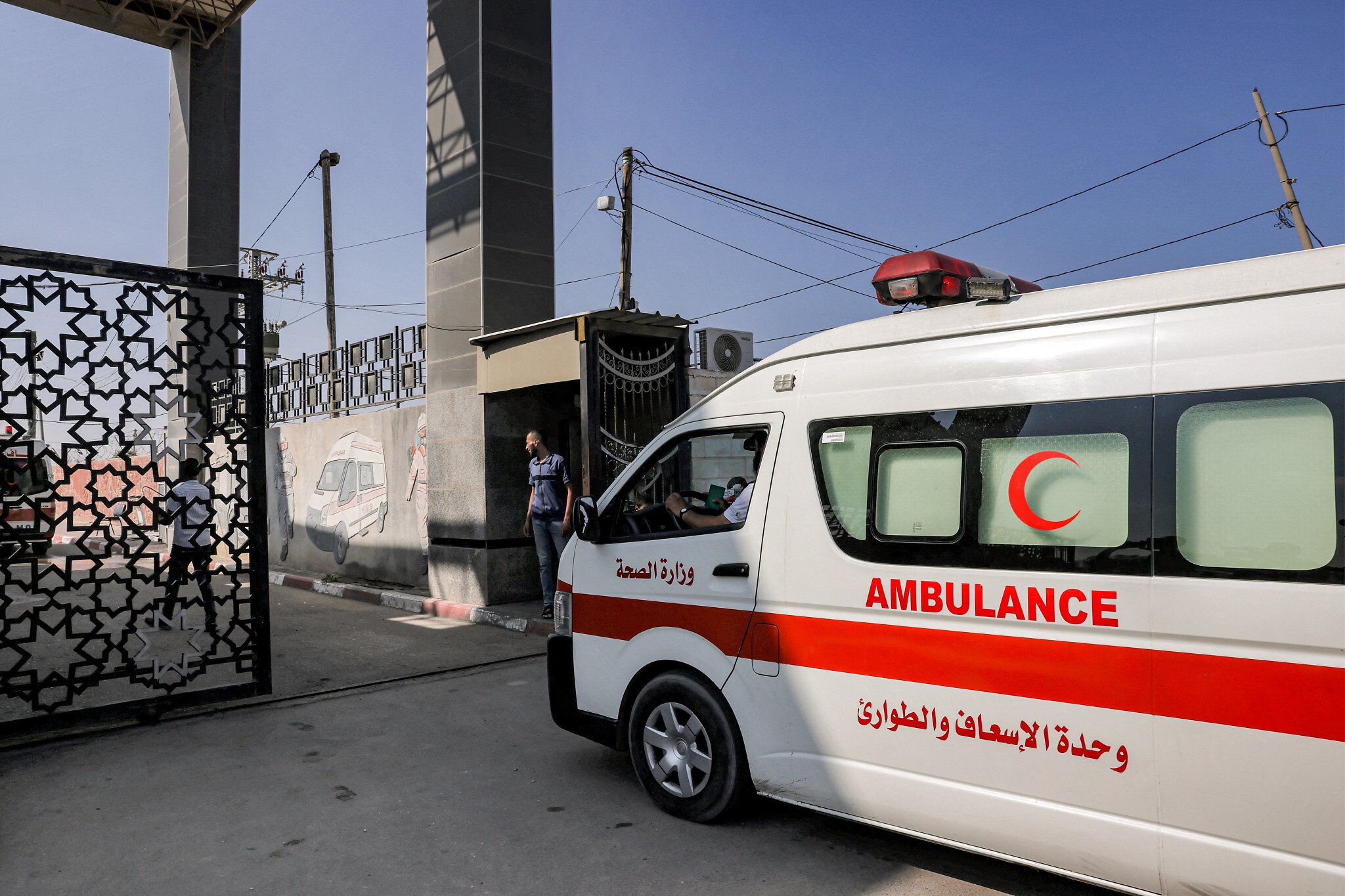
Palestinian sources said they expected 88 people to be taken across for treatment in Egyptian hospitals.
Medical sources said that Egypt has prepared a field hospital in Sheikh Zuwayed in the Sinai peninsula.
Gaza’s has essentially been sealed since October 7, when the Strip’s Hamas rulers sent some 2,500 terrorists into southern Israel by land, air and sea under the cover of a deluge of thousands of rockets fired at Israeli towns and cities. Some 1,400 people were killed in Israel during the onslaught, and at least 245 more taken hostage. The vast majority of those killed as terrorists seized border communities were civilians — including babies, children and the elderly.
Israel’s offensive is aimed at destroying Hamas’s infrastructure, and it has vowed to eliminate the entire terror group, by targeting all areas where Hamas operates, while seeking to minimize civilian casualties and urging the civilian population to evacuate to southern Gaza.
Nonetheless, weeks of punishing airstrikes and a ground offensive launched over the weekend have created a dire humanitarian crisis in the Strip.
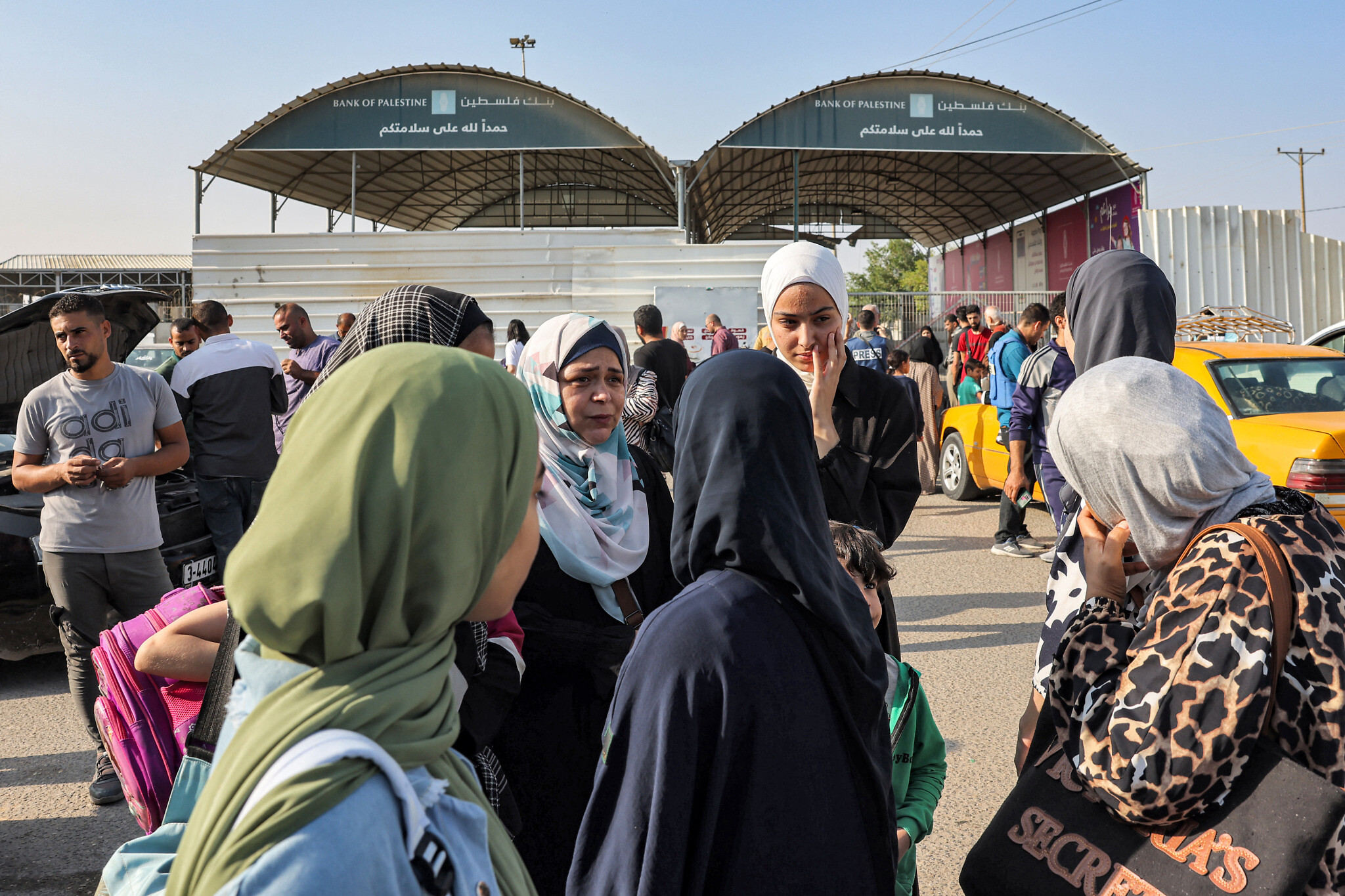
Egypt has refused to open its doors to those fleeing Gaza — in part because it doesn’t want to be seen as aiding Palestinian displacement, and also because it doesn’t want a massive refugee crisis within its borders.
Since the war broke out, the United States and other countries have scrambled to arrange charter flights — and even an evacuation ship — to ferry their citizens in Israel to various destinations, as the country has been bombarded by over 7,000 rockets targeting its cities and towns, with many border communities near Gaza and Lebanon evacuated.
But no such evacuation has materialized for foreign citizens stranded in Gaza, who are coping with the fiercest Israeli bombing campaign in the territory’s memory and dire shortages of food, water and fuel. The Jewish state has accused Hamas of maintaining significant fuel supplies for its own use, withholding them from the civilian population.
Western diplomats estimate there to be some 1,700 Palestinians in Gaza with European or US citizenship.
The US State Department said last week that David Satterfield, recently appointed special envoy for humanitarian issues in the Middle East, was in Israel for negotiations with Israel, Egypt and the United Nations to get Rafah to open for US citizens, other dual nationals and employees of international organizations.
A day earlier, Matthew Miller, the State Department spokesman, blamed Hamas for the hold-up.
“We do believe that Egypt is ready to process American citizens if they can make it to Egyptian authorities,” he told reporters. “Hamas just has to stop blocking their exit.”
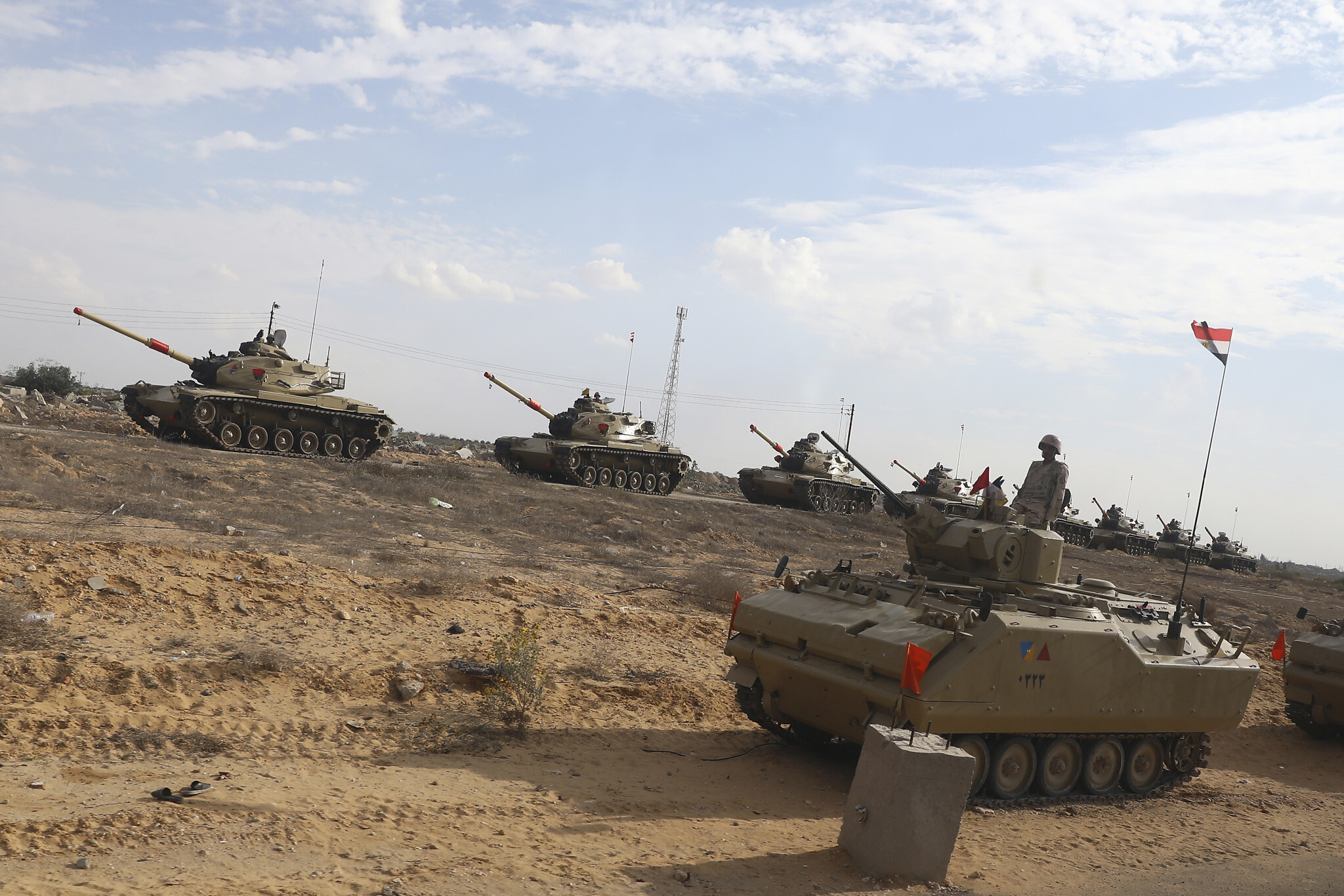
The week before that, Palestinian Americans and other dual citizens had rushed to the Rafah crossing as it opened for the first time since the war started to allow 20 trucks loaded with humanitarian aid into Gaza.
However, none of the foreigners were allowed to cross the other way into Egypt
It was not immediately clear if the Hamas authorities in Gaza or Egypt were preventing them from leaving.
Embassies had asked their citizens in Gaza to stand ready at the border, but crowds of disappointed Palestinians holding American, Canadian, German and British passports waited hours in vain for at least the fifth time that week.
Israel is still tallying the number of people it believes were taken captive in the Hamas attack, but last week it said that over half — 138 — have foreign passports from 25 countries. Over 200 foreigners or dual nationals were killed or abducted in the onslaught.
The Hamas-run health ministry has claimed more than 8,500 people have been killed in the enclave, a figure that cannot be independently verified. Hamas has been accused of artificially inflating the death toll, and it also does not distinguish between civilians and terror operatives. The terror group has pushed back against such claims, releasing an unverified list of names it says represent those killed. Some of the dead are believed to be victims of Palestinian terrorists’ own misfired rockets.
Israeli officials said that 70 trucks with aid were allowed to enter Gaza from Egypt on Tuesday.
That was one of the biggest flows since a US-brokered deal was reached, but much less than humanitarian groups say is needed.
Israel fears that food, water, and medicine coming into Gaza could be diverted to Hamas, or that aid shipments could conceal arms or other supplies.
As a result, Israeli security personnel carry out stringent inspections that have slowed the flow of aid to a trickle.
Hamas and other Iran-backed groups around the Middle East have continued to barrage Israel, displacing over 200,000 people and periodically sending over a million scrambling for safety in bomb shelters.
Jacob Magid contributed to this report.








The Times of Israel Community.