

Hezbollah fires barrages of rockets and drones at north as IDF expands south Lebanon op
None injured in relentless attacks as military expects increased fire; army strike hits artillery command center; Lebanese officials said disappointed by talks with Israel at Pentagon
 Add ToI as a Preferred Source on Google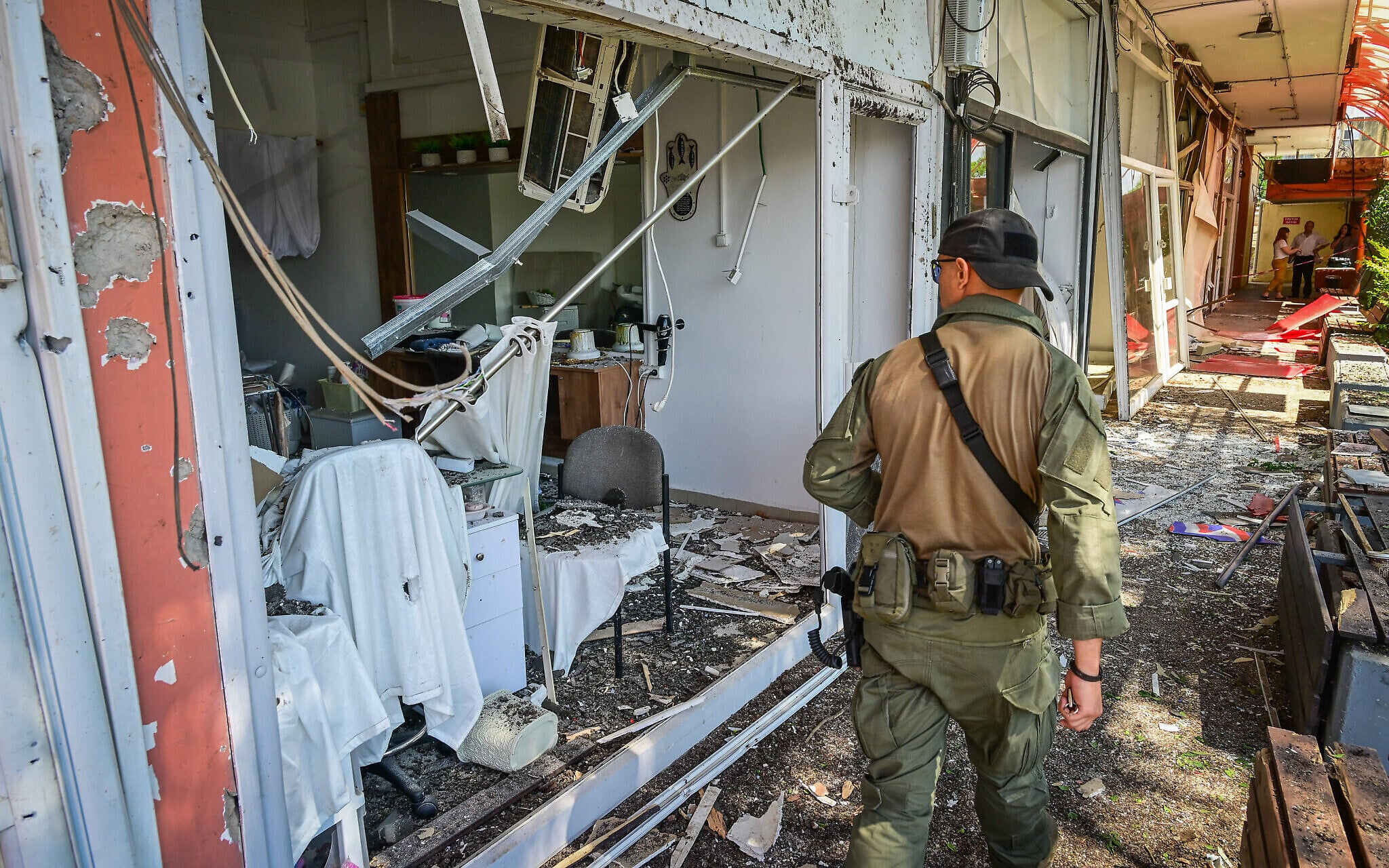
Hezbollah fired multiple rockets and drones at Israel on Saturday afternoon and evening, as the Israeli military said it was preparing for an increase in attacks by the terror group due to the army’s expanded operations in southern Lebanon.
The IDF had said it was prepared for the possibility of increased Hezbollah rocket fire on northern Israel as troops push deeper into southern Lebanon.
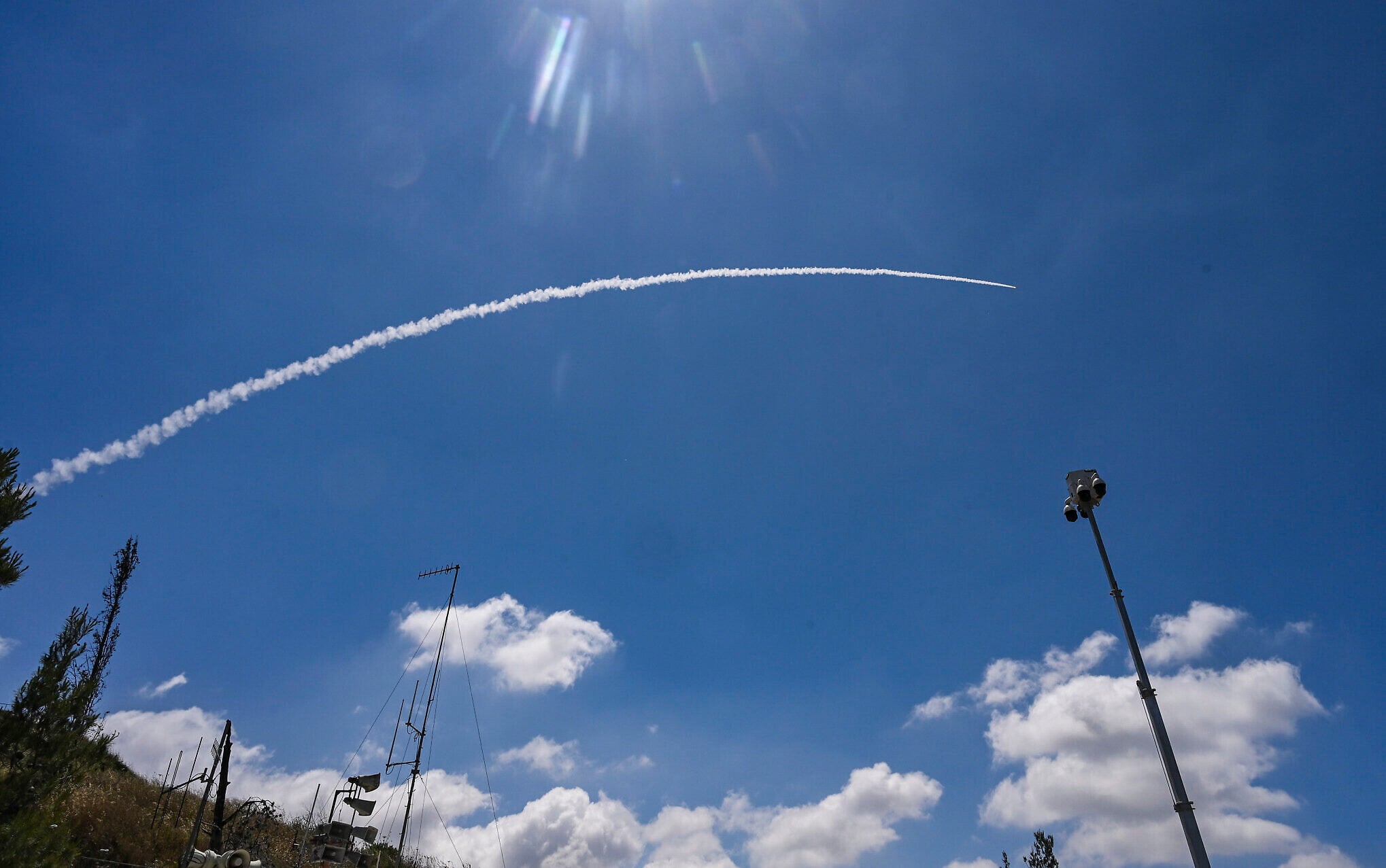
Sirens sounded repeatedly in northern communities as a result of the attacks, sending people rushing to shelters. Rockets were launched at Safed, Kiryat Shmona and Karmiel, as the upper and western Galilee were targeted.
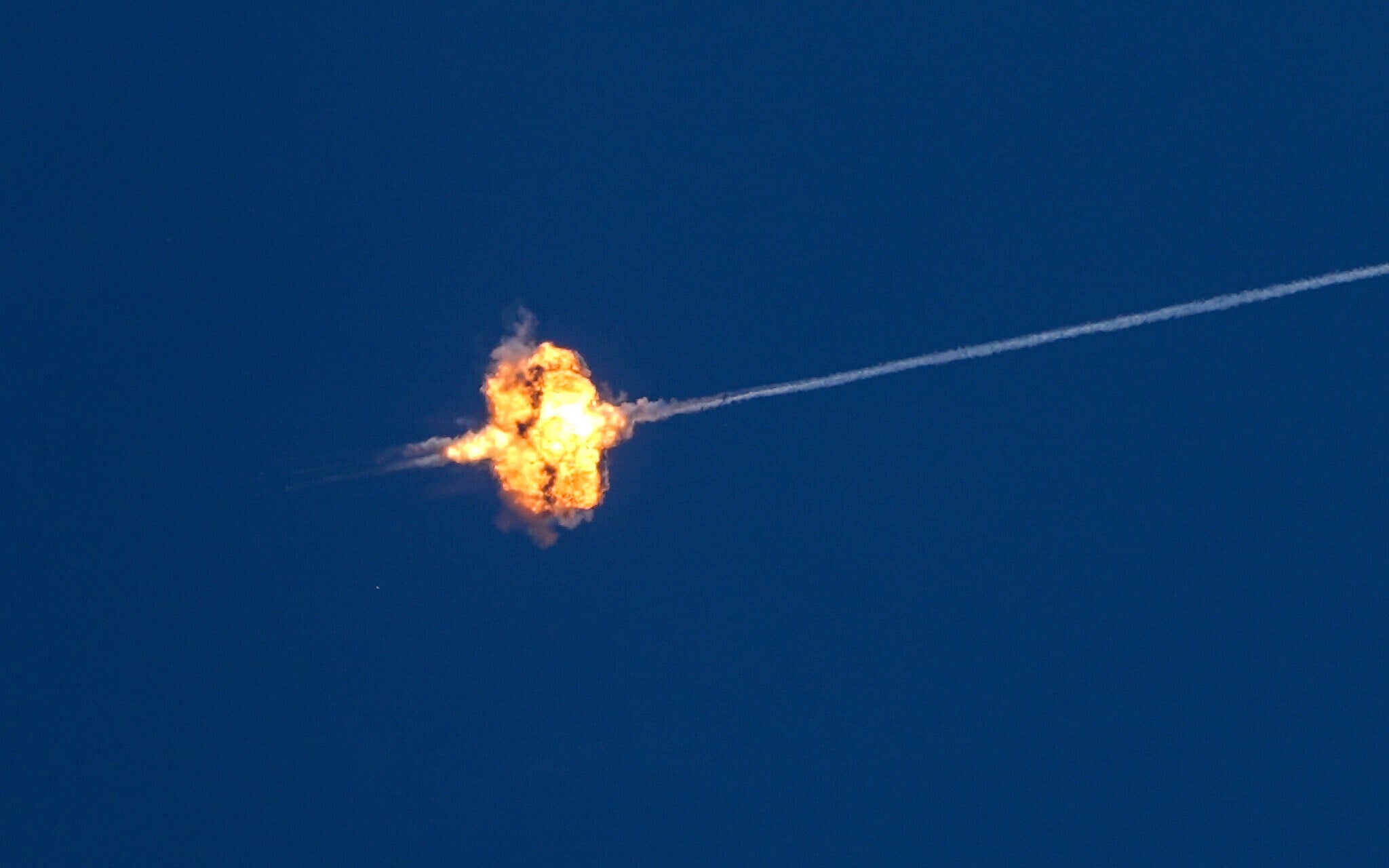
Multiple rockets were intercepted throughout the day, while others struck open areas, according to the military.
A video from the northern coastal city of Nahariya showed rockets impacting nearby in the Mediterranean Sea, as frightened beachgoers scrambled for cover.
Meanwhile, Hezbollah also launched several drones, with one striking a military zone near the border community of Shomera, while two others were intercepted, the military said.
Another apparent drone did not cross the border, the IDF stated.
נפילות סמוך לחוף נהריה pic.twitter.com/NQaEPkwIdN
— כל החדשות בזמן אמת (@Saher_News_24_7) May 30, 2026
No injuries were caused in the attacks.
The continued attacks on Saturday came after local residents described a long night with repeated siren warnings and explosions and expressed frustration with the government for failing to end the threat from the Iran-backed Lebanese terror group.
Dror Mosri voiced his frustration on Channel 12 news, after his business in Kiryat Shmona was damaged by a Hezbollah rocket overnight.
“I don’t know what to say,” he said. “The business is broken. I’m broken. My family is broken. Wake up guys, it’s enough.”
Shiran Ohayon, a Kiryat Shmona resident, told the Haaretz daily: “People here are already desperate, and that’s the most dangerous situation for our city. We feel abandoned. Neither I, nor my husband, nor our children should have to live like this.”
Shimon Kamari, 74, who has lived in the northern city his entire life, told Haaretz that the security situation has never been as bad as it is now.
“We went through difficult times in the 1970s and 1980s, even when [Hezbollah] rockets were fired from 38 barrels at once. But there were always recesses, and now we are in three years of non-stop war,” he said. “Kiryat Shmona is going to disappear. This is not a cliché. It must be understood that Kiryat Shmona is on the verge of vanishing away.”
Netanyahu confirmed Friday that troops of the IDF’s 36th Division had crossed Lebanon’s Litani River, beyond the military’s defensive line, amid Hezbollah’s ongoing attacks.
The defense line, which the IDF announced last month, demarcates the military’s declared security zone in southern Lebanon. The line lies mostly south of the Litani, which runs about 30 kilometers (20 miles) from the Israeli border and has long been Israel’s benchmark in the bid to push Hezbollah northward.
Opposition leaders blast government policy
Former prime minister Naftali Bennett, head of the Together party, called for far more extensive military action against Hezbollah, sharply criticizing Netanyahu.
“The government is returning us to the contemptible policy of containment and normalizing an intolerable and unacceptable situation,” Bennett wrote on social media. “Over the weekend, sirens were heard every 20 minutes across the north and people were forced to seek shelter. This is not victory.”
“Dahiyeh must tremble until security returns to the north,” he declared, referring to the Shi’ite majority suburb of Beirut that is known as a Hezbollah stronghold.
Opposition leader Yair Lapid echoed Bennett, saying that the attacks could not be allowed to continue without a “powerful response.”
“Israel is not a protectorate and the responsibility for Israeli citizens’ security lies only with the Israeli government,” he said, referring to widespread reports that Washington is preventing Jerusalem from intensifying its campaign in Lebanon.
Yair Golan, chairman of the left-wing The Democrats party, also tore into the government over the attacks.
He shared a Netanyahu’s campaign video from 2019 — in which the premier urged people at a beach to back right-wing parties for security reasons — clipped together with footage of frightened beachgoers running for cover in Nahariya.
Yashar party chairman Gadi Eisenkot also assailed the country’s leaders, blaming the attacks on “a lack of leadership.”
“This isn’t a ceasefire, this is a war with one participant,” Eisenkot wrote on X. “A responsible government… would immediately authorize the IDF to act forcefully and broadly against Hezbollah in Lebanon — without tying its hands and without restrictions!”
IDF strikes south Lebanon
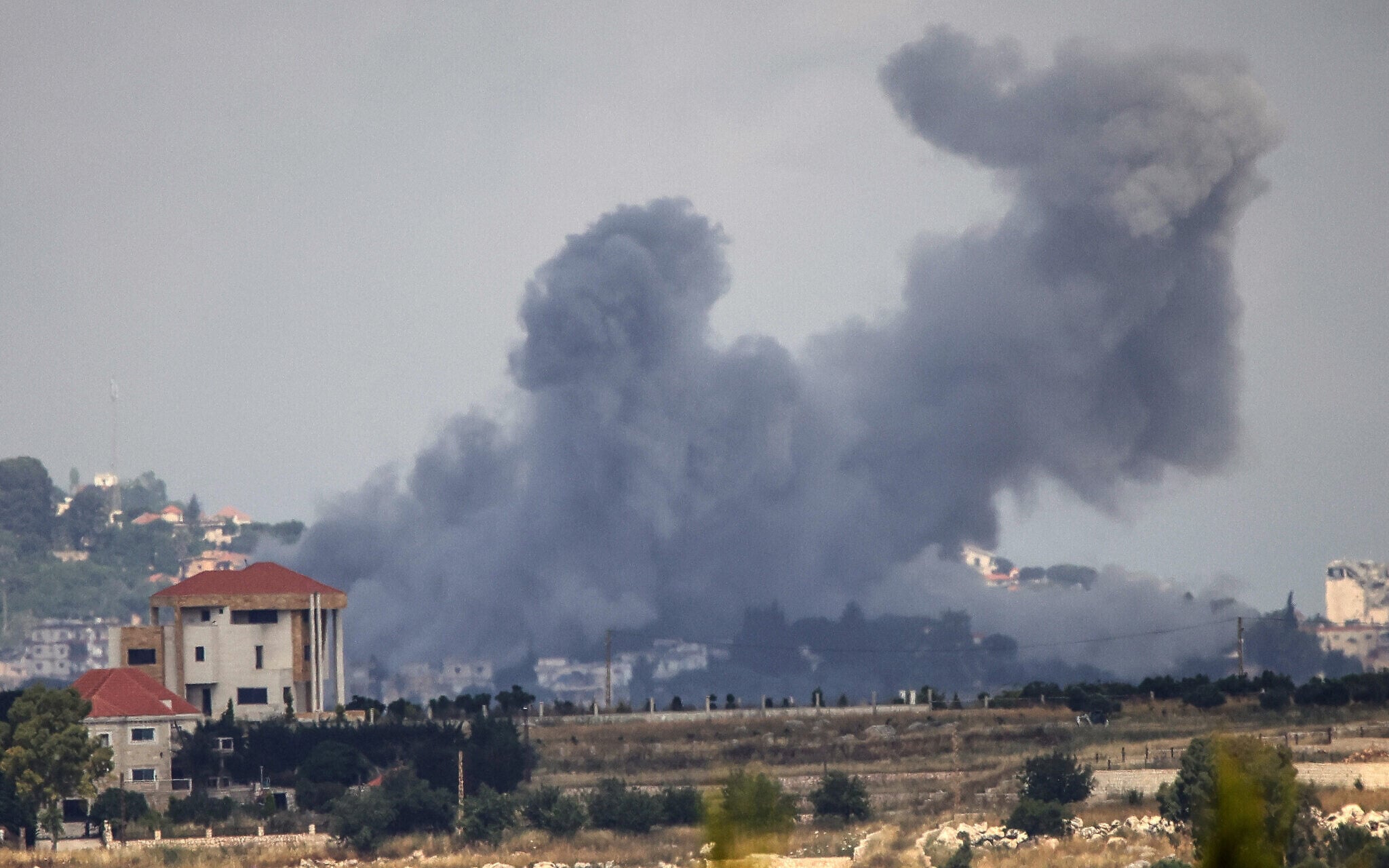
Separately, the IDF said Saturday it struck a manned Hezbollah artillery command center in southern Lebanon a day earlier.
Following Friday’s strike in the Burj al-Shamali area, “secondary explosions were identified, indicating the presence of weapons inside the structure,” the military said.
The IDF said it struck the site after identifying Hezbollah operatives in the area.
צפו בתיעוד: צה"ל השמיד מפקדת ארטילריה מאוישת של ארגון הטרור חיזבאללה
אתמול, צה"ל תקף והשמיד מפקדת ארטילריה של ארגון הטרור חיזבאללה במרחב א-שמעאלי שבדרום לבנון.
לאחר התקיפה, זוהו פיצוצי משנה המעידים על הימצאות של אמצעי לחימה בתוך המבנה.
המפקדה הותקפה לאחר שזוהה כי מחבלי… pic.twitter.com/bw2XxtgFoU
— צבא ההגנה לישראל (@idfonline) May 30, 2026
Lebanon’s state-run National News Agency reported Israeli airstrikes and artillery shelling near the Crusader-built Beaufort Castle, which is located about 15 kilometers (9 miles) from the Israeli border and overlooks wide parts of southern Lebanon. The strategic castle was held by Israeli troops for 18 years until they withdrew from Lebanon in May 2000.
NNA also reported airstrikes on different parts of southern Lebanon, including in the village of Ansar, that killed three people. A drone strike on a road linking the village of Ebba with Nabatieh wounded two Lebanese soldiers, the Lebanese army said in a statement.
Lebanon disappointed at talks
Meanwhile, Lebanese officials cited in Arabic media expressed disappointment in Friday’s US-brokered security talks with Israel at the Pentagon.
Officials cited by London-based outlet Al-Araby Al-Jadeed on Saturday said: “The meeting at the Pentagon achieved no progress, particularly with regard to a comprehensive ceasefire.”
A Lebanese military source cited by Saudi outlet Al-Hadath said the meeting “did not yield practical results as desired by Lebanon.”
Pentagon second-in-command Elbridge Colby had hailed the talks on Friday as “productive military-to-military discussions which will inform the Department of State-led political track next week.”
It was the first strictly military meeting in the US-brokered negotiations since the sides agreed to split the talks into diplomatic and security tracks. Accordingly, Israeli Ambassador to the US Yechiel Leiter did not attend the talks on Friday, an embassy official said.
The first meeting of the diplomatic track will be held on Tuesday and Wednesday next week at the US State Department.
Friday’s meeting had not been expected to lead to any major announcements, and the sides still face an uphill battle to reach a deal that would normalize Israeli-Lebanese relations and disarm Hezbollah, the embassy official said.
The Lebanese government demands that the deal ensure an IDF withdrawal from Lebanon, while the Iran-backed terror group is adamantly opposed to disarmament and has slammed the government for engaging with Israel on the issue.
Israeli and Lebanese negotiators previously held three rounds of talks at the State Department starting last month. The first round was followed days later by US President Donald Trump’s announcement of a ceasefire in Lebanon on April 16, eight days into the ceasefire in Iran.
That truce has not been felt in southern Lebanon, though, where Israel carries out daily strikes against what it says are Hezbollah operatives and infrastructure, and the Iran-backed terror group targets Israeli troops that have established an increasingly large buffer zone, which Jerusalem claims is for protecting its northern communities from enemy fire. It has also regularly attacked northern Israel with rockets and drones.
While the US has okayed Israeli strikes in Lebanon against targets that Jerusalem deems a threat, it has reportedly drawn a line on strikes in Beirut.




The Times of Israel Community.