

Debate sees Trump enlist Israeli PM, Iran deal against Clinton
After GOP nominee calls nuclear accord ‘one of the worst deals ever,’ Clinton apparently alludes to her negotiation of Israel-Hamas ceasefire, depicts rival as likely to initiate war
 Add ToI as a Preferred Source on Google
WASHINGTON — The first head-to-head debate between Donald Trump and Hillary Clinton lived up to its billing as a prime-time television spectacle. It was everything commentators imagined it would be: confrontational, hostile, nasty, warlike.
For the duration of the 90 minutes, the Republican nominee relentlessly attacked his Democratic rival — and one of the tactics he employed against Clinton was attacking the Iran nuclear deal and noting Israeli Prime Minister Benjamin Netanyahu’s opposition to it.
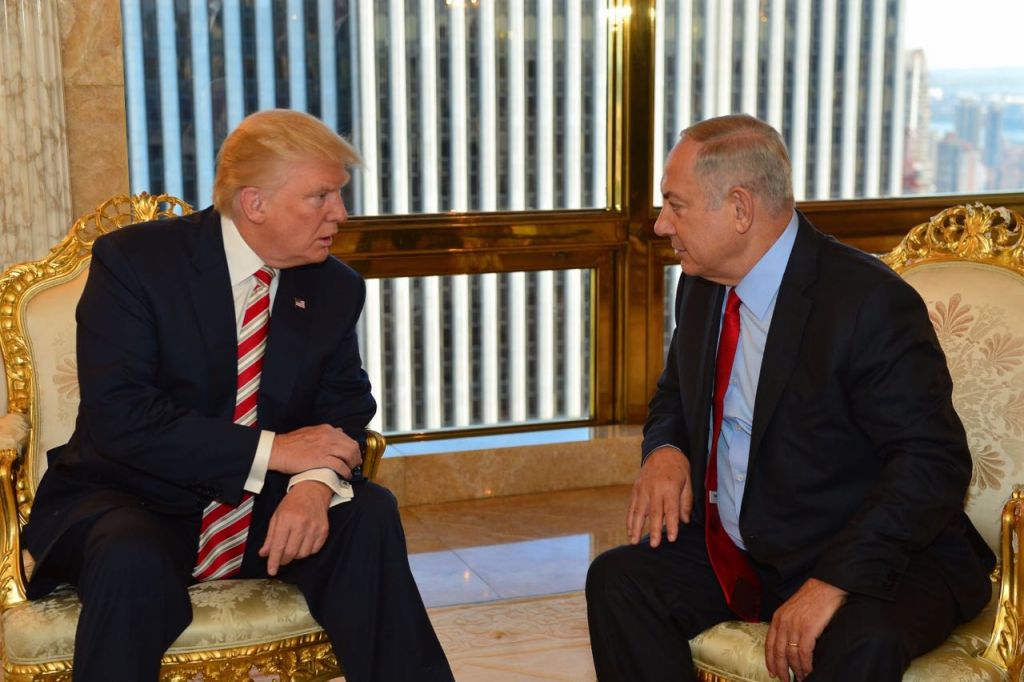
Just one day after both candidates met with the Israeli premier in New York, Trump used Clinton’s record on Israel-related issues to attack her, while Clinton utilized it as defense.
After an uncharacteristically polite opening, with Trump affirming he would call his opponent “Secretary Clinton” as opposed to his usual “Crooked Hillary,” he quickly shifted back to his signature form of bellicosity — interrupting her incessantly and seeking to implicate her in the highest forms of incompetence and malfeasance.
One of the examples he repeatedly cited was her role in forging the Iran nuclear agreement — which he described as rendering the world less safe, and which he noted was much to Netanyahu’s disgruntlement.
“You started the Iran deal, that’s another beauty, they were about to fall,” Trump said to Clinton, alluding to the pressure on the Tehran regime caused by US-imposed oil and financial sanctions. “They were choking on the sanctions and now they’re probably going to be a major power.”
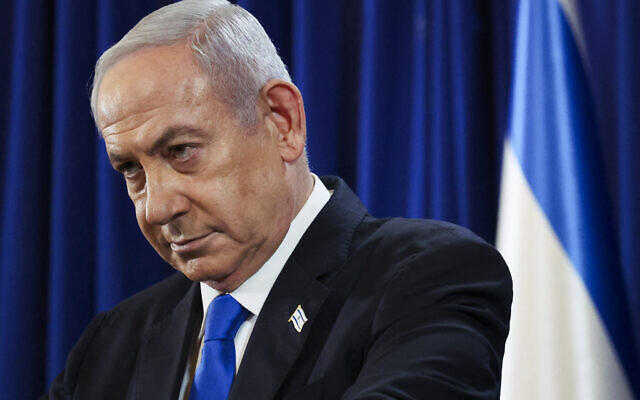
“This is one of the worst deals ever made by any country in history,” he added. “I met with Bibi Netanyahu the other day. Believe me, he is not a happy camper.”
It was expected that Trump would apply pressure on Clinton for her support of the nuclear pact, as it remains unpopular with large swaths of the American public and delineates a difference between the two parties on foreign policy. (Opposition to the deal was a boilerplate talking point for Republican hopefuls throughout the primary season.)
It’s also a way for Trump to suggest Clinton is responsible for the region’s instability. “You look at the Middle East, it’s a total mess, under your direction, to a large extent,” Trump said while addressing Clinton.
But while Trump has no qualms in appropriating Netanyahu, Clinton was not compelled to respond directly to that remark. She defended her role in the Obama administration’s first-term negotiating team, which opened the channels for an accord to be reached. In fact, she cast it as proof of her diplomatic aptitude.
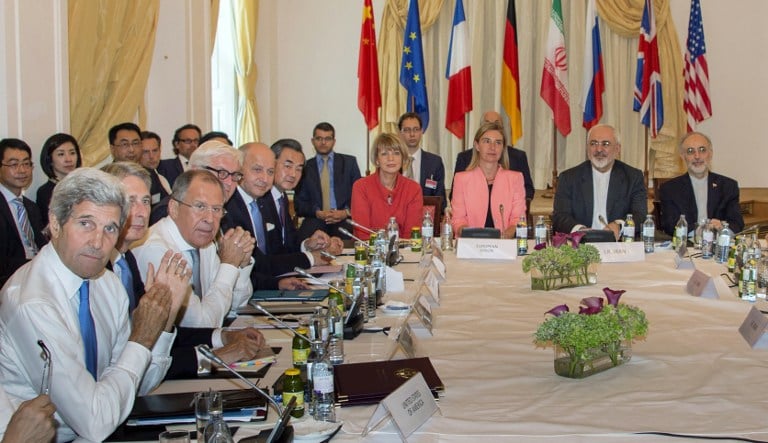
“With respect to Iran, when I became secretary of state, Iran was weeks away from having enough nuclear material to form a bomb,” she said. “They had mastered the nuclear fuel cycle under the Bush administration. They had built covert facilities. They had stocked them with centrifuges and were whirling away. And we had sanctioned them.
“I voted for every sanction against Iran when I was in the Senate. It was not enough. So I spent a year and a half putting together a coalition that included Russia and China to impose the toughest sanctions on Iran. And we did drive them to negotiating table. And my successor, John Kerry, and President Obama, got a deal that put a lid on Iran’s nuclear program — without firing a single shot. That is diplomacy. That is coalition building. That’s working with other nations,” she said.
Instead, she sought to solidify her argument that she should be America’s next commander-in-chief by noting Trump’s reputation for reckless remarks and failure to provide specifics to his proposed policies.
“The other day, I saw Donald saying that there were some Iranian sailors on a ship in the waters off of Iran, and they were taunting American sailors who were on a nearby ship,” Clinton stated. “He said, you know, ‘If they taunted our sailors, I’d blow them out of the water and start another war.’ That’s not good judgment.”
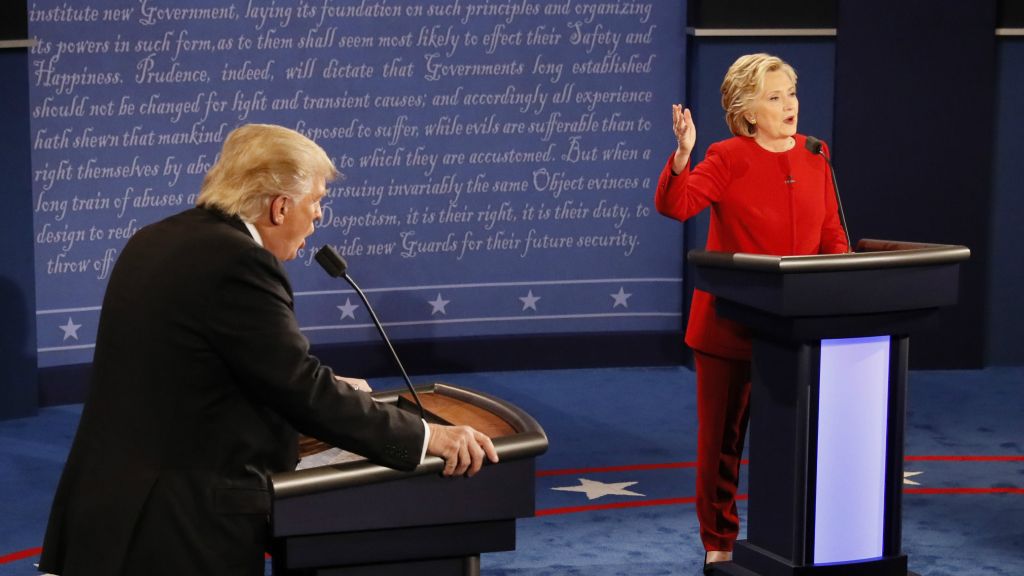
“There’s no doubt that we have other problems with Iran. But personally, I’d rather deal with the other problems having put that lid on their nuclear program than still to be facing that,” she said. “And Donald never tells you what he would do. Would he have started a war? Would he have bombed Iran? If he’s going to criticize a deal that has been very successful in giving us access to Iranian facilities that we never had before, then he should tell us what his alternative would be.”
“But it’s like his plan to defeat ISIS,” she added. “He says it’s a secret plan, but the only secret is that he has no plan. So we need to be more precise in how we talk about these issues.”
The former secretary of state also had to fend off Trump’s accusation tying her to the Obama administration’s cash transfer of more than $1 billion to Iran, in what has been described by critics as a ransom payment for captured US sailors. Clinton was not involved in the delivery of that payment, which was part of a settlement over a failed arms deal that Tehran’s pre-revolutionary government made with the US in the 1970s.
On the record
While Trump was eager to use Clinton’s background in foreign policy — and specifically that pertaining to Israel and the Middle East — to her disadvantage, Clinton saw other openings to reverse the attack.
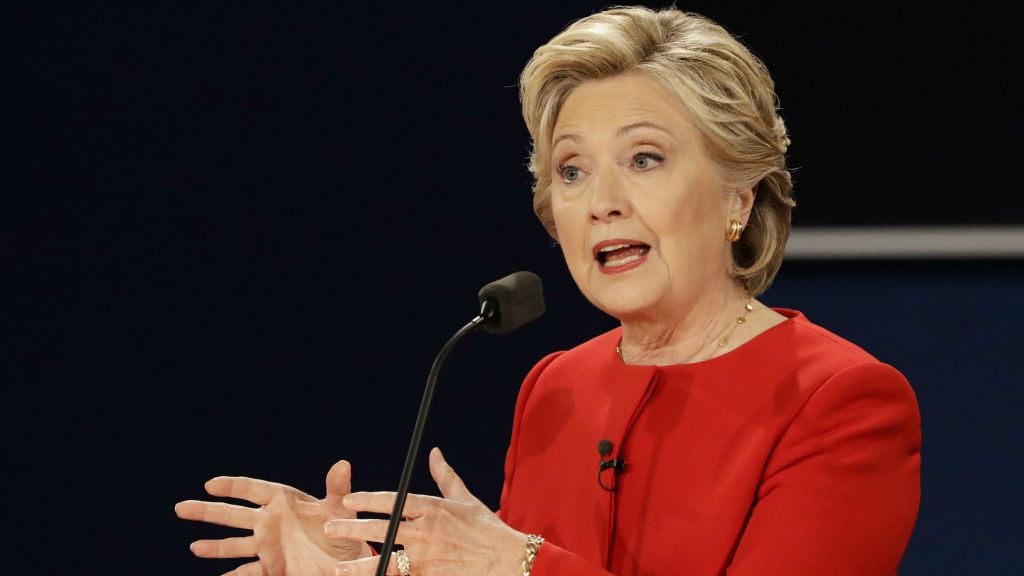
At one point during the debate, she cited her negotiating skills, apparently referencing a 2012 Israel-Hamas ceasefire amid a violent flareup in the Gaza Strip, when aiming to simultaneously demonstrate her diplomatic prowess and counter Trump’s claim that she “lacks the stamina” to be president.
After Trump was asked to explain his comment that “I just don’t think she has the presidential look” — a criticism many regard as sexist — the real estate tycoon pivoted to his oft-stated claim that she doesn’t have the endurance for the office.
“Well, as soon as he travels to 112 countries and negotiates a peace deal, a ceasefire, a release of dissidents, an opening of new opportunities in nations around the world, or even spends 11 hours testifying in front of a congressional committee, he can talk to me about stamina,” Clinton said in response to her competitor.
At this point in this race, the stamina of both opponents is unquestionable. But after this first debate, it seems clear that one of the two candidates is willing to politicize the Israeli prime minister — just as the two countries are trying to heal the wounds of a bitter showdown.





The Times of Israel Community.