

In Gaza, a grueling search for the dead under the rubble
Thousands of bodies remain trapped under ruins of destroyed buildings, according to Hamas authorities; residents say they are trying to extract deceased relatives by themselves
 Add ToI as a Preferred Source on Google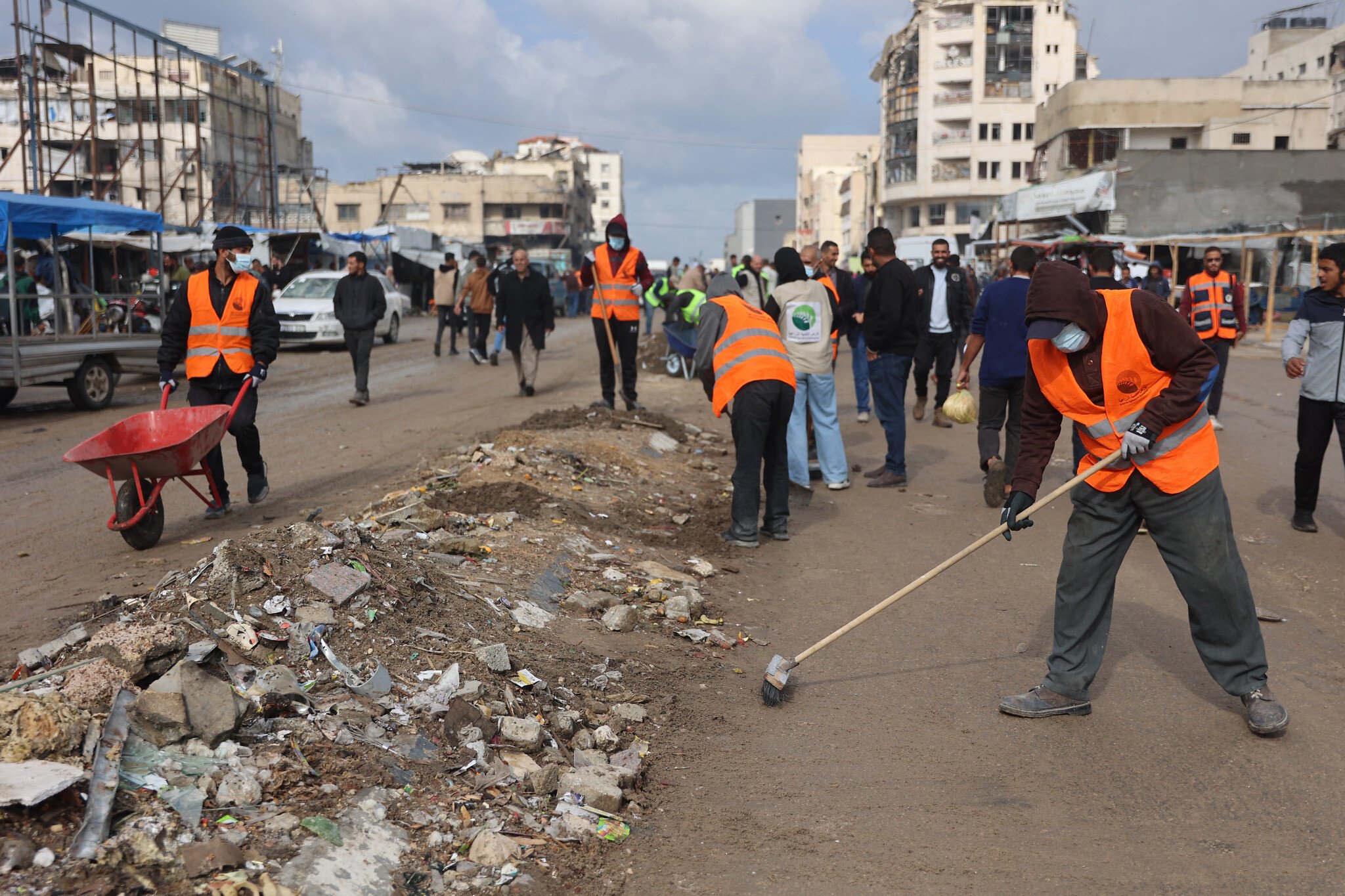
GAZA CITY — Standing beside the mound of rubble that was once his home, Ahmed Salim cannot hold back the tears as he struggles to retrieve the bodies of loved ones trapped underneath tons of debris.
Over 30 people were killed when his home was struck, he told AFP, among them “my wife, my children, my mother, my father.”
“I’m the only one who survived,” he told AFP, pointing to the pile of broken concrete and twisted metal that was once a five-story building in Gaza City’s Zeitoun neighborhood.
The building was destroyed on December 24, 2024. He has been waiting ever since to retrieve their bodies and give them a proper burial.
“The only thing that matters to me is to be able to bury them,” the 43-year-old said.
After two years of war between Israel and Hamas that ravaged the Gaza Strip, thousands of other Palestinians are in a similar situation.

According to United Nations data, as of late September, around 83 percent of the buildings in Gaza that stood prior to the war have been destroyed during Israel’s war against Hamas, which the terror group ignited with its invasion of southern Israel on October 7, 2023.
Israel has said the widespread destruction in Gaza was a direct result of Hamas and other terror groups embedding themselves and conducting combat from within a substantial portion of civilian buildings in the enclave, fighting from civilian areas including homes, hospitals, schools, and mosques. They also dug hundreds of miles of tunnels under Gaza’s cities and towns from which to attack Israeli troops.
Israel has said it seeks to minimize civilian fatalities and stresses that Hamas uses Gaza’s civilians as human shields. The Hamas-run Gaza health ministry says more than 69,000 people in the Strip have been killed or are presumed dead in the fighting, though the toll cannot be verified and does not differentiate between civilians and fighters. Israel says it killed over 22,000 combatants in battle as of August and another 1,600 terrorists inside Israel during the initial Hamas-led October 7 onslaught.
The densely populated territory is now covered in more than 61 million tons of debris, according to figures from UNRWA, the UN agency serving Palestinians.
Mahmud Bassal, spokesman for Gaza’s Hamas-run civil defense agency, estimated that about 10,000 bodies are buried under the rubble.
“We cannot extract thousands of bodies without heavy machinery. We need the means to lift the roofs and the tons of cement,” said Bassal, whose agency has conducted search-and-rescue operations in Gaza.
A search is also underway for the bodies of three slain hostages — two Israeli and one Thai — whom the terror group kidnapped amid its massacres on October 7, 2023.

Iyad Rayan holds out the same hope as Salim — to bury his wife and children with dignity.
“My wife, my son Samir and my daughter Lana are still here under the rubble,” he told AFP by the wreckage of his Gaza City home, which he said was destroyed in early October this year. A ceasefire took effect on October 10.
“I want to send an appeal to the whole world: help me retrieve them,” the 55-year-old said.
Amal Abdel Aal is waiting for heavy equipment to enter the Gaza Strip so the bodies of her son and brother can be recovered.
They have been under the rubble in the Sabra neighborhood of Gaza City since the early days of the war.
“They never leave my thoughts. My heart aches at the thought of dogs reaching their bodies and eating them,” said the 57-year-old woman now living in southern Gaza, where hundreds of thousands of people have sought shelter.
“I will only find relief when I have buried them, even if only a single bone remains,” she said.

Since the ceasefire, Palestinians have been able to recover around 500 bodies in areas that emergency workers could access following the partial withdrawal of the IDF, Bassal said.
The halt in fighting allowed Amer Abu al-Tarabish to return to Beit Lahiya in northern Gaza, he said, to extract the bodies of his parents from the ruins of their family home “with my bare hands.”
“My parents, my brother and his children, his wife, my uncle, his wife and their children… Thirty people remained under the rubble for more than a year,” he said.
“I pulled out their bodies intact; they were not decomposed,” he recounted, adding that he was “overwhelmed by sadness, loss and pain.”
“I was able to bring them out one by one, say goodbye to them, and imprint their faces in my memory before burying them.”

For other Gaza residents, even this small consolation may never come.
Bassal said that thousands of people had been reported missing, especially during major population evacuations, as the fighting shifted.
As for families who buried their loved ones hastily during the war, many consider those graves to be temporary, or feel that proper rites have not yet been observed.
Mohammed Naim, 47, said his family had to bury 43 relatives in just seven graves.
“We placed the remains of each family in a single grave,” he said. “But we swore over their graves that we would exhume them and rebury them, with dignity, in Gaza City.”







The Times of Israel Community.