

In it to win it: 8 things to know for December 27
Netanyahu says he’s not going anywhere, indictments be damned; the left’s messiah may turn right; and Russia and Israel could be headed for a more serious clash
 Add ToI as a Preferred Source on Google
Joshua Davidovich is The Times of Israel's Deputy Editor
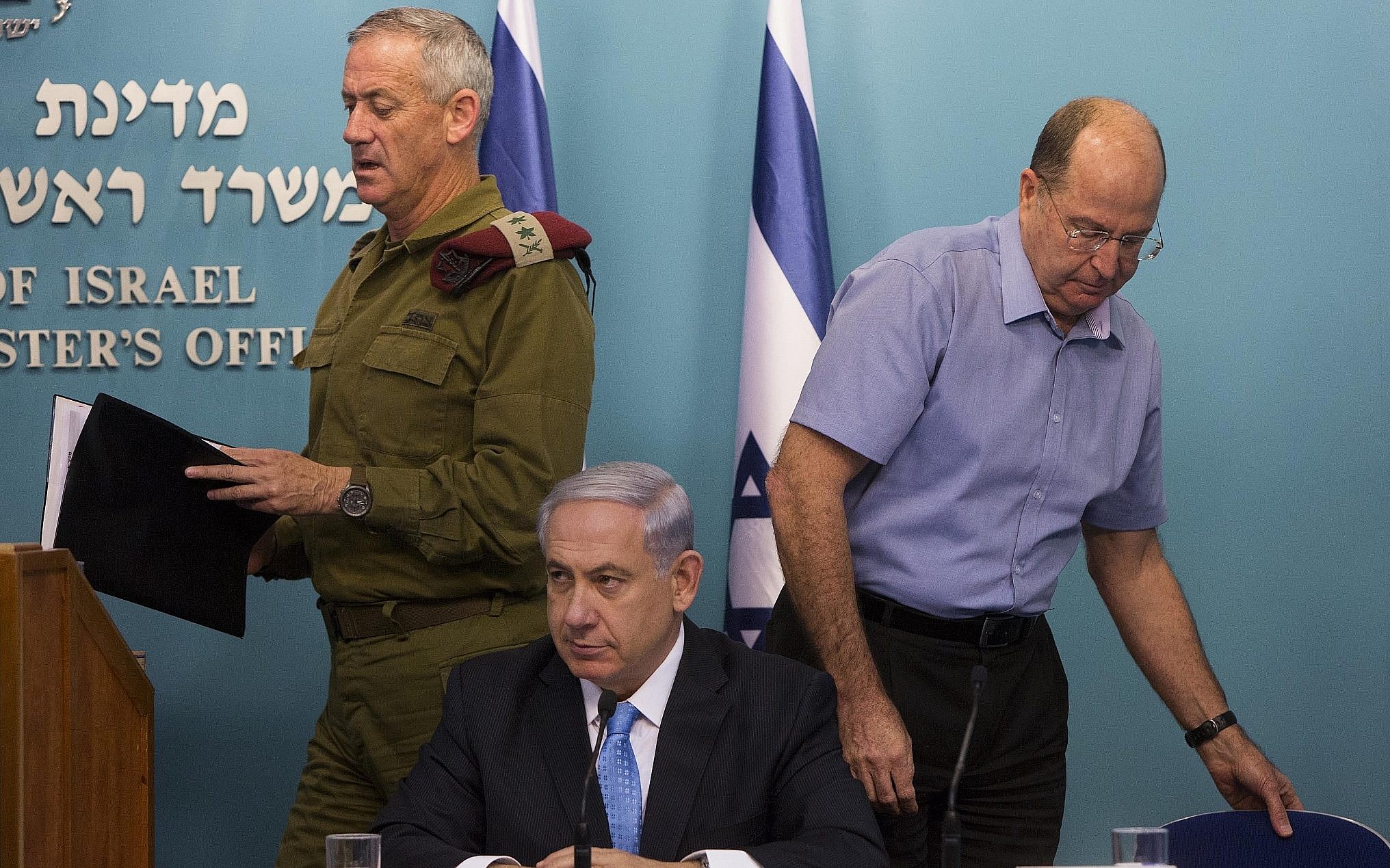
1. Not going anywhere: The Knesset voted to dissolve itself Wednesday, making elections official and plunging the country into some 104 days of electioneering, polls, rumors and everything in between.
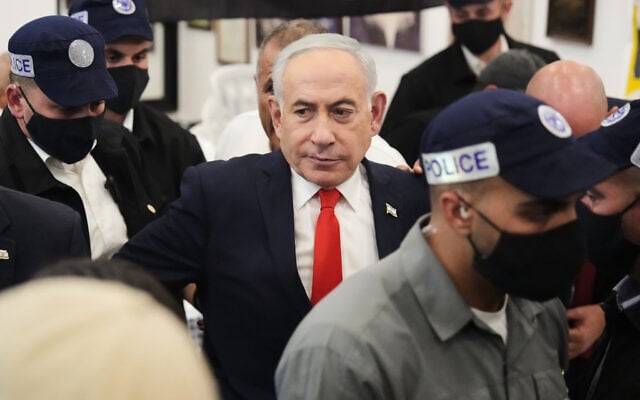
- If there were any doubt that the elections were called by Prime Minister Benjamin Netanyahu with his possible impending indictment in mind, the Israel Hayom daily leads off with Netanyahu telling associates “I won’t step down in any situation, even if I’m indicted.”
- The paper reports that since deciding on new elections Netanyahu has told his pals that “he does not think Attorney General Avichai Mandelblit will dare announce an indictment during election season.”
- The story, from a daily long seen as a mouthpiece for Netanyahu, is likely meant to signal to backers that a vote for Likud is a vote for him, not whoever his number 2 ends up being. But it also appears to confirm that the timing of the decision to bring down the government was governed by the prime minister’s personal considerations and not some higher cause.
- Previewing a likely talking point, Likud MK and Netanyahu confidant Tzachi Hanegbi tells Army Radio that there’s no law that says Netanyahu has to step down if indicted: “A clerk won’t overturn the will of the people.”
2. They love me: The prospect of indictment means that despite easily leading in the polls, Netanyahu still intends to fight tooth and nail, and not only against his political rivals.
- Haaretz’s Yossi Verter writes that Netanyahu wants to make sure the attorney general and other lawmakers understand that if he’s elected, it will mean the Israeli people have faith in him, criminal suspicions be damned.
- “On the strength of this he will try, if reelected, to force his future coalition partners to agree to pass some version of the ‘French law’ prohibiting the prosecution of a sitting prime minister. It sounds insane but that’s the plan; there is no other,” he writes. “Netanyahu has the most to lose in the general election. This will determine his conduct during the hundred or so days until the balloting. Without morals and without restraint, without law or judge.”
3. Ya’alon alone no more? Meanwhile, the left looks to be in as much disarray as ever, with reports that five members of Zionist Union are thinking of bolting to Meretz.
- Even worse news comes in the form of a report from Hadashot TV news that their messiah, former IDF chief Benny Gantz, is in talks with another former IDF chief, Moshe Ya’alon, to gang up and form an alliance.
- Gantz has been quiet about his political views, though most view him as a centrist. Ya’alon, meanwhile, is a critic of Netanyahu, but certainly solidly right wing.
- According to Yedioth Ahronoth, each would still form their own party (Ya’alon has already started campaigning, though he makes Kevin Spacey look like a media genius), and then they would get together, with Gantz at the top.
- “They’ve had very good talks and want to work together,” a source tells the paper.
- The story is accompanied by a strange picture of what seems to be Gantz offering the camera a cup of coffee. According to Ynet, that’s exactly what happened; it put out a Facebook video of Gantz offering a cameraperson who waited outside his house all day a cup of coffee. “It made our day,” the news site writes.
בני גנץ מגיש קפה של בוקר לצלמת שהמתינה מחוץ לביתו
עשה לנו את היום: בני גנץ מגיש קפה לצלמת ynet שהמתינה הבוקר מחוץ לביתוhttp://bit.ly/2BRL93R | צילום: ליהי קרופניק
Posted by ynet on Wednesday, December 26, 2018
4. Down but not out: A poll in Israel Hayom (which must be taken with lots of grains of salts, like every other poll) places Likud at 31 seats, with Gantz in second place with 15 seats.
- None of that is new, but what is are the depths to which the Zionist Union has sunk in the poll, with a mere 7 seats. (The poll also shows Ya’alon below the electoral threshold, and Shas and Yisrael Beytenu barely scraping in.)
- Writing about the poll, columnist Mati Tuchfeld notes not once but twice that the number for Zionist Union “is an all-time low.”
- Haaretz, which is seen as the paper of record for the left, uses its lead editorial to call for all the anti-Netanyahu parties to get together and block the prime minister, though that would mean some egos taking a backseat to whoever is chosen to lead the ragtag bunch.
- “All those who see themselves as potential prime ministers must realize that it would be better to be No. 2 or No. 3 in the winning camp than No. 1 in a midsized opposition party,” the editorial reads.
5. Missilegram: An Israeli source has confirmed to the Associated Press that — shocker — Israeli jets were behind the airstrikes in Damascus Tuesday night, which targeted Iranian arms depots where weapons were being transferred to Hezbollah.
- While everyone knows the attacks were carried out by Israel, Jerusalem has normally maintained a policy of strategic ambiguity meant to give Syria or anyone else maneuvering room to not have to respond in order to save face.
- Israel still isn’t saying things officially, but the fact that it leaked the info itself (and not via a Pentagon official as in the past) shows how serious it is about wanting to make sure Syria, Iran, Hezbollah and Russia get the message that it’s not going to stop operating in that theater.
- Former National Security Adviser Giora Eiland argues in Yedioth that the signaling goes even further than that: The fact that the attack lasted three hours and was not just a one and done, underlines that Israel is serious about stopping Iran and isn’t just sending messages; Syria also sent a signal by firing a rocket at Israel, and lastly, Lebanon should pay attention. With tensions rising over Hezbollah tunnels and weapons transfers, Israel’s decision to fire the missiles from Lebanese airspace was no mere coincidence.
6. From Russia with anger: While in the past Russia has mostly held its tongue on Israeli strikes, this time it did not, which Israel Hayom’s Yoav Limor writes is meant to signal all sort of things as well.
- “Firstly, it was meant for the Syrians, who were wondering why Moscow continues to let Israel continue to act freely in its territory. Secondly, to those near and far it was meant to show who the real boss is around those parts, and thirdly and most importantly, it was meant for Israel, which got more proof that Russia is no longer turning a blind eye to the attacks or accepting them with understanding, but is opposed to them and could in the future take active steps to oppose them.”
- Former Israeli ambassador to Russia Zvi Magen tells Army Radio that “Israel is again in a confrontation with the Kremlin. Israel has entered the fray over control of Syria and the Russians are not prepared for Israel to determine what its targets in the region will be.”
7. Mission creep: If Israel had been counting on the US backing it against Russia, it should think again. With $4.5 billion in its pocket and a US embassy sign on the former consulate in Jerusalem, it is apparently doing fine defending itself, according to US President Donald Trump.
- While the comments barely registered a blip by the American reporters who were with Trump in Iraq, once an official transcript came out and Israel noticed it, it became big news.
- In the New York Times, columnist Bret Stephens writes that “Donald Trump is bad for Israel,” no matter how many embassies he moves or Iran deals he pulls out of.
- “Are Israelis better off now that the U.S. Embassy is in Jerusalem? Not materially. The move was mostly a matter of symbolism, albeit of an overdue and useful sort. Are Israelis safer from Iran now that the U.S. is no longer in the Iran deal and sanctions are back in force? Only marginally. Sanctions are a tool of strategy, not a strategy unto themselves,” he writes. “What Israel most needs from the U.S. today is what it needed at its birth in 1948: an America committed to defending the liberal-international order against totalitarian enemies, as opposed to one that conducts a purely transactional foreign policy based on the needs of the moment or the whims of a president.”
8. Pardo me? A month ago, a fake site meant to mimic Harvard University’s Belfer Center for Science and International Affairs put up a story claiming that former Mossad chief Tamir Pardo said Avigdor Liberman is a Russian spy.
- The site was quickly debunked as a hoax, but now Haaretz reports that Pardo told a conference put on by its financial section that Russia was behind the rise of Trump.
- According to the paper, Pardo said Moscow took a look at Washington “and thought, which candidate would we like to have sitting in the White House? Who will help us achieve our goals? And they chose him. From that moment, they deployed a system [of bots] for the length of the elections, and ran him for president.”




The Times of Israel Community.