

In the UK’s ‘most progressive’ town, a memorial to Oct. 7 victims is repeatedly destroyed
Erected by relatives of Israelis murdered in Kibbutz Nahal Oz, Brighton’s commemorative site has polarized the liberal enclave, bringing displays of support – and over 50 attacks
 Add ToI as a Preferred Source on Google
Robert Philpot is a writer and journalist. He is the former editor of Progress magazine and the author of “Margaret Thatcher: The Honorary Jew.”
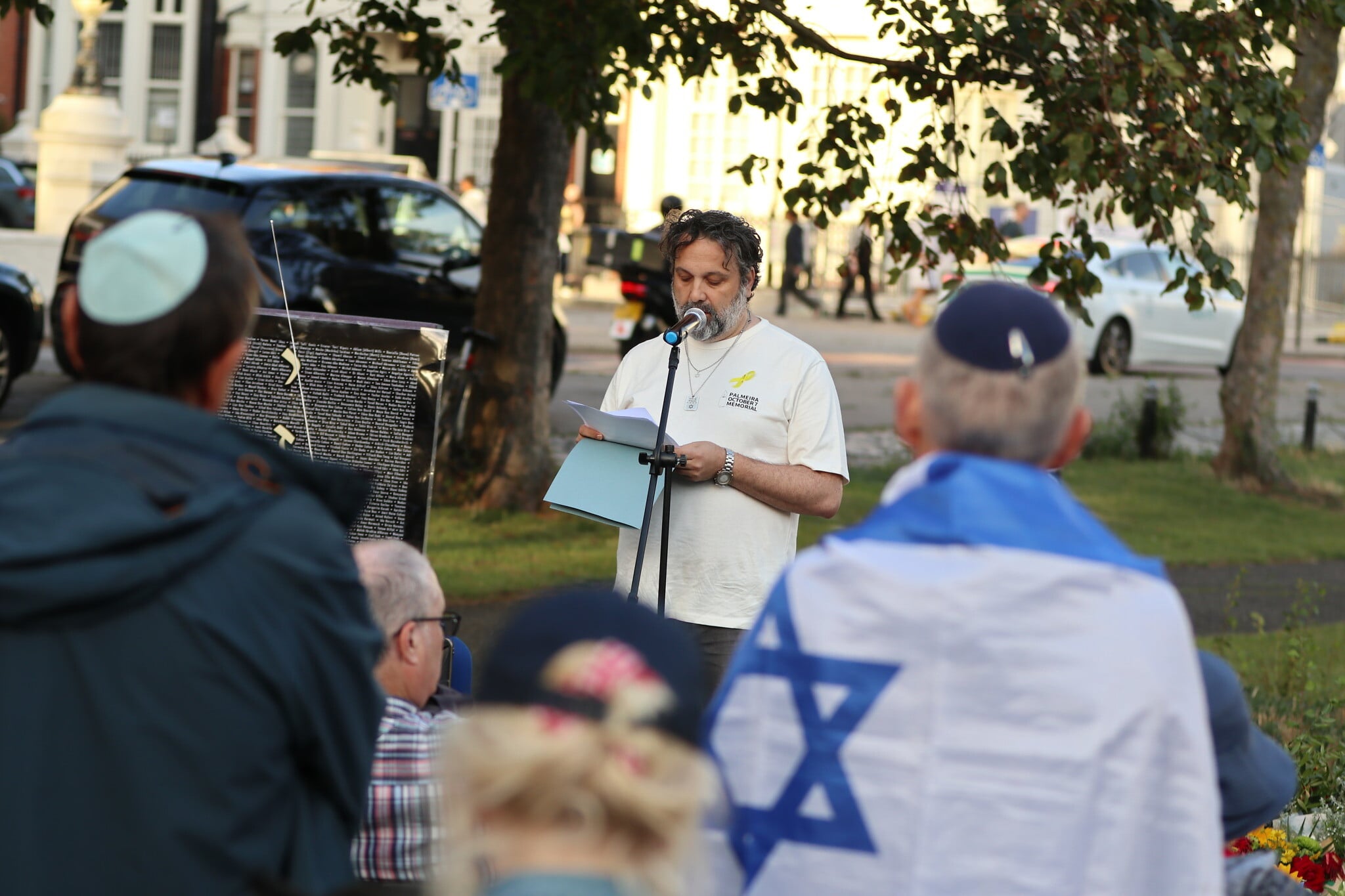
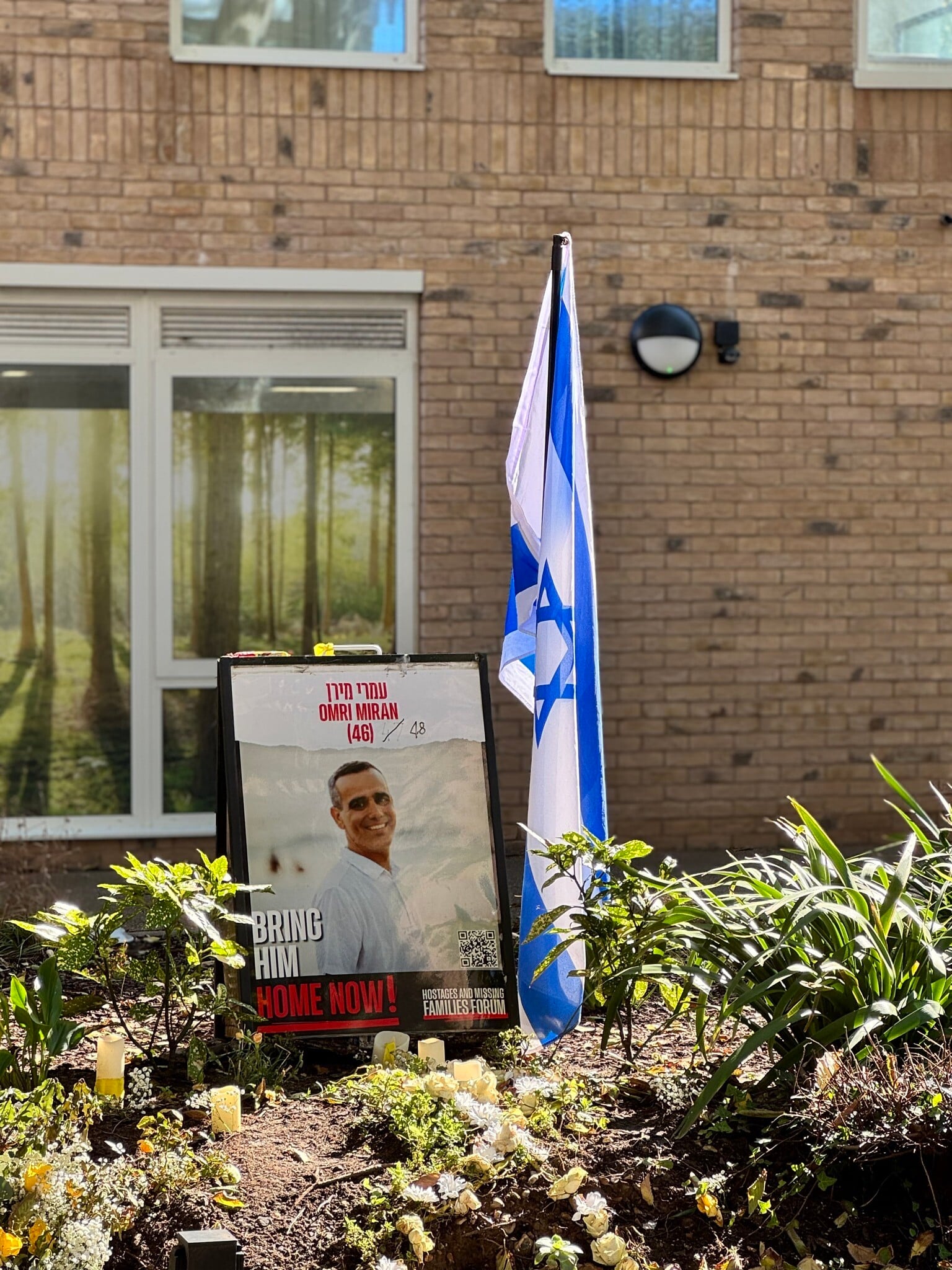
BRIGHTON AND HOVE, United Kingdom — On a sunny late summer morning, two dozen local visitors to the Brighton and Hove Jewish Center gather for their weekly vigil before a large photo of Omri Miran, a hostage seized by Hamas on October 7, 2023. Around them, trees are bedecked with yellow ribbons, and an Israeli flag flutters gently in the wind.
It is a totally natural but also sadly incongruous scene.
Brighton, a city on the south coast of England that elected Britain’s first Green MP, is one of the UK’s most progressive communities and prides itself on its open, tolerant atmosphere. And yet, over the past two years, a memorial to those murdered by Hamas has been targeted over 50 times and completely destroyed on five occasions in its location in nearby Hove, a stone’s throw away.
Home to hipster coffee bars and vegan restaurants, a thriving arts and club scene, and Britain’s largest annual Pride festival, Brighton also has a long and illustrious Jewish history stretching back at least 150 years.
It was precisely this mix that drew Heidi Bachram and her Israeli-born husband, Adam Ma’anit, to the city 15 years ago.
“We are very much of the Left. I used to work fighting climate change and on human rights issues, and Adam used to work for an environmental charity,” Bachram tells The Times of Israel. “When I got pregnant, we wanted to bring up our kids in a progressive environment where they could be free.”
Those words now have an ironic twist.
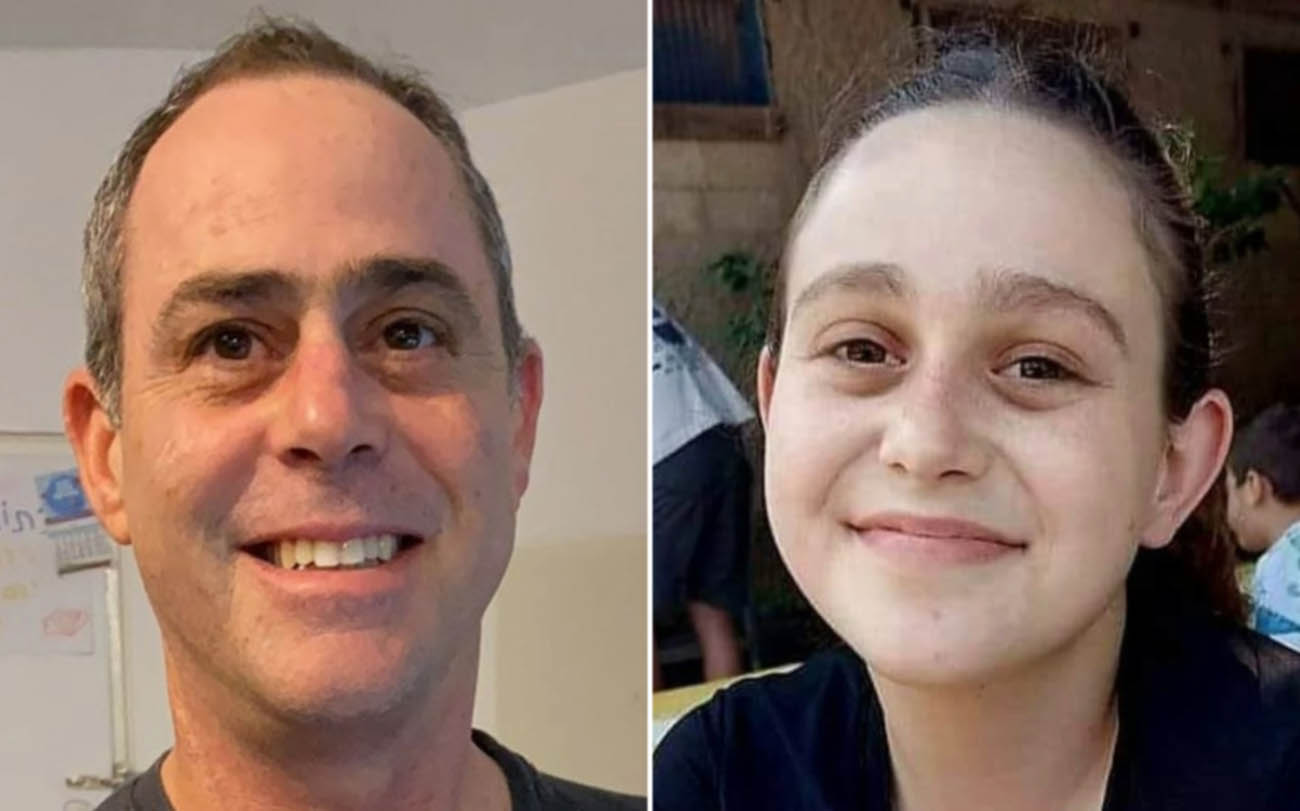
As for so many others, the couple’s world changed forever on the morning of October 7, when nearly 3,100 miles away, on Kibbutz Nahal Oz, Ma’anit’s cousin Tsachi Idan shepherded his wife Gali and three of their children into the family’s safe room.
There was no lock on the door — missile barrages were the norm, but nobody expected a ground invasion. As gunfire sounded and the grim reality that Hamas terrorists had broken into the kibbutz became apparent, Tsachi and his oldest daughter, Ma’ayan, clung onto the handle in a vain bid to keep the family safe.
Ma’ayan died instantly when gunmen fired through the door. Tsachi and the rest of his family were held for hours in their home, their terror livestreamed by Hamas fighters on Gali’s Facebook account. Tsachi was eventually abducted to Gaza, his shattered family left behind. He was later murdered in captivity, his body returned as part of the February 2025 ceasefire deal.
The onslaught saw thousands of Hamas-led terrorists brutally slaughter some 1,200 people in southern Israel amid a horrific display of carnage, and abduct 251 to the Gaza Strip. Thousands more were injured.
For Bachram and Ma’anit, shock and grief were compounded by events unfolding on their own doorstep. On October 8, while burned-out homes in kibbutzim on the Gaza border still smoldered and the IDF desperately sought to flush out the remaining terrorists still roaming the area, pro-Palestinian, anti-Israel activists gathered at the Victorian Clock Tower in the center of Brighton, where one of their number delivered a speech describing the attacks as “beautiful” and a “success.”
“That triggered something in us because we realized that our family had been harmed, physically harmed, there [in Israel], and we were being harmed here and we were under threat here,” Bachram recalls.
After two weeks in which they barely slept or ate, but discussed the events in Israel and the reaction in Brighton incessantly, the couple decided they needed to act. With others, they organized a gathering in Palmeira Square, an elegant mid-19th-century enclave containing Italianate mansion blocks, close to Hove’s Reform synagogue.
“It started as a spontaneous expression of grief,” says Bachram, but it also reflected how we were “feeling dehumanized here, the absence of any support and empathy.”
For hours, they read aloud the names of those murdered and captured by Hamas on October 7.
“We felt saying their names would make them real to people. These were real people, real women, real children, real elderly people, Holocaust survivors, people that had become invisible in all of this discussion about what was happening in Gaza,” Bachram says.
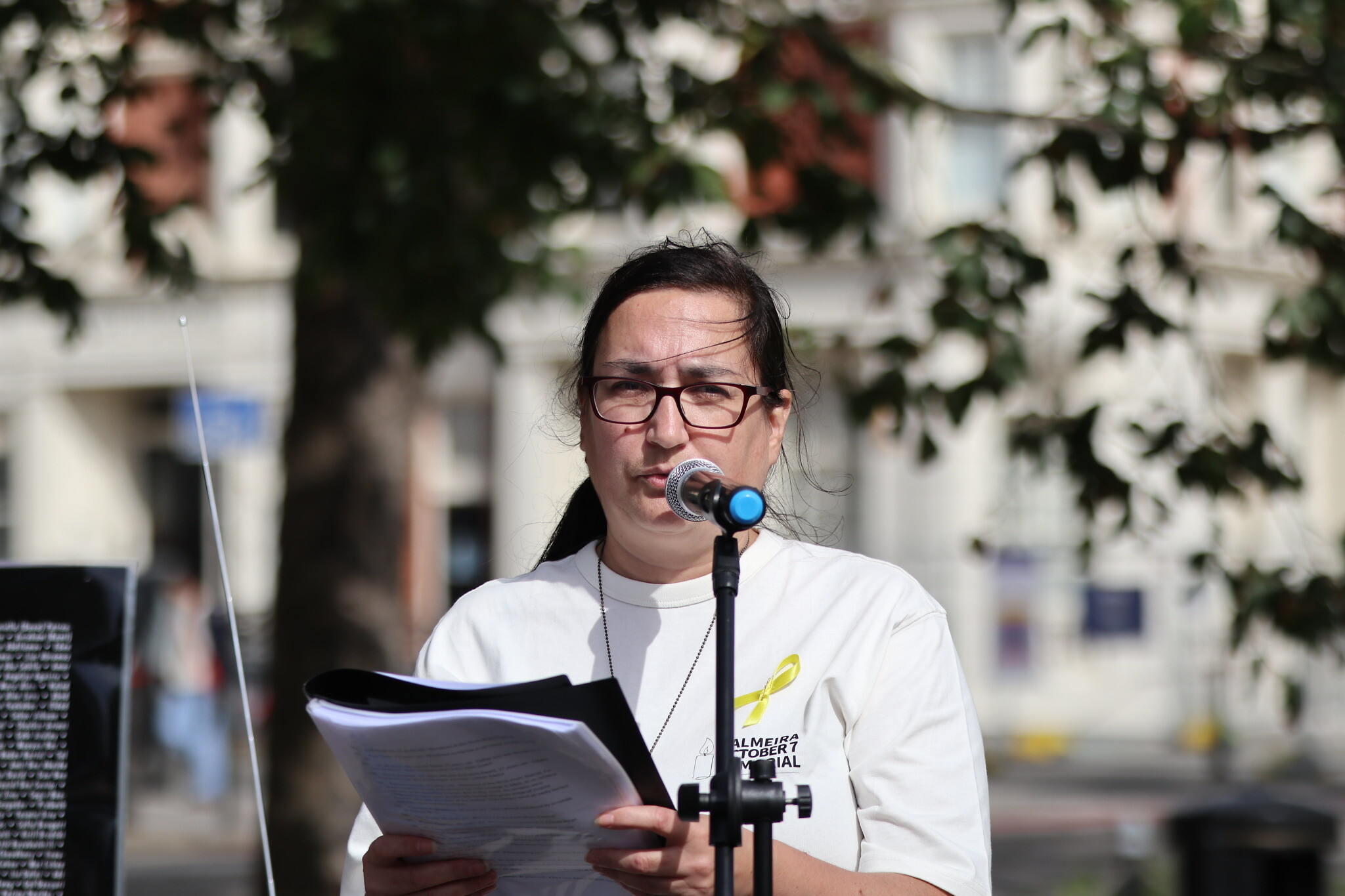
As they read the names, they were subject to a torrent of abuse from people walking and driving past.
“We’ve just seen the deadly outcome in Manchester of not addressing these issues,” Bachram argues following the Yom Kippur attack on an Orthodox synagogue in the northern England city. “When each act of supporting terrorism or Jew-hate goes without consequences, then another step towards violence is taken. There’s a direct connection between the inaction, radicalization and terrorism.”
Nonetheless, as the informal memorial to the victims of October 7 remained in the square, local residents began to leave flowers and messages.
“We started to see quite a lot of support from the community, and we realized that we weren’t alone,” says Bachram. “There were a lot of people who wanted to express solidarity with us, and the memorial was probably the only way that people could connect with us.”
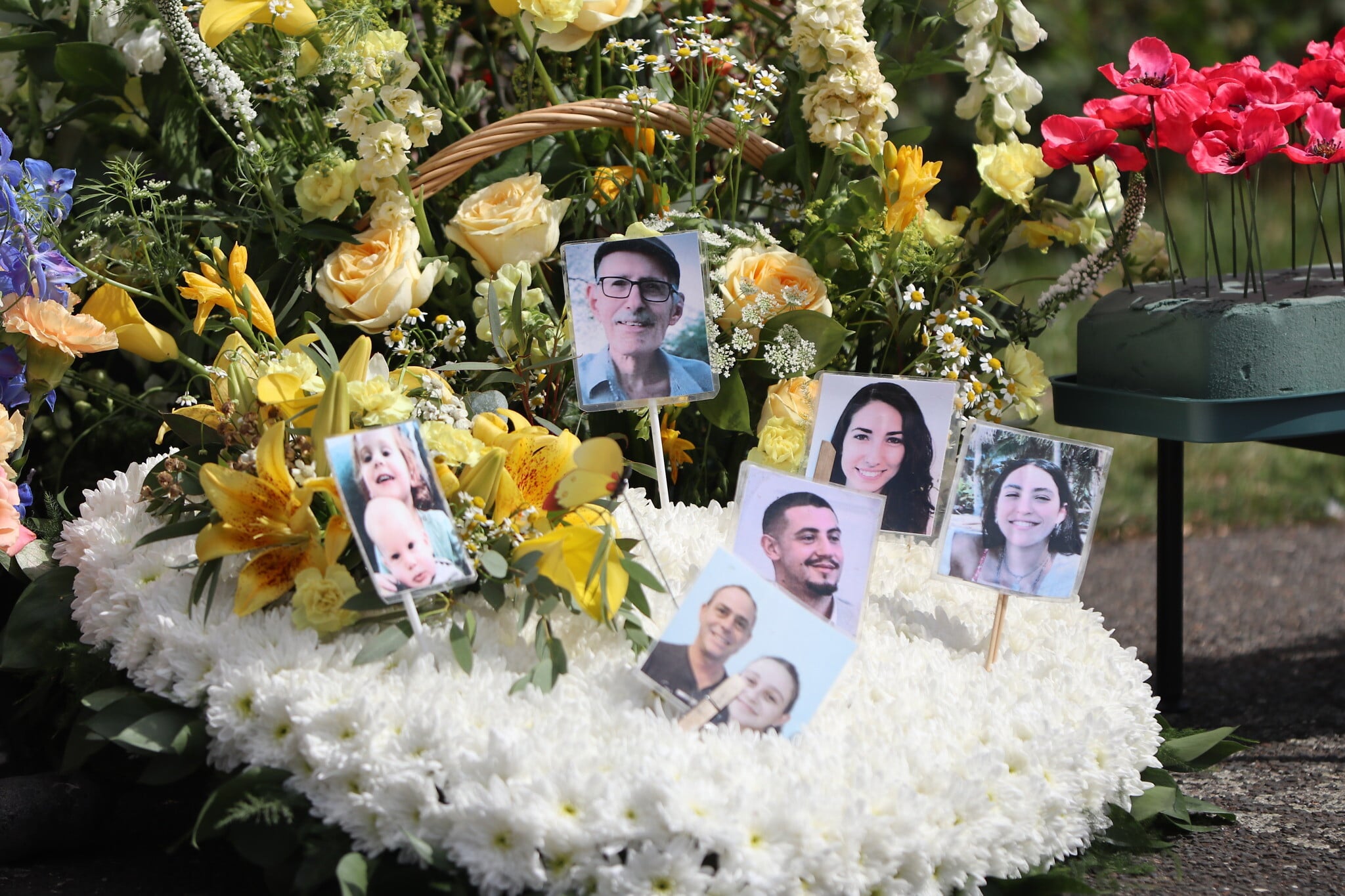
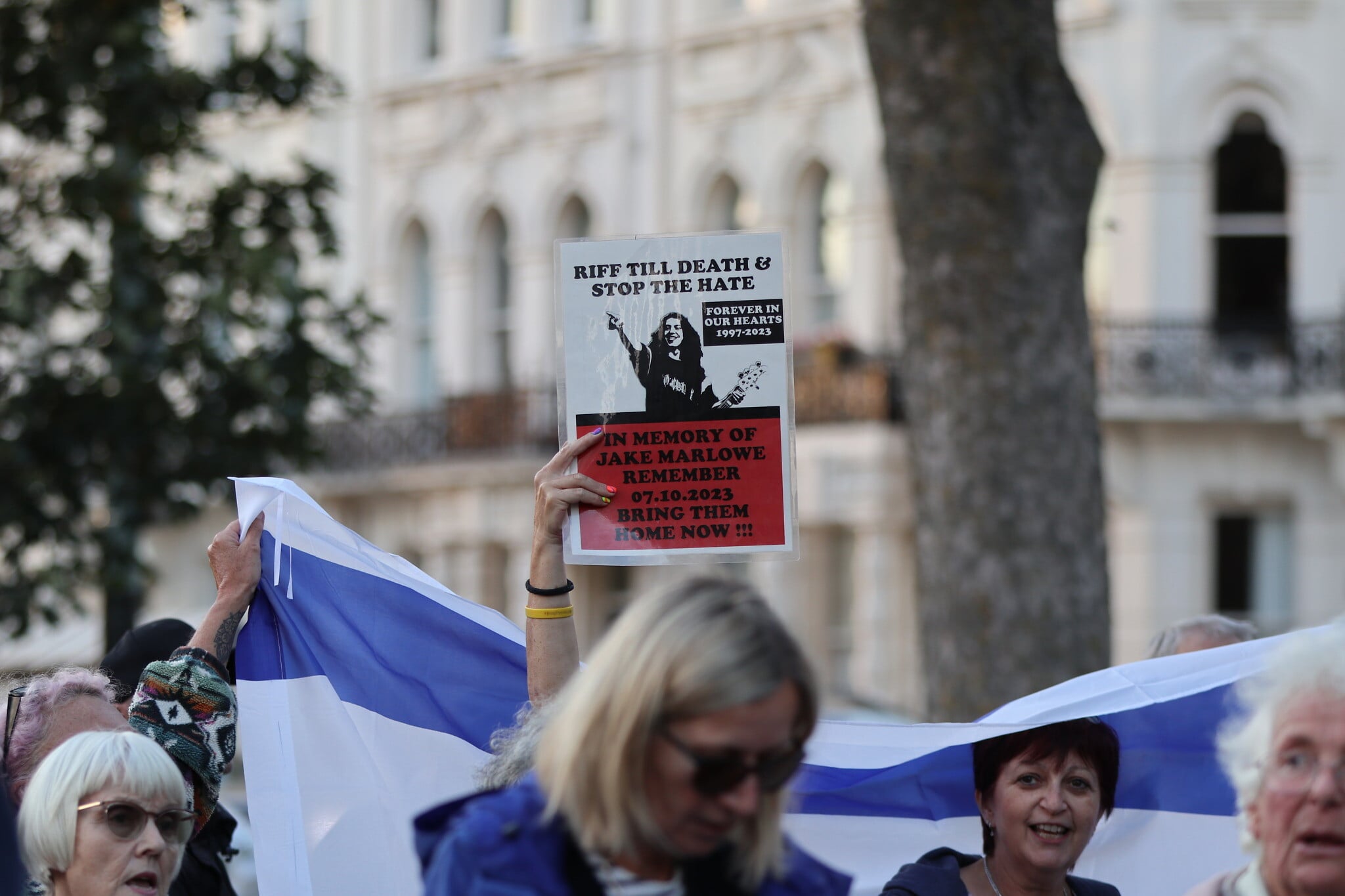
Over time, the memorial has become more formalized, with a nightly dedication to a different victim. While the memorial has attracted visits from the chief rabbi, Sir Ephraim Mirvis, Bachram believes one of the most important points came when the parents of Jake Marlowe, a Briton murdered at the Supernova music festival, came to share their son’s story.
“It became such a profound place after that. We really became a family, and the impact of the memorial grew out of Brighton and into the country at large,” she says.
The memorial has also attracted Israeli visitors. A group of Druze came to commemorate the 12 children killed by a Hezbollah rocket attack as they played soccer in the Golan Heights town of Majdal Shams in July 2024. A soccer ball inscribed in Arabic with the names of the victims was added to the memorial.
Feces on the ‘book of the dead’
But the visits from the families of those who lost their lives or were taken hostage on October 7 — and the clear support some parts of the local community have shown — have been punctuated by periodic attacks.
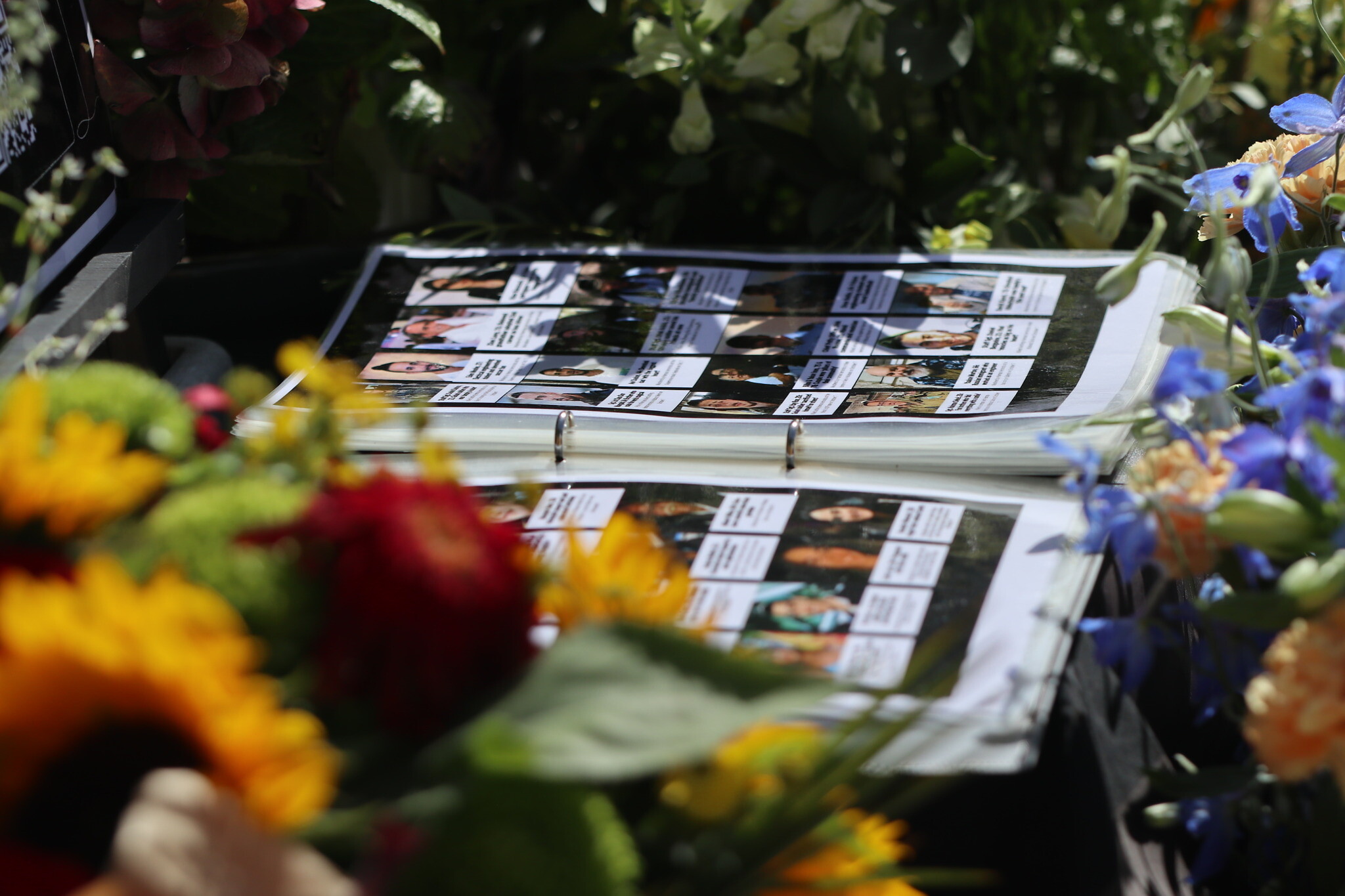
Feces have been left in the “book of the dead.” People visiting the memorial have faced chants of “die, die,” with gun gestures made at the back of their heads. And Holocaust denial graffiti has been plastered nearby. On seven occasions, local pro-Palestinian, anti-Israel marches have begun at Palmeira Square or passed by the memorial.
Bachram believes that the site symbolizes the emotions coursing through Brighton.
“It drew hate, but it also drew love, and it told us a story of all of those things that were running through the city,” she says.
Local police, Bachram says, have been slow to act. Indeed, on one occasion, officers told her that they could not prove that an attack on the memorial — which was captured on film and widely shared on social media — was a hate crime and that the perpetrator, who was arrested but never charged, may have been experiencing mental health problems. When Bachram reported abuse and threats against her on social media, police suggested that she refrain from posting about controversial topics. (Local officers later apologized to her for those suggestions.)
“It felt like being victimized twice, first by the abuser and then by the authorities,” Bachram says. “And what the authorities did was so much worse because if we can’t rely on their protection, then we’re really in trouble.”
Bachram recognizes that local police have a well-meaning “very liberal and tolerant attitude” towards protest, itself very much a tradition in Brighton. But she also believes that the authorities have determined that this is the easy option — the city’s law-abiding Jewish community and its allies are simply no match for its loud and aggressive pro-Palestinian movement.
The reaction of local politicians has also been patchy. Cabinet minister Peter Kyle, the Labour MP for Hove, has “always been very supportive of the community,” Bachram says. By contrast, Sian Berry, the Green MP for the Brighton Pavilion constituency, has joined pro-Palestinian marches, including the contentious protests which set off from Palmeira Square.
“She’s never expressed any interest in us or shown any condolences or sympathies — and she’s my MP,” Bachram says.
The number of antisemitic incidents in Brighton has tripled since October 7. Aside from the attacks on the Palmeira Square memorial, a Jewish child was punched in the face, swastikas carved onto the back of chairs at a local school, and a “school strike for Palestine” saw 60 children walk out of their classes and march into the city center, chanting “From the river to the sea, Palestine will be free.”
These figures, of course, don’t capture the equally invidious but more invisible impact of rising antisemitism: local Jews taking off Star of David necklaces when they go to the doctor and people removing a mezuzah from outside their homes.
“These are the ones that don’t make the headlines, and that’s why it was so important for us to grieve publicly,” says Bachram. “We wanted to make sure that we were visible and that we weren’t being pushed into closed spaces where no one would ever hear about us and we would become completely invisible.”
Redevelopment in Palmeira Square means the memorial has had to move, but Bachram says its organizers were insistent that it remains visible. It is now located in a public area outside the local synagogue.
Although largely contained to a far-left fringe, even before October 7, there were signs of trouble on the horizon. The opening of an Israeli-owned EcoStream store in the city became a rallying point for BDS campaigners who eventually forced its closure in 2014. The strongly pro-Palestinian, hard-left former Labour leader Jeremy Corbyn — who achieved notoriety for the way allegations of antisemitism within the party were handled on his watch — was popular in the city, and the party saw its best-ever results there during the two general elections in which he headed the ticket.
Bachram believes the biggest driver of antisemitism is the manner in which a current of “far left radical politics” has exploited the “very liberal, tolerant culture in the city.” Moreover, while Brighton trumpets its support for minorities, she argues, Jews seem to have been excluded from those worthy of protection and empathy.
After two deeply disturbing and distressing years, Bachram hopes the tide might be turning. Those who have visited the memorial — 500 people showed up at one event — demonstrate “a basic recognition of humanity and a questioning of the one-sided narrative to the conflict,” she says.
She also senses that people in the country are speaking up more confidently against the wave of antisemitism which struck in the wake of 7 October – and recognizing that it’s not just a threat to Jews.
“What people are starting to see from this movement is that the embracing of terrorism and hate is actually going to affect all of us,” Bachram believes.






The Times of Israel Community.