

IDF admits Tehran synagogue was ‘collateral damage’ in strike on Iran commander
Army says it regrets damage to Rafi Niya synagogue; video from site shows rescuers handling what looks like book of Hebrew scripture found in the rubble
 Add ToI as a Preferred Source on Google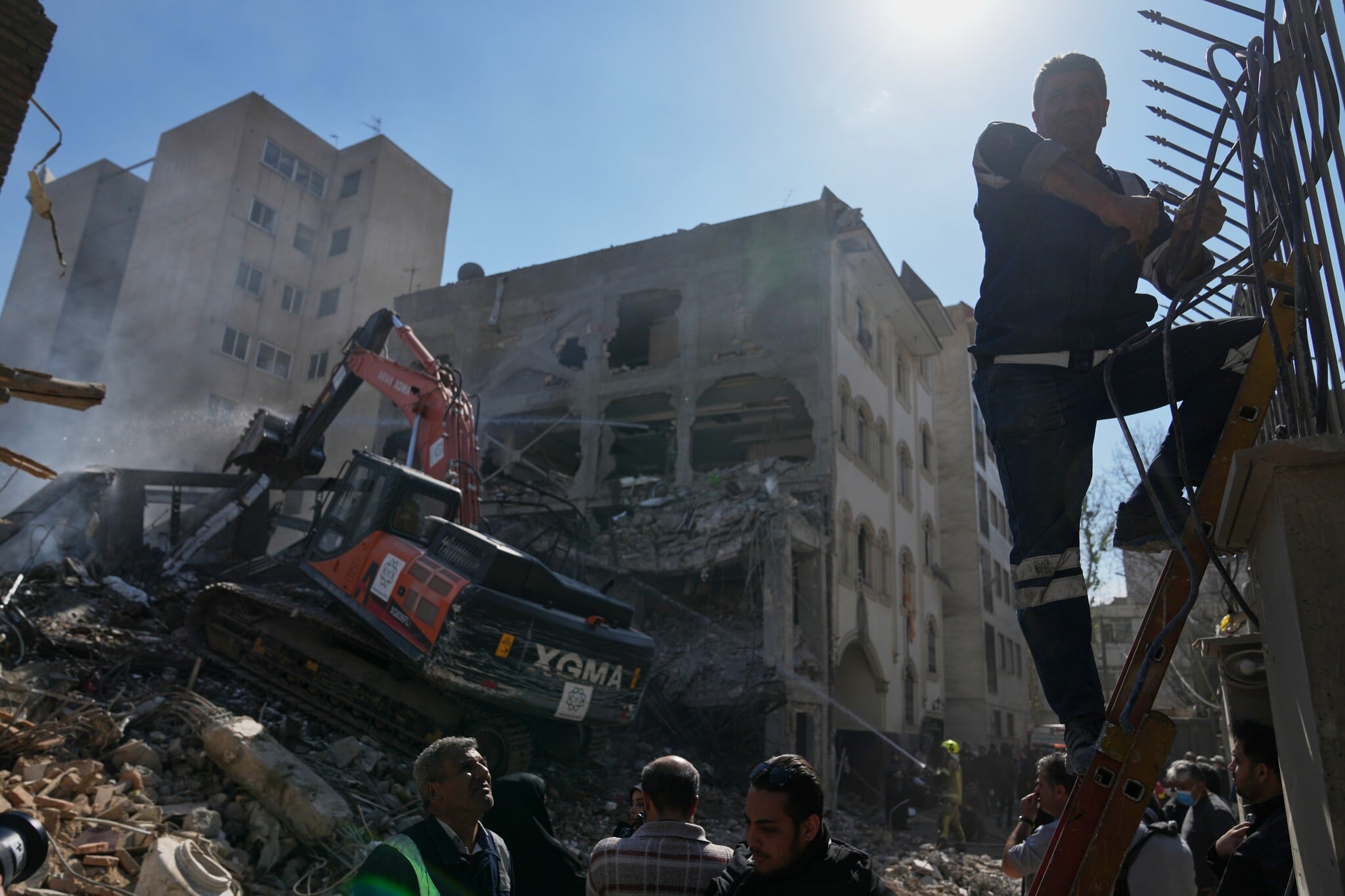
The Israel Defense Forces admitted late Tuesday that it was behind a strike early in the day that damaged a synagogue in Tehran, saying it was targeting a senior Iranian commander and that it regretted the “collateral damage” to the Jewish house of worship nearby.
According to Iranian media, heavy damage was caused to the Rafi Niya synagogue.
In response to a query by The Times of Israel, the IDF said that it struck a top commander from Khatam al-Anbiya, Iran’s military emergency command.
“Reports were received that a nearby synagogue was also damaged in the strike. The IDF regrets the collateral damage to the synagogue and emphasizes that the strike was directed at a senior military target within the regime’s armed forces,” the IDF said.
The army insisted that it took steps to “minimize the risk of harm to civilians” in the strike, “including the use of precise munitions and aerial surveillance.”
The results of the strike are still under review, the military added.
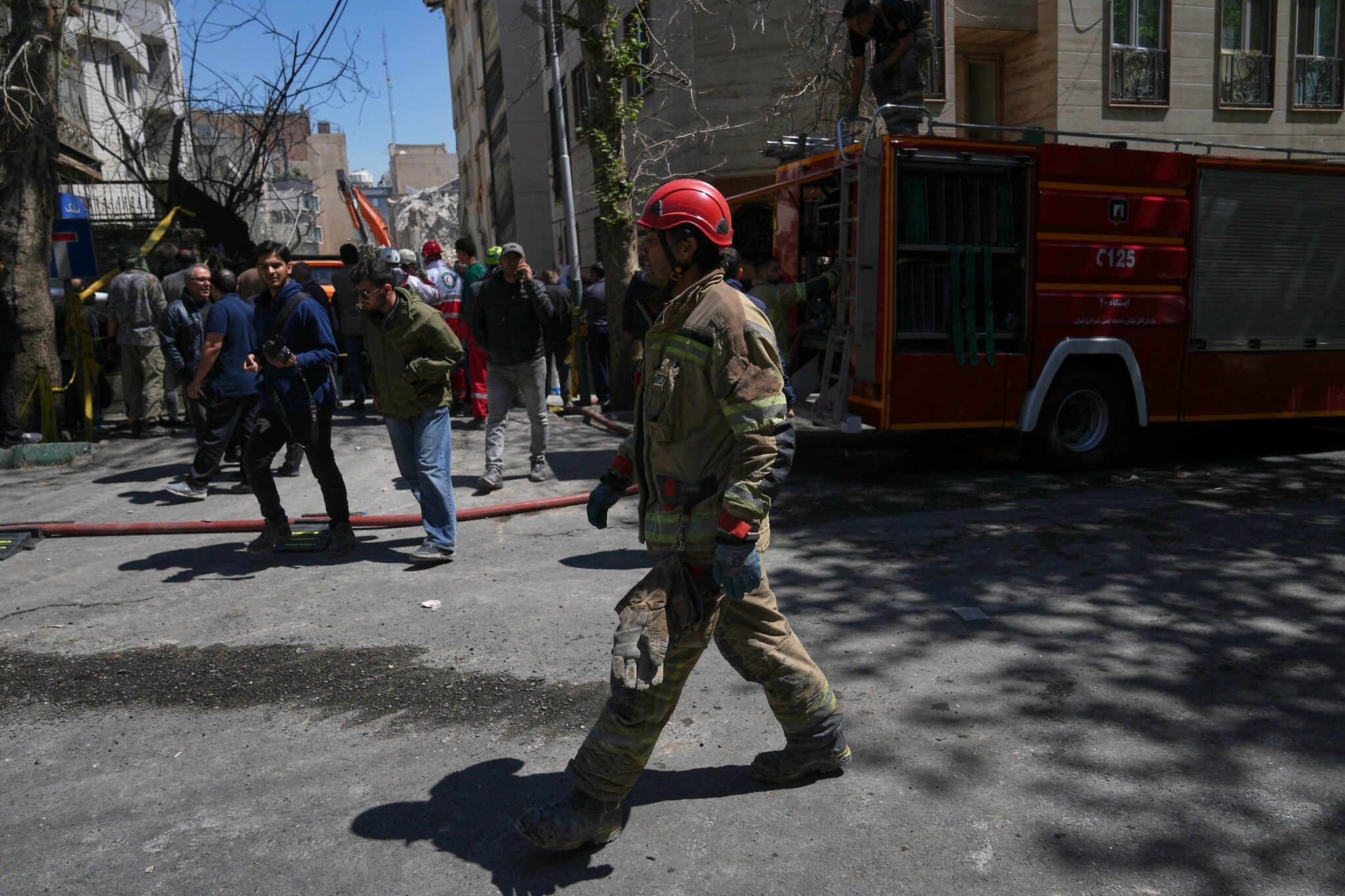
Multiple Iranian news sources reported on the strike that damaged the synagogue. In an internal report, Israel’s Diaspora Affairs Ministry said that visual documentation ostensibly from the scene showed rescuers working through piles of rubble and debris, with photographs capturing scattered religious books and damaged interior fixtures. The ministry’s internal report noted that the claim the synagogue was damaged is supported “by several sources, albeit all of them Iranian.”
The AP news agency reported that “video from the site showed rescuers moving around and what looked like a book of Hebrew scripture in the rubble.”
Iranian media asserted that Israel “deliberately attacked” the religious site. State-run IRNA news agency initially suggested the synagogue may have been caught in the blast radius of a strike aimed at an adjacent building in its location near Palestine Street. The intensity of the explosion “caused at least five neighboring residential blocks to suffer extensive damage,” IRNA said.
However, it also said that the site was “targeted by Israeli jets,” and showed footage of what it said was the site, “damaged by the enemy.”
A Jewish synagogue in center of Tehran was damaged by the enemy at 4 a.m. on Tuesday.
Debris removal operations are ongoing. pic.twitter.com/AJuFAptTFV— IRNA News Agency ☫ (@IrnaEnglish) April 7, 2026
An Israeli official told The Times of Israel that “Israel doesn’t target synagogues. Anyone claiming otherwise thinks you’re gullible.”
In response to an inquiry from The Times of Israel, the Prime Minister’s Office stated: “Iran is firing missiles at civilians, Israel is striking terror infrastructure. Missiles on civilians versus precision strikes on terror targets. That’s the difference.”
A few hours ago, the Jewish synagogue near Palestine Street in Tehran was targeted by Israeli fighter jets.
This synagogue, located near Palestine Square, is known as "Rafi Niya Synagogue," and a significant part of it has been destroyed as a result of the Israeli attack. pic.twitter.com/dBXApQ3omi
— IRNA News Agency ☫ (@IrnaEnglish) April 7, 2026
IRNA reported that a “significant part” of the Jewish house of worship was destroyed in the attack, which it said occurred around 4 a.m. Tuesday morning.
Other sources, including the Shargh daily and Al Jazeera, said the building was “completely destroyed,” the Diaspora Affairs Ministry’s internal report said, noting that this was likely for propaganda purposes.
Homayoun Sameh, the Jewish community’s representative in the Iranian Parliament and head of the Jewish Association in Tehran, blamed Israel for the attack in an interview with state media.
“Unfortunately, during the Jewish holidays, the Israeli entity targeted us and did not even spare Jews in Iran, as it struck one of our old and sacred synagogues,” he said in a statement. As a result of the attack, the synagogue building was completely destroyed, and the Torah scrolls remained under the rubble, he said.
An instagram post showed Younes Hamami, a local rabbi, at the scene.
Iran’s Jews are frequently used as mouthpieces by the Iranian regime, making it difficult to gauge the community’s real sentiments, analysts have noted.
Iranian outlet Mehr News Agency says a Jewish synagogue in central Tehran was badly damaged during US-Israeli airstrikes. pic.twitter.com/giRLdw0xsr
— Clash Report (@clashreport) April 7, 2026
Iran’s Jewish community is estimated at between 8,000 and 15,000, with most located in Tehran, Isfahan and Shiraz. Prior to the Islamic Revolution in 1979, there were some 100,000 Jews in the country. Iran still has the second-largest Jewish population of any country in the Middle East, after Israel.
About 25 synagogues are believed to remain in Iran, sources indicate, as well as several kosher restaurants, an old-age home, a cemetery, and a Jewish library.



The Times of Israel Community.