

Israeli officials said to believe Hamas has changed tack on Gaza rallies
With terror group seemingly working to curb violence, defense officials reportedly weigh renewing fuel transfer into Strip to create positive momentum
 Add ToI as a Preferred Source on Google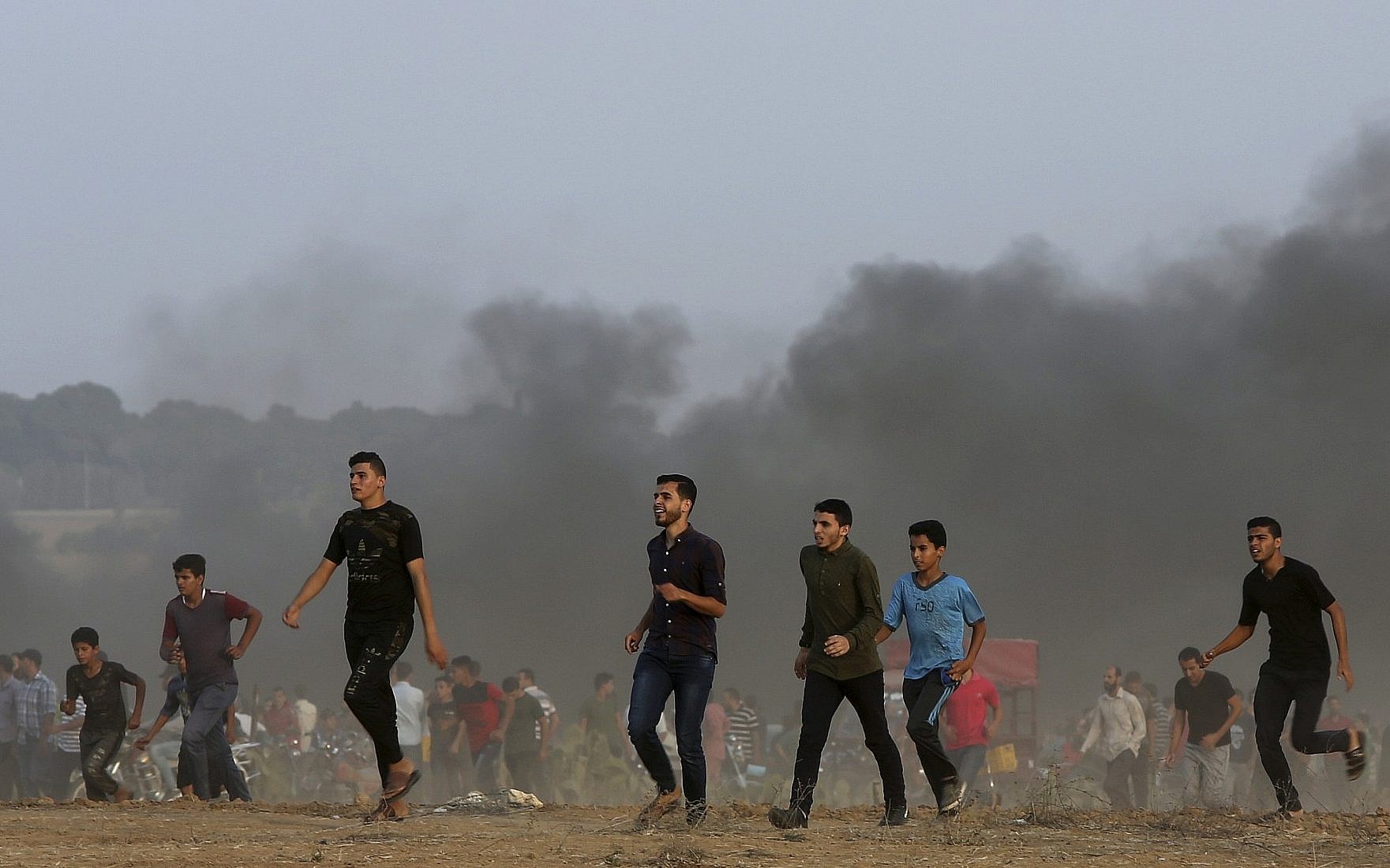
Israeli officials believe Hamas has changed its policies regarding protests on the Gaza border, and is working towards curbing violence at the rallies which have become a near-daily occurrence, Hadashot TV news reported Friday night.
Jerusalem believes the terror group that rules the coastal enclave is moderating the demonstrations in order to give a chance to Egyptian mediators seeking to strike a deal between Hamas and Israel for a long-term truce in Gaza, the report said.
Meanwhile Haaretz reported that Israeli defense officials wish to respond to the more limited rallies in Gaza on Friday by renewing fuel supplies to the Strip. The officials have said in closed deliberations that Hamas’s efforts to limit the violence should be taken advantage of to create positive momentum towards a calm.
Last Friday Israel halted the transfer of fuel to Gaza in response to heavy rioting and attacks at the border fence.
According to the newspaper security officials hope to renew supplies to Gaza as early as Sunday, to send a positive message to Hamas. It was not clear whether Defense Minister Avigdor Liberman supports such action. Liberman said last week Israel would not allow any more fuel into Gaza until violence against Israel was stopped “entirely.”
On Friday more than 100 Palestinians were reported wounded in violent clashes on as thousands protested close to the fence, burning tires and throwing rocks at Israeli military positions along the Gaza border.
The IDF said protesters broke through the fence in three locations before immediately returning to the coastal enclave, with Israeli soldiers opening fire at the suspects in one case. In addition, an IDF aircraft opened fire at a group of Palestinians launching incendiary balloons at Israel from the southern Gaza Strip, the army said.
However, Israeli defense officials said it was the quietest protest since the “March of Return” events began earlier this year. According to their estimations, Hamas may have stationed armed men close to the fence to try to minimize the violence, the Ynet news site reported.
Since March 30, Palestinians in the Gaza Strip have participated in a series of protests and riots which have mostly involved the burning of tires and rock-throwing along the security fence, but have also seen shooting attacks and bombings as well as the sending of incendiary balloons and kites into Israel.
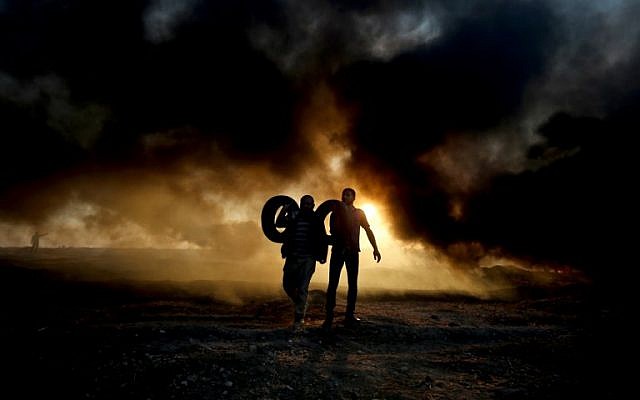
Some 155 Palestinians have been killed and thousands more have been injured in the clashes with IDF troops, according to AP figures; Hamas, an Islamist terror group that seeks to destroy Israel, has acknowledged that dozens of the dead were its members. One Israeli soldier was shot dead by a sniper on the border.
Friday’s violence broke out despite one of the main organizers of the protests calling on participants on Thursday night to behave nonviolently in the demonstration, following a flareup between Israel and Hamas that threatened to spark all-out war.
According to reports, Egypt had warned Hamas that renewed protests would bring a heavy Israeli response.
The Israeli military was on high alert Friday ahead of the clashes, coming two days after a rocket with a 20-kilogram (44-pound) warhead exploded outside a house in the southern Israeli city of Beersheba early Wednesday morning, causing significant damage, but no injuries as the mother inside had rushed her children to their bomb shelter moments before.
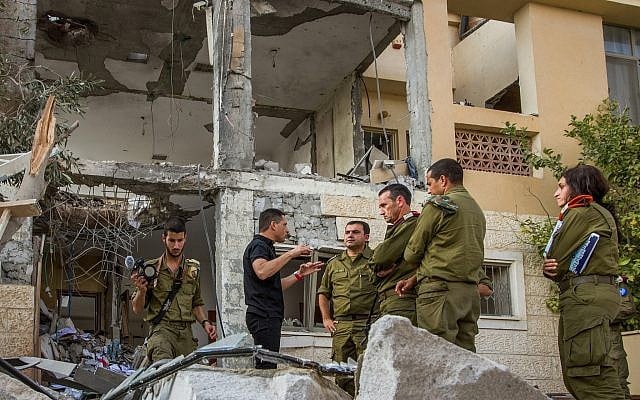
A second rocket also landed in the sea, off the coast of the greater Tel Aviv area.
In response, the Israeli Air Force conducted strikes against some 20 targets in the Gaza Strip, including a border-crossing attack tunnel that entered Israeli territory from the Palestinian city of Khan Younis.
According to the Israel Defense Forces, only the Gaza-ruling Hamas terror group and the Palestinian Islamic Jihad have access to the type of rockets fired on Wednesday morning.
The terror groups, however, denied responsibility for the launch, condemning those who carried it out as “irresponsible” and said they threatened to undermine an Egyptian-led effort to reach a negotiated armistice with Israel in exchange for certain economic incentives.
Experts have surmised a freak lightning strike may also be to blame for the launches, as a bolt was found to have struck near where the rockets were being stored.
فيديو لحظة اطلاق الصاروخ من قطاع غزة pic.twitter.com/XHUDO0vwl1
— حسن اصليح | Hassan (@hassaneslayeh) October 17, 2018
On Thursday, Israel’s top-level security cabinet instructed the army to take a wait-and-see approach to allow mediation efforts to succeed, but also ordered the military to step up reprisal attacks should there be border violence.
Ministers said the IDF should ultimately adopt a zero-tolerance policy toward rocket attacks, arson balloons and rioting along the Israeli border, according to reports in Hebrew-language media.
Even prior to the rocket attack, tensions along the border had been rising, with a rising clamor of calls within Israel for military action to stop incessant balloon attacks and border riots.
Last Friday, some 14,000 Palestinians thronged to the perimeter fence, burning tires and throwing rocks, firebombs and grenades at soldiers on the other side.
Some 20 Palestinians breached the border during the riots, and seven Palestinians were killed, including four who the military said had entered Israel and approached a military position. Israel responded by cutting off Qatari-funded fuel shipments meant to ease a chronic electricity shortage.
Judah Ari Gross contributed to this report.





The Times of Israel Community.