

It’s in the bag
Handbag and costume designer Shira Wise turns a former leather showroom into a cozy work studio and loft
 Add ToI as a Preferred Source on Google
Jessica Steinberg, The Times of Israel's culture and lifestyles editor, covers the Sabra scene from south to north and back to the center
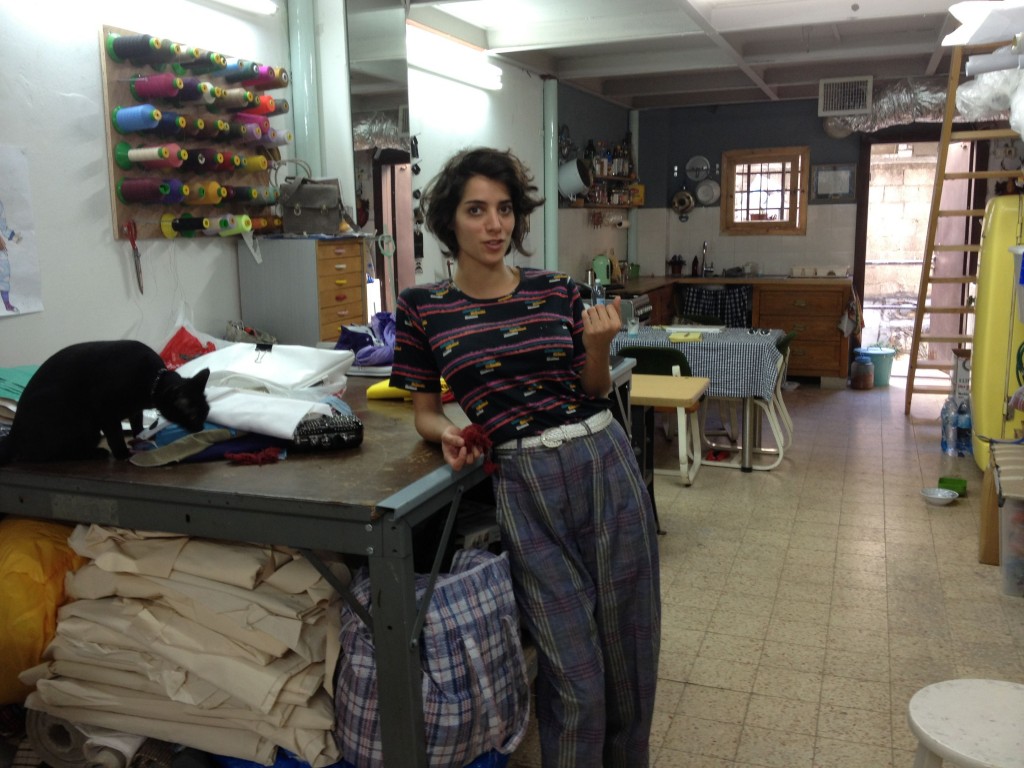
Shira Wise grew up in a bag factory; now, she lives in one.
The 30-year-old daughter of Steve’s Packs founder Steve Wise, creator of the ubiquitous Jerusalem backpack, key chain and wallet empire, Wise, who has her own line of handbags, stumbled upon a possible Tel Aviv living space when her long-time leather wholesalers retired.
“They had done absolutely nothing to the place for years,” said Wise, waving her hands at the renovated studio apartment that took six weeks to redo. “I sometimes think that if I’d known how much work it was going to be, I never would have done it.”
That’s probably not completely accurate: Wise, a gamine, wide-eyed woman with decidedly eclectic tastes, has taken on major projects more than once, from starting her bag design company — while learning costume design in Paris — to her current theater-costume design and handbag workshop in Tel Aviv.
It’s true she’s sometimes had the helpful back of her entrepreneur father, who came to bag design much the same way his daughter did — when he couldn’t find the kind of bag he wanted to buy. Thanks to the family business, Wise learned many tools of the trade, working in her father’s Givat Shaul, Jerusalem, factory throughout her childhood, designing a line of jungle-inspired clutches when she was just 16 and then establishing Le Sac, her label for comfortable, roomy but trend-conscious bags made of leather and imported fabrics. Named for the first bags she designed during that year in Paris, she now produces about 1,000 bags a year, a welcome sideline to her growing theater-costume business.
-

- Shira Wise and one of her animal print clutches (Courtesy Shira Wise)

-
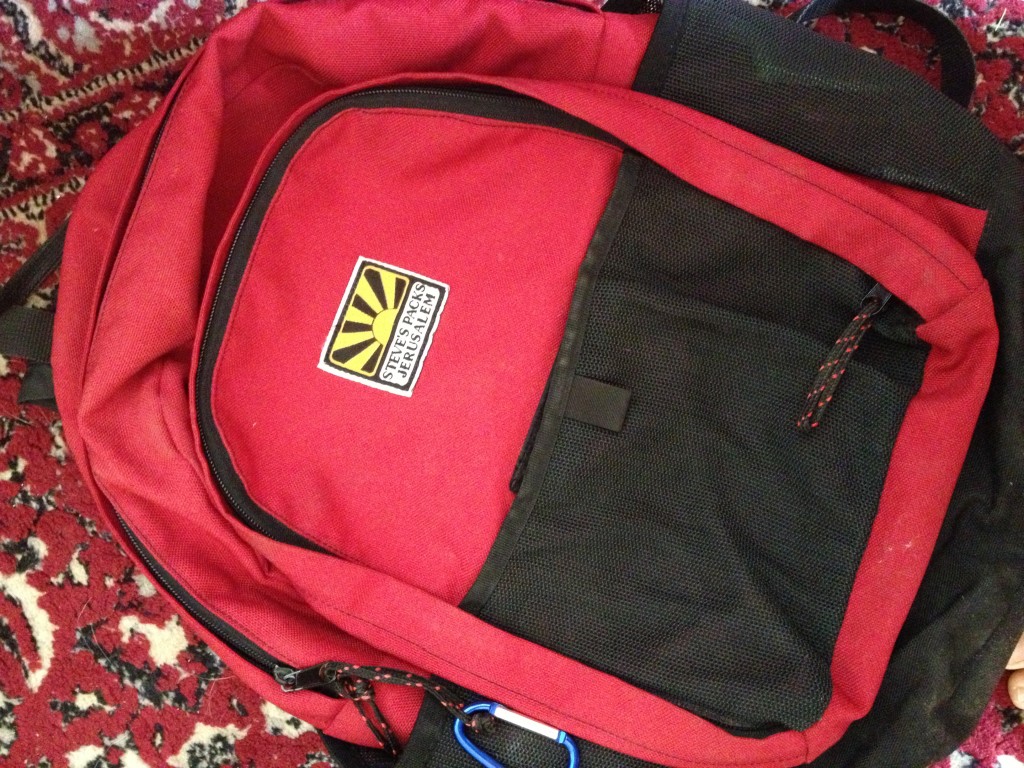
- The first Wise bags, a Steve’s Pack’s backpack, by Shira Wise’s father, Steve (photo credit: Jessica Steinberg/Times of Israel)
-
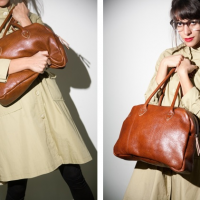
- A leather satchel by Shira Wise (Courtesy Shira Wise)
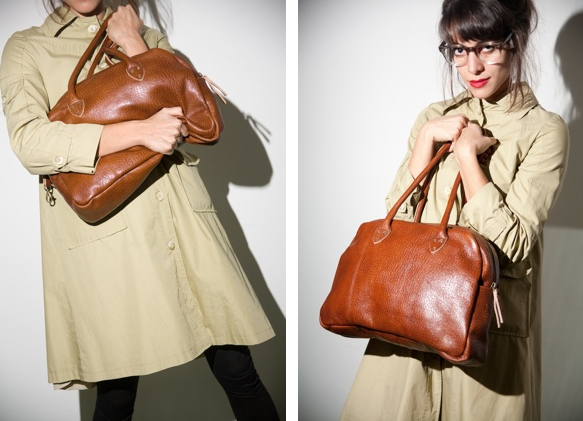
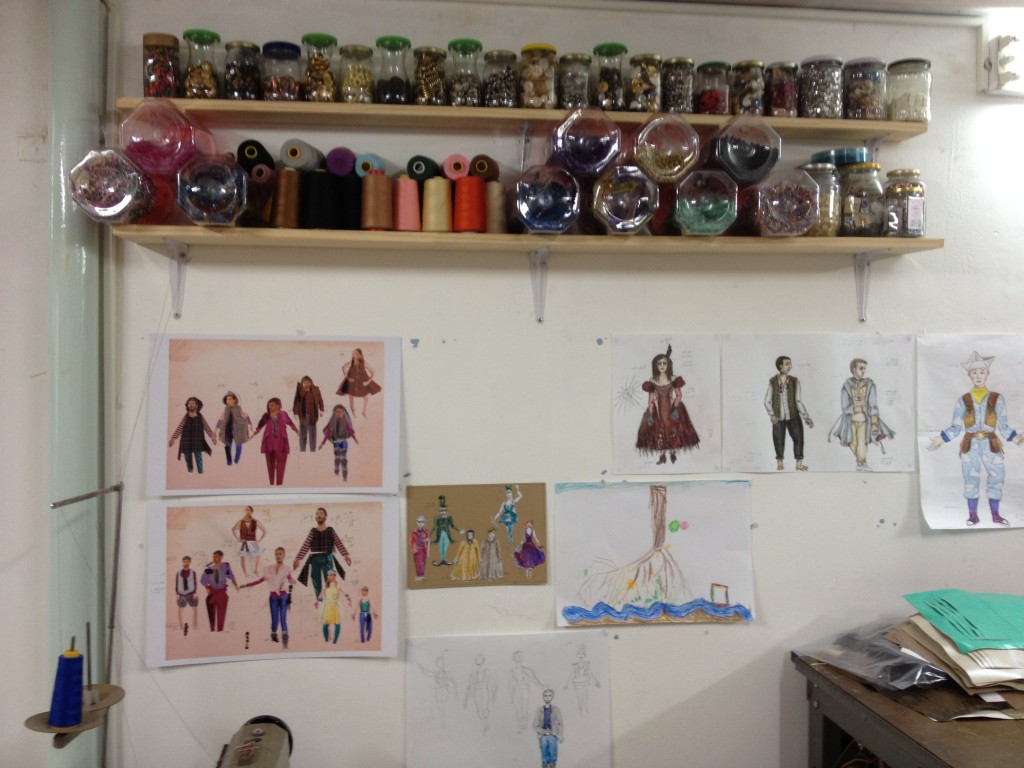
These days, Wise and her loyal seamstress design and sew the bags and costumes in the front section of her home studio — a clean, busy space decorated with colorful thread spools, costume etchings taped to the wall, a crowded rod of costumes, and a line of wooden shelves stuffed with boxes of finished bags, piles of vibrant fabrics gathered from Wise’s travels and books on design.
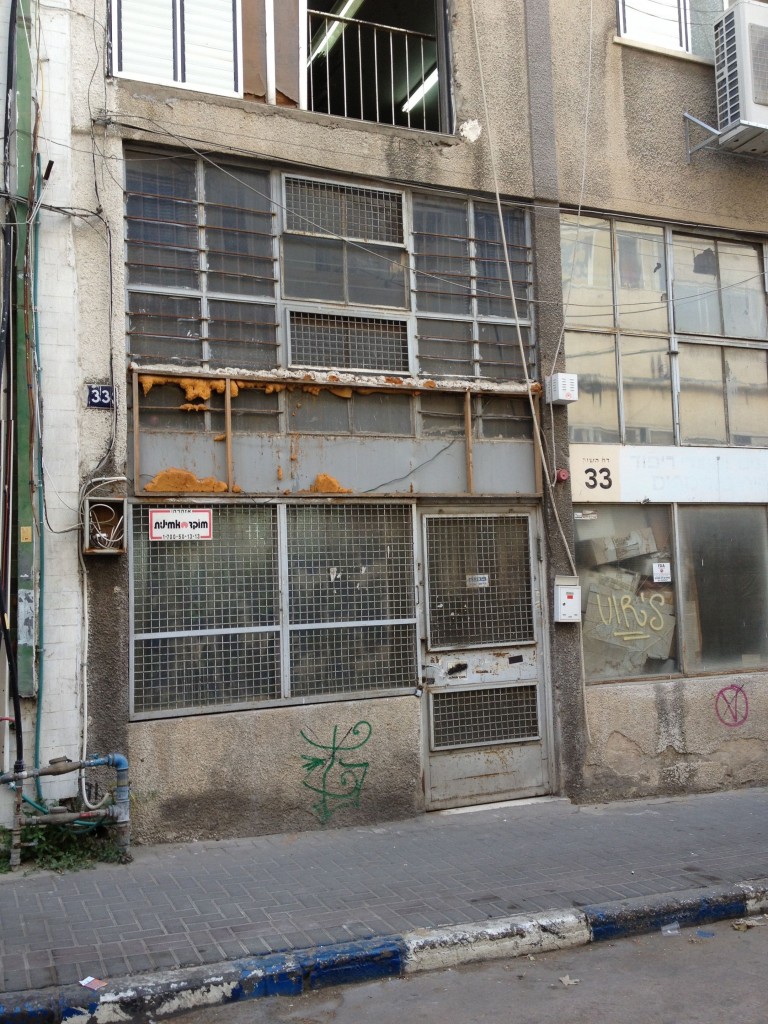
Entered by way of a still-grimy storefront door on a side street in the Levontin neighborhood in Tel Aviv — the city’s lighting and furniture-design district — Wise’s entire studio space is three meters wide and 12 meters long. She’s got about 90 meters in total when counting the upper loft area that serves as her bathroom, bedroom and living room, formerly used as the showroom’s storage area.
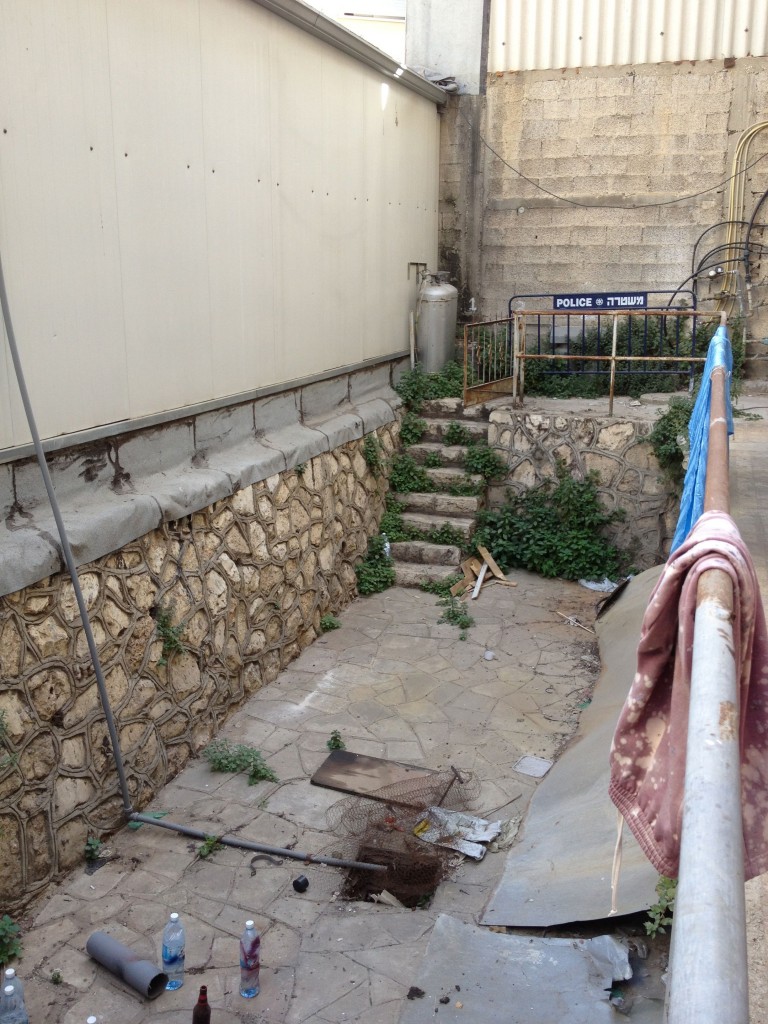
Given the relatively inexpensive rent — about NIS 4,000 a month — and the possibility of a 5-year contract, it was clear to Wise that it paid to use this space as both her work studio and apartment, despite the initial lack of plumbing and the layers of electrical wire stapled to the formerly dirty, dingy, brown walls. There was also no window to speak of, aside from a grimy front aperture and the back door, which led to a garbage-filled cement pit used as a dump by the surrounding buildings.
“It was pretty gross,” admitted Wise. “I definitely thought, ‘How the hell is this going to happen?'”
-
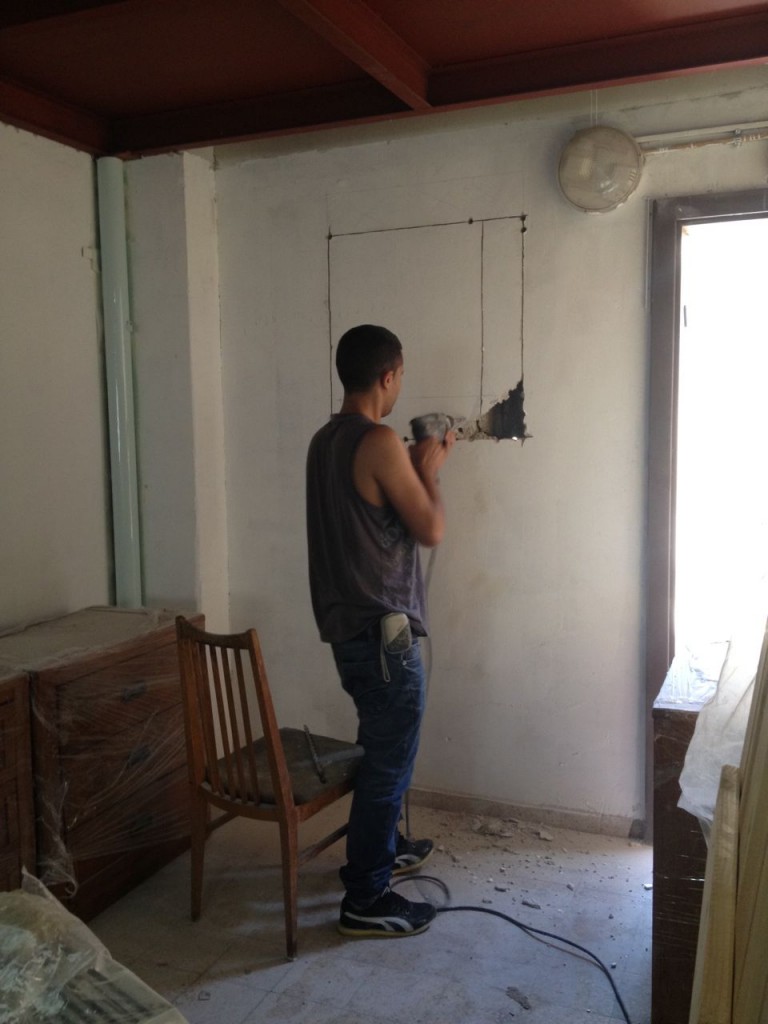
- The handyman from next door, putting in a window (Courtesy Shira Wise)
-
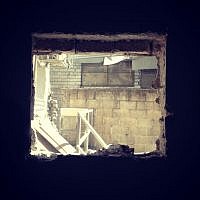
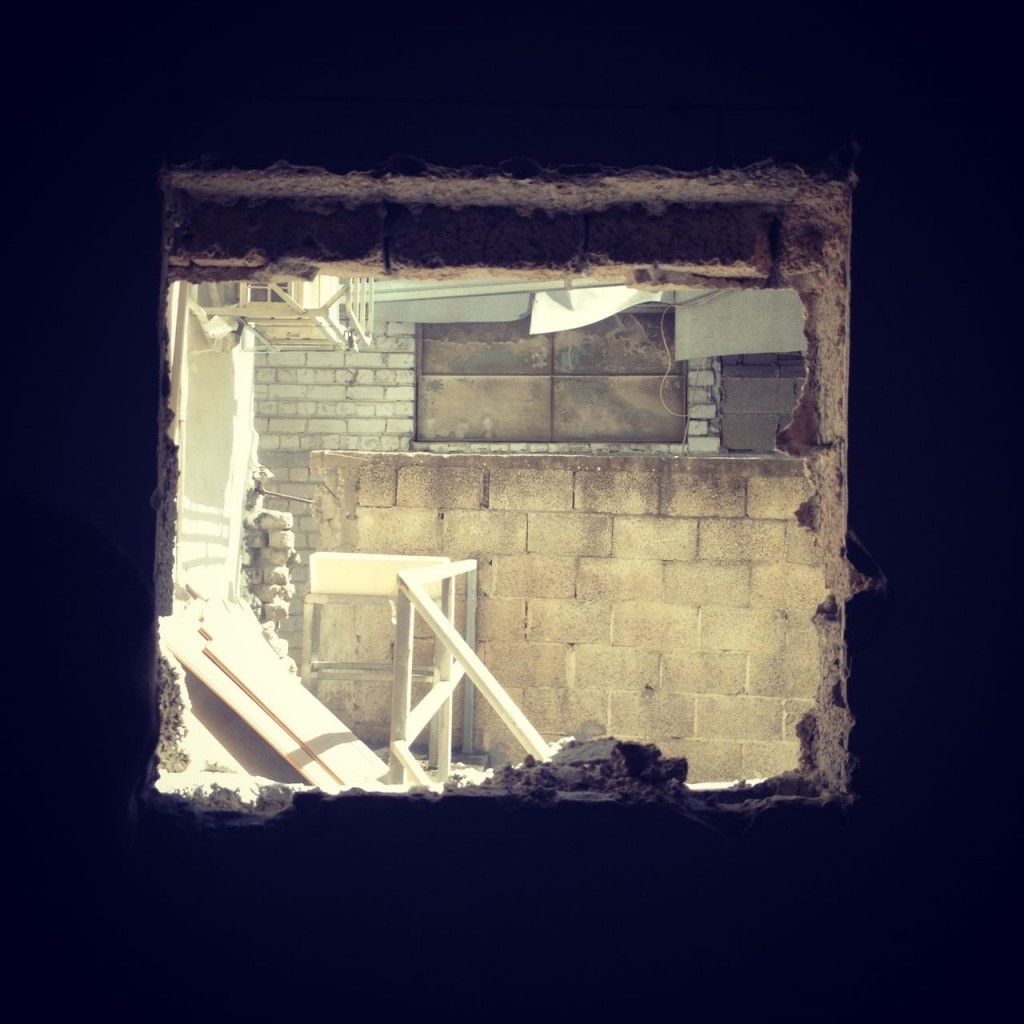
- A room with a view (Courtesy Shira Wise)
-
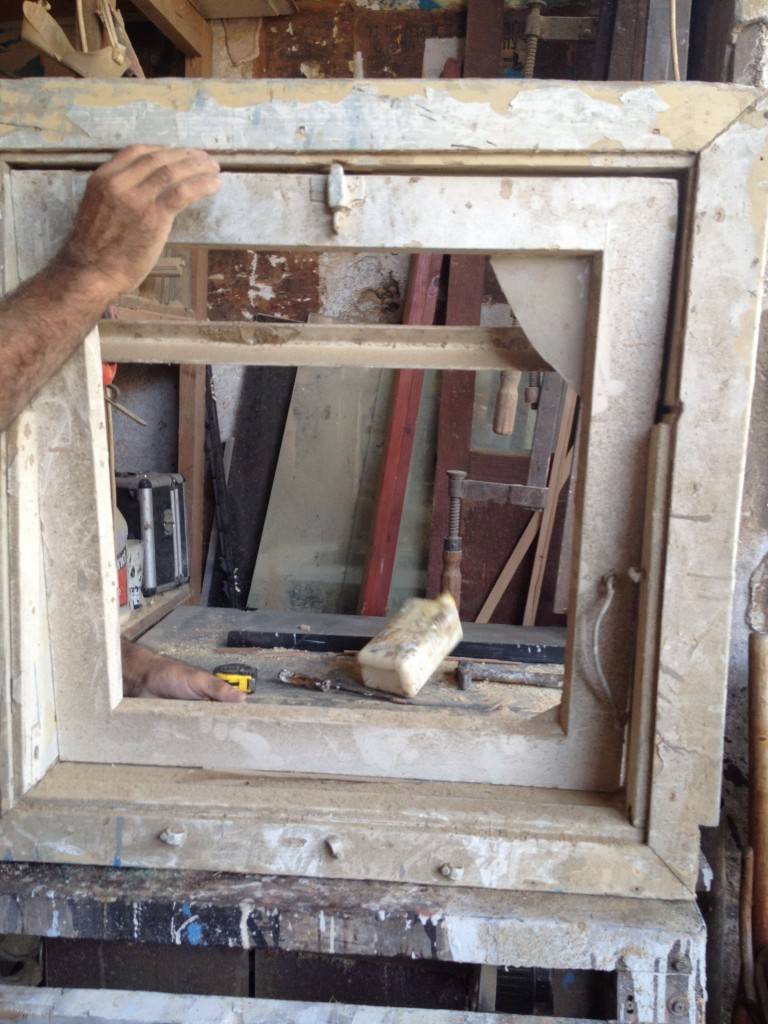
- The window frame is in (Courtesy Shira Wise)
-
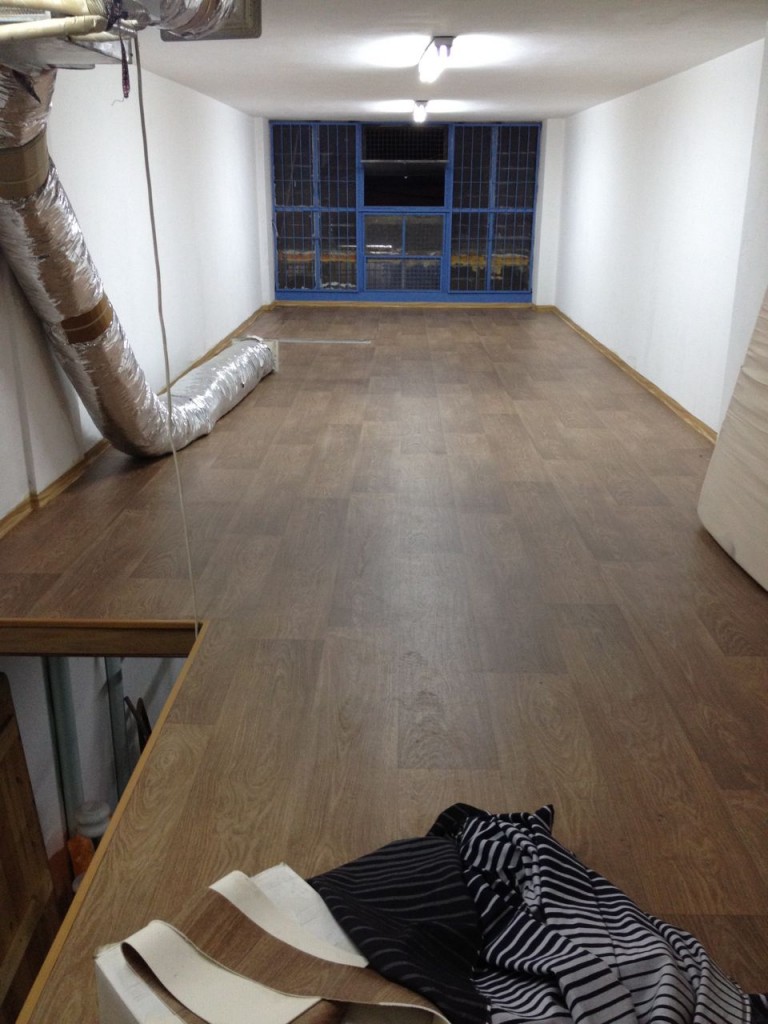
- Laying linoleum over steel girders (Courtesy Shira Wise)
-
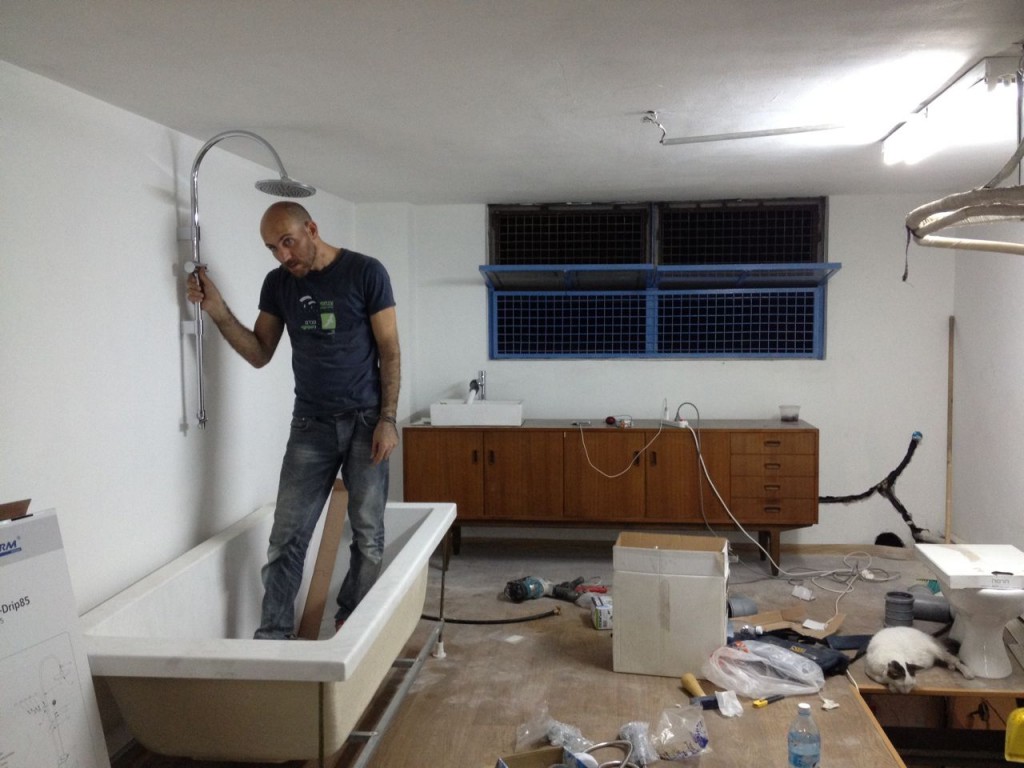
- Discovering the ceiling is too low (Courtesy Shira Wise)
Not everyone can handle the challenges of a DIY house project, particularly with the added limitations of an approximately NIS 30,000 budget for renovating what is ultimately only a rental apartment. But with a father who’s an architect by training, a couple of design-savvy friends and her own ideas for what Wise wanted her new home to look like, the place came together quickly.
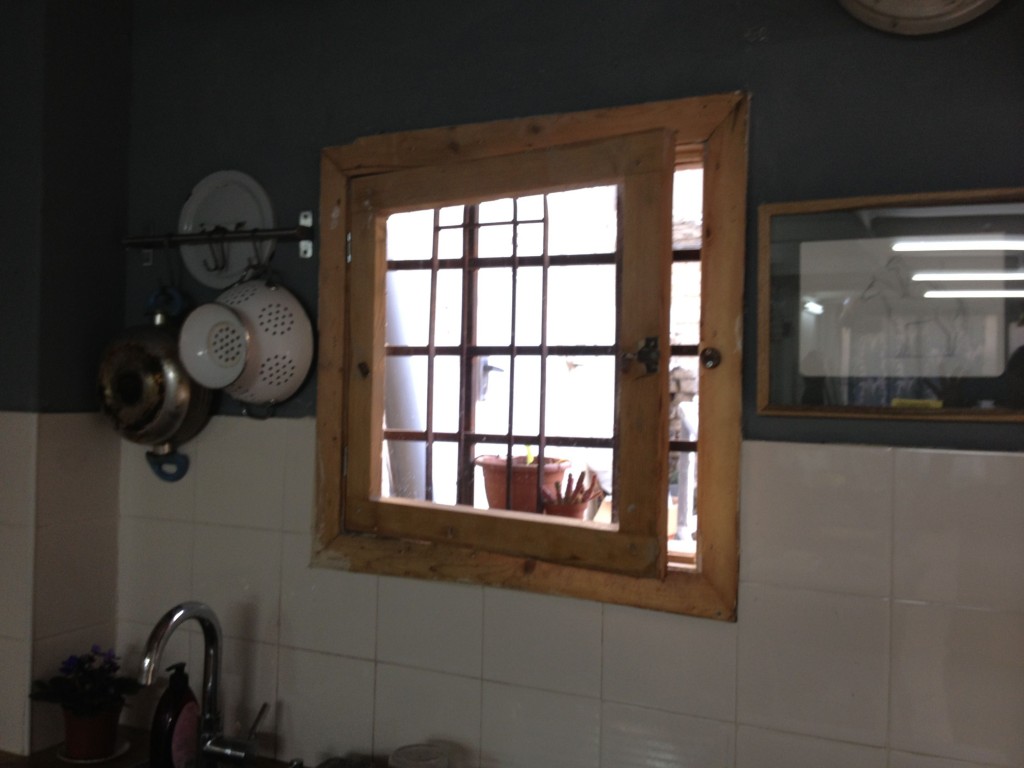
Wise tried to hire a contractor, but found the prices were too high for her limited funds. She turned, instead, to tool-handy friends and neighbors. The handyman across the street agreed to open the wall above the planned kitchen sink — looking out onto the “back garden” — and create a window; another friend helped out with the plumbing for the kitchen and washing machine, as well as the bathroom upstairs.
“You find out how much you pay for contractors to do very little,” said Wise, who did hire an electrician to put in outlets and light fixtures. “So much of the work is drilling a hole in the wall, putting in a screw, and that’s it.”
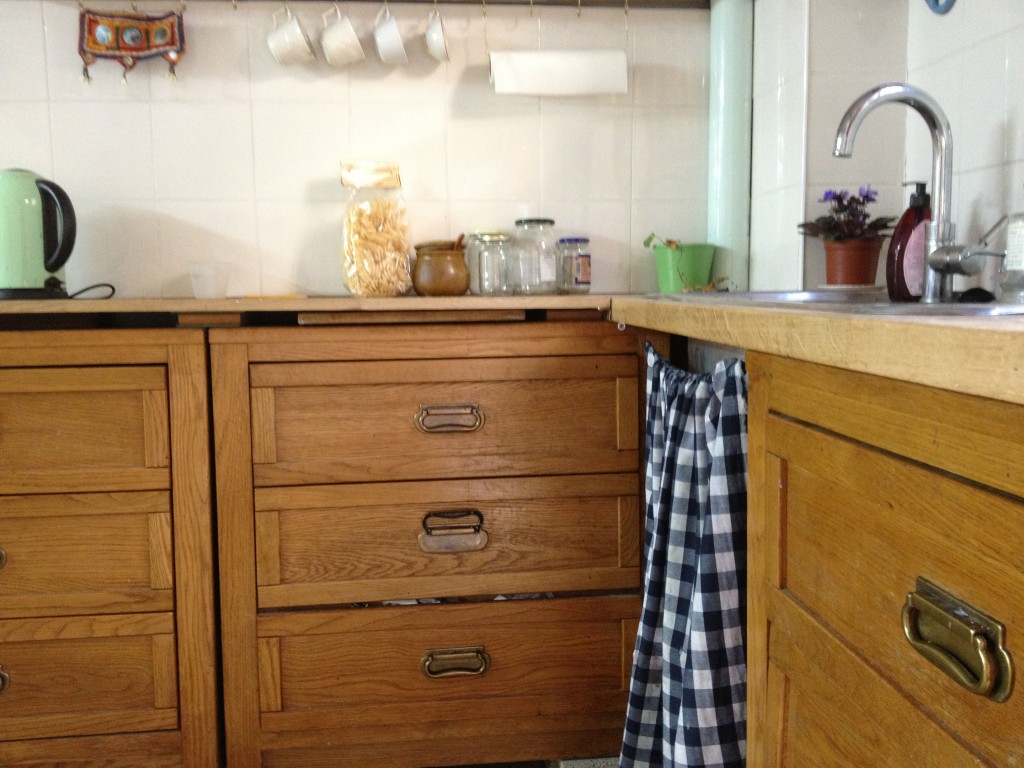
Creativity figured heavily in this home renovation. For kitchen cupboards and a sink, Wise headed to the Jaffa flea market, where she found three wooden chests that were installed as below-the-counter cupboards; she acquired a piece of countertop, sink and faucet from nearby wholesalers. Her pots, pans and teacups hang from hooks on the white tiled wall — some of which she proudly laid herself (“I did a much better job than the professionals”) — while the spices, oils and spirits sit on an open shelf above the counter.
-
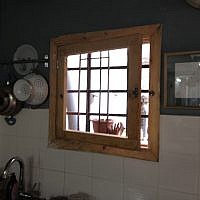
- Pots and pans hanging next to the finished kitchen window (photo credit: Jessica Steinberg/Times of Israel)
-
- Flea market chests serve as kitchen cabinets (photo credit: Jessica Steinberg/Times of Israel)
-

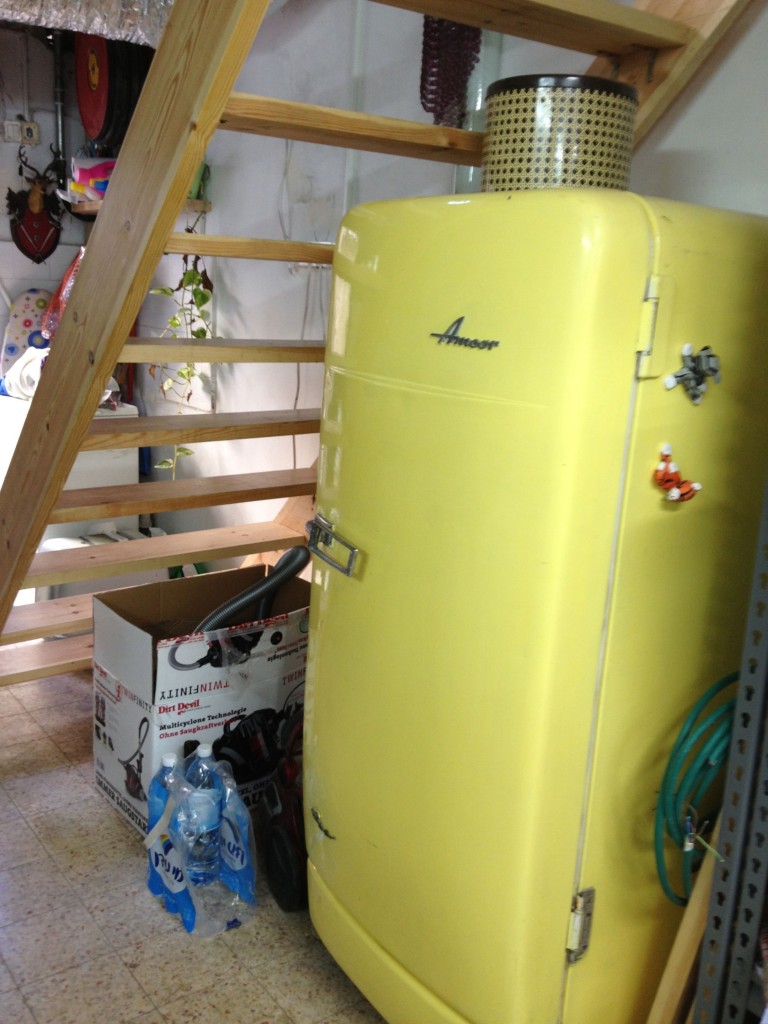
- The yellow refrigerator in its staircase niche (photo credit: Jessica Steinberg/Times of Israel)
-
- The backyard with potential (photo credit: Jessica Steinberg/Times of Israel)
-
- Spools of thread and etchings on Wise’s studio walls (photo credit: Jessica Steinberg/Times of Israel)
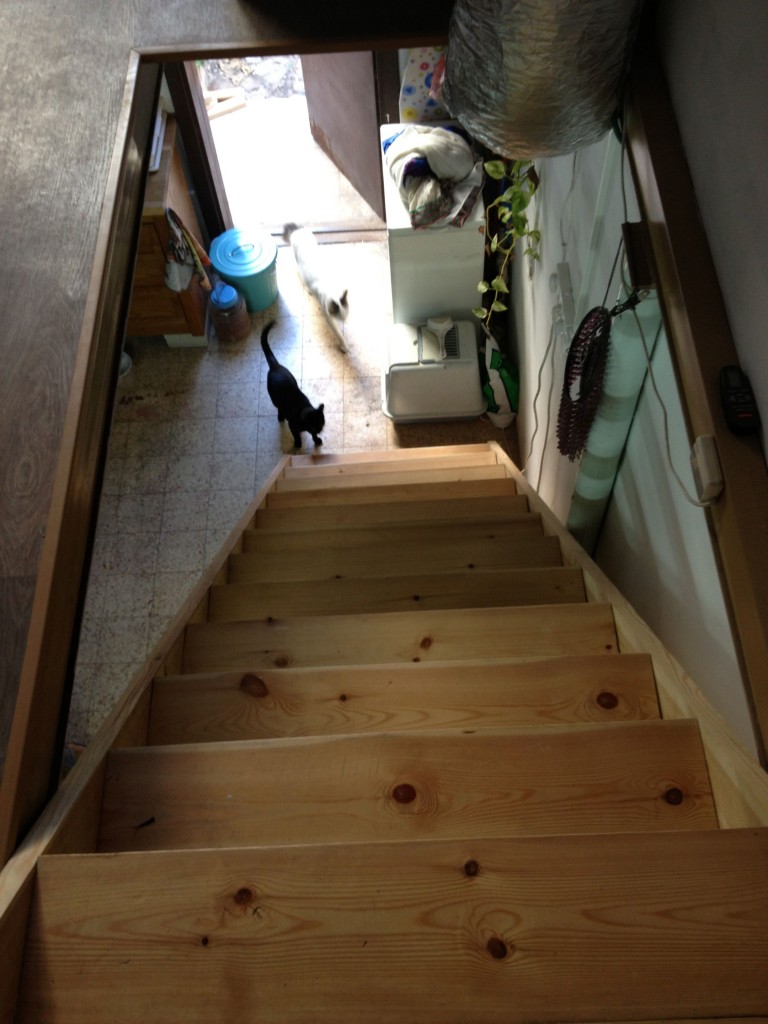
The former owners had left behind their 1950s-era refrigerator, which Wise happily painted a sunshine yellow. That relic sits in a nook under the open staircase leading above, which replaced the ancient version that Wise used for her first two weeks in the place. Now there is a clean line of unpainted wooden stairs that Wise built herself — twice, after initially leaving uneven spaces between the steps. Live and learn.
Upstairs, Wise laid parquet linoleum over the steel girders that had formed the storage space floor, using “about 25 liters of glue,” for the entire length of the loft and in the process causing herself massive headaches. That taught her that one should never sleep in a room that has just been floored and glued.
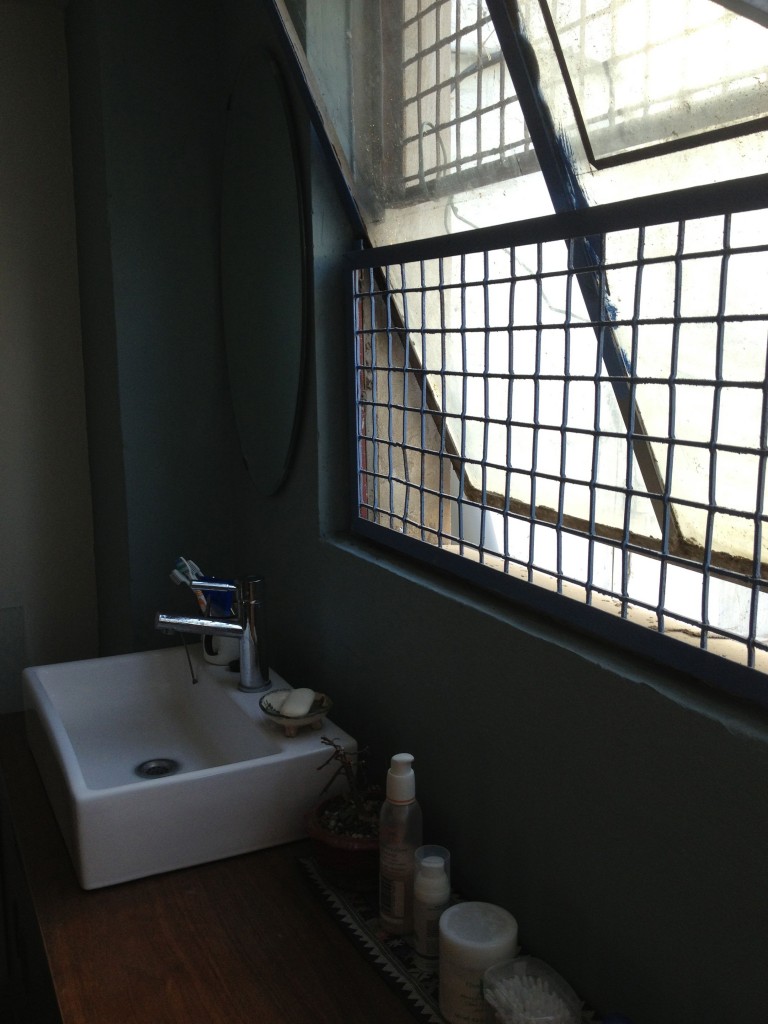
At the far end of the loft, overlooking the backyard, she carved out one corner as the bathroom area, building a toilet room with a bleached white door that was donated by a friend who has a hobby of collecting old doors and storing them around the city. The bathroom cabinet is a long, 1950s-style bureau, similar to what once stood in Wise’s grandparents’ house, with a white sink and faucet dropped into one end of the bureau. Simple, stylish and effective.
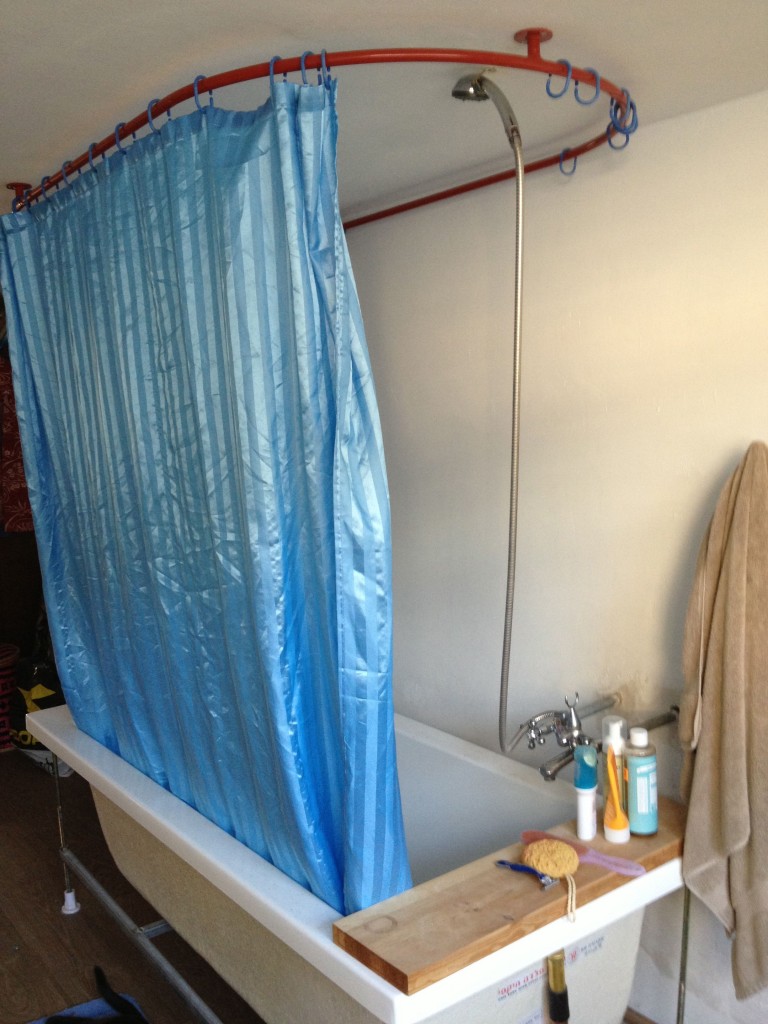
The bathtub was more of a challenge; Wise bought a plain white tub, which rests permanently on the metal frame in which it was delivered in a modern take on the claw-footed bathtub. After finding part of a shower rod in the street, she extended it with additional pieces in order to form a full oval, and then had a car shop paint it fire-engine red. Her one indulgence was a wide, rain-shower head that she attempted to hang from the ceiling, but alas, the ceiling was too low to accommodate it.
-
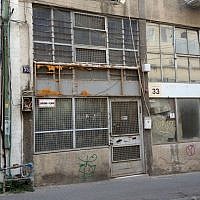
- The still-dingy front of Wise’s Levontin apartment (photo credit: Jessica Steinberg/Times of Israel)
-
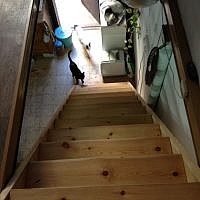
- Shira Wise built her open stairs twice, but now they’re well-spaced (photo credit: Jessica Steinberg/Times of Israel)
-
- Accommodating massive windows above the bathroom sink and commode (photo credit: Jessica Steinberg/Times of Israel)
-
- The machinations of a bathtub in a loft space (photo credit: Jessica Steinberg/Times of Israel)
-
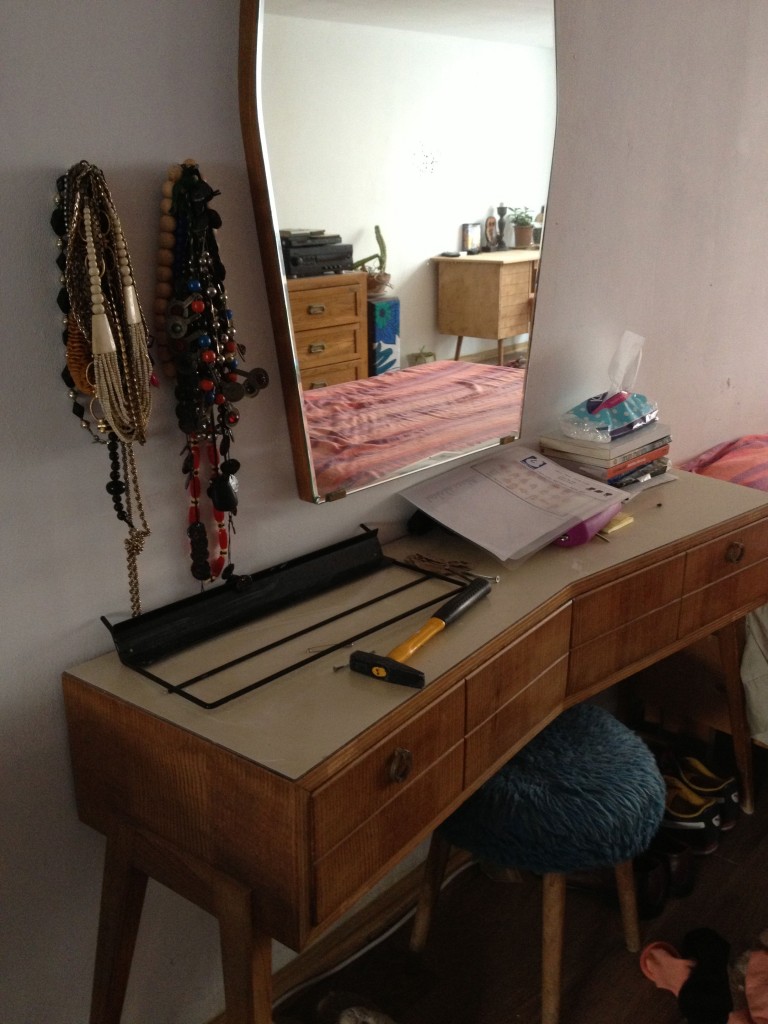
- Another one of Shira Wise’s flea market finds, with sideways drawers that offer ample hiding space (photo credit: Jessica Steinberg/Times of Israel)
-
- Another flea market find, this time a curio table donated by a friend (photo credit: Jessica Steinberg/Times of Israel)
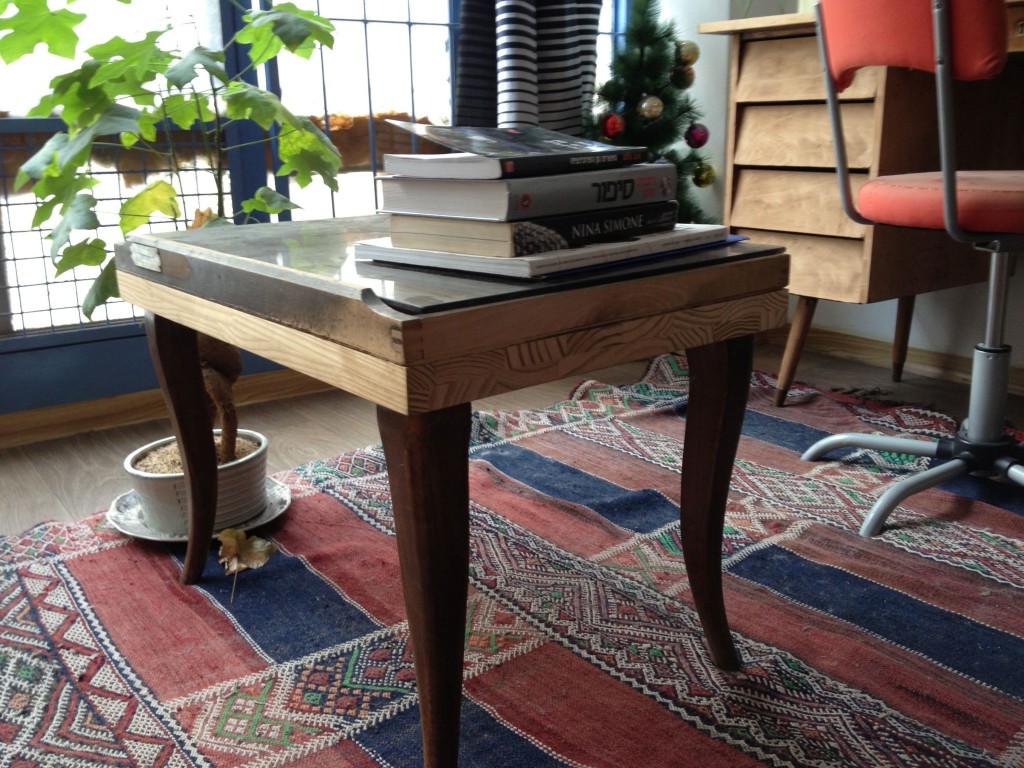
For the rest of the furniture, Wise rounded up pieces she’s been “shlepping around for years,” a groovy makeup table that functions as a night table, a massive armoire, pillows and a rug brought home from a trip to Morocco. She had the air conditioner tubing rerouted to blow cool air upstairs, and spent a couple of days clearing out the debris in the outside space. Now she has plans to plant a garden, maybe even laying a deck for easier entertaining.
“When you do the work yourself, you realize it’s not such a big deal,” said Wise, who said she did the entire renovation in about six weeks, with “a lot of stops and starts.”
“And even if I’m only here for two years, it was worth it for the price.”










The Times of Israel Community.