

Judge halts major Dimona housing plan over absence of environmental impact study
Citing ‘significant flaws,’ Beersheba Administrative Court sends plans for expansion of Negev desert city back to planning committee for further work
 Add ToI as a Preferred Source on Google
Sue Surkes is The Times of Israel's environment reporter
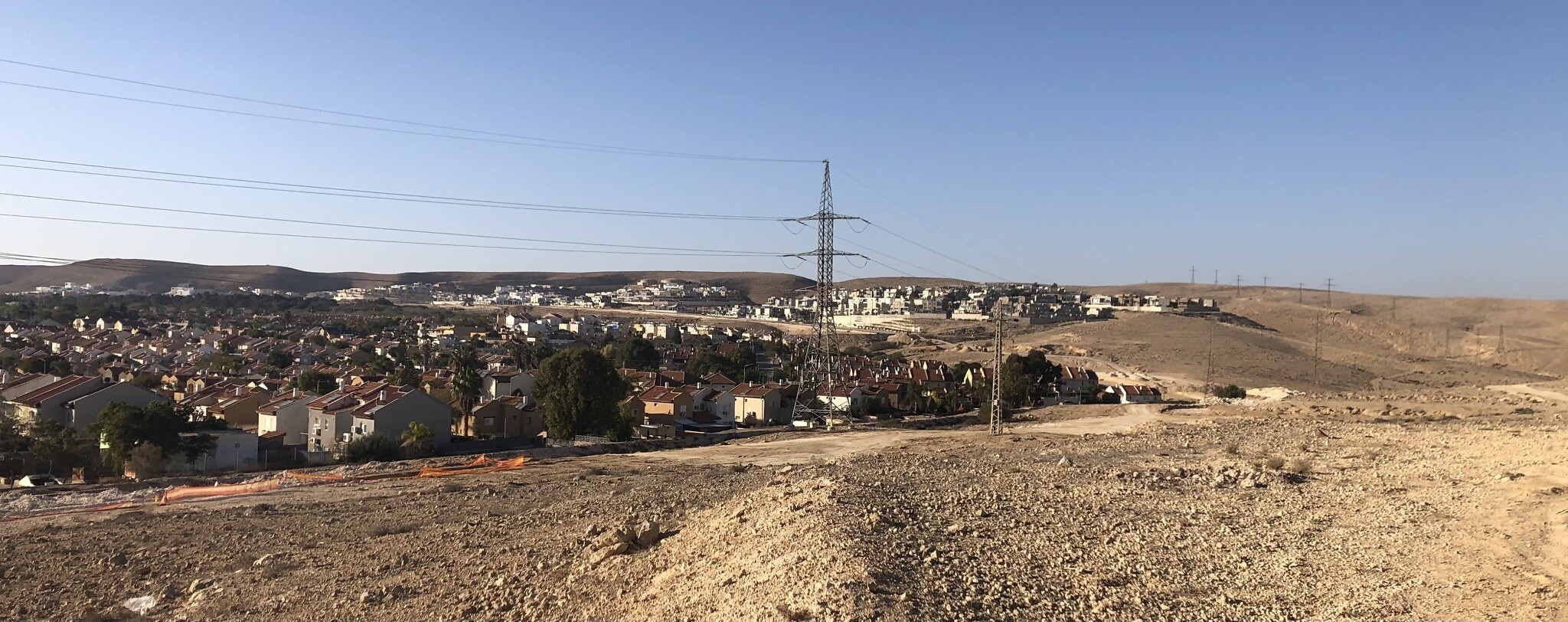
Sending a strong message to planners and the Israel Land Authority, a court nixed a program for a major housing estate in southern Israel because the site is located in an area of high environmental sensitivity, yet the plans were approved without any serious attempt to assess the environmental impact.
In a decision published Tuesday, Judge Yael Raz-Levy of the Administrative Court in Beersheba, berated the Israel Lands Authority, the Southern District Planning Committee, and others for “significant flaws” in the plan’s approval, ordering a list of respondents to pay the petitioner, the Society for the Protection of Nature in Israel, costs of NIS 15,000 ($4,400) apiece.
At issue is a new neighborhood called Dimona East, set to combine residential, industrial and employment areas with a new train station and transportation hub.
Initiated by the Israel Land Authority in cooperation with the Dimona Municipality, it would include 8,000 new housing units on nearly 2,200 acres of open gravel desert east of Dimona, in the Negev desert, most of it defined as of high environmental sensitivity.
Raz-Levy sent the plan back to the Southern District Planning Committee so that an environmental impact assessment and other related checks could be carried out.
In her decision, she wrote: “I have come to the conclusion that significant flaws occurred in the approval of the plan and its publication, including its approval without an environmental impact assessment, in violation of the provisions of the assessment regulations and case law… Not only that, the decisions were made in the absence of sufficient reasoning and without a proper factual foundation.”
In its petition, the Society for the Protection of Nature (SPNI) claimed that the plan had been approved without an environmental impact assessment and that the environmental landscape document that was prepared did not include all the information necessary for such a large plan.
The SPNI said after publication of the ruling that there was enough land to serve decades of building needs within the city of Dimona and that there was no urgent need to build what amounted to a new city on open space, seriously impacting the environment.










The Times of Israel Community.