

Lawmakers mull lowering military exemption age for ultra-Orthodox yeshiva students
Finance Ministry says law regulating Haredi enlistment should not contain any exemption age; MK Tur-Paz calls for ‘strong sanctions, no exemptions’
 Add ToI as a Preferred Source on Google
Sam Sokol is a former political correspondent at The Times of Israel. He was previously a reporter for the Jerusalem Post, Jewish Telegraphic Agency and Haaretz. He is the author of "Putin’s Hybrid War and the Jews"
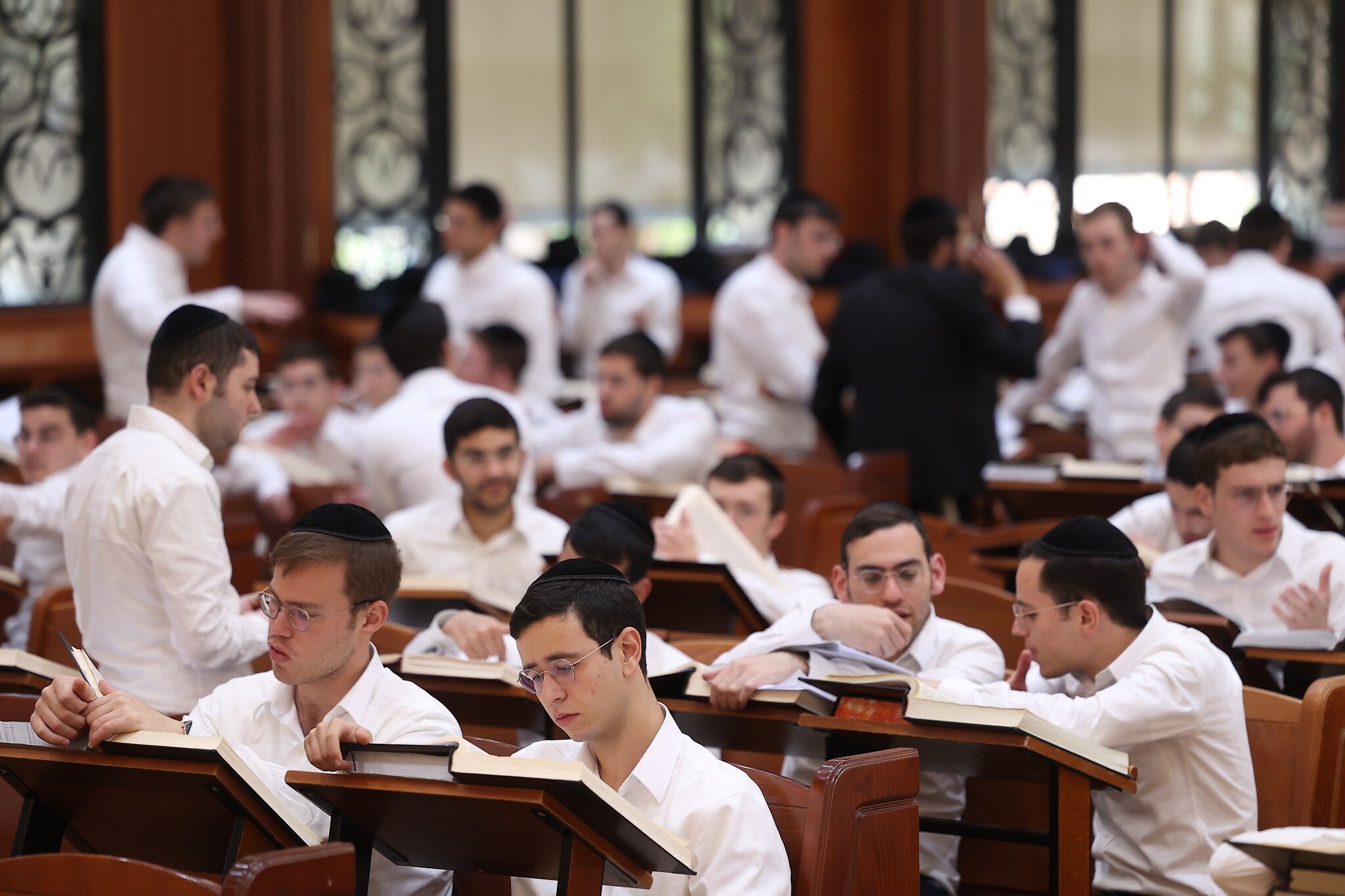
Lawmakers and government representatives pushed back against legislating an exemption age for yeshiva students on Tuesday, as part of an ongoing debate in the Knesset Foreign Affairs and Defense Committee on a government-backed bill to regulate Haredi enlistment.
Addressing the committee, officials from several ministries argued that a high exemption age would fail to conscript Haredim and harm efforts to integrate them into the economy, with one finance ministry official declaring that “an exemption age is not an incentive for conscription and is only economically harmful.”
“An exemption age should not be part of this outline,” the official told lawmakers.
For decades, yeshiva students received annual deferments until the age of 26, when they were completely exempted from IDF conscription. However, the High Court of Justice ruled last summer that the blanket exemptions from army duty were illegal, prompting the coalition’s two ultra-Orthodox parties, Shas and United Torah Judaism, to demand the passage of a law reestablishing the previous status quo.
Others present at the committee debate argued against lowering the age without explicitly dismissing doing away with it altogether.
“If we lower the exemption age to 22, a person knows that at this age, they will be able to enter the labor market. What will be his incentive to enlist in the IDF?” asked committee legal advisor Miri Frenkel Shor, recommending the use of economic sanctions against evaders.

Brig. Gen. Shay Tayeb, head of the IDF Personnel Directorate’s Planning and Personnel Management Division, also argued against lowering the exemption age, saying that “23 percent of this year’s recruits were 23 years old and older, and 9% were 22 to 23.”
The fact that lawmakers are discussing an exemption age “implies that they are talking about large numbers of people staying in the yeshiva,” Israel Hofsheet Executive Director Uri Keidar, whose organization has petitioned the High Court to order the conscription of all eligible Haredi men, told The Times of Israel.
“After October 7, there should be no exemption age. Strong sanctions. No exemptions,” committee member Moshe Tur-Paz (Yesh Atid) said in a WhatsApp message following the debate.
After rolling back changes made to the legislation by former chairman Yuli Edelstein, lawmakers on the committee are currently debating a version of the bill first proposed by Blue and White-National Unity chairman Benny Gantz in 2022 and revived by the Knesset in 2024.

As originally written, the bill would lower the current age of exemption from mandatory service for Haredi yeshiva students from 26 to 21 and “very slowly” increase the rate of ultra-Orthodox conscription.
Any bill specifying an exemption age that releases large numbers of Haredim from military service runs the risk of being struck down by the High Court as contravening its previous ruling.
Some 80,000 ultra-Orthodox men aged between 18 and 24 are currently believed to be eligible for military service but have not enlisted. The Israel Defense Forces has said it urgently needs 12,000 recruits, due to the strain on standing and reserve forces throughout the ongoing war against Hamas in Gaza and other military challenges.
Taking to the streets
As lawmakers grappled with the legislative side of conscription, the rabbinic leaders of the ultra-Orthodox parties began to mobilize their followers, calling on the Haredi public to take to the streets on Thursday to protest government efforts to conscript yeshiva students.
Rather than strengthening Torah study while Israel is faced with bloodthirsty enemies, the Israeli authorities are seeking to “mortally harm the world of Torah,” the ruling rabbinic councils of the Shas, Degel HaTorah and Agudat Yisrael parties declared in a joint letter.
Degel HaTorah and Agudat Yisrael together comprise the larger United Torah Judaism party.
The rabbis urged the “God fearing” public to go out to the streets of “each and every city (as far as possible) to stand and beg the Creator of the Universe to save us from all our troubles, send complete healing to all of the wounded and nullify the thoughts of our enemies.”
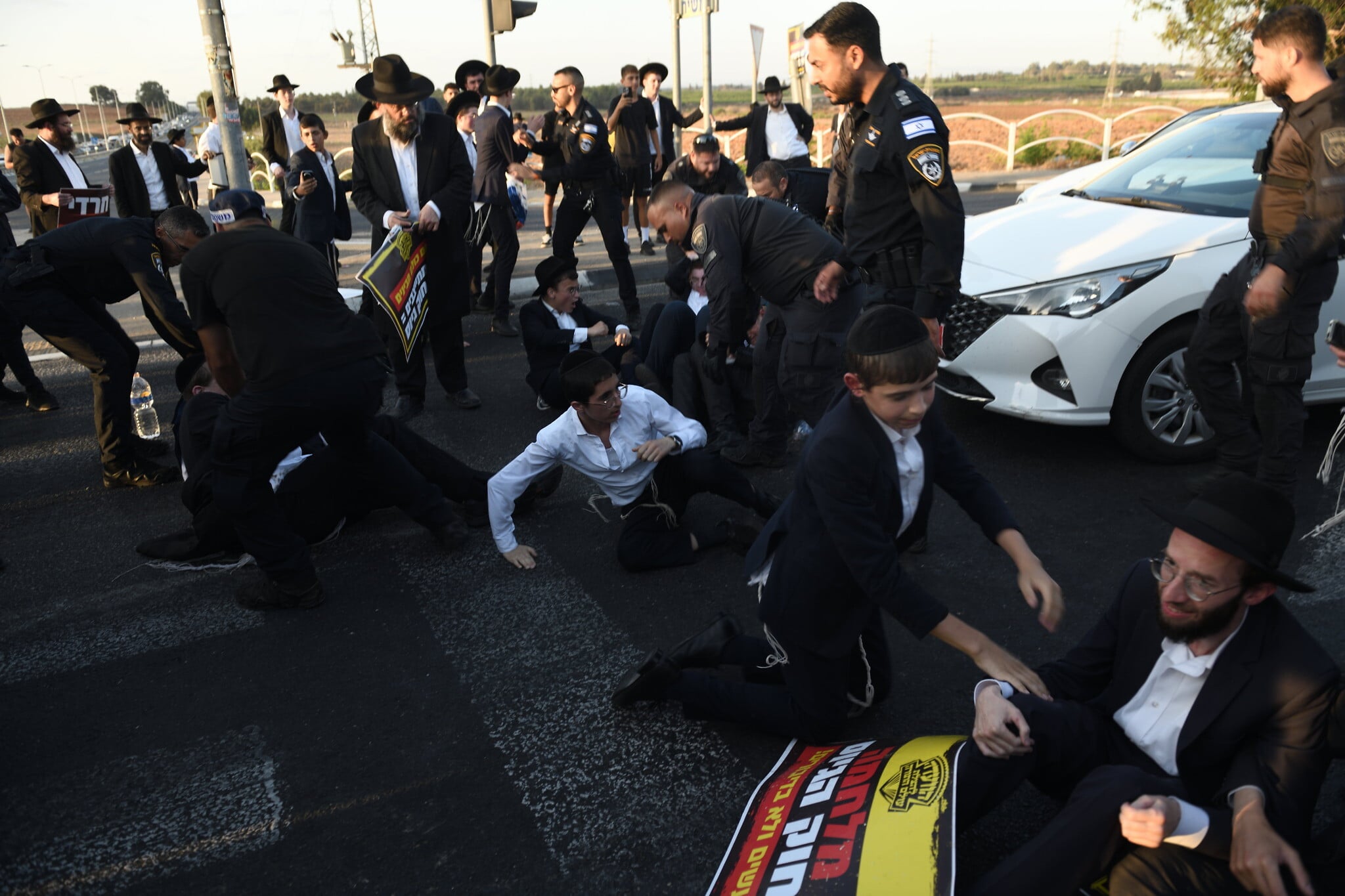
Recent months have seen a significant increase in Haredi demonstrations in response to military efforts to increase enforcement against draft dodgers, including through arrests.
Thursday’s planned demonstrations are slated to occur three weeks after an international day of prayer and fasting called by the Haredi rabbinic leadership, which itself came a day after protesters affiliated with the extremist Jerusalem Faction held a “day of rage,” blocking several highway intersections in central Israel.
Anti-enlistment protesters have also held multiple demonstrations outside the Beit Lid military prison, where several draft dodgers have been held, and blocked traffic near Tel Aviv and in Jerusalem.






The Times of Israel Community.