

Legal right or government caprice: Was the decision to fire the attorney general lawful?
Government says it’s entitled to modify the dismissal process in order to axe an AG who repeatedly stymied its policies, but critics argue this violates key principles of administrative law

 Add ToI as a Preferred Source on Google
Jeremy Sharon is The Times of Israel’s legal affairs and settlements reporter

For only the second time in Israel’s history, and for the first time in four decades, the government of Israel fired its attorney general on Tuesday, in a seismic legal and political event that will likely have a dramatic impact on the remainder of the coalition’s tenure in office.
After years of feuding, the cabinet voted unanimously to dismiss Attorney General Gali Baharav-Miara from office on the grounds that she had serially blocked government policy, appointments, and legislation for political, not professional, reasons.
The High Court of Justice swiftly froze the dismissal, however, on the basis of petitions that argue that a new procedure used by the government to fire her was fundamentally flawed.
It is questions over this procedure that are now at the heart of the High Court case over the decision to fire Baharav-Miara.
In March this year, the government initiated the process of firing the attorney general by seeking the official recommendation of the committee of professionals that was used to appoint her in 2022, in keeping with the terms of a cabinet resolution on the matter passed in 2000.
After having embarked upon that original process and failing to complete it — since it could not find the requisite former justice minister or attorney general who was willing to sit on the panel and was a supporter of the government, the cabinet then passed a new resolution in June allowing it to form a committee composed of cabinet ministers to make the recommendation instead.

Instead of a committee headed by a former Supreme Court justice, and comprising other legal professional officials, the new panel would be staffed entirely by politicians from the government. (The resolution did not, however, change the appointment process.)
Justice Minister Yariv Levin, who led the charge to fire Baharav-Miara, has argued that the government was within its rights to make this change, since the will of the government could not be thwarted by the mere “procedural” technicality that it could not staff the originally mandated committee.
But critics, including petitioners to the High Court, have accused the government of changing the rules of the game mid-play by formulating a new dismissal procedure, of violating key aspects of administrative law, and of acting “capriciously” in order to secure its desired outcome
Who is right, and how is the court likely to rule?
High Court concerns
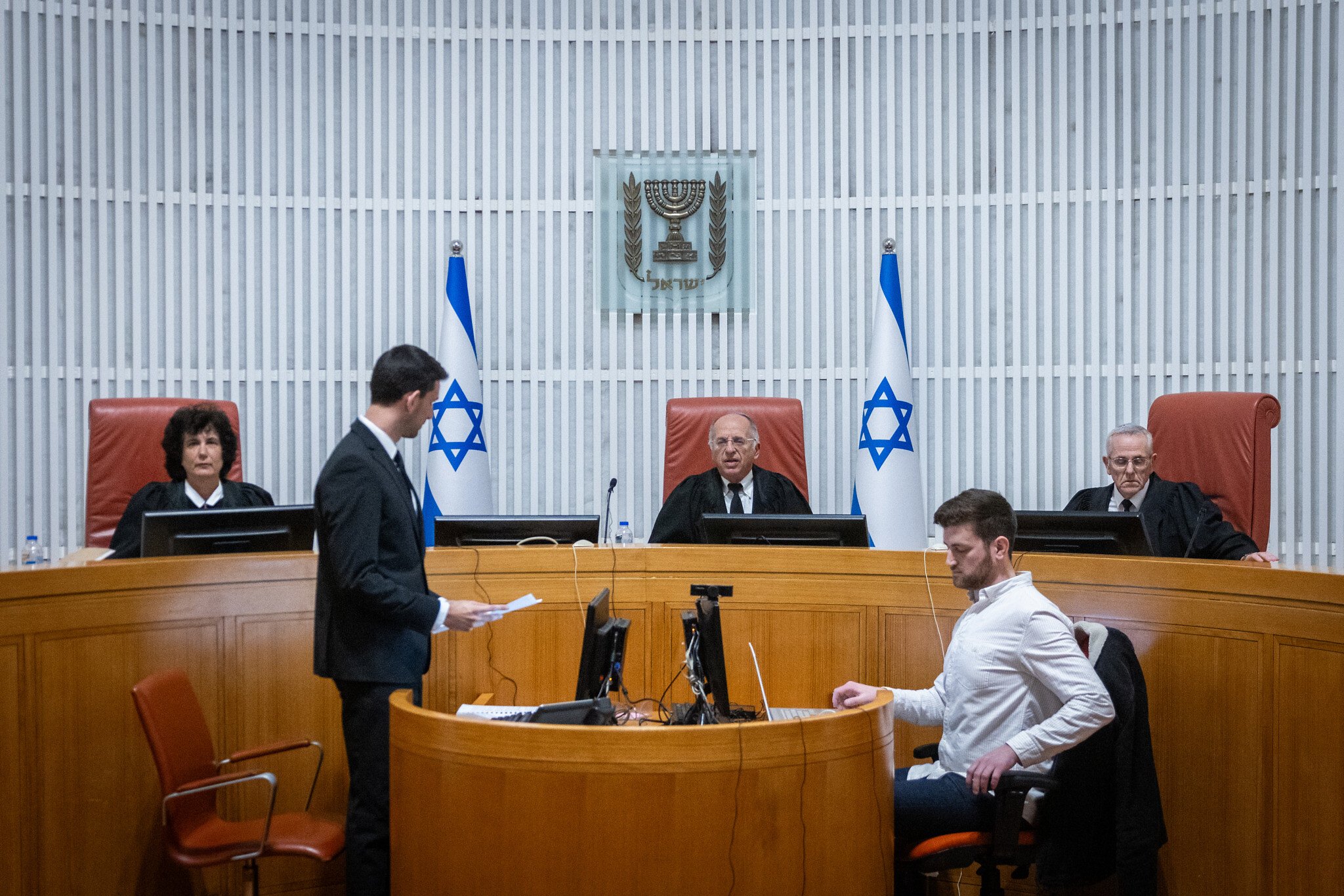
Judge Noam Sohlberg, who presided over the initial court procedures dealing with the petitions, has already given several hints that the court does not view the government’s change to the dismissal process favorably.
Last week, Sohlberg suggested the government return to the original dismissal process, possibly hinting that a smaller change to the panel’s make-up might be acceptable.
And when initially ruling that the dismissal would not take immediate effect, the judge said he was doing so in light of “difficulties highlighted by the petitioners” and “the apparent chances of the petition” succeeding.
Sohlberg is a staunch conservative and advocate of judicial restraint, so his apparent reservations about the government’s changes to the dismissal process do not augur well for the government’s position.

Within the government’s rights
Attorney Ze’ev Lev, the legal adviser to the conservative Movement for Governance and Democracy, acknowledged that the court is likely to block the decision to fire Baharav-Miara in one form or another, either directly or by asking the government to find an alternative solution.
But he nevertheless posited that the government had been within its rights to change the dismissal process, since the method for hiring and firing the attorney general is not set out in legislation but rather in the government resolution from 2000.
Government resolutions are a form of executive action implementing a specific policy or government measure. But just as the government has the power to pass such resolutions, it also has the power to revoke, amend, and supersede previous resolutions with new ones.
“If the dismissal process is determined by a government resolution, then you shouldn’t need more than a government resolution to change it,” argued Lev.
He conceded that the government had “acted foolishly” in the way it went about trying to fire Baharav-Miara by switching tracks, but said that this too should not invalidate the new process, citing as reasons the government’s need to have an attorney general it can work with, and its right under the law to hire and fire them.
“Because the government acted stupidly and zigzagged over the dismissal process, does that mean the attorney general must continue in her position forever, come what may, when everyone agrees that the government is not functioning properly because of her?” demanded Lev.
Government caprice
Yaniv Roznai, a professor of constitutional law at Reichman University, readily conceded that the government has the authority to decide on the hiring and firing process for the attorney general.
But he argued that the manner in which the government changed course in the middle of the original dismissal process violated key principles of administrative law, in particular the idea that administrative decisions be prospective not retrospective.

“The whole idea of the rule of law is that the government acts behind a veil of ignorance and under predetermined rules. What we have with the firing of the attorney general is not the rule of law, it is governmental caprice, changing the rules retrospectively for how to get rid of Baharav-Miara specifically,” asserted Roznai.
“Of course you can change the rules, but once you bind yourself to a specific procedure, and start working on it, then you can’t go back and undo that,” he continued.
“The government knew the original committee wouldn’t agree to fire Baharav-Miara, so they tried to bypass it.”
These principles of administrative law are not formally codified in Israeli law but rather in case law and court rulings dating back to the beginning of the state, noted Roznai.
It is likely that Sohlberg had these longstanding principles in mind when recommending the government revert to the original dismissal process.
Freeing itself from the shackles of restraint?
But Roznai also argued that the government’s effort to remove the attorney general was more broadly part of its drive to free itself from the small number of limitations on government power afforded by Israel’s constitutional arrangements.
The attorney general is the formal interpreter of the law for the government and their decisions are binding. The institution is also one of only two that can restrain the government’s power, the other being the High Court.
The cabinet resolution from 2000 was based on recommendations by the Shamgar Commission from 1998 that established that the committee for appointing and firing the attorney general be filled by at least three legal professionals out of five members, precisely in order to ensure that the role remained independent and not subject to political whims.

The commission made its recommendations against the background of the Bar-On – Hebron scandal, in which Roni Bar-On was appointed attorney general in 1997 allegedly due to his willingness to grant Shas leader Aryeh Deri a plea bargain over criminal indictments that had been filed against him.
“The government wants to change the very nature of the role, from an independent gatekeeper to a position of personal loyalty, and the message to all legal advisers and the entire civil service is ‘If you do not align with what we tell you you’ll be out of office,’” asserted Roznai.
Lev strongly rejected this argument, insisting instead that Baharav-Miara has stymied the government without proper cause at numerous turns, and opposed the government’s positions at a record level compared to her predecessors.
The fact that the High Court has also ruled against Baharav-Miara on several occasions when she and the government have clashed demonstrates that she has gone out of her way to hinder the government instead of helping it implement its policies as the role requires, Lev said.
“I have list of 60 government decisions and processes that the attorney general blocked.
“On the one hand you could say this is the most unlawful government in the history of Israel, but she also has lost a record number of times in court.”
Lev argued that it was not the job of the attorney general to block government policy — other than in the most extreme circumstances — but rather to represent the government and help it advance its goals.
“If there is something problematic then the court can rule against it,” he argued.
Lev pointed to several decisions in which the High Court has ruled against Baharav-Miara when she opposed the government’s position, such as her opposition to the appointment of a temporary head of the Second Authority broadcast media regulatory authority; the appointment of an acting civil service commissioner; her opposition to an additional hearing on the appointment process for the civil service commissioner, and several other cases.
In the Second Authority case in particular, Baharav-Miara was sharply rebuked by the court, which not only ruled that the appointment was lawful but also determined that her refusal to allow the government representation in court had no legal basis.
“I looked everywhere and I did not find a legal basis for establishing this standard… or even a reference to this standard,” Sohlberg reprimanded her at the time.
Lev said this and other cases demonstrated that Baharav-Miara was not acting to assist the government to implement its policies within the boundaries of the law, but acting against it: “It’s not true that every government decision she opposes is a clear violation of law, and we see this when she loses so often in court.”
Others have, however, pointed out that Baharav-Miara has won the majority of the cases that have reached the High Court when she has opposed the government, including the most legally and constitutionally consequential ones.
These include the government’s legislation to annul the judicial standard of reasonableness, which the High Court struck down; the government’s decision to fire Shin Bet chief Ronen Bar, and Levin’s refusal to convene the Judicial Selection Committee to elect a new High Court president.
The government decision to fire the attorney general through its new dismissal process, which Baharav-Miara also said was unlawful, could itself soon be added to that list.
“The attorney general has raised more red flags in this government than previous governments, that’s true, but this is just reflective of the number of questionable actions this government has taken,” contended Roznai.
“It is a populist government that wants to remove any checks on its powers, and will settle for nothing but [an attorney general who is] a rubber stamp.”










The Times of Israel Community.