

Likud MK says legislation regulating Haredi enlistment is ready for committee vote
‘We are reaching the finish line,’ boasts Boaz Bismuth, urging fellow lawmakers to pass controversial bill in its final two readings despite objections of IDF brass, AG and others
 Add ToI as a Preferred Source on Google
Sam Sokol is a former political correspondent at The Times of Israel. He was previously a reporter for the Jerusalem Post, Jewish Telegraphic Agency and Haaretz. He is the author of "Putin’s Hybrid War and the Jews"

Knesset Foreign Affairs and Defense Committee chairman MK Boaz Bismuth announced on Tuesday evening that his parliamentary panel finished discussing all clauses of the government’s bill regulating ultra-Orthodox enlistment and that its members will soon vote on advancing it to its final two readings in the Knesset plenum.
“I am excited to announce that the Foreign Affairs and Defense Committee has completed reading all sections of the conscription law. We are reaching the finish line [and] will soon vote in the committee on the law [advancing to its] second and third reading,” said Bismuth, a member of the ruling Likud party.
“What dragged on for years, what got stuck over and over again in endless discussions, moved forward on my watch because there was a clear goal: a law,” Bismuth declared, adding that “now it is the role of the entire Knesset to continue the path until the law is approved by the Knesset plenum, a historic conscription law that will strengthen the IDF and Israeli society as a whole.”
Despite Bismuth’s statement, it may still take one or two weeks to draft a final version of the bill before the committee can vote on whether to send it to the full plenum, especially in light of the expected behind-the-scenes wrangling between the committee legal advisor and the Haredi parties.
Bismuth’s comments were made shortly after Prime Minister Benjamin Netanyahu defended the highly controversial legislation during a press conference, insisting to reporters that its passage would lead to the conscription of 27,000 Haredim over the next three years.
Some 80,000 ultra-Orthodox men aged between 18 and 24 are currently believed to be eligible for military service, but have not enlisted. The Israel Defense Forces has said it urgently needs 12,000 recruits due to the strain on standing and reserve forces caused by the war against Hamas in Gaza and other military challenges. According to the IDF, 80 percent of all draft evaders are currently members of the ultra-Orthodox community.
For the past two years, the Haredi leadership has pushed for a law keeping its constituency out of the IDF, after the High Court ruled that decades-long blanket exemptions from army duty traditionally afforded to full-time Haredi yeshiva students were illegal. Since then, coalition lawmakers, dependent on Haredi support to keep them in government, have struggled to find a formulation that could win ultra-Orthodox backing while also meeting demands for the community to share in the burden of mandatory military service.

The latest version of the bill, drafted by Bismuth, would codify blanket exemptions from military service for full-time yeshiva students, while setting modest conscription targets for the community as a whole. It has come under fire from IDF brass, the attorney general, and a wide array of other critics, who have objected to it on the grounds that it is full of loopholes and will not increase Haredi enlistment.
The end of committee discussions on the bill came before the first reading of the 2026 state budget in the Knesset on Wednesday evening, a vote which had already been delayed due to ongoing tensions with the Haredi Shas and United Torah Judaism parties over the enlistment bill’s slow advancement.
The delay placed additional pressure on Netanyahu’s coalition, which must begin votes on the budget this week in order to meet a legally mandated March 31 deadline. Under Israeli law, if the government fails to pass the budget by the end of March, the Knesset will automatically dissolve, triggering early elections three months later. Elections are currently slated to be held by late October.
Yesh Atid MK Moshe Tur-Paz, a member of the Knesset Foreign Affairs and Defense Committee, told The Times of Israel on Monday that the Haredim had delayed the budget vote because they were “not satisfied with the dialogue with the [committee’s] legal adviser” Miri Frenkel Shor and her demand for certain changes to the bill to which they objected.
According to national broadcaster Kan, one of the central points of contention is Frenkel Shor’s call to pass the law “as a temporary provision for a maximum period of five years.”

Frenkel Shor has previously warned that the bill violates equality principles and fails to meet current security needs. She has also called for reexamining a clause ending sanctions at age 26 and argued that by effectively resetting the status of yeshiva students who ignored call-up orders over the past year, the legislation would grant legal immunity to Haredim but not to non-Haredi evaders.
According to Maariv, late-night discussions of the issues on Sunday had failed to bring about an agreement, leading to the delay on the budget vote.
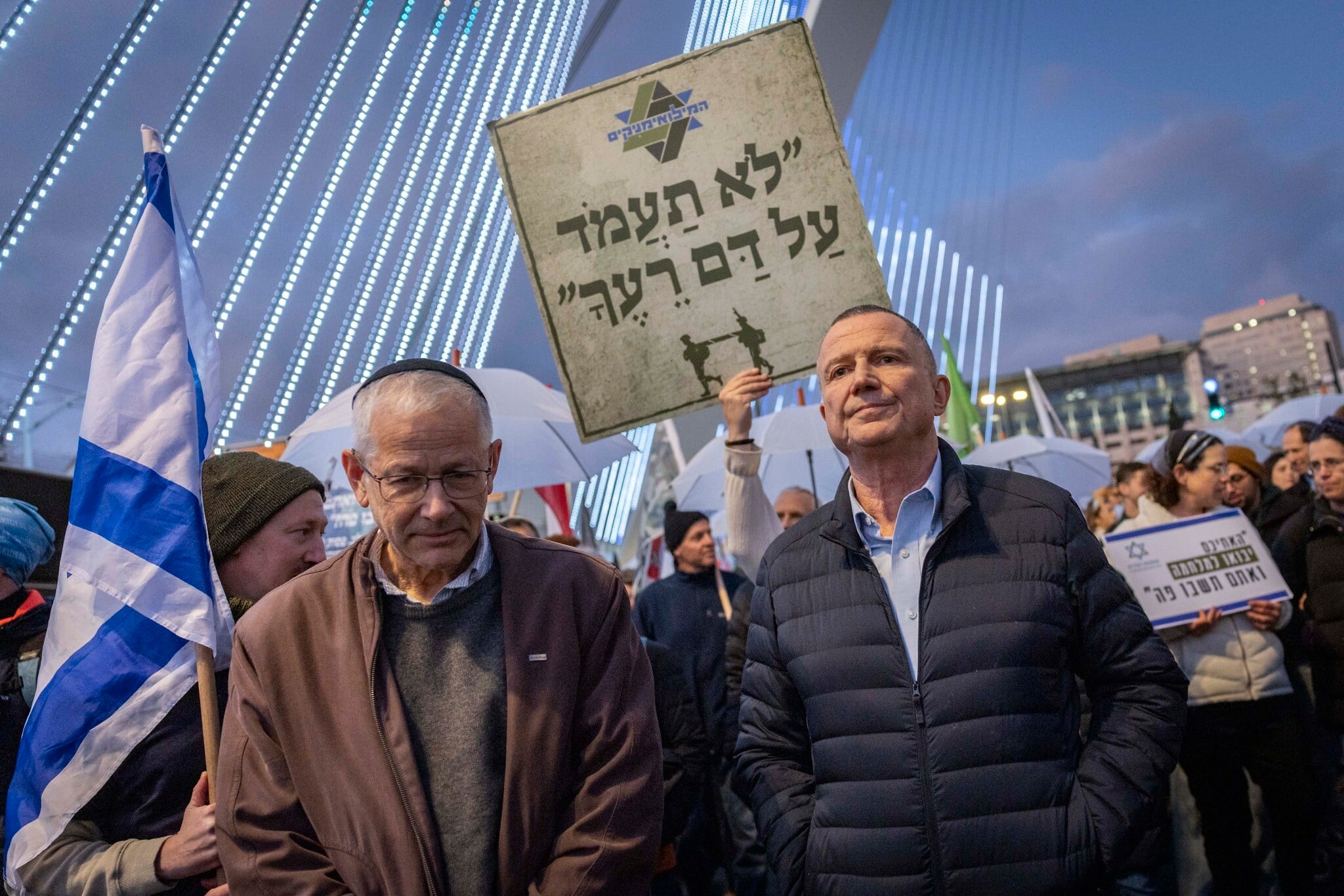
During Tuesday’s final discussions of the bill, Likud MK Yuli Edelstein, who was removed as chair of the committee in favor of Bismuth, argued that ultra-Orthodox lawmakers who support the bill had lied about rabbinic support for even limited Haredi enlistment.
“When they sat across from me and said that the rabbis agreed, they lied brazenly,” he stated, referring to the recent airing of audio recordings of senior ultra-Orthodox rabbis boasting that the controversial legislation will not lead to an increase in enlistment and will only serve to put off any real change.
In the recordings broadcast by Channel 12 news, Rabbi Moshe Hillel Hirsch, one of the senior leaders of the stream of ultra-Orthodox Jewry known as “Lithuanian,” says the law is meant to buy time rather than fundamentally influence enlistment patterns.
“In the end, the law will fall after a few years, but we’ve gained years,” he could be heard saying.
Even if Bismuth’s bill advances out of committee, its passage is still not assured, given the opposition of a small but significant group of coalition lawmakers who have spoken out against it.










The Times of Israel Community.