

 From the Liveblog of
Monday, April 6, 2026
From the Liveblog of
Monday, April 6, 2026
Gantz urges reopening of schools, as wartime guidelines keep most students at home
 Add ToI as a Preferred Source on Google
Sam Sokol is a former political correspondent at The Times of Israel. He was previously a reporter for the Jerusalem Post, Jewish Telegraphic Agency and Haaretz. He is the author of "Putin’s Hybrid War and the Jews"
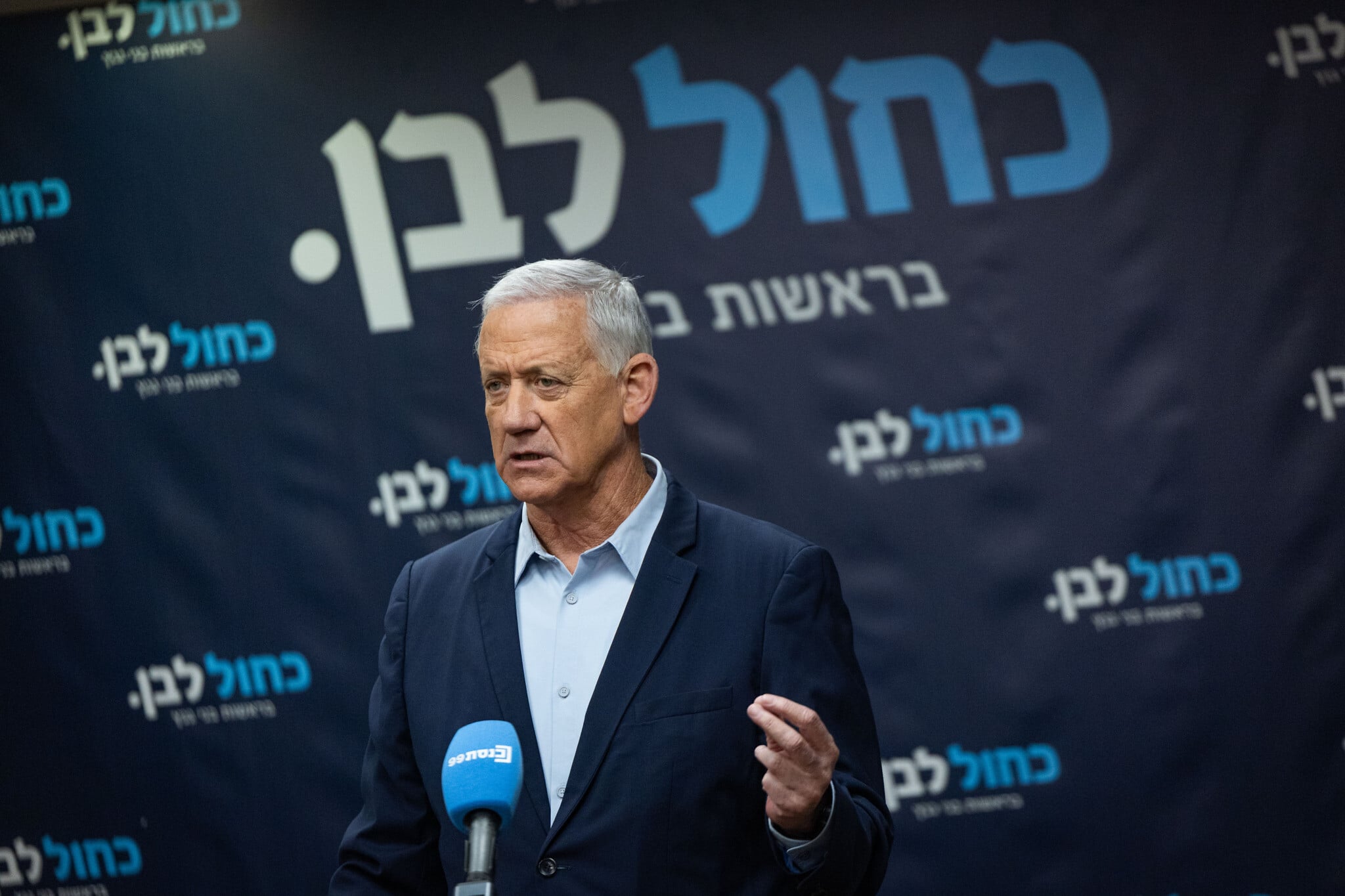
Blue and White chairman Benny Gantz demands that the government reopen schools despite the ongoing war with Iran, stating that any educational institution that “has a protected space can and should return.”
“The education system needs to open up and the government needs to save parents the headaches and announce today that unless there is a dramatic change in the situational assessment, the entire education system will return after the holiday,” he says — calling on the government to begin negotiations with teachers and “give the local authorities time to prepare.”
“And most importantly, even though this is not the government’s thing, take responsibility and speak to the public,” Gantz adds.
The IDF Home Front Command on Saturday announced that its current wartime guidelines have been extended until tonight at least, meaning educational activities will remain prohibited in most parts of the country.
Under the current guidelines, educational institutions can operate in areas designated as “yellow,” or at lower risk of attacks, in some areas of the north, south and West Bank — provided there is an adequate shelter that can be reached in time. However, several cities and towns, including Ashkelon, Ariel in the West Bank, and Dimona, announced last month that they would not reopen schools despite being permitted to do so.
The Education Ministry does not possess any data on the existence of bomb shelters in about 50 percent of kindergartens, according to a recent report by the Knesset Research and Information Center.
Meanwhile, 14% of Israeli schools have no protection, while 24% have partial protection. This means that about 466,000 students, comprising roughly one-quarter of the country’s students, lack adequate protection, although the State Comptroller has said that 36% of the Education Ministry’s data is outdated, having last been collected between 2018 and 2021.










The Times of Israel Community.