

 From the Liveblog of
Thursday, January 22, 2026
From the Liveblog of
Thursday, January 22, 2026
Under pressure, Arab Knesset parties sign agreement to work toward reviving Joint List
 Add ToI as a Preferred Source on Google
Ariela Karmel is a political correspondent at The Times of Israel. She previously reported for Calcalist and Haaretz. She holds an MA in Middle Eastern and African History from Tel Aviv University and a BA in Political Science from the University of British Columbia.
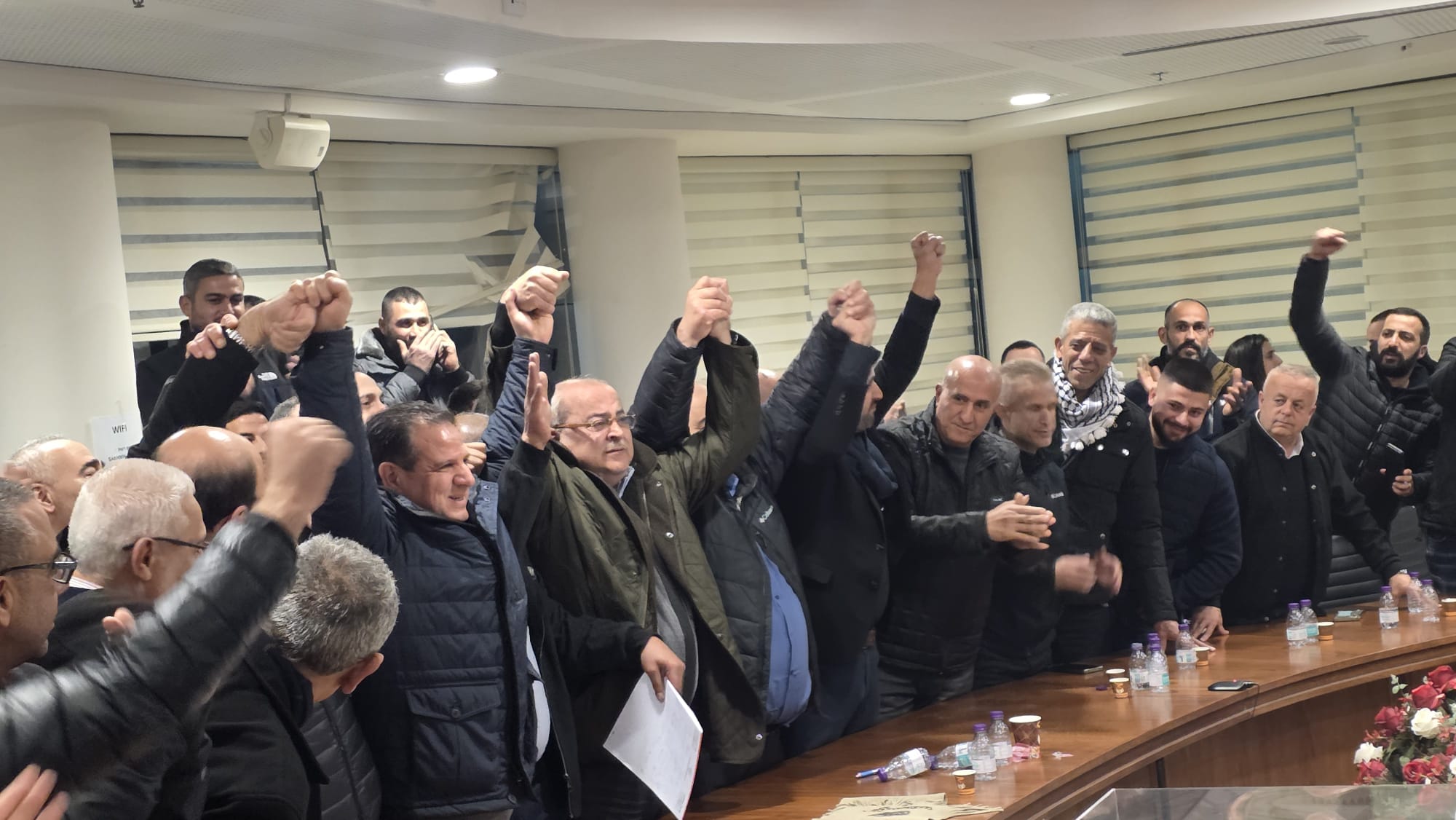
The four Arab parties — Hadash, Ra’am, Ta’al and Balad — have signed an agreement to work toward reestablishing the Joint List bloc, a spokesperson for one of the parties tells The Times of Israel.
The party heads — Hadash’s Ayman Odeh, Ra’am’s Mansour Abbas, Ta’al’s Ahmad Tibi and Balad’s Sami Abou Shahadeh, the latter of whom failed to enter the Knesset in the last elections — are in Sakhnin, as part of a nationwide general strike in Arab locales over the police’s failure to stem a surging violent crime wave besetting the Arab community.
The agreement is written on a notepad bearing the Sakhnin Municipality’s letterhead and the signatures of the party heads, and footage shows the party heads cheering and holding hands after signing.
The Arab parties have for months been in talks to revive the list, though they seemed halted amid internal fights between Ra’am and the other parties, mainly over Abbas’s demand for the bloc to be merely a technical alliance to allow him the option to split after the elections and have Ra’am join a governing coalition.
According to the Kan public broadcaster, the other parties acquiesced to this, enabling an agreement to be signed.
However, a spokesperson for one of the parties tells The Times of Israel that the four party heads — principally Abbas — were ambushed into signing the public agreement, amid widespread pressure from the Arab street to revive the bloc amid the crime epidemic sweeping Arab society.
“You can’t say it’s absolutely final, but such a public commitment will lead to more serious meetings, and everyone will be afraid to come out looking like the ones who collapsed the list,” says the spokesperson.
At its peak in 2020, the Joint List bloc commanded the third-largest party in the Knesset, before splitting due to internal fighting in 2021. Ra’am broke away to join Naftali Bennett’s and Yair Lapid’s coalition that briefly unseated Netanyahu in 2021, the first time in decades that an Arab party had joined the government.
The bloc’s collapse provoked extreme anger and frustration among the Arab public, who have been pressuring the party heads to reunify ahead of this year’s upcoming elections.
According to data from a survey published in November by the Moshe Dayan Center at Tel Aviv University, 77.4% of Arab respondents support the inclusion of an Arab party in the next governing coalition.
The report also said that a Joint List would significantly increase voter turnout: among Arab citizens, turnout is expected to reach 52.4% if the four parties run separately, but would rise to 61.8% and secure approximately 15-16 Knesset seats if the Joint List were reestablished.






The Times of Israel Community.