

Maryland, DC sue Trump for ‘flagrantly violating constitution’
Targeting business holdings, attorneys general cite emoluments clauses, noting payments made by foreign entities to president’s hotels
 Add ToI as a Preferred Source on Google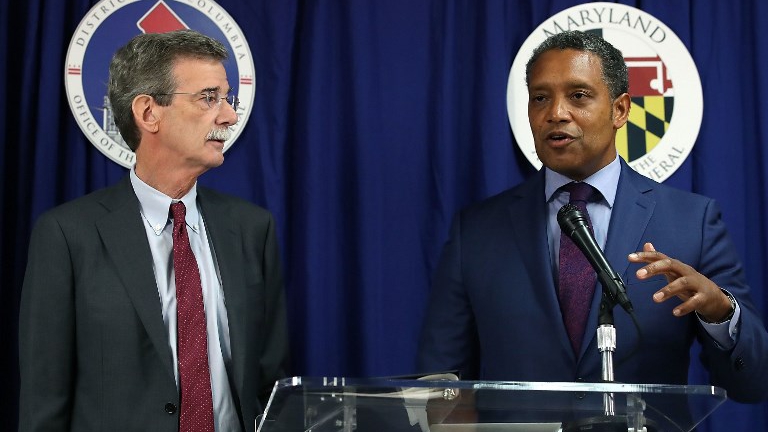
WASHINGTON (AFP) — Maryland and Washington DC sued President Donald Trump Monday, saying he is violating laws by raking in money from foreign governments and businesses at his luxury hotels and office towers.
The lawsuit said heavy spending by foreign diplomats and embassies at the Trump International Hotel just a few blocks from the White House, payments made by foreign entities at his Trump Tower and Trump International Tower in New York, and other business operations effectively violate the US Constitution’s ban on presidents enriching themselves while in office.
“The suit alleges that president Trump is flagrantly violating the constitution, which explicitly bars presidents from receiving gifts or inducements from foreign or domestic government entities,” said Washington Attorney General Karl Racine.
“Never in the history of this country have we had a president with these kinds of extensive business entanglements. Or a president who refused to adequately distance themselves from their holdings,” Racine said.
The suit says that despite billionaire Trump having placed his extensive business holdings in a trust after he was elected president, he still owns the properties and is conscious of the money they are earning him.
“The defendant continues to own — and be well-aware of the activities of — the Trump organization” and other businesses he formerly actively ran, the suit said.
“Although he formed a trust to hold his business assets, he may obtain distributions from his trust at any time.”
‘Firewall’
The suit detailed the popularity with foreign officials of the opulent Trump International Hotel since his January 20 inauguration, alleging that the hotel “has specifically marketed itself to the diplomatic community.”
It pointed to news reports of Asian and Middle Eastern diplomats saying they will go there to impress the president. Kuwait held its national day celebration at the hotel, and Saudi Arabia has spent hundreds of thousands of dollars there, the suit claims.
Trump himself and members of his cabinet entertain in the hotel, it noted.
In New York, Trump Tower leases space to the Chinese government-controlled bank ICBC and Trump World Tower and other properties also focuses on foreign clients, including Russians, it said.
The suit also alleged that Trump benefits from foreign distribution payments for his “The Apprentice” reality TV show; and that he benefits from the international real estate projects, hotels and golf courses of the Trump Organization.
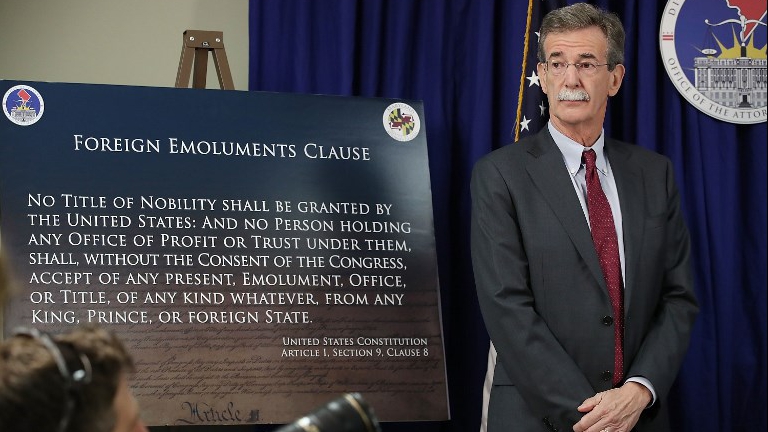
Those benefits violate the US Constitution’s “emoluments clauses,” which ban US officials from taking gifts or other benefits from foreign governments, the suit argues.
“The emolument clauses are a firewall against presidential corruption,” said Maryland Attorney General Brian Frosh.
“He’s going to have to answer in court.”
The focus on Trump International Hotel, a large, stately building that used to be a central post office, stems in part from businesses in Washington and Maryland, including some partly owned by the local governments, complaining that its link to the president effectively gives it an unfair competitive advantage over them.


The Times of Israel Community.