

Movies, mayors and money
The press is shocked at the events in Libya; a mayor celebrates one less indictment; and economic woes continue to worsen for Israeli families
 Add ToI as a Preferred Source on Google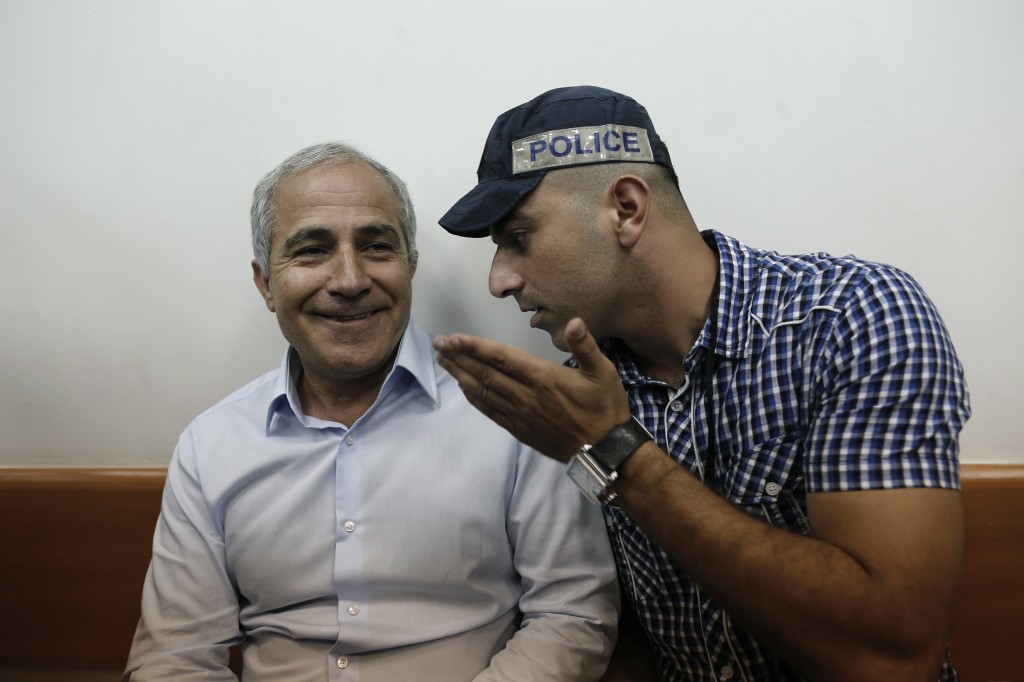
Images of the violent attack on US consulate in Libya were front and center on all of Israel’s major papers Thursday as they reacted to the brutal killing of the American ambassador to Libya, Christopher Stevens.
Yedioth Ahronoth called the attack a “Horror movie” in its front page headline, and along with a description of the violent attack, the paper includes a brief story about Stevens’ Israel connection. Stevens worked at the US Consulate in East Jerusalem from 2002 to 2006 and his friend, attorney Danny Zeidman, praised the diplomat. “Christopher served here in the most difficult and complicated years, when there a lot of terror attacks. He was unique, he could sit in a room with Israelis and Palestinians and be empathetic to both sides. This wasn’t just a place of work for him, this was his passion. He had to be in the Middle East.”
Maariv has four pages of coverage of the attack, including two pages of profiles of the man who may have made the film that sparked the violence. “The director who lit the Middle East on fire” looks into the identity of Sam Bacile and quotes heavily from an interview with the producer of the film, Steve Klein, who does not think Bacile is an Israeli Jew (contrary to media reports). The paper also provides a movie review: “A summary in one word of the film that lit the Arab world on fire: Garbage.”
Haaretz provides a pretty dry article about the attack but also includes a translated opinion piece from Guardian writer Ian Black. In the piece, Black warns against Salafi extremists and discusses the threat that the new Arab governments in Libya and Egypt face from extremists. Black reminds readers that the old dictators kept the extremists locked up but now the situation is weaker than before. “Arab governments want to get on well with Washington but their relationships will always be vulnerable to provocations by extremists on both sides.”
Israel Hayom goes on the offensive with some surprisingly tasteless coverage. “US is surprised again,” reads the front page headline. The paper’s main article about the attacks is a opinion piece by Boaz Bismuth whose opening sentence reads, “It was quite embarrassing to see yesterday how much difficulty the president of the world’s number one superpower (still), Barack Obama, has in understanding the Middle East.” The piece goes on to attack Obama and his foreign policy over the past four years, while focusing very little on the situation in Libya. It concludes with Bismuth’s conclusion regarding Obama, “He simply sees the world a little differently. The problem is that he is probably wrong, but we and the world will pay the price for his mistakes.”
One less charge
Maariv reports on a development in the case against Kiryat Malachi Mayor Motti Malka. He will not be charged with rape, but will still be charged with bribery and indecent acts. Maariv hits the nail on the head with its headline, “This is how a man acts who has been indicted for ‘only’ indecent acts,” and the paper goes on to describe the party-like atmosphere Wednesday night as Malka and hundreds of residents celebrated the prosecutor’s decision not to move forward with the rape charge. According to the paper, prosecutors decided not to prosecute because they felt they didn’t have enough witness testimony to convict.
While there will be slightly less courtroom drama in Kiryat Malachi, Haaretz reports that the state wants to expand 40 settlements on private Palestinian property. The paper reports that in documents submitted to the Supreme Court, the government seeks to expand settlements on land that was originally seized for military use. The paper provides a brief history lesson noting that the practice of seizing Palestinian private property for settlement use was outlawed in 1979 decision, but now the government wants to use private Palestinian land to expand settlements such as Ariel, Kiryat Arba, and Efrat.
See you in New York?
The attack in Libya may have knocked the Iran issue off the front page, but Yedioth covers the growing frustration between Netanyahu and Obama. “Broken telephone” describes the back and forth between the White House and the PM’s office. Yedioth focuses on whether Netanyahu requested a meeting with Obama later this month in New York. “The message that came from the White House in the late hours of the night left little room for doubt: President Obama thinks that Netanyahu is lying,” reads the opening line of the article, which goes on to describe the confusion about whether Netanyahu actually requested a meeting with Obama. His people say yes, Obama’s say no.
But aside from that, Yedioth reports that the actual call between the two went well and that on the issue of red lines the two would continue the dialogue, “in an intimate manner, quietly and seriously.”
Israel Hayom reports on the other subject that continues with no end in sight: the increasingly difficult economic situation. The paper reports that the price of cottage cheese, a staple of Israeli breakfast and subject of the first protest that kicked off last summer’s demonstrations, has risen 35% from 2005 to 2011. Dairy products have risen 33-38% and the price of milk has gone up by 10%.
In an adjoining article, the paper reports that 35% of Israelis cannot make ends meet at the end of each month and an alarmingly high 52% are chronically in debt. Also worrisome is that Israelis who are ill may forgo spending money on health in order to pay their bills.






The Times of Israel Community.