

New study puts hominins in Israel 1.9 million years ago, rewriting earliest human migration
Team redates prehistoric ‘Ubeidiya in Jordan Valley to same age as oldest Georgian site, suggesting at least two distinct groups of human ancestors left Africa at roughly the same time
 Add ToI as a Preferred Source on Google
Rossella Tercatin is The Times of Israel's archaeology and religions reporter.
Ancient humans already lived in the area of modern-day Israel at least 1.9 million years ago, a new study suggests, pushing back the exodus out of Africa to hundreds of thousands of years earlier than previously thought, a new study has suggested.
The study, published this month in the peer-reviewed journal “Quaternary Science Reviews” by a team of Israeli and international researchers, employed several analytical methods to date the prehistoric site of ‘Ubeidiya in the Jordan Valley, south of the Sea of Galilee, which was previously thought to have been occupied between 1.2 and 1.6 million years ago.
The redating of ‘Ubeidiya to 1.9 million years ago means the site was occupied at roughly the same time as a site in Georgia long considered as presenting the earliest evidence of hominins outside of Africa, significantly shaking up what we know about the earliest migrations out of the cradle of human life by modern humans’ ancient ancestors.
Until now, scholars believed that the population living at Dmanisi, Georgia, some 1.9 million years ago represented an earlier group than that living at ‘Ubeidiya, which had different anatomical features and crafted distinct types of stone tools.
But the new study suggests that at least two distinct groups migrated out of Africa at the earliest point we know about.
“Until now, researchers believed that the Acheulian stone-tool tradition found at ‘Ubeidiya was younger than the Oldowan tools discovered at Dmanisi in Georgia,” said Prof. Omry Barzilai of the University of Haifa, one of the authors of the study. “However, the new dating shows that this is not the case. Instead, both tool traditions likely left Africa and reached Eurasia at roughly the same time, around 1.9 million years ago.”
Human evolution can be traced back around 6 million years through fossil and DNA evidence. Hominins are primates that are modern humans’ direct ancestors or closely related to us. Homo sapiens, our modern form, do not appear in the fossil record until around 200,000 to 300,000 years ago.
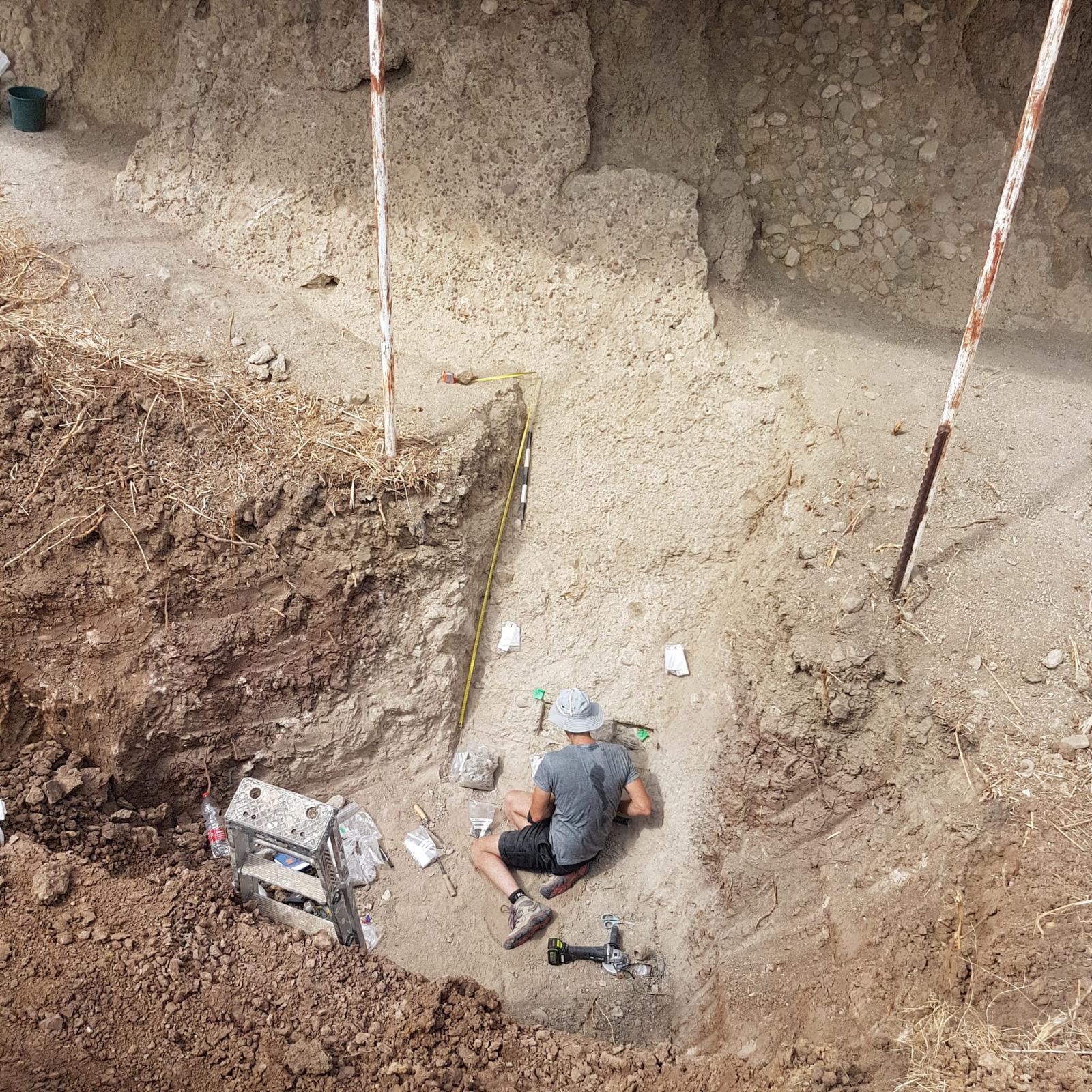
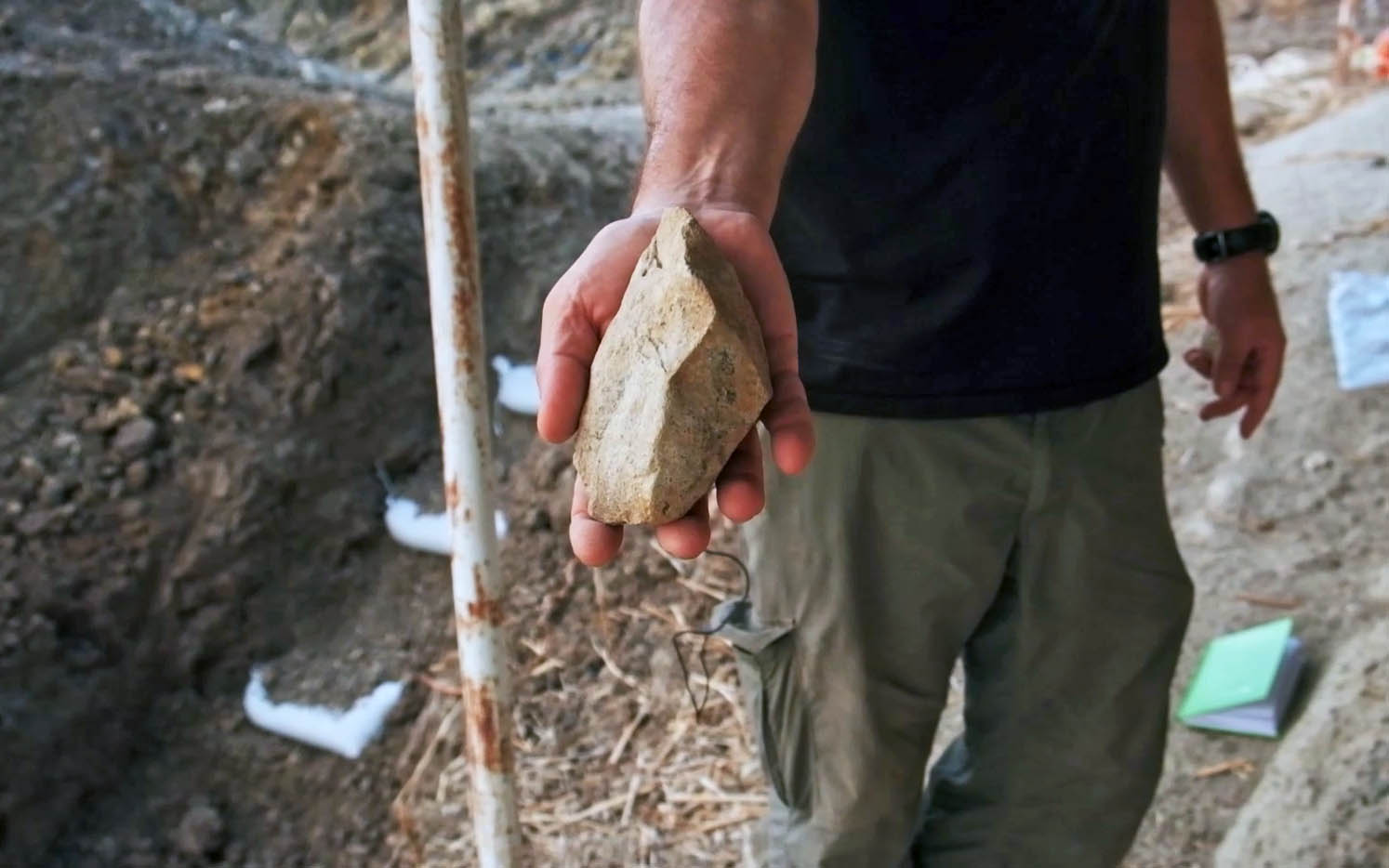
‘Ubeidiya was first excavated in the 1960s and has since been considered one of the oldest expressions of the Acheulian culture in the world, which was characterized by the creation of two-sided tools such as hand axes, in association with rich collections of fossilized animal remains.
This research marks the first time that scientists have attempted to independently date ‘Ubeidiya, according to Prof. Ari Matmon of the Hebrew University of Jerusalem, the lead author of the study.
“For decades, the estimates of its age were based on what we call relative dating,” he told The Times of Israel over the phone.
Animal remains found at the site were compared to similar remains found elsewhere around the world. “Based on that comparison, the site was given an age of somewhere between 1.2 and 1.6 million years ago,” he said.
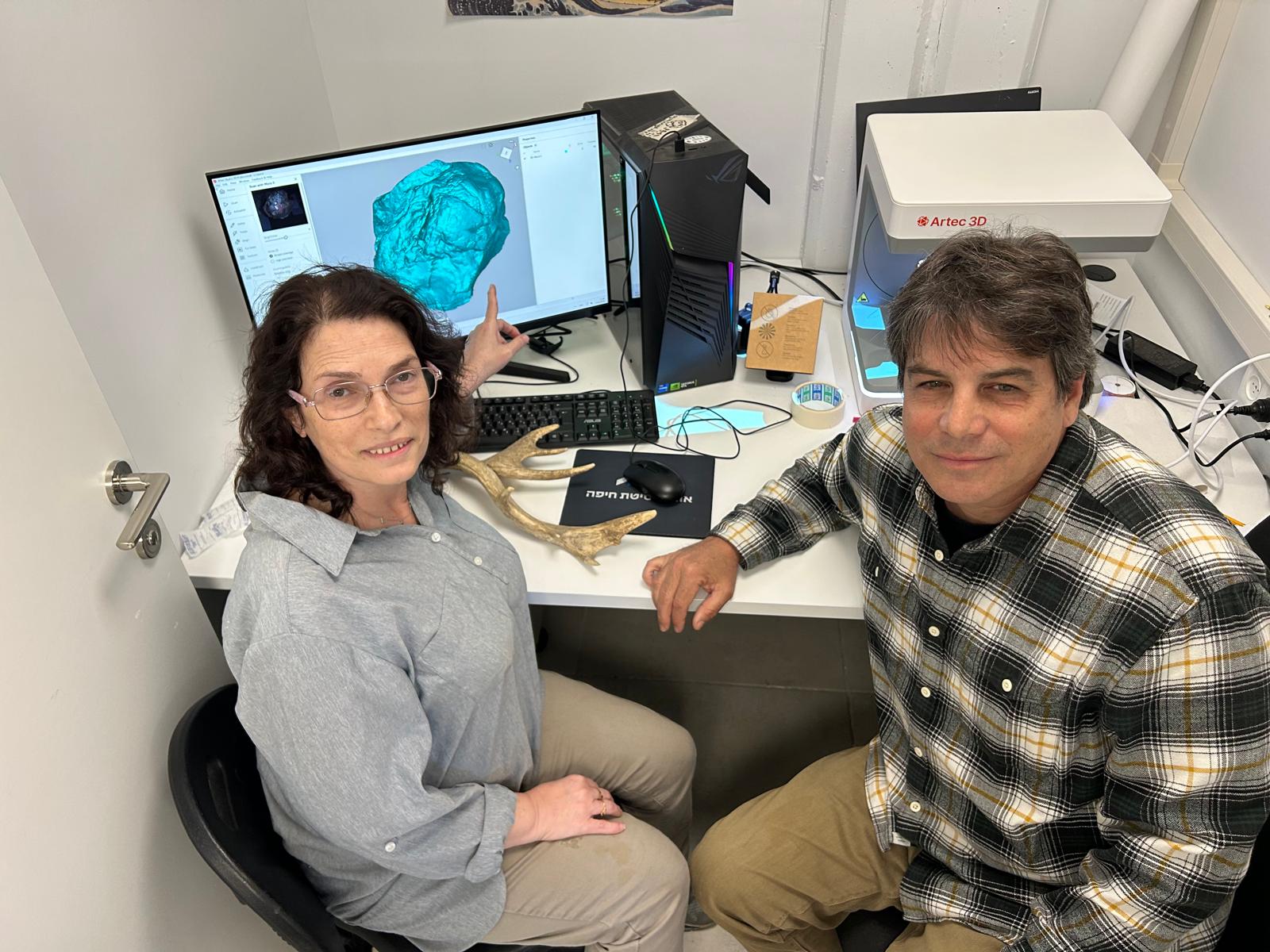
To date ‘Ubeidiya, Matmon used a method of studying cosmic radiation, or cosmogenic isotopes, buried under the earth’s surface.
“Cosmogenic isotopes are formed all the time at very low concentrations on the surface of the earth because of its interaction with cosmic rays, which stem from the entire universe,” he explained. “When these isotopes are buried [under sediments], they decay, while no new isotope can form because cosmic rays cannot reach them.”
The median age of the isotopes buried at ‘Ubeidiya was around two million years old.
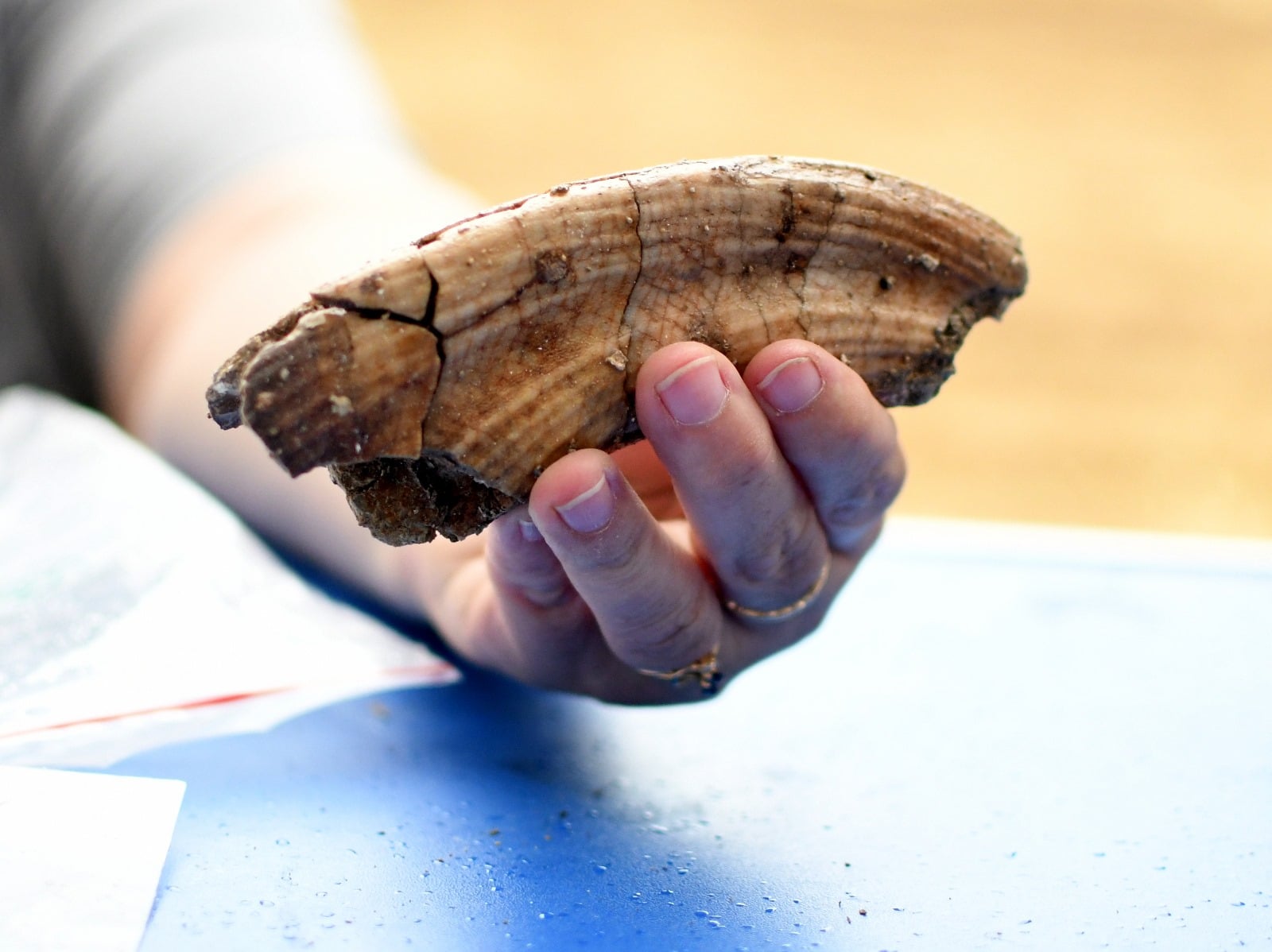
The team also used the Earth’s magnetic field and uranium-lead dating of fossilized Melanopsis shells, which did not pinpoint the date of occupation but helped determine the latest possible date for the site’s occupation by early humans.
By analyzing shifts in the magnetic field, which stems from magnetic ore in the Earth’s core, the team determined that the site was at least 1.1 million years old.
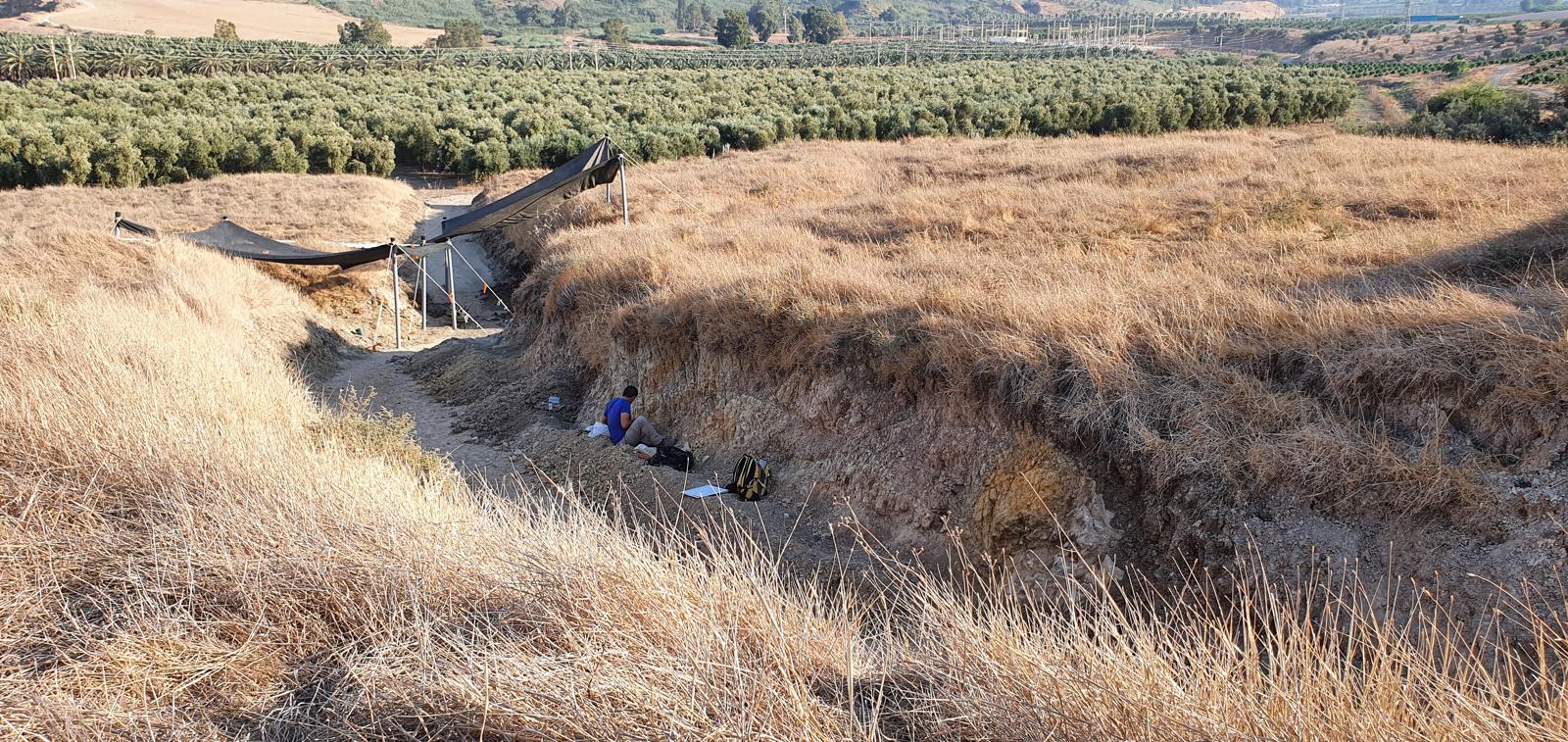
“The magnetic field flips on reverse to normal, back and forth,” Matmon said. “We know that currently the magnetic field is normal, and we know the times that it flipped back and forth. In this case, we found that [the magnetic field registered at ‘Ubeidiya] is older than at least one reversal period, or at least older than 1.1 million years, and possibly dates back to the previous one, which occurred between 1.7 and 1.9 million years ago.”
The shells were found to be at least 1.3 million years old.
“The shells are originally made out of a mineral called aragonite,” Matmon explained. After the shells are buried by the sediment, “slowly, that aragonite transforms, over time, into calcite. The isotopic clock starts working only when the transformation is complete, which might take hundreds of thousands of years and might vary between shells. This means that the analysis does not tell us when exactly they were buried [and the process started] but rather only the latest possible date [the process was over].”
Combining all the results, Matmon created a probability curve that pinpointed 1.9 million years ago as the most probable dating for the site.
According to Prof. Miriam Belmaker of the University of Tulsa, Oklahoma, another author of the study, the results are likely to have implications for the relative dating of other sites as well and the understanding of who left Africa and when.
“From a paleoecological perspective, ‘Ubeidiya has always been very interesting,” she said over the telephone. “Like a lot of modern situations in Israel, [at ‘Ubeidiya] we have fauna from a lot of different regions in the world, Africa, Asia, Europe. In paleo-biochronology, or the study of how old an archeological site is based on the different types of species that lived there, for many years, the assumption was that the species there lived between 1.2 and 1.4 million years ago. This new date not only changes the date for ‘Ubeidiya and its lithic assemblage, but suddenly, tells us these species already lived two million years ago.”
“[The results] have extended their evolutionary track, which is going to lead to a revision of a lot of species, their distribution, and the paleoecology of the area,” she added.
Barzilai said that in recent years, more evidence has emerged of early human presence outside Africa close to two million years ago, including in China and in Romania.
“New information is gradually emerging from different regions in Eurasia, using a range of dating methods, and it consistently points to an earlier dispersal of the Acheulian culture than we previously thought,” Barzilai noted. “We may need to rethink some of our assumptions and remain open to new dating techniques, provided they are reliable and supported by multiple lines of evidence.”
“That’s how science advances, and the results we’re seeing are very encouraging,” he added.
Barzilai and Belmaker are still excavating at ‘Ubeidiya, and in the meantime, the site has also been declared a national park.
“The site, which has been developed through the efforts of the Israel Antiquities Authority, the National Nature and Parks Authority, the Kinneret Drainage Authority, and the Jordan Valley Regional Council, is a national treasure,” Barzilai said. “As the earliest prehistoric site discovered outside Africa, it is essential that it remain accessible, so visitors can experience the ancient landscapes of Israel and learn about the early humans and animals that once lived here.”










The Times of Israel Community.